Border-Crossing Battle: The Bark Beetle Blight in Bohemia, Austria and Bavaria (1868–1929)
October 15, 2026 10:58 am | by James Rice | Posted in
£30.00
ISBN 978-1-917813-18-1 (PB) £30
Border-Crossing Battle: The Bark Beetle Blight in Bohemia, Austria and Bavaria (1868–1929) (FORTHCOMING – open for advance sales)
by Kristýna Kaucká
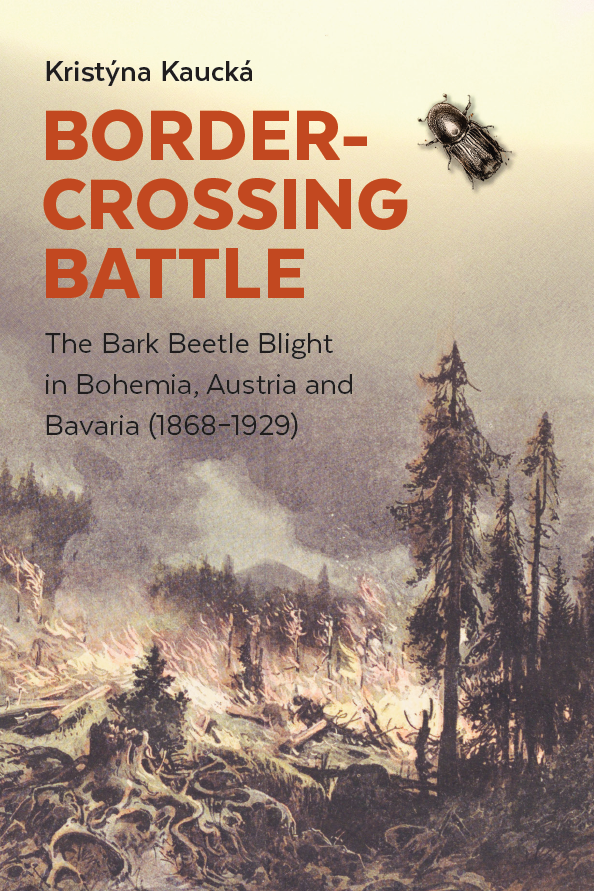
Climate change accelerates natural events that are perceived as disastrous from the perspective of human society, be it deforestation, fires or overpopulation of forest pests (bark beetles, nun moths). Humans have faced such phenomena in the past, and their responses have ranged from fatalism to active moderation of natural processes. This book examines natural disasters as a transnational phenomenon spanning the Habsburg Monarchy and the Kingdom of Bavaria, taking the example of the extreme weather events of 1858–1878, which culminated in two major storms (1868, 1870) that led to an overpopulation of bark beetles, with profound social consequences. The study area is the so-called Böhmerwald, a geographical unit that historically spanned the Habsburg Monarchy and the Kingdom of Bavaria (today’s Šumava, Bavarian Forest and Böhmerwald). The milestones of the study are not political, but meteorological events: the storms of 1868 and 1929. The overpopulation of bark beetles in the region in the 1870s is analysed as a significant event in the context of environmental history. The human response to this crisis exemplified how to deal with major forest catastrophes in the Central European region and the procedures established to mitigate the bark beetle disaster served as a model for similar events. The book covers the 1870s and the subsequent socio-economic development of the region, including afforestation, the overpopulation of other so-called pests (especially nun moths in the 1890s), the construction of infrastructure and the beginnings of forest conservation. The book’s temporal scope ends in 1929, when another storm swept through the area. The hypothesis is that, unlike in previous periods, from the 1870s humans became increasingly aware of their ‘power’ to change nature. Human impact on the area had been significant before, but it was the interventionist policies of the state and administrations of the late nineteenth century that became part of the central European cultural narrative about humans consciously altering the forest ecosystem.