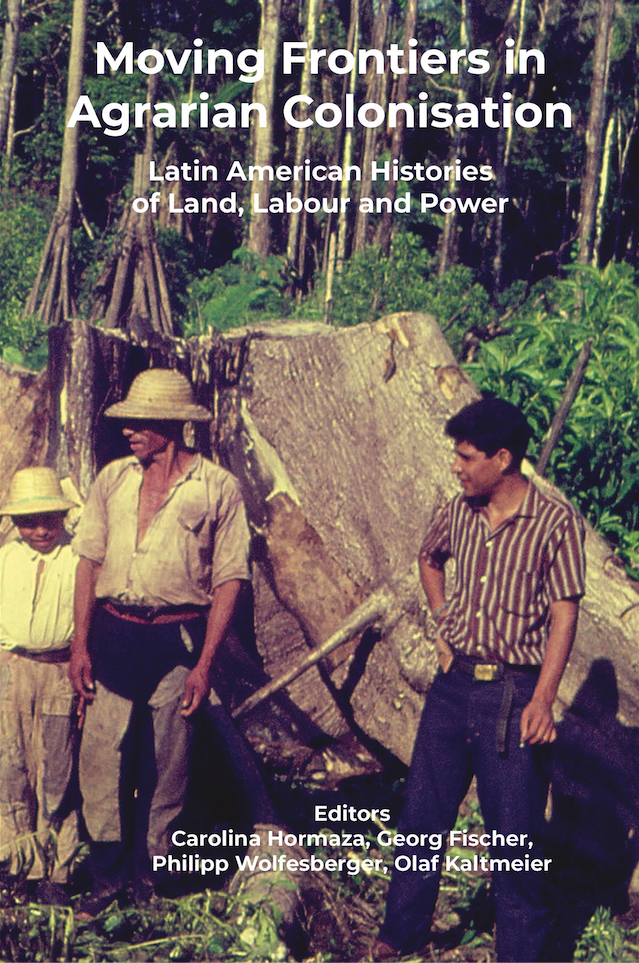
Moving Frontiers in Agrarian Colonisation examines the meanings of agrarian colonisation in nineteenth- and twentieth-century Latin America and its roots in the Ibero-American colonial past. The volume historicises agrarian colonisation as an ongoing process of agricultural expansion situated within enduring colonial regimes. It explores the practices and epistemologies of diverse actors involved in the making of agrarian frontiers, including European immigrants, Mennonite communities, mestizo settlers, Indigenous peoples and Afro-descendants, while also highlighting the roles of governments and international organisations. Through fifteen chapters, the volume offers a fresh take on agrarian colonisation as a process that illustrates the profoundly unequal positions of different rural communities within colonial and postcolonial societies, and examines the ambivalent histories of exploitation and resistance that shaped Latin America’s rural frontiers. The conceptual introduction approaches agrarian colonisation as a more-than-human process and a point of departure for engaging tensions between decolonial and settler-colonial studies in Latin America.
Carolina Hormaza is a Research Associate, lecturer and academic coordinator of the collaborative research project ‘Turning Land into Capital’. She is the current executive secretary of CALAS – Maria Sibylla Merian Center for Advanced Latin American Studies in the Humanities and Social Sciences. She holds a Ph.D. in History from Bielefeld University and specialises in global, environmental and agrarian history. Her research interests include science and knowledge, climate, agriculture and bonded labour in Latin America.
Georg Fischer is an Associate Professor for Brazilian Studies at the Department of Global Studies at Aarhus University and a co-director of the Aarhus University Centre for Brazilian and Global Affairs. He holds a Ph.D. in History from the Freie Universität of Berlin. His research interests include nature-society relations, science and knowledge, and North–South inequalities. Fischer’s regional focus is on Latin America and its connections to the wider world with emphasis on nineteenth and twentieth-century Brazil.
Philipp Wolfesberger is a Research Associate, lecturer and managing director at the Center for InterAmerican Studies at Bielefeld University. He holds a doctoral degree in Political Science from the University of Vienna and specialises in international politics, political sociology and political theory. His research interests include state transformations in Latin America, organised crime, masculinities, radical democracy and decolonial theories.
Olaf Kaltmeier is a Professor of Iberoamerican history at Bielefeld University. Since its foundation in 2018, he has been the director of CALAS – Maria Sibylla Merian Center for Advanced Latin American Studies in the Humanities and Social Sciences. He is founding director and member of the Executive Board of the Center for InterAmerican Studies (CIAS) at Bielefeld University and director of the collaborative research project ‘Turning Land into Capital’.
CONTENTS
Introduction: Conceptualising the History of Agrarian Colonisation in Latin America
Part 1. Agrarian Colonisation as a Particular Form of Settler Colonialism
Appropriation of Land and Labour
Chapter 1. The Victory of the Landowners. Pablo F. Luna
Chapter 2. The Final Years of Agrarian Colonisation in Mexico: Land Market and Agrarian Reform, 1947–1963. Luis Aboites Aguilar
Chapter 3. Agrarian Colonisation, Drug trafficking and Agro-industry in Michoacán, 1947–2000. Salvador Maldonado Aranda
Chapter 4. Peasants Becoming Criminals: Squatters, Land Reform, and Forest Conservation in Late Twentieth-Century Costa Rica. Wilson Picado-Umaña and Elisa Botella Rodríguez
Tension between Established and Newly Arrived Colonists
Chapter 5. Designing White Farmers for the Brazilian Tropical Agribusiness: Ethno-technification in the Soybean-Anthropocene. Claiton Marcio da Silva
Chapter 6. To Conquer the Earth: Agrarian Colonisation in Bolivia 1952–1990. Olivia Arigho Stiles
Chapter 7. Mennonites in Southern Mexico: Four Decades of Agrarian Colonisation in a Peripheral Region. Wolfgang Gabbert and Ute Schüren
Part 2. Agrarian Colonisation as a More-Than-Human Process
Dwelling in the Forest
Chapter 8. Beyond the Enclave: Colonists’ Agency and the Making of Lago Agrio in the Ecuadorian Amazon, 1969–1984. Pablo Campaña
Chapter 9. ‘Being Organic’: Cobbling together Campesino Colonisation within Agrarian Extraction in La Chiquitanía, 1989–2025. Frederik Andersen Tjalve
Chapter 10. The Unruliness of Sacred Plants: Why Ka’a Miri’i and Coca have caused Less Deforestation than Coffee and Sugar. Freg J. Stokes, Timóteo Tupã Verá Popygua and Jürgen Renn
Chapter 11. Disputed Sovereignties: Colonisation and Armed Conflict in Southern Colombia, 2002–2016. Estefanía CiroRodríguez
Improving the Forest
Chapter 12. Expert Imaginaries of Landscapes and Bodies: Colonisation in Colombia and Peru, 1950–1970. Mercedes Prieto and Ernesto Camargo Hernández
Chapter 13. In Search of the Ideal Soil: Colonisation, Trade and Agrarian Scientific Exchange Between Brazil and Germany (1930–1945). Carolina da Cunha Rocha
Chapter 14. German Agrarian Colonisation in Nineteenth-Century Southern Brazil: Urwald, Fire and Socioecological Changes in the Atlantic Rainforest. Eduardo Relly
Chapter 15. Biotech Corporations at the Front Line of Transgenic Crops in Latin America: A New Phase of Agrarian Colonisation. Josué García Veiga
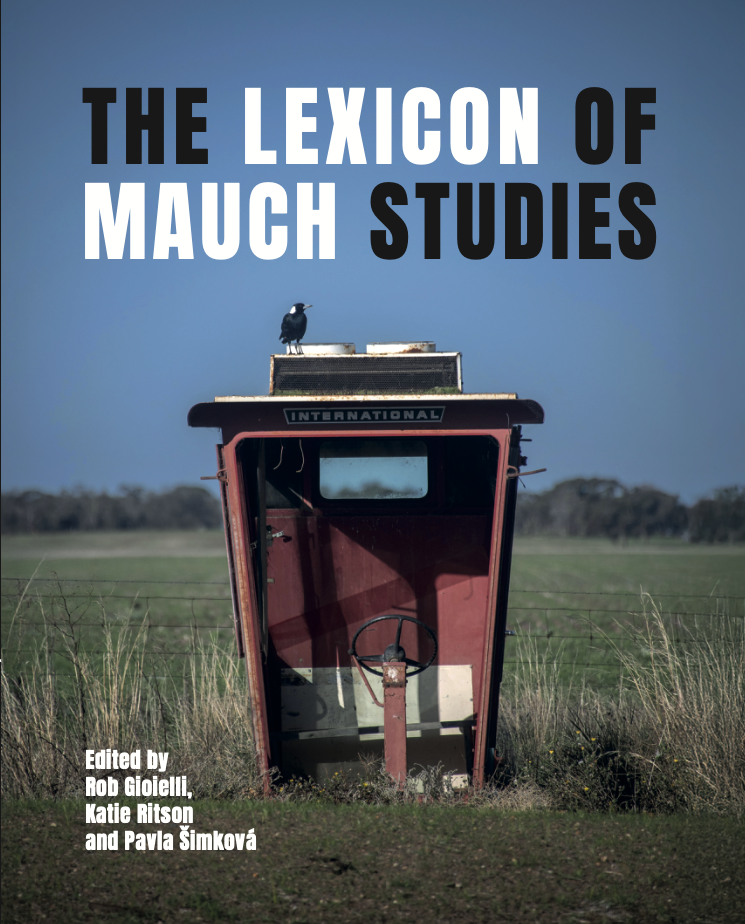
The Lexicon of Mauch Studies is a critical resource for both seasoned Mauchists and those yet to dip a toe into these temperate and inviting waters. Experts from across the Mauchian Humanities have come together to develop this definitive scholarly work, which explores the limitless definition and fantastical shapelessness of this exciting field. In proud Mauchian tradition, this Lexicon promises to beguile you. While you may intend to stop by for a single word, the editors are confident that you will then stay for twenty-five or more; because Mauch is always at least a sentence, and for many a life sentence.
The Editors
Rob Gioielli has been a card-carrying historian for almost twenty years, and a devotee of the Mauchian Method for almost as long. His apprenticeship began as a postdoctoral fellow at the RCC in 2010, where he was introduced to the art of the scholarly introduction, of which he was the befuddled subject in a workshop later that year. He returned to Munich in 2019 as a sabbatarian, during what one might call the high modernist period of Mauchianism, witnessing the method in its greatest form during the Tuesday discussions, which wove together scholarly digression, environmental practice and cake in equal measure. Since 2024 he has been the director of the KTH Environmental Humanities Laboratory in Stockholm, where he works to retheorise Mauchian studies in a Nordic context.
The current version of Katie Ritson is an assistant professor in Scandinavian literature and culture. In previous lives she was a translator, editor and occasional ghostwriter and her future iterations include crime-writer and academic gossip columnist. Well, you never know. Her affiliation with LMU Munich goes back to three years BCE (Before the Christof Era) and her exposure to the Mauchian oeuvre is thus almost unrivalled. When she cleared out her office after fifteen years at the RCC, she possessed a full set of accessories for the scholarly pursuit of Mauch studies: every issue of RCC Perspectives ever published, a pair of hiking boots, a song book and a bottle of whisky. These important relics have all been put into storage as a legacy donation to the future Museum of Mauch. Apart from the whisky.
Pavla Šimková likes to think of herself as a historian. Like many others, she washed up at the RCC sometime in the early 2010s as Amerika-Institut flotsam and hung on for much longer than anyone thought possible or advisable, as student assistant, doctoral student, postdoctoral fellow and Christmas Party gatecrasher. Eventually, she bobbed over to Collegium Carolinum on the other (some would say wrong) side of the Isar River. Despite her longue-durée exposure to the Mauchian Method, she remained her exact, and exacting, self. This, together with having been an unwitting and long-suffering witness to all the shameful RCC shenanigans, makes her an excellent choice as an editor of this volume.
CONTENTS
Introduction: The Mauchian Turn in the Twenty-First Century
Lexicon
List of contributors
Appendix: Mauchian Miscellanea
Publication date: 10 July 2026 ISBN 978-1-917813-06-8 (PB) £18
Philosophy has overwhelmingly considered our environmental responsibility as a moral issue. But it is something much deeper and more important than that.
The ethical template fails because obligations to the future or to nature which can only be arbitrated by present humans can only be pseudo-obligations. This accounts for much of the procrastination and bad faith that has dogged the sustainability agenda. But our real responsibility is to understand the natural world as reflecting humanity’s species life-form just as the lifeworlds of other creatures reflect theirs. This we can only do out of the creativity of life working through us. And that ‘deep naturalist’ understanding demands a revolution in how we think about the politics of climate and ecological crisis.
This is a book both for those new to environmental philosophy and for those dissatisfied with it. Parts I and II provide a concise critical introduction to the subject as hitherto practised, while Part III offers an original and far-reaching alternative, of which Part IV explores the political implications. The whole approach thus speaks to a wide range of interests in how philosophy bears on the crucial challenge of our time.
This book is Open Access through the support of Lancaster University and The Open Book Collective.
John Foster is a freelance philosophy teacher and an honorary Teaching Fellow in Philosophy at Lancaster University. He is the author of various books including, most recently, Realism and the Climate Crisis: Hope for Life (2022).
CONTENTS
Introduction: Why Environmental Philosophy?
Part I. Fundamentals Chapter 1. The Structure of Environmental Issues Chapter 2. Humans and Nature
Part II. Environmental Moralities Chapter 3. Protecting Future People? Chapter 4. Treating Future People Fairly? Chapter 5. Non-Anthropocentric Morality?
Part III. The Human Lifeworld Chapter 6. On Not Being a Bat Chapter 7. Deep Naturalism Chapter 8. Metaphysical Implications Chapter 9. Human Creativity Chapter 10. The Creativity of Life
Part IV. Lifeworld Politics Chapter 11. Environmental Epistocracy Chapter 12 • Therapeutic Politics and the Authority of Life
Publication date: 1 June 2026 ISBN 978-1-917813-04-4 (PB) £25 eISBN 978-1-917813-05-1 (Open Access PDF) eISBN 978-1-917813-10-5 (Open Access ePub)
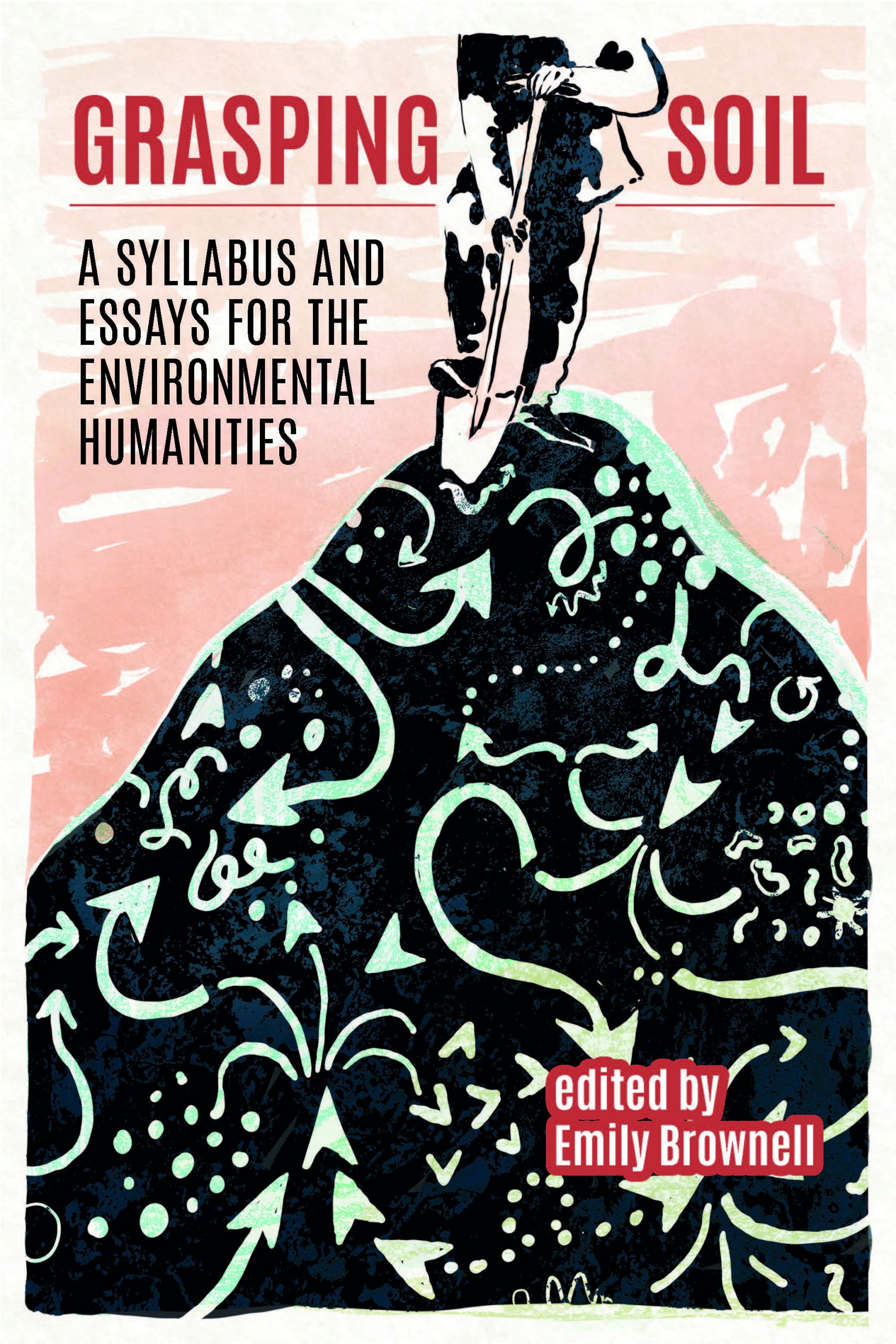
Soil is a nearly ubiquitous presence in our lives, regardless of whether we spend much time noticing it. Soil holds worlds within itself and also builds other worlds; it devours and remakes things; it sustains life and gives cover to the dead. Grasping Soil is a collectively-authored syllabus and series of essays, all examining, with different inflections, the fundamental question: what comes into view when we ‘grasp’ soil as a vessel of human history and point of view for inquiry?
Part I is an interdisciplinary syllabus that traces the contours of a growing body of work in the humanities that uses soil as a bridge between human and more-than-human histories. The syllabus offers a template of readings, discussion questions and assignments with an accompanying website for easy access to the supporting materials. The essays that follow in Part 2 explore particular moments and locations in which communities have modified, depleted or remade soil to suit a particular need. In examining these engagements with soil, each essay provides a particular view on the social, political or economic conditions that they reflect and create. The essays range from mountain top mining in Appalachia to the construction of a load-bearing monolith in Nazi-era Berlin, and the layered, residual histories of agricultural projects in Tanzania. As these essays make clear, soil is a lively presence not an inert recipient of human desires and actions. It is a living and not always governable community with ever-changing stories to tell.
This book is Open Access through the support of UKRI.
Editor:
Emily Brownell is a Senior Lecturer in Environmental History at the University of Edinburgh. Her current project, Stories from the Substrate, considers twentieth-century East African history through a variety of interventions with, and extractions from, the soil.
CONTENTS
Introduction
PART I: SYLLABUS
Soil as Substrate Cynthia Browne, Johannes Lehmann
Soil as Archive Amiel Bize, Seth Denizen, Jayson Maurice Porter
Soil as Health Emily Brownell, Tamar Novick, Lulu Tessua
Soil as Belonging Dotan Halevy, Basil Ibrahim, Paul Kurek, Steven Stoll
Syllabus bibliography
PART II: ESSAYS
Soil’s Metabolisms
Under the electron microscope, Lehmann Lab, Cornell University, New York: Behaviour instead of Identity: Functional Complexity of Organic Matter as an Organising Principle in Soil Ecosystems Johannes Lehmann
British Mandate Palestine: “The Fertility of the Soil is in Your Hand”: On Manure and the Colonial Roots and Branches of the Organic Movement Tamar Novick
Kwale District, Kenya: Building Roads, Counting Worms: Soil as a Medium for Parasitic Relations Emily Brownell
Residual Histories
The Ring of Fire, Americas: Arsenic Cycles through Racism and Empire Jayson Maurice Porter
Appalachia, USA: Mountains Become Wasteland Steven Stoll
Ndungu, Tanzania: Knowing Soil as a Living Thing, Treating it as a Non-Living Body: Contradictory forms of Care Lulu Tessua
Lusatia, Germany: Punkt Null (Point Zero): An Ecological Substrate Begins Anew Cynthia Browne
Substrates and Belonging
Berlin, the Cosmos: Blood over Soil? Albert Speer’s Heavy Load-Bearing Cylinder, Glacial Till, and Racial Terra Forming Paul Kurek
The Gaza Strip, Palestine: Cultivating an Ancient Soil: Sub-dune Histories and Ecologies Dotan Halevy
This book is a priceless treasure! It makes you see Afghans and Afghanistan in vivid colours with their humanity and generosity of spirit shining brightly, rather than the monochrome news coverage of their sad predicament today.
Mukulika Banerjee, Author of ‘The Pathan Unarmed’. Professor of Anthropology, London School of Economics
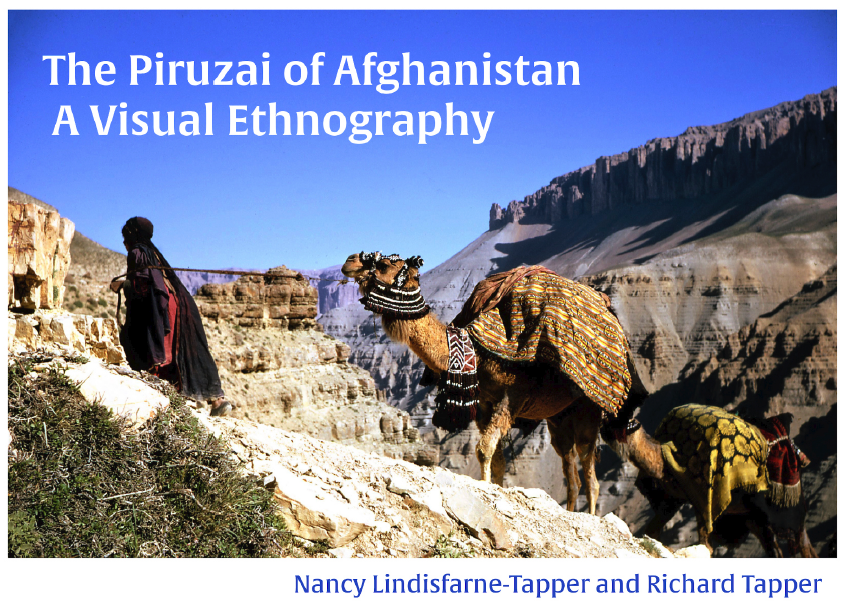
In the early 1970s Nancy Lindisfarne-Tapper and Richard Tapper spent a year living with the Piruzai, pastoralists and farmers in northern Afghanistan. They joined the Piruzai in the spring pastures, trekked with Piruzai families, their camels, horses, sheep, goats and dogs, to the high mountains of the Hazarajat in the summer and returned with them to their farmlands in the autumn. And they took hundreds of photographs.
This book reproduces 380 of those photos, most in colour. It is a visual ethnography of the beauty of the people they met and the landscape in which they lived and travelled. The pictures are an evocation of a time of peace before the country was engulfed in nearly fifty years of war, and an historical record of the lives of people who have since had to cope with great tragedy and whose relatives and descendants have been major actors in more recent events.
This book is also a work of art. The landscapes are simply spectacular. But equally striking are the pictures of family groups, of people working and the intimate portraits of women and men and children. All too often Afghans have been stereotyped for other people’s political purposes, but here you meet warm, clear-sighted individuals who can laugh at themselves and are kind, curious and wise about others.
This book is published by the authors in association with The White Horse Press.
With its personalised commentary and beautiful images of people and landscape, this precious book captures the essence of a remarkable pastoral nomadic culture now lost.
Veronica Doubleday, Writer and Musician. Author of ‘Three Women of Herat’
The authors are pillars in the ethnography of Afghanistan. In Afghan Village Voices, they gave us a chance to hear their interlocutors directly. In The Piruzai of Afghanistan, we can now see them. A striking visual journey into an ill-understood part of the world. A great homage to the Piruzai
Chihab El Khachab, Author of ‘Making Film in Egypt’. Visual Anthropologist, University of Oxford
This deeply moving book and its beautiful photographs will be widely read and result in much-needed reflection on the injustices inflicted on Afghanistan’s people and environments over the past half century and more.
Magnus Marsden, Author of ‘Beyond the Silk Roads’. Professor of Social Anthropology, University of Sussex
THE AUTHORS
Nancy Lindisfarne-Tapper (1944-2025) studied and taught anthropology at School of Oriental and African Studies in London. Her book Bartered Brides is a classic ethnography of the Piruzai. She retired early from teaching to retrain as an artist at Central St. Martins. She had solo exhibitions of her paintings, prints and photographs at Linacre and Wolfson Colleges in Oxford, the Central Library in Manchester and SOAS in London.
Richard Tapper is emeritus Professor of Anthropology at SOAS, and has done field research in Iran, Afghanistan and Turkey. He has published widely on tribal organization and history, pastoral nomadism, Iranian cinema and the anthropology of food. This book is a companion volume to Richard’s Afghan Village Voices, a remarkable compilation of stories, drawn from a hundred hours of tape recordings in which the Piruzai speak for themselves.
Obituary: Nancy Lindisfarne
Richard Tapper writes:
Tragically, after a short illness, Nancy Lindisfarne (also Lindisfarne-Tapper, and previously just Tapper) died on 15 November 2025.
Nancy and I were married from 1965 to 1991, but kept in regular contact thereafter, not least because of our extensive shared experiences such as the fieldwork on which The Piruzai of Afghanistan is based.
Nancy had a long and interesting life. Born and brought up in St Louis, Missouri, she majored in anthropology at Washington University St Louis, then completed an MPhil and PhD at SOAS University of London. In the mid 1960s she shared part of my fieldwork in Iran; we did joint research in northern Afghanistan between 1968 and 1972, and (together with our two small sons) in a town in western Turkey between 1979 and 1984. In the late 1980s, after joining SOAS as a lecturer, she did research alone in Syria.
Nancy published widely about her fieldwork, and was a popular teacher and a dedicated supervisor of students. After retiring, she travelled extensively, and also became increasingly active, alongside her partner Jonathan Neale, in relation to the climate crisis and related causes. Always an artist, after retirement she had several successful exhibitions of her work in different locations.
She will be much missed by a very large number of people.
15th August 2025 ISBN 978-1-917813-00-6 (HB) – £40 eISBN 978-1-917813-01-3 (eBook PDF) – £20
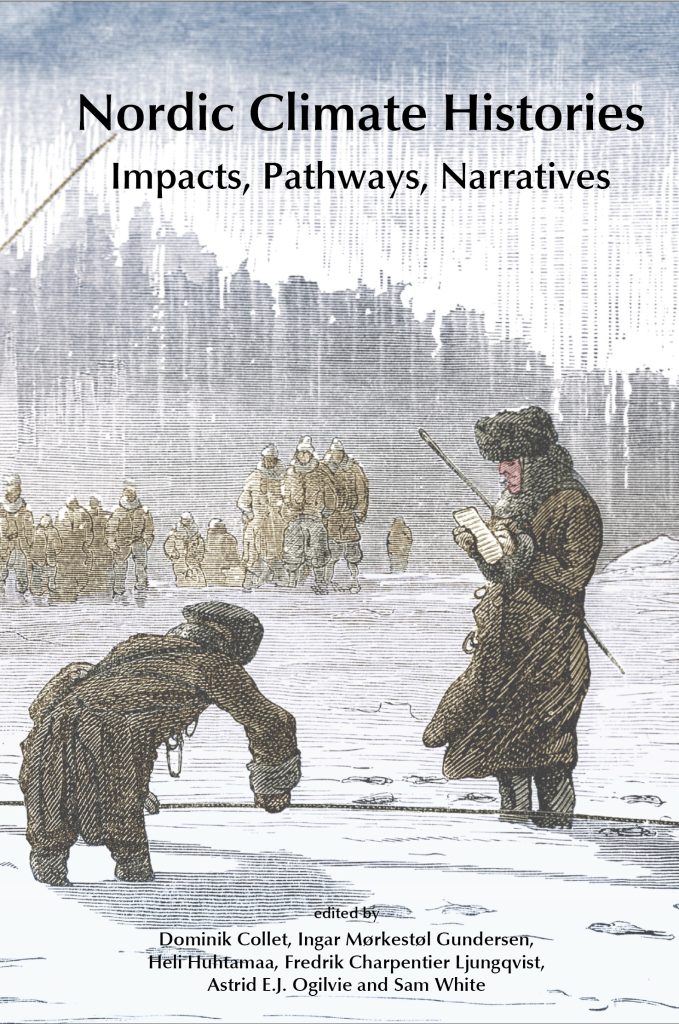
Down the centuries, the people of the Nordic countries have confronted challenges from climatic variability and change and sought ways to survive and adapt. In a time of accelerating global warming, these climate histories take on new contemporary significance. Drawing on tools from the natural and historical sciences, the innovative scholarship in this volume addresses questions such as: How did Nordic societies cope with past climatic hazards? What was the historical significance of the ‘Little Ice Age’ or the ‘Medieval Climate Anomaly’ for Nordic countries? And how do we study, narrate and learn from these past experiences?
This volume is the first to collect climate histories from across all the Nordic countries. It combines research from climatologists, historians, archaeologists and museologists to explore how climate and culture interacted in the past and what we might learn from these interactions today.
The chapters range from in-depth case studies to reflexive meta-histories; cover periods from the Bronze Age to the present; and draw on sources from tree rings to material culture to poetry. They also discuss how these histories can be communicated today, including how museums and literature can bring them into conversation with a current audience looking for lived experiences of climate adaptation.
The volume was conceived during an international conference at the University of Oslo in May 2024. This interdisciplinary forum connected leading scholars in the field with practitioners and stakeholders. The essays presented here engage a rapidly growing field of intense public and political concern in the Nordics and beyond.
The book speaks to various academic communities (climatology, history, literature) and stakeholders (museum practitioners, climate communicators and advocates). It includes the growing research and student community invested in this topic across several disciplines, practitioners and communicators in the field and the wider public interested in the vibrant debates about climate adaptation and experience.
Corrigendum: Chapter 4, ‘Volcanic Vulnerability in Medieval Iceland’, should bear the following funder credit: ‘This research is part of the project No. 2022/47/P/HS3/01044 co‑funded by the National Science Centre (Poland) and the European Union’s Horizon 2020 research and innovation programme under the Marie Skłodowska‑Curie grant agreement No. 945339. For the purpose of Open Access, the author has applied a CC‑BY public copyright licence to any Author Accepted Manuscript (AAM) version arising from this submission.’
THE EDITORS
The editors are all currently Fellows of the project The Nordic Little Ice Age(1300–1900) Lessons from Past Climate Change (NORLIA) at the Centre for Advanced Study at the Norwegian Academy of Science and Letters.
Dominik Collet is Professor of Climate and Environmental History at the University of Oslo, Norway. He is the PI of ClimateCultures – Socionatural entanglement in Little Ice Age Norway (1500–1800) as well as the thematic research group Nordic Climate History. He also leads the project The Nordic Little Ice Age(1300–1900) Lessons from Past Climate Change (NORLIA) at the Centre for Advanced Study at the Norwegian Academy of Science and Letters. His research focuses on the historical entanglements of climate and culture both in their material and mental configurations.
Ingar Mørkestøl Gundersen is a Postdoctoral Research Fellow in the Department of Archaeology, Conservation, and History at the University of Oslo. He has published on a range of topics on climate history and the Scandinavian Iron Age. Gundersen received his Ph.D. in 2022 with the thesis ‘Iron Age Vulnerability’, which investigated the archaeological evidence for a sixth-century climate crisis in eastern Norway. His doctoral research was part of the VIKINGS project (Volcanic Eruptions and their Impacts on Climate, Environment, and Viking Society in 500–1250 ce). Together with Dr Manon Bajard, he received the Inter Circle U. prize 2022 for outstanding examples of cross-disciplinary research. He is currently part of two research projects on the Nordic Little Ice Age (ClimateCultures, University of Oslo and The Nordic Little Ice Age(1300–1900) Lessons from Past Climate Change (NORLIA) at the Centre for Advanced Study at the Norwegian Academy of Science and Letters.
Heli Huhtamaa is a climate and environmental historian. Her research interests include human consequences of the Little Ice Age and pre-industrial Nordic history. She focuses on interdisciplinary approaches concerning both historical and climate sciences. She is an Assistant Professor at the University of Bern, Switzerland, where she leads a research project on volcanic impacts on climate, environment and society.
Fredrik Charpentier Ljungqvist is Professor of History, in particular Historical Geography, at Stockholm University, Sweden. He also holds the title of Associate Professor of Physical Geography at the same university. Ljungqvist was in 2022 by the Royal Swedish Academy of Letters, History and Antiquities awarded the Rettig Prize for “interdisciplinary works concerning climate and diseases in a long-term perspective”. He was a Pro Futura Scientia Fellow at the Swedish Collegium for Advanced Study from 2019 to 2024 and has been a visiting researcher at the University of Cambridge, Lanzhou University, University of Bern, and the Freiburg Institute for Advanced Studies (FRIAS).
Astrid Ogilvie is a Research Professor at the Institute of Arctic and Alpine Research at the University of Colorado and a Senior Associate Scientist at the Stefansson Arctic Institute in Akureyri, Iceland. Her research focuses on the broader issues of climatic change and contemporary Arctic issues, as well as the environmental humanities. Her interdisciplinary, international projects have included leadership of the NordForsk Nordic Centre of Excellence project: Arctic Climate Predictions: Pathways to Resilient, Sustainable Societies (ARCPATH); and The Natural World in Literary and Historical Sources from Iceland ca. AD 800 to 1800 (ICECHANGE). She is currently a Fellow of the project The Nordic Little Ice Age(1300–1900) Lessons from Past Climate Change (NORLIA) at the Centre for Advanced Study at the Norwegian Academy of Science and Letters. She is the author of some 100 scientific papers and has three edited books to her credit.
Sam White is Professor of Political History at the University of Helsinki, author of A Cold Welcome (Harvard University Press, 2017) and editor of the Palgrave Handbook of Climate History (Palgrave, 2018).
CONTENTS
Introduction: Integrating, Connecting and Narrating Nordic Climate Histories Dominik Collet, Ingar Mørkestøl Gundersen, Heli Huhtamaa, Fredrik Charpentier Ljungqvist, Astrid E.J. Ogilvie and Sam White
Chapter 1. The Development of Meteorological Institutions and Early Instrumental Climate Data in the Nordic Countries Elin Lundstad, Stefan Norrgård and A.E.J. Ogilvie
ANCIENT AND MEDIEVAL CLIMATE
Chapter 2. Cold or Culture? Effects of Mid-Holocene Temperatures on Forager and Early Farmer Demographics in Southern Norway Svein Vatsvåg Nielsen
Chapter 3. A Series of Unfortunate Events: Two Central Norwegian Settlements Facing the Climatic Downturn after ad536–540 Ingrid Ystgaard and Raymond Sauvage
Chapter 4. Volcanic Vulnerability in Medieval Iceland Carina Damm
Chapter 5. The Moving Manors and Adaptation in Sixteenth Century Denmark Sarah Kerr
Chapter 6. Architectural Climate Change Adaptions in Little Ice Age Norway c. 1300–1550 Kristian Reinfjord
LITTLE ICE AGE CLIMATE
Chapter 7. The Impact of Wildfire and Climate on the Resilience and Vulnerability of Peasant Communities in Seventeenth-Century Finland Jakob Starlander
Chapter 8. Northern Iceland Temperature Variations and Sea-Ice Incidence c. ad 1600–1850 A.E.J. Ogilvie and M.W. Miles
Chapter 9. Integrating Agricultural Vulnerability and Climate Extremes. Eighteenth-century Norway through the Works of Jacob Nicolaj Wilse (1735–1801) Ingar Mørkestøl Gundersen
Chapter 10. An Ice Breakup as in the Good Old Days’. Ice Jams in the Aura River, Turku, Southwest Finland, 1739–2024 Stefan Norrgård
NARRATING CLIMATE HISTORIES
Chapter 11. Climate Narratives in Norwegian Public Histories Eivind Heldaas Seland
Chapter 12. Glacier Poetry in Norwegian Literary Historiography Kristine Kleveland
Chapter 13. Through a Mirror, Darkly: Bringing Deep Environmental History into the Museum Felix Riede
Chapter 14. Back to the Future: Weaving Climate History into Nordic National Museum Narratives Natália Melo, Bergsveinn Þórsson, Felix Riede and Stefan Norrgård
1st August 2025 ISBN 978-1-912186-98-3 (PB) £30, 360pp eISBN 978-1-912186-99-0 (Open Access eBook)
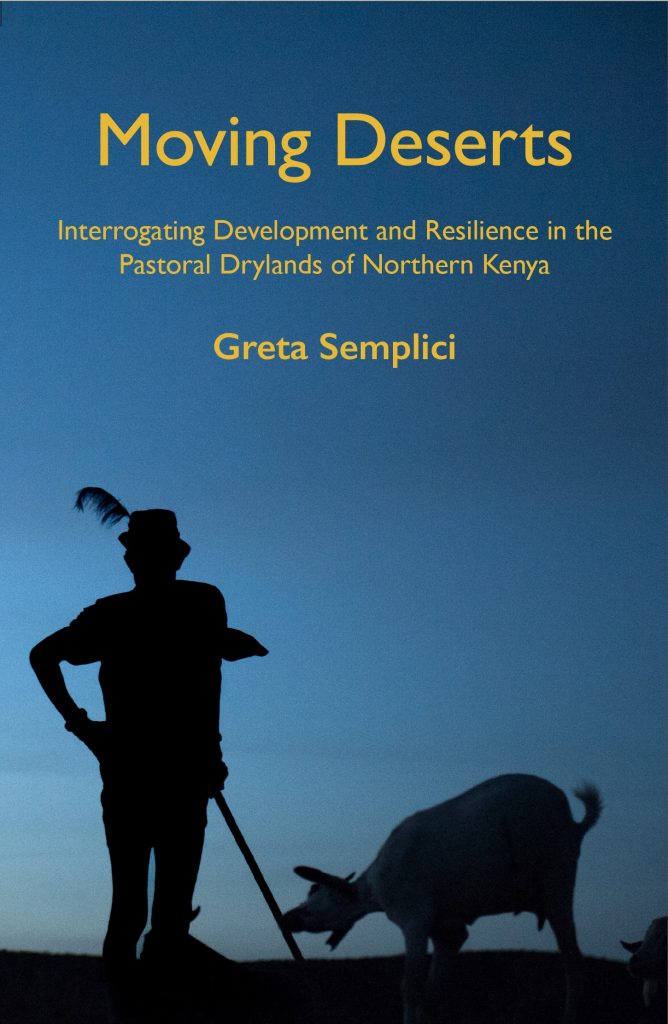
Interrogating Development and Resilience in the Pastoral Drylands of Northern Kenya
Greta Semplici
‘Enyes remembered playing with his friends, running and following shadows of clouds. Those who managed to stay protected from sun rays under the clouds’ shades the longest were the winners of the game … A game for kids played at times when trees did not have a crown … when there were no bird traps to set. When there was no water to waste … It must have been a time of drought … I understood that he was speaking of the form of resilience I was researching. It is a story of movement, running bodies and drifting clouds. It is a story of transformation of the harsh reality of a drought into a game … of attention to the environment and how it constantly changes, moulded by the relationship between humans, animals, rains, wind, river, grains of sand … a story of a group of friends supporting each other … a story of games and laughter. This is the everyday form of resilience I hope to portray in this book.’
Moving Deserts re-examines the concept of resilience, as applied in the development sector. It gives central stage to the voices, experiences, memories and everyday lives of the people whose resilience is the subject of much international attention and financial aid flows. Building a bridge between the perspectives of practitioners and local communities, Moving Deserts reveals a story about life, struggle and hope among Turkana herders, a story woven by following the movements and relations of the author’s hosts and interlocutors during fourteen months of ethnographic fieldwork. The volume argues that it is in their very mobility that the meaning of resilience resides: mobility as physical movements to reach ephemeral and unevenly spread resources; mobility as social connections to weave a social fabric that also works as safety net; mobility as fluid identities, never static but plastic, capable of taking on new shapes and adapting to changes. The drylands and their inhabitants, largely pastoral populations, are the spine of the book. Drylands often fall in the imaginary of the remote, the deserted, the unproductive, a powerful imaginary rooted in romantic narratives, as well as in political and economic interests. At a time of rising alarm about climate change, mass migrations and energy requirements, drylands are returning to the international stage with a focus on building resilience. This book asks what we can learn about ‘pastoral development’, currently discussed in the international development regime under the label of resilience, by switching perspective and following pastoralists’ lived experiences?
Greta Semplici is a postdoctoral fellow at the Social Science department at the University of Molise, Italy. Previously she held a postdoctoral fellowship at the department of Culture, Politics and Society at the University of Turin, and a Max Weber Fellowship at the European University Institute. Greta was affiliated to the Pastoralism Uncertainty and Resilience (PASTRES) programme as post-doctoral researcher. She earned a Ph.D. from the Oxford Department of International Development with a critical study of pastoralism and development in the arid lands of northern Kenya. In her research, with the support of visuals like photographs and creative writing, she aims to bring a people, a place and a culture to life in the eyes and hearts of those who have not been there.
CONTENTS
Introduction
Chapter 1 – The Resilience Agenda
Chapter 2 – The nomadism of space. An experiential journey through the variability of drylands
Chapter 3 – The nomadism of settlements: aid like rain
Chapter 4 – Practices of mobility
Chapter 5 – On food and no-food: the mobility of identities
Afterword – Mobility, Change, Resilience
1st October 2025 ISBN 978-1-912186-96-9 (PB) £30 eISBN 978-1-912186-97-6 (Open Access eBook)
This site uses cookies. For details see 'PRIVACY AND COOKIES' below. Dismiss