

WASTE ETHNOGRAPHIES COLLECTION
From Yak Dung to Plastics: Rethinking Zero Waste in a Tibetan Pastoral Community
This article examines how Zero Waste is interpreted and practised in Naksoknyi, a Tibetan pastoral community in Qinghai Province, China. Drawing on ethnographic fieldwork, interviews, focus groups and analysis of NGO publications, it shows that the initiative is not simply adopted as a global environmental model, but translated into local moral, ecological and material concerns. This article begins with the problem of waste as an unstable category: materials such as dried yak dung are used as fuel, signify wealth and are regarded as pure, while plastics emerge as harmful because they persist, threaten livestock and disrupt existing cycles of use, burning and decay. In Naksoknyi, households pursue waste reduction through refusal and replacement of and a distinctive approach to plastics that are neither reused nor discarded. These practices reveal both the possibilities and limits of Zero Waste in a pastoral context where plastic packaging, household containers and ritual materials remain difficult to avoid. By tracing how the concept is named, adapted and lived with, the article argues that theories of waste reduction must account not only for material diversion, but also for the cultural, infrastructural and ecological conditions through which materials come to count as waste.
Zero Waste, waste practices, plastic pollution, materiality, Tibetan pastoralism, environmental ethics
On my first evening in Naksoknyi, I joined my host family and members of several other Zero Waste households for dinner. As the evening meal was being prepared, my hostess reached into a pile of dried yak dung and added several pieces to the stove with her bare hands – the stove stood near the entrance of the main room, where cooking, dining and conversation all took place. Spatula still in hand, she continued stirring the food and chatting with the guests gathered in the room. She did not pause to wash her hands, nor did the act, performed in full view of everyone present, attract any attention from other guests, except me. Dried dung was handled with the same practical familiarity as firewood in my own village, where forests provide an abundant source of fuel.
Although I had worked with nomads in the region and eaten food prepared by pastoral families many times, I still felt a slight sense of unease. Yet, for my hosts, yak dung was not regarded as waste at all. Large piles of dried dung traditionally signalled wealth, reflecting the size of a household’s herd. Dung is also an important element in wedding decorations, where it symbolises prosperity and good fortune. In everyday life, it remains an essential fuel for cooking and heating in many pastoral communities across the Tibetan Plateau (Rhode et al. 2007). When pressed on the issue of cleanliness, some people responded by placing small fragments of dried dung in their mouths to demonstrate that they genuinely regarded it as pure. As one person explained, ‘Yaks eat grass. Grass is clean. Therefore, the dung is clean.’
The scene unsettled assumptions about contamination and waste that I had largely taken for granted. If animal excrement could be understood as fuel, wealth and even purity, what, then, made a material into waste? How would a global environmental initiative such as Zero Waste be understood and practised in a community like Naksoknyi? These questions became increasingly important with the arrival of plastics. Brox (2022: 95) defines plastics as ‘a broad category of synthetically and semi-synthetically produced polymers’ and notes that, although ‘commonly referred to in the singular, “plastics” is the generic name for a wide-ranging group of flexible materials that include acrylic, polyethylene and silicone’. Yet, across their differences, plastics share forms of persistence, toxicity and mobility that make plastic pollution a distinctive problem of environmental harm and unequal exposure (Liboiron 2016, Davis 2022).
Globally, growing concern over the environmental consequences of waste has generated a range of responses, including circular economy initiatives, degrowth, minimalism and the Zero Waste movement (Baudrillard 1998, Cooper 2005, Kallis et al. 2012, Steffen et al. 2015, Khattab and Haggar 2016, Meissner 2019, Ayçin et al. 2021). Among these movements, Zero Waste seeks to minimise waste through changes in production, consumption, reuse and material recovery, while reducing environmental and health impacts (ZWIA 2023). Yet what constitutes waste is not always self-evident. Materials classified as waste in one context may remain useful, valuable or meaningful in another (Allison 2019). Understanding how Zero Waste is interpreted and practised therefore requires attention not only to waste reduction, but also to the social and cultural processes through which materials come to be recognised as waste in the first place.
On the Tibetan Plateau, non-biodegradable waste remained relatively invisible as a problem until the early twenty-first century due to geographic remoteness, low levels of industrialisation and limited infrastructure (Jiang et al. 2009). Over the past two decades, expanding transport networks have dramatically increased the influx of packaged goods, introducing new waste challenges even in remote nomadic areas (Gao et al. 2019), a transformation also observed elsewhere in the Himalayas (Diemberger and Skrivere 2021). As Liboiron (2021) argues, these developments highlight that waste is not merely a technical problem of disposal but also a question of who bears its consequences. Open dumping and burning are now common, as many rural regions below the county level still lack formal waste management systems (Han et al. 2015). These changes pose risks to livestock, attract wildlife such as bears and threaten the lives and livelihoods of pastoral communities (Dai et al. 2021).
To address these growing concerns, the Great Rivers Alliance (GRA),1 a key environmental organisation in Qinghai Province, China, established 377 Zero Waste households between 2017 and 2024 across seven Tibetan communities in Nangchen, Yülshül and Dritö Counties of Yülshül Prefecture. The prefecture forms a core part of the Sanjiangyuan Region, a modern Chinese conservation designation for the headwaters of the Yangtze, Yellow and Mekong rivers. The Zero Waste communities include both state-led sedentarisation settlements and communities that continue to practice pastoralism. The focus of this article, Naksoknyi, is a pastoral community in Kyodrak Township of Nangchen County, along the Dzachu River, internationally known as the Mekong (Wodzer 2024). Naksoknyi alone accounts for 190 Zero Waste households, representing 51 per cent of the overall programme total and 39 per cent of the village’s 493 households. The community consists of six villages scattered across the valley, including Wanak Valley, where my host family lived. Households move seasonally between winter and summer pastures, combining livestock herding with small-scale cultivation of turnips and hay around their winter settlements. Pastoralism remains central, but most families also own motorbikes for herding and one or two vehicles for travel between settlements, markets and county towns.
Naksoknyi began its environmental efforts in 2015 when two young men organised a clean-up of a sacred mountain littered with prayer flags and plastic waste. In 2016, they founded the Genang Environmental Association (GEA) and built a community centre. At its opening, representatives from 139 households – all of whom actively participated in the earlier clean-up efforts – pressed red handprints onto a large banner inscribed with a collective environmental oath. Displayed prominently on the central wall, the banner portrayed a visible, enduring form to their vow. The act of swearing together, marked in blood-red handprints, transformed environmental protection from a general ethical aspiration into a binding public commitment. As Ramble (2019) suggests, oaths in Tibetan societies do not merely express belief but sacralise an affirmation and bind words to future conduct. In Naksoknyi, the oath was therefore more than a promise of good conduct; it was a moral declaration made before monks, leaders, neighbours and fellow households’ members. In retrospect, this oath foreshadowed the Zero Waste practices that would later take root.
In 2017, GEA partnered with GRA and the Blue Sheep Foundation to phase out plastic household items, such as cups, bags, bottles and buckets, and replacing them with cloth, ceramic and stainless-steel alternatives in Zero Waste homes. Blue Sheep also donated juice makers to reduce reliance on bottled beverages. The initiative started with twenty households from the original oath-taking group as the first batch of Zero Waste adopters. Over time, the project expanded beyond waste reduction. By 2024, GRA reported that each Zero Waste household saves up to CN¥6,000 (about US$843) annually by avoiding packaged foods and drinks during major festivals like Losar (New Year), Yartsagünbu (caterpillar fungus) harvesting and the summer festival. Naksoknyi also began developing a Zero Waste reception centre and hospitality training programmes to promote eco-tourism. During my fieldwork, the reception centre was being renovated and was not yet fully operational. In GRA’s representations, Zero Waste appeared to offer an uncompromised ‘win-win’ solution, linking environmental protection, household savings, healthy lifestyle and economic development, even as some of these aspirations remained works in progress.
Nonetheless, the ‘Zero’ in Zero Waste implies a quantifiable, seemingly rigid goal of total waste elimination, an especially powerful aspiration in Naksoknyi where participation was linked to a collective environmental oath publicly displayed in the community centre. Yet the practices that emerged were shaped by pastoral livelihoods, social obligations, environmental concerns and limited infrastructures. This article examines how a global environmental initiative, often associated with affluent industrial societies, was interpreted and enacted within a Tibetan pastoral community. It first explores how Zero Waste was conceptualised in Naksoknyi, then examine how households practised the initiative in everyday life, showing how materials come to be understood as waste and how the meaning of Zero Waste itself is reshaped through practice.
My interest in Naksoknyi began when I encountered a social media article showing the environmental oath and the handprints of participating households. Familiar with the social significance of oaths in Tibetan communities, I was struck by the contrast between the solemnity of the commitment and the practical difficulties of avoiding plastics in contemporary pastoral life. To explore this, the present article draws on ethnographic fieldwork conducted in two phases (February–March 2022 and July–September 2024), including twelve key informant interviews, five focus group discussions and analysis of 65 WeChat social media articles and reports from GRA, GEA and the Blue Sheep Foundation. Interviews and discussions were conducted in the Yülshül Tibetan dialect, while textual materials were reviewed in both Tibetan and Chinese.
My relationship with this region extends beyond the formal periods of fieldwork discussed in this article. I was introduced to the community through the NGO GRA, with whom I had collaborated on development and environmental projects in the region. Prior to this research, I spent several years teaching in the prefecture town. These experiences enabled me to develop long-term relationships across the region and become fluent in the local dialect. My family ties to the neighbouring county further strengthened my familiarity with local social and cultural life. These connections enabled me to conduct research without the assistance of interpreters and shaped both my access to the community and my understanding of local discussions concerning waste and Zero Waste practices.
Zero Waste has diverse origins, with some tracing it to Silicon Valley in the early 1970s (Palmer 2023), while others trace its roots to New Zealand (MacBride 2012: 132) or Australia (CAS 2009). Whatever its origins, the concept has gained global traction among municipalities, NGOs and individuals committed to waste reduction (MacBride 2012, Zaman 2015, Zero Waste Academy 2018, Zhan 2022b, Palmer 2023). In China, it became widely recognised through the ‘mason jar’ stories of Bea Johnson and Lauren Singer, whose minimalist waste practices circulated widely on social media and inspired urban Zero Waste lifestyles (China Development Brief 2019, Zhan 2022a). Yet Zero Waste has never had a single stable meaning. While some define it as a framework for eliminating waste instead of merely managing waste (Bagui and Arellano 2021), others treat it primarily as a lifestyle philosophy (Khattab and Haggar 2016). In practice, many programmes focus on recycling and diversion from landfills and incinerators (Zaman 2015). Liboiron and Lepawsky (2022) further challenge the notion of total waste elimination, arguing that waste is embedded in systems of power and disposal. The question, then, is not simply whether waste can be eliminated, but how discarding is organised, justified and lived in particular contexts.
On the Tibetan Plateau, Naksoknyi’s own clean-up efforts began as early as 2015, when local youth organised the removal of prayer flags and plastic waste from a sacred mountain. However, GRA identified Dügya Village in Nangchen County as the first community where the formal Zero Waste concept was introduced. GRA’s use of the term ‘Zero Waste’ has also shifted over time. In reviewing GRA’s Wechat archive, I found that earlier articles used Chinese terms such as ling laji2 (Zero Garbage/Trash) and ling suliao (Zero Plastics), with ling feiqi (Zero Waste) appearing for the first time in September 2017 (GRA 2017b, 2017a). The shift is significant. While laji commonly refers to garbage or trash, feiqi denotes a broader category of discarded materials. The move from ling laji to ling feiqi therefore reflects a subtle semantic shift from garbage and plastics towards a more encompassing language of waste.
These Chinese terms circulated alongside Tibetan vocabularies. The Tibetan translation adopted by facilitators was is genyik mepa (without waste), drawing on genyik (swept residue), a widely recognised Tibetan term for waste, especially in written and formal contexts. Local nomads, however, rarely used the term in everyday conversation. They more commonly used nyoblü (nyob lud ‘withered fertiliser’), a term that evokes biodegradable matter and resonates with Reno’s (2014) notion of scat: materials that remain embedded within regenerative cycles rather than becoming enduring pollutants. At the same time, the Chinese word laji was widely used in everyday speech and appeared in Tibetan transliteration on public signs warning against littering. This reflects a process similar to that described by Liebman (2019), who notes how laji became increasingly dominant in the mid to late twentieth century, displacing older local and colloquial Chinese vocabularies. In Naksoknyi, then, waste was not named through a single stable vocabulary, but through overlapping Chinese, Tibetan and locally used terms.
The word ‘zero’ posed a related problem of translation. It suggests an absolute and quantifiable standard, as in zero tolerance or zero Covid, but it was not translated literally into Tibetan in GRA materials or everyday organisational speech. A literal transliteration into terms such as tikle or lekor would lose much of the catchiness and rhetorical force carried by the English ‘zero’ and Chinese ling. In Tibetan, these terms are rarely used in everyday speech and lack the same association with measurable absence. Facilitators therefore adopted genyik mepa, ‘without waste’ or ‘no waste,’, a formulation that was more culturally adaptable and better suited to a context in which waste was understood relationally rather than as a fixed material category.
The early GRA definition of ling feiqi drew on the Chinese Academy of Sciences, defining Zero Waste as a system in which waste from production and everyday life could be reused as raw material for other industries (CAS 2009). This definition aligned GRA with an authoritative scientific vocabulary in Chinese, but it fit Naksoknyi only awkwardly. In a pastoral community centred on yak herding, ‘production waste’ was limited, and materials produced by livestock, such as dung, were already used as fuel or fertiliser. The main concern was not industrial reuse but everyday waste, especially plastics, for which there were few recycling outlets. Given the distance from processing facilities and the costs of transporting recyclable materials, a recycling-centred model was unrealistic (Lepawsky 2023).
The emergence of Zero Waste in Naksoknyi therefore cannot be understood through a simple and typical opposition between bottom-up and top-down NGO intervention. Before the formal introduction of the programme, youth leaders, local monks and environmental households had already organised clean-up campaigns and participated in environmental protection activities. The environmental oath further demonstrated a collective commitment to caring for local landscape. NGO staff identified Naksoknyi as a promising site for Zero Waste precisely because of these existing efforts. Rather than introducing environmental concerns where none existed, they brought a new conceptual framework, organisational resources and practical interventions to a community that had already demonstrated a willingness to engage with environmental stewardship.
The mismatch between global definitions and local practice was also visible in how households understood particular materials. In contrast to CAS’s definition, which centres on waste as a material resource to be reused, the Zero Waste International Alliance offers a broader and more systemic perspective that defines Zero Waste as the conservation of resources through responsible production, consumption, reuse and recovery, without burning or discharges that threaten environmental or human health (ZWIA 2023). Yet in Naksoknyi, burning could not be treated simply as a violation of Zero Waste principles. Dung remained as essential fuel for cooking and heating, while other forms of burning and disposal were shaped by local moral and ritual concerns. Materials with strong or unpleasant smells, such as hair or milk, were traditionally avoided because they were believed to irritate deities; there were also specific codes against polluting water sources. Burning plastic, with its strong smell and toxic smoke, therefore entered an existing moral field in which not all materials could be disposed of in the same way. By contrast, Nyima, the head of the first Zero Waste household, explained that the tissue roll on the dining table is not considered waste, because it could be used to wipe his mouth and then burnt for cooking, leaving no trace, much like dung. Similarly, cardboard boxes, often used for packaging, are seen as functional and easy to dispose of through burning in the stove, which also generates heat. For many households, the initiative was therefore less about eliminating all waste than about limiting plastics that threaten livestock, encourage unhealthy packaged foods and resist existing cycles of use, burning and decay.
The principles of Zero Waste have been adapted to the unique cultural and ecological context of Naksoknyi, demonstrating a blend of traditional practices and contemporary environmental awareness. These adaptations are organised around several practical strategies: refusing plastic – avoiding packaged foods and drinks, repurposing old textiles, replacing plastic household items with metal, ceramic and cloth alternatives; organising community clean-ups; and developing a distinctive approach to materials that were neither reused nor dumped. Composting, a common element in many Zero Waste frameworks (Johnson 2013), was largely absent, since food scraps and leftovers were usually fed to mastiffs or young and weak yaks rather than treated as household waste.
These practices show how Zero Waste was reshaped through pastoral life. Old textiles and bedding, for example, were repurposed as blankets for yaks during harsh winters (Figure 1). Community clean-ups removed waste from sacred sites, roadside and riverine spaces. Replacement efforts, supported by Blue Sheep Foundation, introduced stainless steel alternatives to substitute plastic containers in Zero Waste households. Yet some materials, especially butter lamp oil buckets, did not fit easily into conventional principles of reuse, recycling or disposal. In the pages that follow, I focus on three of these strategies: refusing, replacing and the distinctive approach of neither reusing nor dumping. Together, they show how global ideals were reshaped into local negotiations of morality, culture and material necessity.
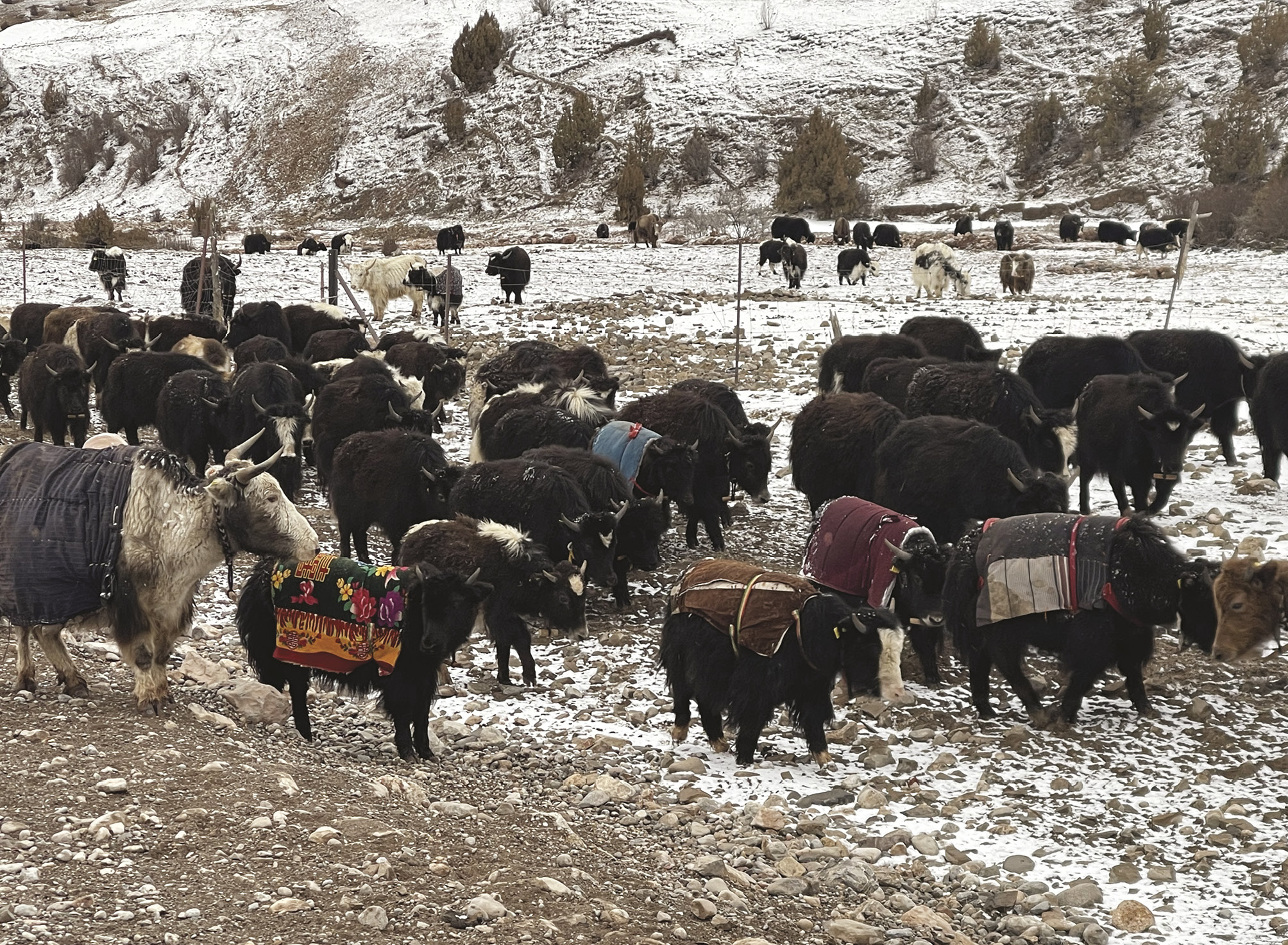
Figure 1. Repurposed old textiles as blankets for younger and older yaks. Photo taken by Author in Wanak Valley, Naksoknyi, March 2023.
In practice, refusing plastic has meant more than simply declining packaged snacks; it has become a site where knowledge, health and moral value intersect. Training run by GRA often emphasised that consuming packaged foods brought not only health risks but also plastic waste into the community. A nomad expressed confusion, asking why these items were allowed if they were not made from the fruits depicted on their packaging. Such confusion stems from the fact that many nomads cannot read Chinese and rely on product images for purchasing decisions. Lhamo, the daughter of the first Zero Waste household, remarked that she would have no food options if fast noodles, latiao (Chinese spicy gluten snack) and soft drinks were unavailable. Packaged food came to be associated with unhealthy eating not because residents assumed that all packaged food was inherently harmful, but because the products most accessible in local shops were often cheap snacks, sugary drinks and highly processed foods, especially those consumed by children. This everyday experience shaped the impression that packaged foods were unhealthy and made their rejection part of both waste reduction and household health practice. Nyima, Lhamo’s father, drew a parallel between the effects of plastic on yaks and unhealthy foods on humans: ‘Yaks that consume plastics get their stomachs bloated, just like people who have big bellies from eating unhealthy foods. They struggle to walk uphill and cannot keep up with others. It’s all the same thing.’
Refusal of plastics emerged not only from concerns about human health, but also about the effects of plastic waste on pastoral livelihoods. According to Nyima, households could lose three to five yaks annually to plastic ingestion before the introduction of Zero Waste. With a healthy yak worth around 10,000RMB (US$1,500), such deaths can amount to tens of thousands of RMB in losses for a single household. Yet residents rarely framed the issue solely in economic terms. Yaks occupy a central place in pastoral life, providing milk, fuel, wool, transport and livelihood, and most households slaughter only a limited number of animals for their own consumption, making the deaths of otherwise healthy yaks particularly painful. Residents described how plastic entered animal bodies in different ways: in some cases, plastic bags or wrappers became lodged in the throat, causing animals to choke; more commonly, however, plastic accumulated in the stomachs of yaks. As ruminants, yaks were unable to digest these materials, which gradually formed hard masses that residents described as becoming ‘like stones’. Some nomads even performed operations to remove the plastic from living animals in an effort to save them. Deaths frequently occurred in spring, when food was scarce and animals were already weakened. Whether caused by choking or by plastic accumulation in the stomach, animals that died during this period were generally not considered suitable for consumption, magnifying the financial loss. Unlike animals intentionally slaughtered for food or those killed by wolves, these deaths were widely understood as preventable, resulting not from natural causes but from plastic waste left on the grassland. Plastic therefore appeared not merely as litter on the landscape but as objects capable of entering animals’ bodies, disrupting pastoral livelihoods and causing the loss of valued animals. According to members of the Zero Waste households, livestock deaths from plastic ingestion declined by at least ninety per cent following the introduction of Zero Waste and associated community clean-up efforts. During my fieldwork, I still occasionally observed a few beer cans and plastic bottles discarded from passing vehicles along the main road. Beyond these isolated instances, however, litter was remarkably scarce throughout the valley. For many nomads, the reduction of plastic was therefore not simply an environmental goal but a practical effort to protect livestock, livelihoods and the grasslands on which both depended.
The deaths of yaks were frequently cited as a reminder of the consequences of plastic waste. At the same time, the commitment to avoiding plastic waste carried social consequences of its own. Many from Zero Waste households often refuse candies or snacks brought by friends and relatives due to their negative perception of packaged foods. They also decline invitations to join communal meals with non-Zero Waste families, as their elders avoid buying snacks or drinks to contribute, a choice sometimes seen by others as mere stinginess. While refusing junk food promotes health and reduces the environmental impact of plastic waste, it can also generate moments of social tension, limit children’s enjoyment of treats and complicate their interactions with the wider community. The tension was particularly evident during the yartsa genbu harvesting season, when communal meals were common. Most families contributed commercially packaged snacks and drinks, which were easy to transport and widely recognised as appropriate offerings for sharing. In contrast, Zero Waste families often brought tsampa (barley flour), bread, butter, dried yak meat, and other unpackaged foods. Their refusal to purchase packaged foods was sometimes interpreted by others, particularly younger people, as stinginess rather than environmental commitment. As a result, Zero Waste families frequently gathered separately. Over time, however, some non-Zero Waste families began joining these gatherings, remarking that the foods being shared were ‘real food’ in contrast to packaged snacks. In this way, debates over waste became entangled with competing understandings of generosity, hospitality and what constituted proper food.
The replacing approach, led by Blue Sheep, substituted plastic items with stainless steel or ceramic alternatives. This strategy moved from rejecting plastics outright to actively reshaping household practices through material substitution. In the first Zero Waste household, for instance, around seventy plastic items, such as cups and buckets, were replaced. With no environmentally-sound disposal options, the removed plastic items were sent to the county landfill. Replacement thus became a form of moral sorting, an effort to distance undesirable plastic objects from the more valued alternatives (Lugones 1994). Over time, this material substitution gained traction through the 2016 oath, which extended the practical logic of replacement into a binding moral commitment. Initially framed as a general pledge to environmentalism, the oath has been reinterpreted by many as a moral stance specifically against plastics. As Samdrup put it, ‘Except the items on the stove, almost everything else is plastic one way or the other.’ Yet even the apparent exceptions were not entirely free of plastic. Looking around the room, I noticed that even some of the metal kettles on the stove has plastic knobs and plastic -covered handles. Plastic persisted even in objects commonly regard as non-plastic, reflecting how deeply synthetic materials had become embedded in everyday life and how challenging it is to live up to the oath. Zero Waste households take pride in maintaining cleaner, tidier living spaces. During a visit to a non-Zero Waste household, the members of GEA pointed out the scattered, stained and cluttered items that sharply contrasted with their own homes. Zero Waste households even developed an inspection routine: community inspectors would visit homes, check for the presence of plastic items, take photos and share them in social media groups as a form of public shaming.
This broad categorisation of plastic contrasts with much of the Zero Waste and plastic literature, which often distinguishes disposable, single-use plastics and plastic packaging from durable, reusable plastic goods (Pezzulo 2023, United Nations Environment Programme 2018). In Naksoknyi, however, such distinctions were not articulated in these terms. Plastic bottles, food packaging, plastic covers and plastic containers were increasingly grouped together as undesirable materials associated with pollution, livestock deaths, human health concerns and moral anxieties about waste. At the same time, Zero Waste households recognised that certain plastic products remained difficult to avoid or socially desirable. As one member of a Zero Waste household explained, once people began differentiating between types of plastic, they would always find reasons to justify keeping certain plastics in their lives.
Despite all their efforts, some villagers believed that if they could not go 100 per cent plastic-free, then taking the oath was a hollow commitment. Wodme, the only household in Wanak Valley not to join the movement in 2022, was particularly critical of the oath. He argued that it was hypocritical to pledge Zero Waste but still accumulate plastic waste, such as napkins or spice packages, in hidden corners. ‘They took an oath but hoarded some plastic waste in their corners’, he said. For Wodme, if you take an oath and receive donations, yet fail to live up to the promise by hiding waste, it becomes more sinful than wasting. In his view, not achieving 100 per cent Zero Waste rendered the oath itself a moral failure, a commitment that ultimately caused more harm than good.
However, replacement comes with hidden compromises. Despite the intention to eliminate plastic, many new items, such as the juicers introduced to reduce plastic bottle usage, are made with plastic components, including the pusher, the material pipe, the spiral shaft, the pulp outlet, the juice cup, the cleaning brush and the host (motor base). The host consists of several plastic parts: the motor gearbox, the customised cooling fan and the outer case. This particular juicer model (MK-sj0001) does not have a steel blade but an Ultem plastic spiral shaft designed to break, squeeze, grind and press the materials. Only certain parts of these juicers, such as the screws, outpost shaft and some parts of the motor are metal. Here I am not trying to criticise their effort to reduce the use of plastics as a straw man (Pezzullo 2023), but to highlight the importance of compromise in order to achieve a relative absence of waste. Pezzullo (2023: 118) underscores the importance of distinguishing between essential and non-essential plastics in everyday decision-making, a challenge that the nomads of Naksoknyi grapple with regularly. The juicer reduced dependence on disposable plastic bottles, yet it did so through a durable appliance composed largely by plastic. Replacement therefore did not eliminate plastic but shifted it from a disposable container to a long-lasting household object.
Members of Nyita’s family expressed mixed feelings about practising Zero Waste. Nyita, an active member of the GEA, proudly displayed the reusable bags he had crafted for carrying goods such as rice and flour from the county seat. However, when asked about the challenges of sustainable living, Drölma, his wife, voiced her frustration with replacing plastic containers. She explained that switching to steel containers for sending milk or yogurt required coordination. She now had to depend on relatives in town or nearby monasteries to return the containers, meaning she often had to wait before being able to send goods to others. Gifting plays a crucial role in maintaining family relationships and is deeply rooted in nomadic cultural norms (Zhan 2022b). Long before the introduction of plastic bottles, dairy products circulated through kinship networks in a variety of reusable containers. Yogurt was often sent in cooking pots or wooden buckets, milk in tea kettles or glass bottles sealed with turnip or butter and tsampa (roasted barley flour), and butter in cleaned yak stomachs whose openings were sewn shut. While this enabled exchange, they required greater care and could be prone to leakage. Unlike steel buckets or thermoses, plastic bottles are abundant, lightweight and disposable, enabling people to give without expecting the containers to be returned. This disposability turned plastic into a vehicle for building relational capital. For nomads living far from political and economic centres, sustaining relationships outside the community is vital, as such networks often provide access to monastic advice, medical care and government services in towns. These dynamics make plastic bottles particularly well-suited for gifting. As many scholars have shown (Hawkins 2009, Brox 2022, Abrahms-Kavunenko 2023), plastics are not merely polluting but also practical: they enable certain social practices and offer a kind of convenience that other materials may not.
Additionally, women’s responsibilities in and around the house have increased their reliance on plastic materials. Drölma noted that the plastic covers previously used to protect dried yak dung from rain and snow are no longer available, forcing her to move the dung in and out daily, which is very time-consuming. Traditionally, nomads used woven coverings and heavy canvas cloth to shield fuel and household goods from rain and snow. However, these materials absorb moisture and become heavy when wet. Plastic sheets, by contrast, are lightweight, waterproof, and easy to deploy and remove. A simple plastic cover could save considerable time and effort, allowing them to manage multiple tasks more efficiently. Without it, women like Drölma must remain constantly vigilant against sudden weather changes, adding mental strain and frustration to their already demanding daily routines. According to Ding et al. (2019), nomadic women typically perform over twelve different types of work for more than fifteen hours a day. The unpredictable weather often complicates their ability to complete these duties effectively.
Overall, the nomads’ strategies reveal a constant negotiation between refusal and replacement. Households work to refuse plastics, especially conspicuous items such as plastic covers and containers, yet these objects often carry practical and social value that makes them difficult to forgo. For families bound by the oath, the stakes are even higher. In traditional societies, an oath carries deep moral weight and once taken, particularly when tied to donations, it becomes integral to one’s standing within the community. Like other ritualised forms of waste handling (Borup 2026), the oath transforms the management of plastics into a moral act, reinforcing collective ideals while constraining individual flexibility. It also functions as a narrative and moral anchor, a way of telling and retelling the community’s story about change and commitment in the face of modern waste (Chophel 2026). This moral commitment creates both pride and pressure, especially when highly visible plastics remain in circulation. Replacing them with stainless steel or ceramic alternatives can signal virtue, yet such substitutions sometimes introduce new compromises, as when juicers or other ‘plastic-reducing’ items still contain multiple plastic components. For some, like Drölma, giving up certain plastics has reduced convenience, strained relationships and increased daily labour. In this sense, compromise is not a failure of Zero Waste but an inevitable condition for reaching a workable, pragmatic state of genyik mepa, or ‘without waste’.
As Douglas (2002) reminds us, the notion of purity, such as ‘zero’, often stands in stark opposition to compromise. Many Zero Waste families construct for themselves an image of a ‘plastic-free home’ – a space where cleanliness, commitment and care converge. In this imagined landscape, plastics must be completely removed. Reusing plastic, even when practical, risks its continued presence and, with it, both symbolic and material contamination. This makes reuse difficult to reconcile with the oath: if plastics are still being used, they cannot be fully classified as waste; if they are not waste, they cannot be properly refused or replaced. In this logic, keeping or reusing plastic becomes a moral and practical dilemma.
Liboiron (2021: 134) wryly observes that ‘compromise is not about being caught with your pants down; it is not a mistake or a failure, it is the condition for activism in a messed-up field’. In this spirit, while avoiding junk food and bottled drinks helps to reduce pollution and protect both human health and livestock, it also limits convenient gifting and attracts wildlife to leftover waste, increasing the risk of human-animal conflict. Refusing and replacing plastics has had tangible benefits. Yet abstaining from packaged snacks is not simply a lifestyle choice, it demands a careful reworking of social and ecological relations. These efforts come with real sacrifices, especially for children and women who often bear the burden of maintaining these ideals in everyday life.
The tension between cultural significance and material adversity is vividly illustrated by Samdrup’s conundrum with the accumulation of plastic buckets. Following a family funeral, Samdrup’s yard held sixty empty plastic buckets, originally used to store ‘vegetable ghee’ – mainly palm oil – for marme (butter lamps). Butter lamps play an important role in Tibetan Buddhist practice. As offerings associated with wisdom and the dispelling of ignorance, they are frequently lit for deceased relatives as part of broader ritual practices intended to generate merit and support a favourable rebirth (Gouin 2010). During funerals, burning large quantities of butter lamps is seen as a deeply meaningful act, providing solace to grieving families by honouring the departed and fulfilling ritualistic obligations. However, this culturally significant practice generates considerable material waste, posing a dilemma where sacred traditions inadvertently contribute to environmental challenges.
Samdrup, an active member of the local Zero Waste association and a vocal advocate for sustainable practices, had neatly stacked a pile of empty buckets against the wall of his yard. He explained that Zero Waste families are discouraged from reusing these buckets. As part of the replacement process, families discarded all plastic items, including plastic buckets, in an effort to create a ‘plastic-free’ living environment. Ironically, families not participating in the Zero Waste initiative often repurpose the buckets for collecting water, storing milk or carrying dried yak dung. This creates a paradox: if reused, these plastic containers would never truly disappear from daily life. On the other hand, many believed that one cannot be considered even relatively ‘without waste’ while relying on such prominent plastic items. In this context, household tidiness became a visible maker of commitment: Zero Waste families took pride in homes where colourful plastic containers were conspicuously absent.
Adding to the complexity, oily buckets left outside can attract bears, providing yet another reason for their removal. By May 2024, the head of the local association noted that the buckets in Samdrup’s yard remained untouched. ‘Other Zero Waste families have brought their buckets to the association’s greenhouses to comply with the rule against reusing them’, he said. ‘Now the greenhouses are filled with even more buckets, just sitting there, waiting to be dealt with.’ The buckets had not always remained idle. In earlier years, Zero Waste members incorporated many of them into the walls of greenhouse structures, extending their usefulness beyond their original purpose. Yet this solution could only absorb a limited number of buckets. As funerals, religious observances and everyday butter-lamp offerings continued, new buckets accumulated faster than they could be repurposed. The greenhouses themselves eventually became storage spaces for surplus buckets, revealing the limits of reuse as a long-term solution. Although Blue Sheep donated stainless steel containers to replace many everyday uses of plastic buckets, these interventions addressed only the buckets’ secondary functions. They did not replace the buckets’ primary role as the container through which butter lamp oil entered the community. As a result, new buckets continued to accumulate even as households sought to remove plastic from daily life.
This persistence reveals a deeper dilemma. While plastic buckets were increasingly treated as undesirable objects, the oil they contained remained difficult to replace. Palm oil is far cheaper and more accessible than yak butter, especially when large quantities are needed. Once emptied, these sturdy plastic containers lose their immediate utility but cannot be reused under Zero Waste commitments. In this shift, the bucket becomes what Kennedy (2004: 7) calls ‘matter without place’: objects that are no longer part of an ‘ordered set of relations’. Choosing neither to discard nor reuse leaves these objects in limbo, intensifying their ambiguous status. However, as many would note, the moment they decided not to reuse the buckets, the Zero Waste households effectively transformed potentially useful objects into waste. In this sense, Zero Waste does not eliminate waste but paradoxically creates it, exposing the tension between material utility and aspirations for a plastic-free environment.
Yet not all buckets remain in this liminal state. Others continue to circulate through everyday life or enter the wider environment, where they create unintended hazards for wildlife. The environmental consequences of these dilemmas are starkly illustrated by a video shared by Internet Trust Tibet (2024), which captures Tibetan nomads and wildlife patrollers rescuing a bear with its head trapped in a butter lamp oil bucket (Figure 2). This distressing scene, evocative of the infamous image of a sea turtle with a straw lodged in its nose, highlights the unintended harm caused by discarded plastics. While the video celebrates the bravery and compassion of the rescuers, it also raises critical questions about the origins of such waste. Once crafted from locally sourced yak butter, butter lamps now often rely on the industrially produced and internationally imported palm oil, a shift that obscures the environmental footprint of these offerings. It represents a shift from a pre-industrial era, characterised by sustainable practices and minimal waste to one shaped by industrial influences.
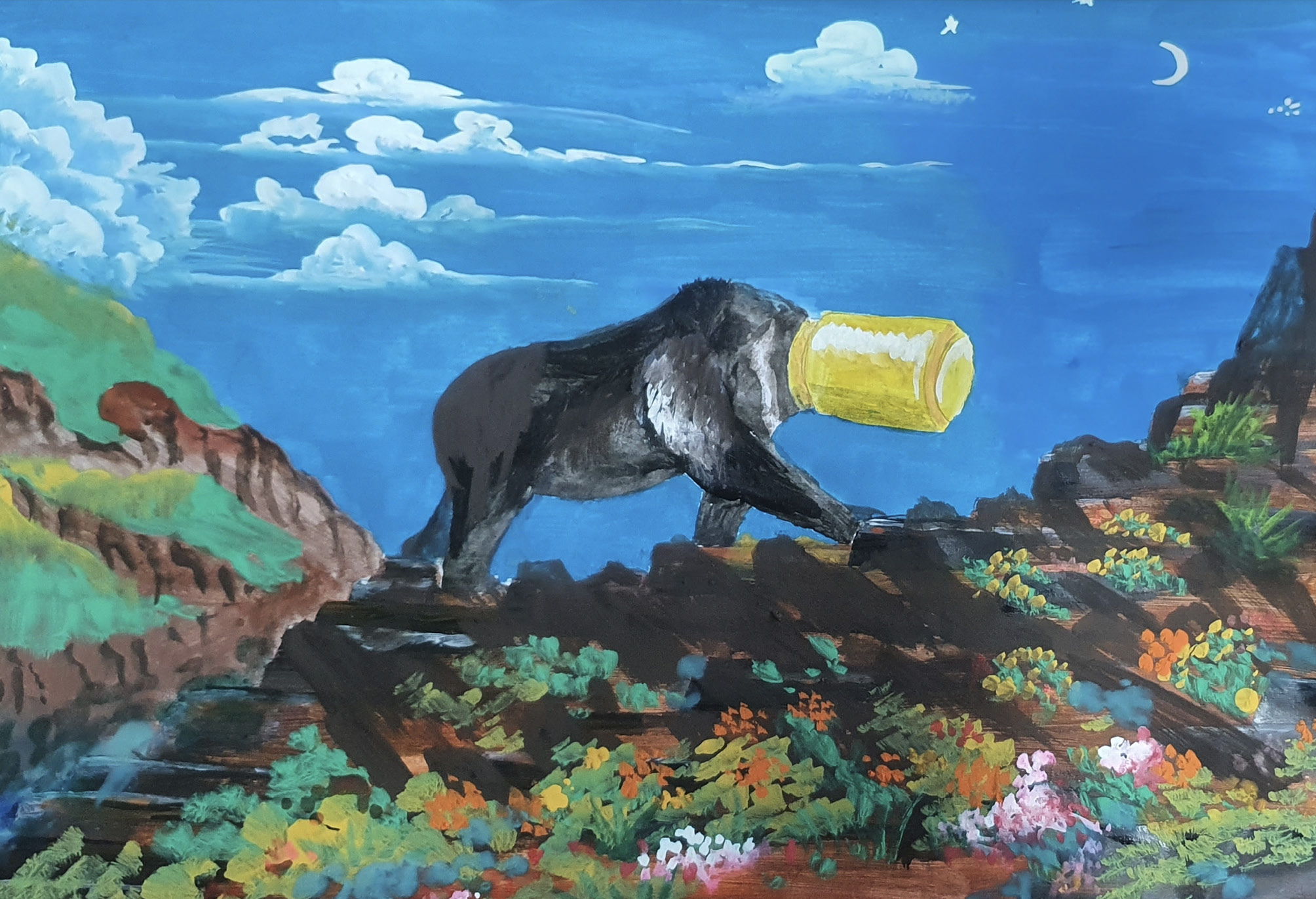
Figure 2. Painting by Lobchu, a nomad artist, of a bear with its head trapped in butter lamp oil bucket, based on a screenshot from a video posted by Internet Trust Tibet and used here with his permission for publication.
Douglas (2002) suggests that any attempt to reform waste practices in a deeply traditional and ritualistic setting must engage with the social and cultural systems that define what is considered ‘clean’ and ‘acceptable’. If the concept of dirt is rooted in the rituals and symbolic significance of specific objects or actions, then merely introducing technological or material solutions, such as donating stainless steel replacements, is unlikely to suffice. The real challenge lies in understanding and negotiating the cultural meanings of waste, dirt and purity in order to enact meaningful change. The current strategy, neither to reuse nor to discard, when applied to ritualistic externalities like butter lamp oil buckets, places them in a liminal state. Functionally, a plastic bucket is clearly reusable. And reusing the function of a potential waste item is arguably at the core of Zero Waste principles. Yet, in this context, reusability is redefined and denied. This adaptation reflects a culturally-specific response to potential disorder, what Douglas might call ‘matter out of place’, by redefining waste in ways that are meaningful (or meaningless) within the community’s ecological and symbolic frameworks (Douglas 2002).
Plastic packaging and plastic vessels for culturally significant items are among the most difficult to reject, and any reform effort must grapple with the challenge of altering the foundational elements of a culture. In Naksoknyi, Zero Waste practices often leave these deeper structures untouched – particularly in relation to butter lamp oil buckets. While Zero Waste families focus on replacement over reuse, neither nomads nor facilitators critically engage with more fundamental questions: Why must so many butter lamps be burned? Could locally-sourced yak butter be used instead? Who ultimately benefits from these rituals? What is the source and composition of the oil?
In the framework of plastics theory, these questions are central because the buckets behave like other persistent synthetic wastes: culturally integrated, indispensable within their ritual context, yet ecologically persistent. Addressing them cannot rely solely on technical fixes or material substitution; it requires interrogating the cultural and symbolic systems that produce them. This dilemma is not unique to Naksoknyi but reflects broader patterns in which entrenched systems of packaging and consumption render plastics indispensable. Whether in the form of single-use bottles carried into remote highlands, the shrink-wrap around imported goods or the foam boxes in urban markets, these objects persist because they are woven into the fabric of global consumer culture, just as butter lamp oil buckets are woven into the fabric of ritual practice. In both contexts, the waste is not merely a technical problem but the product of symbolic, economic and infrastructural systems designed to resist change. As funerals, memorial rituals and everyday consumption continue, the accumulation of such plastic waste will only grow. Asking these questions may be the first step towards what Liboiron and Lepawsky (2022) call ‘wasting well’ – rethinking not only the material flows, but also the cultural and political systems that generate persistent waste.
The Zero Waste practices in Naksoknyi represent a locally adapted response to these disruptions brought about by the growing presence of plastics in pastoral life. Rather than adopting a global ideal wholesale, nomads reinterpret Zero Waste through lived realities, rejecting packaged foods, repurposing textiles and attempting to minimise their reliance on plastics. Yet the idea of a ‘zero’ waste lifestyle proves far more complex than the term suggests. Household strategies are shaped not only by ecological considerations but also by socio-cultural norms, religious obligations and practical needs, such as gifting yogurt, burning butter lamps and transporting milk. Their efforts can be read as a rejection of plastics and the disruptions they brought to pastoral life. Yet the persistence of plastics in household appliances, toys, sanitary products and butter lamp oil containers reveals the limits of this aspiration.
The Naksoknyi case also suggests that concepts of Zero Waste developed in affluent industrial contexts cannot be uncritically generalised across diverse social and ecological settings. The contrast with Kamikatsu, a Japanese town widely recognised as a global model of Zero Waste, is instructive. As Bichler’s (2024) research shows, locally produced goods in Kamikatsu are often packaged in plastic despite the community’s commitment to Zero Waste. Rather than seeking to eliminate plastics altogether, Kamikastu’s model focuses on sorting, recycling and diverting waste from landfills and incineration. Naksoknyi households, by contrast, often sought to reduce plastics before they entered everyday life. Yet neither approach resulted in the complete elimination of plastics. Their difference is therefore less in the presence or absence of plastic than in how communities negotiate its inevitability.
At the same time, Naksoknyi challenges assumptions that Zero Waste practices are only feasible for affluent and privileged communities (Müller and Schonbaüer 2020). While their critique is directed at forms of Zero Waste activism centred on individual consumer choices and affluent lifestyle, Naksoknyi demonstrates a different configuration. Despite limited economic resources, minimal recycling infrastructure and the practical demands of pastoral life, residents actively transformed everyday practices in an effort to reduce waste and plastic consumption. These efforts also produced benefits beyond participating households, as community clean-ups reduced plastic on the grasslands and contributed to fewer livestock deaths. In this sense, Zero Waste is best understood not as an achievable endpoint but as an aspirational direction. As Song (2016) argues, complete waste elimination may be impossible in practice, yet striving towards it can offer a meaningful orienteation for rethinking relationships with consumption, materials and the environment.
Ultimately, while plastics represent a global environmental challenge, how they are understood, managed and lived with is deeply shaped by local contexts, economic infrastructures, material conditions and cultural traditions. The handling of dried yak dung in the opening scene of this essay reminds us that what counts as waste cannot be taken for granted. What appeared to me as a dirty and discarded substance was understood by many nomads as fuel, wealth and even purity. In Naksoknyi, the pursuit of Zero Waste is not simply an externally imposed environmental model, but a situated negotiation, between ecological values, cultural continuity and the realities of modern waste. The experiences of Tibetan nomads suggest that theories of Zero Waste must account not only for waste reduction and material diversion, but also for the social, ecological, economic and cultural conditions that shape what counts as waste.
Abrahms-Kavunenko, S. 2023. ‘Toward an anthropology of plastics’. Journal of Material Culture 28 (1): 3–23. Crossref
Allison, E. 2019. ‘The reincarnation of waste: A case study of spiritual ecology activism for Household Solid Waste Management: The Samdrup Jongkar Initiative of Rural Bhutan.’ Religions 10 (9). Crossref
Ayçin, E. and S.K. Kaya. 2021. ‘Towards the circular economy: Analysis of barriers to implementation of Turkey’s Zero Waste management using the Fuzzy DEMATEL Method’. Waste Management & Research: The Journal for a Sustainable Circular Economy 39 (8): 1078–89. Crossref
Bagui, B.E. and L.R.A.C. Arellano. 2021. ‘Zero Waste store: A way to promote environment-friendly living’. International Journal of Qualitative Research 1 (2): 150–55. Crossref
Baudrillard, J. 1998. The Consumer Society: Myths and Structures. Reprinted. Theory, Culture & Society. London: SAGE.
Bichler, R.M. 2024. ‘Kamikatsu as a Zero Waste role-model? Lessons for future Zero Waste cities’. In C Hommerich, and M.Kimura (eds), Sustainable Societies in a Fragile World: Perspectives from Germany and Japan, pp. 15–38. Tokyo: Sophia University Press
Borup, J. 2026. ‘Ritualising waste, disposal and afterlife in Japanese Buddhism’. Worldwide Waste: Journal of Interdisciplinary Studies 9: 67–80. Crossref
Brox, T. 2022. ‘Plastic skinscapes in Tibetan Buddhism’. The Copenhagen Journal of Asian Studies 40 (1): 91–114. Crossref
China Development Brief. 2019. Taking Recycling One Step Further: China’s Thriving Zero Waste Movement. 31 October. https://chinadevelopmentbrief.org/reports/taking-recycling-one-step-further-how-the-zero-waste-movement-thrives-in-china/ (accessed 21 March 2024).
Chinese Academy of Sciences (CAS). 2009. ‘什么是生活垃圾零废弃 What does Zero Waste in everyday garbage mean’. 8 November. http://www.rcees.cas.cn/kx/kxpj/kpwz/200911/t20091108_6825853.html (last accessed 15 May 2025)
Chophel, D. 2026. ‘Waste talk: Waste lexicons and imageries as expressions of disorienting societal changes in a Bhutanese community’. Worldwide Waste: Journal of Interdisciplinary Studies 9: 26–39. Crossref
Cooper, T. 2005. ‘Slower consumption reflections on product life spans and the “Throwaway Society”.’ Journal of Industrial Ecology 9 (1–2): 51–67. Crossref
Dai, Y., C.E. Hacher and Y. Cao et al. 2021. ‘Implementing a comprehensive approach to study the causes of human-bear conflicts in the Sanjiangyuan Region, China’. Science of The Total Environment 772 (3). Crossref
Davis, H. 2022. Plastic Matter. Durham, NC and London: Duke University Press.
Diemberger, H. and S. Skrivere. 2021. ‘Piles of plastic on darkening Himalayan peaks: Changing cosmopolitics of “pollution” in Limi, Western Nepal’. Worldwide Waste: Journal of Interdisciplinary Studies 4 (1): 1–13. Crossref
Ding, W., H. Li, D. Zewudie., H. Zhang, T.B. Zafar and X. Liu. 2019. ‘Gender and renewable energy study in Tibetan pastoral areas of China’. Renewable Energy 133 (April): 901–13. Crossref
Douglas, M. 2002. Purity and Danger: An Analysis of Concepts of Pollution and Taboo. London and New York: Routledge.
Gao, X., T. Li and X. Cao. 2019. ‘Spatial fairness and changes in transport infrastructure in the Qinghai-Tibet Plateau Area from 1976 to 2016’. Sustainability 11 (3): 589. Crossref
Gouin, M. 2010. Tibetan Rituals of Death: Buddhist Funerary Practices. London and New York: Routledge
GRA. 2017a. Entering the Sanjiangyuan Nomadic Community Protected Area – A 6-Day Community Work Summary. (accessed 6 October 2024). On file with the author and available upon request.
GRA. 2017b. Zero-Waste Community: Join Us in Building the First Completely Waste-Free ‘Snowy Utopia’ on the Tibetan Plateau. (accessed 6 October 2024). Copy on file with the author and available upon request.
Han, Z., D. Liu, Y. Lei, J. Wu and S. Li. 2015. ‘Characteristics and management of domestic waste in the rural area of Southwest China’. Waste Management & Research: The Journal for a Sustainable Circular Economy 33 (1): 39–47. Crossref
Hawkins, G. 2009. ‘More-than-human politics: The case of plastic bags’. Australian Humanities Review 46 (May): 43–55. Crossref
Internet Trust Tibet. 2024. ‘Wildlife patrollers saved a bear’. QQ News, 7 June. https://new.qq.com/rain/a/20240607V0360V00 (accessed 12 July 2024).
Jiang, J., Z. Lou, S. Ng, C. Luobu and D. Ji. 2009. ‘The current municipal solid waste management situation in Tibet’. Waste Management 29 (3): 1186–91. Crossref
Johnson, B. 2013. Zero Waste Home: The Ultimate Guide to Simplifying Your Life by Reducing Your Waste. New York: Scribner.
Kallis, G., C. Kerschner and J. Martinez-Alier. 2012. ‘The economics of degrowth’. Ecological Economics 84 (December): 172–80. Crossref
Kennedy, G. 2004. An Ontology of Trash: The Disposable and Its Problematic Nature. Doctoral Thesis. Albany: State University of New York Press.
Khattab, M., and S. E. Haggar. 2016. ‘Beyond Zero Waste concept: A revolution for sustainable community’. International Journal of Sustainable Water and Environmental Systems 8 (1): 13–19. Crossref
Lepawsky, J. 2023. ‘Thinking with waste to know the economic’. Journal of Cultural Economy 16 (4): 587–93. Crossref
Liboiron, M. 2016. ‘Redefining pollution and action: The matter of plastics’. Journal of Material Culture 21 (1): 87–110. Crossref
Liboiron, M. 2021. Pollution Is Colonialism. Durham, NC: Duke University Press.
Liboiron, M. and J. Lepawsky. 2022. Discard Studies: Wasting, Systems, and Power. Cambridge, MA, and London: The MIT Press.
Liebman, A. 2019. ‘Reconfiguring Chinese natrues: frugality and waste reutilisation in Mao era urban China’. Critical Asian Studies 51 (4): 537–57. Crossref
Lugones, M. 1994. ‘Purity, impurity and separation’. Signs: Journal of Women in Culture and Society 19 (2): 458–79. Crossref
MacBride, S. 2012. Recycling Reconsidered. Cambridge, MA, and London: The MIT Press.
Meissner, M. 2019. ‘Against accumulation: Lifestyle minimalism, de-growth and the present post-ecological condition’. Journal of Cultural Economy 12 (3): 185–200. Crossref
Müller, R. and S. Schonbaüer. 2020. ‘Zero Waste – zero justice?’ Engaging Science, Technology, and Society 6: 416–20
Palmer, P. 2023. Getting to Zero Waste. 2nd ed. Sebastopol, CA: Purple Sky Press.
Pezzullo, P.C. 2023. Beyond Straw Men: Plastic Pollution and Networked Cultures of Care. Environmental Communication, Power, and Culture 4. Oakland, CA: University of California Press.
Ramble, C. 2019. ‘The legal foundations of Tibetan religious thought’. In D. Arnold, C. Ducher and P.-J. Harter (eds), Reason and Lives in Buddhist Traditions: Studies in Honor of Mathew Kapstein, pp. 35–51. Boston: Wisdom Publications.
Reno, J. 2014. ‘Toward a new theory of waste: From “matter out of place” to signs of life’. Theory, Culture & Society 31 (6): 3–27. Crossref
Rhode, D., D.B. Madsen, P.J. Brantingham and T. Dargye. 2007. ‘Yaks, yak dung and prehistoric human habitation of the Tibetan Plateau’. Developments in Quaternary Sciences 9: 205–24. Crossref
Song, T. 2016. ‘An impossible ideal: The use and misuse of Zero Waste’. In Christof Mauch (ed.), ‘A Future without waste? Zero Waste in theory and practice’. RCC Perspectives: Tranformations in Environment and Society 3: 15–25. Crossref
Steffen, W., K. Richardson, J. Rockström et al. 2015. ‘Planetary boundaries: Guiding human development on a changing planet’. Science 347 (6223): 1259855. Crossref
United Nations Environment Programme. 2018. Single-Use Plastics: A Roadmap for Sustainablity. Nairobi: United Nations Environment Programme. https://wedocs.unep.org/20.500.11822/25496 (accessed 4 June 2025).
Wodzer, T. 2024. ‘What’s in a Tibetan name? Toponymic opacity along the Bird River in Sanjiangyuan National Park, China’. Names: A Journal of Onomastics 74 (4). Crossref
Zaman, A.U. 2015. ‘A comprehensive review of the development of Zero Waste management: Lessons learned and guidelines’. Journal of Cleaner Production 91 (March): 12–25. Crossref
Zero Waste Academy. 2018. ZERO WASTE KAMIKATSU: The Zero Waste Measures of Kamikatsu, Tokushima Prefecture. https://www.taiwanwatch.org.tw/sites/default/files/epapers/2018_kamikatsu_zerowasteinfobook.pdf (accessed 11 June 2024).
Zhan, M.X. 2022a. ‘Sustainable consumption and the well-being dividend: Insights from the Zero-Waste movement in Chinese cities’. Sustainability: Science, Practice and Policy 18 (1): 731–48. Crossref
Zhan, M.X. 2022b. ‘Waste in Zero-Waste households: The power of materials and norms in everyday consumption’. Worldwide Waste 5 (1): 1–15. Crossref
ZWIA. 2023. Zero Waste Definition. Zero Waste International Alliance. https://zwia.org/zero-waste-definition/ (accessed 2 August 2023).
1 All organisation names, personal names and the host village name in this article are pseudonyms.
2 Tibetan terms are rendered according to THL Simplified Phonetic Transcription, with English glosses added where needed. Wylie transliterations are included only when the written Tibetan form is analytically relevant. Chinese terms are given in pinyin, with glosses added at first mention.