Alice Rudge
PLANT PERSPECTIVES 3/2 - 2026: 328–345
doi: 10.3197/whppp.63876246815933
Open Access CC BY 4.0 © The Author
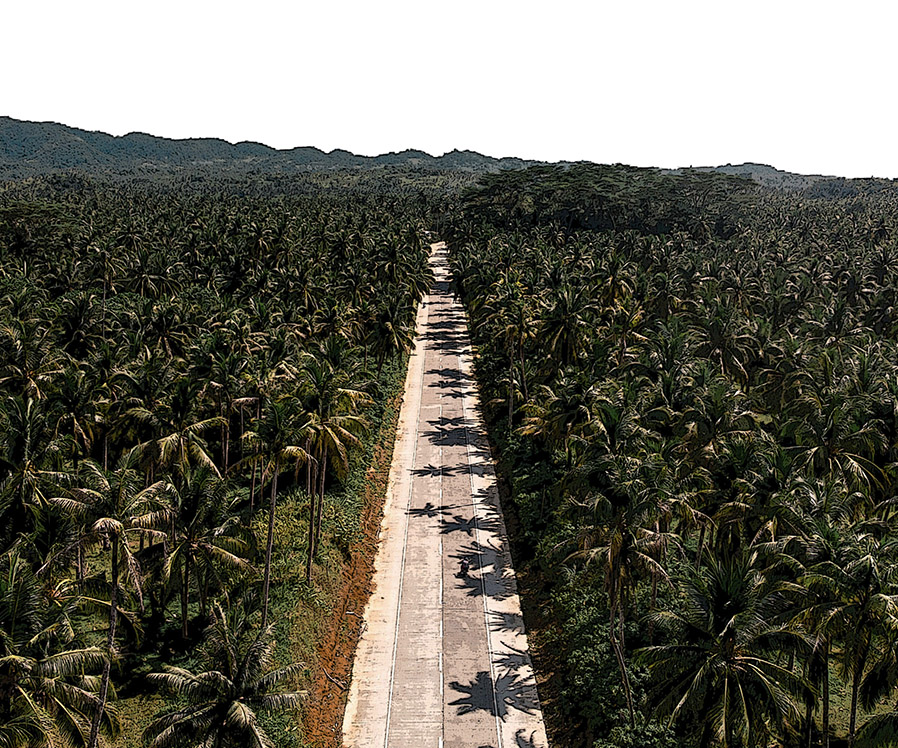
This paper explores the figure of the oil palm in Pahang, Malaysia, asking what the oil palm becomes if theorised from the social and environmental context of this particular state. Pahang is the largest state in Peninsular Malaysia. It has more hectares of land planted with oil palm than any other state in the Peninsula. The oil palm’s roots in Pahang entangle in a complex manner with rubber, gold, tin, colonial systems of land tenure and taxation, political, religious and independence struggles, military occupation, and postcolonial development regimes. How, then, has the palm not only shaped the landscapes of Pahang, but been shaped by the unique contours of this place? How might tracing a more-than-human political and environmental history of oil palm from Pahang prompt a new understanding of this scale-defying global commodity – one that reveals the contingencies, contradictions and fragilities that have historically contributed to its making?
Palms, enclosures, Malaysia, scale, land development
 The story of oil palm is often told as the archetypal crisis of high modernism: a global story of vast commodity networks and worldwide environmental impacts. But this essay argues that this broader story can only be understood with reference to the more contingent and situated histories of oil palm in the places where it is grown. This presents a scalar challenge that has methodological implications for how we might tell global more-than-human histories of palms. To make this claim, I draw on archival research conducted primarily in the National Archives in Kew, London, focusing on annual reports, political intelligence reports, secret notes and correspondence regarding the Malaysian state of Pahang. Through revealing the tensions, frustrations and contingencies of the early oil palm industry in Pahang – seen always-partially through the eyes and anxieties of colonial officials – the localised contingencies that have shaped the global oil palm industry today become clear. These contingencies lurk underneath the seeming order of colonial archives, appearing as gaps, omissions and un-taken possibilities traceable only through a reading ‘against the grain’ (Stoler 2010). But they are central to deconstructing the story of oil palm as it appears today, challenging its seeming inevitablity as an unstoppable technology of global capitalist expansion.
Exploring the rhetorics, politics and social contexts surrounding oil palm in this state reveals how, as Robins argues for the oil palm globally – it never produced violence on its own – but exposed, built upon and exacerbated pre-existing and contemporaneous injustices and dispossessions (Robins 2021: 222). Pahang is significant in the global story of oil palm: it is the largest state in West Malaysia, and the state in West Malaysia with the largest amount of its area under oil palm cultivation (13.2%) (Malaysian Palm Oil Board 2022). This area continues to expand: Pahang had the most approved new oil palm projects between 2001 and 2023 out of all Malaysian states (Low 2024). Tied with Johor, it produces sixteen per cent of Malaysia’s supply, behind only Sabah and Sarawak, East Malaysia (US Department of Agriculture 2024), with Malaysia being the second largest palm oil exporting nation in the world, behind only Indonesia. But engendering this global reach are highly situated articulations of local politics, ecologies and histories, that were put in place well prior to oil palm’s expansion in the region.
It is this longer history of oil palms in Pahang that this essay tells. Doing so has methodological implications. Not only does it demonstrate the construction of particular ‘locations’ as ways that the ‘global’ itself are shaped (Hanieh 2018: 4; Trouillot 2003), but it offers some caution against deterministic understandings of the role of particular commodities in shaping social history (Watts 2012). The oil palm industry in Pahang was contingent: it built on a legacy of counterinsurgent technologies that developed under colonial rule (when very little oil palm was planted) and that developed through the Cold War as technologies to enclose lands and thus contain populations. These were often violent technologies used to subdue people and places: mines, perimeter fences, propaganda, reservations, chemical weapons, union suppression, coercive labour regimes, agricultural restrictions and the colonial archive itself – its flurry of intelligence reports aimed at surveilling the intimate lives of the people of Pahang. These solidified the idea of Pahang as a wild frontier in need of taming through technocratic intervention, setting the stage for those tools of US imperialism, the loan and the development expert, to further these trajectories after Independence. It was only this sedimented history – in which palms themselves played a relatively short role – that meant that, by the 1980s, it was possible for Malaysia to be placed as the leading exporter of palm oil in a ‘veritable green tide’ (Hill 2013: 2), which acted in turn to further enclose and alienate lands for state and private plantations. It is these longer histories – put in place before oil palms ever significantly appeared in Pahang – that today coalesce in the rows of palms that have come to characterise its landscapes. Telling more-than-human histories of palms, then, can involve looking beyond palms themselves.
In such a telling, the oil palm appears not as a monolith, but as a constellation of social and historical forces, ecologies and politics. In Pahang, these include the narrative construction of the frontier, processes of land enclosure and the racialised re-organisation of populations and the suppression of resistance in the interest of colonial capitalism. Peluso and Vandergeest’s notion of the ‘political forest’, in which the declaration of lands as ‘forests’ has been used as a technology of state-making (2001); Hirsch et al.’s description of the ‘powers of exclusion’, by which power relations structure land access which in turn engenders new social formations (2011); and Li and Semedi’s formulation of ‘corporate occupation’ to describe the spatial and political reorganisation of life produced by plantations (2021) offer a foundation for understanding these constellations of land, race and state-making in Southeast Asia. In Pahang, plantations – like forest reserves – offered a key technology through which ‘wild’ place and populations were pacified through the reorganisation of land use, access and ownership, this reshaping the texture of social life itself along racial lines (Bhandar 2014). What the story of Pahang also reveals, however, is the plantation and its management as an explicit technology of counterinsurgency, that worked through the narrative construction of the ‘frontier’ and resultant processes of land expropriation. Techniques developed for military occupation thus facilitated the entwined corporate and state occupation still found in Pahang today, through which the oil palm continues to flourish.
I begin the paper by describing early colonial attempts to reorganise people and places through the land and labour laws that undergirded the plantation, the mine and the wildlife reserve. Second, I explore how these processes of territorialisation were extended through counterinsurgency efforts, when frontiers between the wild (forest) and the managed (the surveilled plantation or labour camp) were reinscribed through psychological and chemical techniques. Finally, I explore how these layered counterinsurgent technologies set the stage for oil palm to flourish after Independence – notably through Malaysia’s flagship land development schemes. These sedimented histories coalesce in Pahang’s palms, exposing relations that are at once locally specific and shape the global industry as we know it today, demonstrating the need for more-than-human methodologies that extend beyond the emergence of plant-species themselves.
Pahang was always constructed in the minds of British colonisers as a ‘frontier’, whether of colonial expansion, resources, communist resistance or wilderness in need of taming (Noor 2011). The frontier is an ‘edge of space and time: a zone of not yet – not yet mapped, “not yet” regulated’, it is a project ‘in making geographical and temporal experiences’ (Tsing 2003: 5101), or the potential for resources, profit and control. Indeed, early British ‘Resident Advisors’ to Pahang in the late nineteenth century saw themselves as bringing Pahang out of ‘chaos’ into profitable order. Prior to the arrival of the British, a complex system of riverine commerce and alliances had resulted in a state of political flux, ‘an open, contested, and hybrid polity’ in which no regime ruled with impunity (Noor 2011: 30; Gopinath 1991). The gold trade was central, and Orang Asli (the Indigenous peoples of West Malaysia) were key agents in trade (Andaya 2002). As Farish A. Noor (2001) describes,
British colonial intervention would later arrest this state of affairs and render the meaning and place name of Pahang as fixed and, in the process, redefine it as a Malay state, albeit under British rule and administered according to the logic of colonial governmentality… the idea of Pahang was invented (p. 30).
Pahang’s first resident advisor, the twenty-year-old Hugh Clifford, viewed Pahang as being ‘the last outpost; the wilder, more exotic and dangerous face of British Malaya’, thus holding an ‘important symbolic role in the discursive economy of British colonialism in Malaya’ – in which men like Clifford were happy for Pahang to remain ‘remote and isolated’ to justify the need for the colonial project (Noor 2011: 61).
During the early years of colonial occupation, the administration introduced new land codes to alienate land for (foreign) interests and forest reserves. What had once been public land was divided and ‘protected’, often to create new timber trades (Kathirithamby-Wells 2005, Baillargeon 2021). This was an ‘exercise in territorialization’ (Baillargeon 2021, Harper 1997, Sioh 2010) that had a profound impact on all inhabitants, but especially on Orang Asli. Many would have seen their forests converted to mines or rubber estates or cut through by roads, or been forcibly evicted in favour of forest reserves. The King George V National Park (now Taman Negara) was created in 1939 as a wildlife reserve in the interests of colonial big game hunting (Kathirithamby-Wells 2005). Batek Orang Asli inhabitants of this area were not consulted, and nor were they given land rights. Being ‘wild people’ (Manickam 2015), they were tolerated to remain in the wildlife reserve (Lye 2011), deemed ‘distinct and apart’ even from ‘other local races of Sakai’ (a racial slur often used to refer to Batek).1 Dato’ Abu Samah Bin Haji Ali, State Secretary of Pahang, recorded that the ‘less wild’ aborigines cultivate some jagong and hill padi for both consumption and sale, demonstrating the depths of colonial conceptual links between race and land use.2
This period also saw the creation of ‘Malay reservations’: areas of land set aside for Malay use and ownership. These were to uplift the economic development of rural Malays but, in practice, they limited Malay opportunities outside agriculture (Kratoska 1983), confining them to specific areas (Baillargeon 2021), creating new forms of exclusion. Agriculture on reservations was controlled, and Pahang’s colonial records reveal intense frustration over the refusal and disinterest of farmers to adopt their new techniques for smallholder rubber and padi (for example wet over dry), which was blamed on the ‘conservativism characteristic of farmers everywhere’, reflecting the trope of the ‘lazy native’ (Alatas 1977).3 New crops were experimented with in stations in the Cameron Highlands where many Orang Asli would also have been living – such as tea, cinchona, cardamom, coffee, coconuts, cotton and gutta percha – destined for British markets.4 Aside from on a couple of estates, oil palm was relatively rarely planted. The main estate growing oil palm was the Sungai Tekal estate in Temerloh, which in 1932 had 787 acres, growing to 1,238 acres by 1938.5
Enormous amounts of land were alienated for foreign interests in rubber, tin and gold. Tin and gold mining had long been conducted by Pahang residents using hand methods like dulang washing and, prior to colonial occupation, Chinese tin mines had long existed, using imported labour from China (Cant 1973). But it was with colonial land-use policies that new concentrations of foreign power were created in Pahang. The Raub Australian Gold Mining Company came to dominate. They conducted frequent surveys in the ‘Pahang Gold Belt’, a strip of country approximately of about 1,400 square miles, from Raub in the South up to boundary with Kelantan in the North. In 1932, the Company covered 11,753 acres, compared to the 7,451 acres alienated for gold mining by all other companies combined.6 For tin, the Pahang Consolidated Company was dominant, being the largest tin mining company in the British Empire. In 1937 alone, they were issued eighteen new permits over 34,548 acres.7 New sites of extraction required the re-routing of water systems – arteries of trade, travel and resistance for centuries – to service the mines when hydraulic methods were introduced.
Almost without fail, both mines and plantations used imported labour, people brought to Malaysia primarily from southern India and China under coercive conditions. Many worked their entire lives only to pay off the cost of their travel (Parmer 1960, Ramasamy 1992, Kaur 2014). On colonial rubber estates in Pahang, Indian deaths ‘per mile’ in 1933 were 12.7 per mile out of 2,913.8 When rubber prices fell, the newly unemployed were sent back (Jomo 1988). Across the region, techniques of labour control and suppression – such as indenture and the kagani system – similarly demonstrate the carceral logics suffusing plantations (Manjapra 2018).
The European-owned plantation thus represented ‘a closed system’:
While the estate itself existed within a privately owned and surveyed plot of land… the infrastructure, living arrangements, and social amenities within the plantation were minutely planned exercises in social control and stratification (Baillargeon 2021: 29).
Estates were tightly monitored by the government, who reported in detail in their monthly reports on housing, healthcare and welfare provision – as well as keeping tight surveillance on union activities. While majority Indian labourers on rubber plantations were concurrent victims of incarceration and state welfare, majority Chinese labourers often lived in makeshift camps at the edges of mines or in local towns. They are constantly referred to by their omission in colonial archives – with officials and bureaucrats expressing their frustrations that they could not access information about them or their employers. 9 The pejorative ‘squatter’ was applied to detract from their claims to legitimate citizenship.
In 1939, C.C. Brown, the British Resident, wrote that ‘the economic possibilities of the 8,876 square miles of State land in Pahang are to a large extent unexplored…’10 And, as resource frontiers were drawn and redrawn across this alleged terra nullius, colonial authorities sought too to fix and separate Malaysia’s inhabitants along racial lines in what became a ‘geography of occupation’ (Baillargeon 2021, Malhi 2011). The plantation, the reservation, the wildlife reserve and the mine each operated to separate and control along racial lines that corresponded to livelihood and ecology: Malay farmers into reservations, Indian workers and Chinese ‘squatters’ on plantations and mines; and Orang Asli subdivided in terms of relative ‘wildness’. These worked to set Pahang up as a resource ‘frontier’, constructed as a wilderness to justify the need for the development of mining, the timber trade and agricultural expansion, with populations organised accordingly. Such attempts were met with constant frustration, for example when ‘Aboriginal’ (Orang Asli) peoples continued to practice swidden cultivation on land alienated for the Gunung Benom forest reserve,11 or when Chinese ‘squatters’ (rural dwellers) grew food crops on land alienated for forest reserves or Malay reservations, denying the colonial authorities’ racialised terms of land exclusion.
Resettling, regrouping, morale
The ‘Emergency’ (1948–1960) was a conflict between the Malayan National Liberation Army, who sought to make Malaya an independent communist republic, and the forces of the British empire. It is famed as one of the most ‘successful’ counterinsurgency efforts of the Cold War, later acting as explicit influence for the US strategies in Vietnam, who drew inspiration from the British focus on resettlement as a tool of suppression (Khalili 2013). Pahang, as a still largely still forested state, took on a central role for guerilla conflict. The networks of jungle paths, courier routes, and smuggling systems that spanned its forests had survived through the Japanese occupation and now became new Emergency battlegrounds: ‘the forests bred their heroes and their myths’ (Harper 1999: 49). On the eve of the Emergency’s outbreak, rubber, tin, gold, and timber products continued to be Pahang’s primary exports for global markets. Concern grew around both the security of these exports, and the state’s lack of domestic rice production and its reliance on food imports from elsewhere in Malaya. Oil palm remained marginal, being planted over only 6,300 acres.12
As the conflict developed, colonial anxieties over the organisation of land, resources and people took on a newly psychological tenor. The capture of ‘hearts and minds’ was now used to justify the reorganisation of land, food and life to ensure the security of foreign capital by eradicating the ‘CTs’ (‘Communist Terrorists’). This took shape under the Briggs plan which dictated new Emergency regulations (Khalili 2013). As defined in a 1953 policy document for the protection of mines and estates: ‘The main impact of the ER (Emergency Regulations) is in the power of detention and deportation, the control of movement, resettlement and regrouping, the control of food and drugs and the imposition of curfews.’13 Malays were moved from villages into ‘regroupment areas’, labourers were moved to ‘labour regroupment areas’, Chinese ‘squatters’ were moved to ‘New Villages’ and many Orang Asli were moved to ‘resettlement areas’ (Baillargeon 2021, Leary 1995, Harper 1999). Across the country, areas were designated as either ‘black’ (strict curfews and food controls), or ‘white’ (slightly less repressive restrictions). When areas had been ‘cleansed’, they became ‘white’ (Sioh 2010). Pahang contained eighteen labour regroupments, 75 regrouped Malay villages and 64 New Villages (Baillargeon 2021: 32).
Fears circulated that Chinese ‘squatters’ and labourers and Orang Asli were helping the ‘CTs’, and they were placed under the most brutal surveillance, ostensibly for their welfare and development. Conditions were extremely harsh. Most suffered greatly, and many were killed. Those who refused to move were often shot, their homes and crops burned (Khalili 2013: 178). The ‘wilderness’ of Pahang was now inseparable from the communist threat (Sioh 2022), and the frontier narrative was used to justify both the reorganisation of races and the enclosure of land for the construction of ‘moral citizenscapes’ (Sioh 2010).
Plantations became key sites for the management of these psychic geographies. Planters were given patrol cover when visiting remote areas of their estates, and new licences were given for private security guards to carry and use firearms. Many Pahang rubber estates had new perimeter fences built which would also ‘assist in the control of the inhabitants and of food’.14 Oil palms, being largely experimental at this time were the last outposts of the frontier, often situated in the remotest, hence ‘worst bandit infested areas’.15 These estates produced anxieties for administrators. After Corry (the British Advisor) visited the aforementioned Sungai Tekal estate with the Chief Police Officer, he wrote in his secret notes that it was a ‘dangerous and lonely estate’, with its particular configurations of disorderly buildings proving difficult to protect or re-site. A new layout for its defence was suggested with all ‘personnel’ contained within ‘two defended areas’.16 In New Villages, crops (themselves heavily restricted) were not allowed to grow above a certain height in case they obscured the view of the guards (Khalili 2013: 178).
Forests, too, posed anxiety. To facilitate the ‘domination’ of ‘deep jungle’ areas, new ‘jungle forts’ were built. In 1950 the resident Advisor wrote in his secret notes of the need to ‘clear’ an area on the Pahang/Negeri Sembilan border of ‘Sakais’, ‘whose pro-bandit activities call for the locality to be subjected to systematic bombing in the near future’.17 Trees and shrubs provoked anxiety for the cover that they might provide to ‘CTs’. New roads were built to cut off areas of remote forest, and clearings on top of hills were created in order to provide command sites watching over resettlement areas, but this often provoked more danger, as felled trees ‘provide excellent cover for bandit aggression’.18 In 1952, Trioxone (similar to Agent Orange, and provided by British company ICI), was used to defoliate the areas next to roads to prevent ambushers hiding under the cover of foliage, and to kill crops planted by ‘CTs’.19 Cold War anxieties were scarred onto the landscape.
The movement of foodstuffs was of central concern, primarily for fear that civilians would share food with the ‘CTs’. It was thought that if civilians had only just enough food to keep themselves alive, they’d be less likely to give it to ‘bandits’. Rice was rationed, and the amount of unopened tinned food a person could buy strictly controlled. Homes and bodies were searched every day to check for food.20 Reports repeatedly referenced ‘dissatisfaction’, ‘discontent’, ‘unsettled conditions’ and ‘unrest’ due to hunger and surveillance. But the ‘hearts and minds’ agenda dictated that people should not mind food raids and restrictions ‘if they could be convinced that they were taking part in a joint effort against the Communists. The considerable degree of Military effort evident has helped this to be put over.’21 Further, ‘a few local kills or surrenders’ would help to ‘vindicate’ food restriction policies.22
Monthly political intelligence reports were produced for circulation, always containing headings on ‘general state of morale’ and ‘government matters affecting morale.’ Low morale was consistently linked with Communism, racial character and dirty conditions. In 1954, the Mentri Besar wrote that ‘it was noteworthy that the most evident Communism in Bentong existed in its foulest slums…’23 Low morale was indicated by ‘an absence of the spontaneous desire by the people in Raub to cooperate’.24 Morale could also be ‘disturbed’ by developments elsewhere, for example Nehru’s visit to China,25 or the Afro-Asian conference in Bandung,26 resulting in descriptions of decay, disrepair, sadness or ‘unsavori[ness]’.27 Morale could also be raised, for example by ‘eliminating’ CTs,28 or ‘civic afternoons’ with tea where villagers were encouraged to inform on others.29 In New Villages and Orang Asli resettlements, where officers often didn’t have the language skills to speak with residents, morale was often indicated merely by ‘contented looks’,30 ‘smiling faces’ and an ‘air of general contentedness’.31 The best morale was when people spoke of a desire for self-help and entrepreneurialism, as when Malays in Pekan spoke of a ‘desire to help themselves rather than rely on Government’, when ‘Aborigines’ in Ulu Rompin spoke of a desire to build as school and fund it on their own,32 or when ‘Sakai’ in a resettlement in Bukit Betong sold firewood ‘encouraging healthy competition with local firewood contractors’, demonstrating an emergent capitalist ethos.33
Strategies enacted to ensure the safety of British estate and mining interests in Malaya demonstrate the importance of ‘incarceration in the course of a liberal counterinsurgency’ (Khalili 2013: 3; Neocleous 2011). The tactics used in such counterinsurgencies often slip between forms of violence meant to intimidate or persuade (Khalili 2013: 4). Indeed it was during the Emergency that the Aborigines Act (1954) was written, cementing restrictive and paternalistic regimes of ‘protection’ and the erosion of Orang Asli rights today (Idrus 2010). These were techniques of social engineering that aimed to protect British plantation and mining interests and to engender moral attitudes that would be friendly to these interests. Colonial speculations on the psychic lives of the native Other through their narratives of morale demonstrate far more about the colonial mindset than the subjects of their notes. Techniques of resettling and developing land became carceral, where one had to smile in order not to starve, demonstrating the profound link between land development, counterinsurgency, empire and the maintenance of a capitalist social order through psychic geographies.
After independence, with the threat of insurgency remaining, development and defence were now inextricably linked, aimed at protecting international trade. The British continued sending arms to Malaysia,34 which now came with conditional ‘technical assistance’ for development,35 often in the form of development ‘experts’ and training programmes that came not only from Britain but also from US philanthropists and banks (Siegel 1977).36 FELDA (Federal Land Development Authority) land settlement schemes were prime examples of this. They encouraged Malays to clear the jungles and plant rubber, and, in so doing, both become moral citizens of the new nation and conquer the forest/communist frontier. In its focus on social engineering, FELDA was the direct descendent of Emergency resettlement (Sioh 2010). Only the ‘best and most disciplined members of rural society’ were chosen as FELDA settlers (Harper 1999: 363).
The first FELDA scheme was in Lurah Bilut, Pahang in 1958. In the same year, a World Bank report on economic development in Malaysia emphasised the need for rural development, with a focus on land settlement. Oil palm was noted as a capital-intensive crop, needing a high degree of skill in running the factory and marketing the oil, necessitating foreign ‘experts’. It still only accounted for a ‘small portion’ of exports, but showed promise. A British Oil Palm Advisor was therefore appointed to FELDA. It was hoped that, through developing agricultural expertise, ‘she [Malaysia] would be a perfect example to the rest of SE Asia and show what can be done without extremist government’.37 By 1965, the World Bank had agreed to fund what became Malaysia’s flagship oil palm development project: the Jengka Triangle in Pahang (International Bank for Reconstruction and Development 1987). US officials ‘saw it as a key step in demonstrating the success of capitalist development in a corner of the world where the Cold War was heating up’ (Robins 2021: 223). There were at least 110 indigenous families in the area, and many smallholders, despite it being depicted as an uninhabited swamp (Robins 2021: 222–23). Political technologies of land development and social control developed for counterinsurgency over the past fifty years thus set the stage for Pahang’s first major oil palm project.
What the story of oil palm in Pahang shows, is how – as the editors of this special issue put it – global relations ‘coalesce’ in the bodies of the palms that still dominate Pahang’s landscapes today. Pahang shows that the demarcation of lands as wilderness – associated with communist ‘banditry’ and the racialised Other – was used to justify the creation of the oil palm industry. Colonial narratives of care and concern were explicitly used to counter communist arguments about the capital-driven nature of British development despite evidence to the contrary (Noor 2011: 131). Warfare and technocratic welfare cemented their relation after Independence and throughout the Cold War, with British approaches to guerilla war and ‘hearts and minds’ in the forests of Pahang inspiring US military strategy in Vietnam and the Middle East (Khalili 2013). Tellingly, the RAND corporation wrote admiringly of Emergency food control tactics (Sunderland 1964). This helps to reveal some of the partial connections ‘across disparate spatialities and temporalities’ (as the editors put it) that oil palm today is both constituted by and creates.
Today, the mundane violence produced by oil palm plantations has become infrastructural, representing the seeming ‘common sense’ (Stoler 2010) of postcolonial capitalism (Krupa 2022). Pahang shows how this seeming common sense has been produced by tools envisaged for war, shaping the ‘occupation’ they produce today (Li and Semedi 2021). But the ‘failure and fragility’ (Chao, Krupa and Li 2024) of the colonial project is also revealed in the archive through those who resisted: the ‘young Mandarin speaking Hakka woman’ who spoke out after a Bentong landowner dismissed the whole labouring force of his estate;38 the ‘Sakais’ at Bukit Betong who ‘disappeared’ from the resettlement scheme; 39 the plantation workers in Bentong who blocked an estate road with their bicycles after wage reductions;40 or the miners at Sungai Lembing who did weekend ‘go slows’ to demand proper safety. 41
At the same time, in Pahang, the full force of oil palm plantations’ eventual violent expansion was constituted in response to those very anxieties produced by the failures and gaps of colonial and Cold War projects of supposed progress and domination. The construction of ‘insurgent’ populations justified the violence that allowed plantations to flourish. Today, the oil palms of Pahang are legacies of these anxieties. As these ‘coalesce within the bodies, careers and trajectories’ of these palms, thinking ‘across temporalities’ (to borrow the editorial framing) helps to uncover multiple connections. These are connections between the lifeways of palms, and the deathways of those deemed to lie on the wrong side of the frontiers that palms rely on; frontiers whose construction in Malaysia have an even longer history than the oil palm itself. A stark reminder of the need to look beyond palms themselves as we tell critical plant histories is that today in Pahang oil palm development is frequently used as a cover for rainforest clearance, without palms themselves ever needing to be planted (Low 2024).
Archival Sources
TNA – The National Archives, Kew UK
IWM – The Imperial War Museum, London UK
RAC – Rockefeller Archives Centre, Sleepy Hollow, New York
Published Sources
Alatas, Syed Hussein. 1977. The Myth of the Lazy Native: A Study of the Image of the Malays, Filipinos and Javanese from the 16th to the 20th Century and Its Function in the Ideology of Colonial Capitalism. London: Frank Cass.
Andaya, Leonard Y. 2002. ‘Orang Asli and the Melayu in the history of the Malay Peninsula’. Journal of the Malaysian Branch of the Royal Asiatic Society 75 (1): 23–48.
Baillargeon, David. 2021. ‘Spaces of occupation: Colonial enclosure and confinement in British Malaya’. Journal of Historical Geography 73 (July): 24–35. https://doi.org/10.1016/j.jhg.2021.07.003.
Bhandar, Brenna. 2014. ‘Property, law, and race: Modes of abstraction’. UC Irvine Law Review 4: 203–18.
Cant, R.G. 1973. An Historical Geography of Pahang. Monographs of the Malaysian Branch Royal Asiatic Society 4. Singapore: Malaysian Branch Royal Asiatic Society.
Chao, Sophie, Christopher Krupa and Tania Murray Li. 2024. ‘Anthropologists are talking – about contemporary plantations. Technologies, violence, and vulnerability across geographies and genealogies’. Ethnos 89 (1): 158–87
Gopinath, Aruna. 1991. Pahang 1880–1933: A Political History. Kuala Lumpur: Malaysian Branch of the Royal Asiatic Society.
Hanieh, Adam. 2018. Money, Markets, and Monarchies: The Gulf Cooperation Council and the Political Economy of the Contemporary Middle East. Cambridge: Cambridge University Press.
Harper, T.N. 1997. ‘The politics of the forest in Colonial Malaya’. Modern Asian Studies 31 (1): 1–29. https://doi.org/10.1017/S0026749X00016917
Hill, R.D. 2013. Agriculture in the Malaysian Region. Singapore: NUS Press.
Hirsch, Philip, Tania Li and Derek Hall. 2011. ‘Introduction’. In Powers of Exclusion: Land Dilemmas in Southeast Asia. Challenges of the Agrarian Transition in Southeast Asia (ChATSEA). Honolulu: University of Hawai’i Press.
Idrus, Rusaslina. 2010. ‘From wards to citizens: Indigenous rights and citizenship in Malaysia’. PoLAR: Political and Legal Anthropology Review 33 (1): 89–108. https://doi.org/10.1111/j.1555-2934.2010.01094.x
International Bank for Reconstruction and Development. 1987. The Jengka Triangle Projects in Malaysia: Impact Evaluation Report. Washington, D.C: World Bank.
Kathirithamby-Wells, Jeyamalar. 2005. Nature and Nation: Forests and Development in Peninsular Malaysia. Copenhagen: NIAS Press.
Kaur, Amarjit. 2014. ‘Plantation systems, labour regimes and the state in Malaysia, 1900–2012’. Journal of Agrarian Change 14 (2): 190–213. https://doi.org/10.1111/joac.12061
Khalili, Laleh. 2013. Time in the Shadows: Confinement in Counterinsurgencies. Stanford: Stanford University Press.
Kratoska, Paul H. 1983. ‘“Ends that we cannot foresee”: Malay reservations in British Malaya’. Journal of Southeast Asian Studies 14 ( 1): 149–68.
Krupa, Christopher. 2022. A Feast of Flowers, Race, Labour, and Postcolonial Capitalism in Ecuador. Pittsburgh: University of Pennsylvania Press.
Leary, John. 1995. Violence and the Dream People: Orang Asli in the Malayan Emergency, 1948–1960. Ohio: Ohio University Press.
Leow, Rachel. 2016. Taming Babel: Language in the Making of Malaya. Cambridge: Cambridge University Press.
Li, Tania Murray and Pujo Semedi. 2021. Plantation Life: Corporate Occupation in Indonesia’s Oil Palm Zone. Durham, NC: Duke University Press.
Low, Choon Chyuan. 2024. ‘Timber grab: The truth behind Pahang oil palm plantations’. Pulitzer Center, 31 March. https://pulitzercenter.org/stories/timber-grab-truth-behind-pahang-oil-palm-plantations (Accessed 17 May 2026).
Lye, Tuck-Po. 2011. ‘The wild and the tame in protected-areas management in Peninsular Malaysia’. In Michael R. Dove, Percy E. Sajise, and Amity A. Doolittle (eds), Beyond the Sacred Forest: Complicating Conservation in Southeast Asia, pp. 37–61. Durham, NC: Duke University Press.
Malaysian Palm Oil Board. 2022. ‘Oil palm planted area 2022’. Malaysian Palm Oil Board. https://bepi.mpob.gov.my/images/area/2022/Area_summary2022.pdf
Malhi, Amrita. 2011. ‘Making spaces, making subjects: Land, enclosure and Islam in colonial Malaya’. The Journal of Peasant Studies 38 (4): 727–46. https://doi.org/10.1080/03066150.2011.607697
Manickam, Sandra Khor. 2015. Taming the Wild: Aborigines and Racial Knowledge in Colonial Malaya. Singapore: NUS Press.
Manjapra, Kris. 2018. ‘Asian plantation histories at the frontiers of nation and globalization’. Modern Asian Studies 52 (6): 2137–58. https://doi.org/10.1017/S0026749X17000403
Neocleous, Mark. 2011. ‘“A brighter and nicer new life”: Security as pacification’. Social & Legal Studies 20 (2): 191–208.
https://doi.org/10.1177/0964663910395816.
Noor, Farish A. 2011. From Inderapura to Darul Makmur: A Deconstructive History of Pahang. Kuala Lumpur: Silverfish Books.
Parmer, J. Norman. 1960. Colonial Labour Policy and Administration: A History of Labor in the Rubber Plantation Industry in Malaya, 1910–1941. Locust Valley, NY: Association of Asian Studies.
Peluso, Nancy Lee and Peter Vandergeest. 2001. ‘Genealogies of the political forest and customary rights in Indonesia, Malaysia, and Thailand’. The Journal of Asian Studies 60 (3): 761–812. https://doi.org/10.2307/2700109
Ramasamy, P. 1992. ‘Labour control and labour resistance in the plantations of colonial Malaya’. Journal of Peasant Studies 19 (3–4): 87–105. https://doi.org/10.1080/03066159208438489
Robins, Jonathan. 2021. Oil Palm: A Global History. Chapel Hill: University of North Carolina Press.
Siegel, Lenny. 1977. ‘World Bank in SE Asia: Arms exports and the economy’. Pacific Research & Empire Telegram January/February: 14–15.
Sioh, Maureen. 2010. ‘Anxious enactments: Postcolonial anxieties and the performance of territorialization’. Environment and Planning D: Society and Space 28 (3): 467–86. https://doi.org/10.1068/d9408
Sioh, Maureen. 2022. ‘Authorizing the Malaysian rainforest: Configuring space, contesting claims and conquering imaginaries’. Ecumene 5 (2): 144–66.
Stoler, Ann Laura. 2010. Along the Archival Grain: Epistemic Anxieties and Colonial Common Sense. Princeton: Princeton University Press.
Sunderland, Riley. 1964. ‘Resettlement and food control in Malaya’. The RAND Corporation. https://www.rand.org/content/dam/rand/pubs/research_memoranda/2006/RM4173.pdf
Jomo Kwame Sundaram. 1988. A Question of Class: Capital, the State, and Uneven Development in Malaya. Monthly Review Press.
Trouillot, Michel-Rolph. 2003. Global Transformations. New York: Palgrave Macmillan.
Tsing, Anna L. 2003. ‘Natural resources and capitalist frontiers’. Economic and Political Weekly 38 (48): 5100–106.
US Department of Agriculture. 2024. ‘Palm oil explorer 2024’. https://ipad.fas.usda.gov/cropexplorer/cropview/commodityView.aspx?cropid=4243000
Watts, Michael J. 2012. ‘A tale of two gulfs: Life, death, and dispossession along two oil frontiers’. American Quarterly 64 (3): 437–67.
Alice Rudge is a Senior Lecturer in Social Anthropology at SOAS, University of London. She is the author of Sensing Others: Voicing Batek Ethical Lives at the Edge of a Malaysian Rainforest (2023)
Email: ar80@soas.ac.uk
https://orcid.org/0000-0001-7023-5428
1 TNA CO1071/252 AR [1933 ARSEPPP HGR Leonard, British Resident].
2 TNA CO1071/252 AR [1948 State of Pahang Annual Report, Dato’ Abu Samah Bin Haji Ali, State Secretary of Pahang].
3 TNA CO1071/252 Annual Reports [AR] [1938 Annual Report on the Social and Economic Progress of the People of Pahang [ARSEPPP] CC Brown, British Resident].
4 TNA CO1071/252 AR [1932 ARSEPPP HGR Leonard, British Resident].
5 TNA C01071/252 AR [1932 ARSEPP HGR Leonard, British Resident]; TNA C01071/252 [1938 ARSEPP CC Brown, British Resident]. The only other oil palm plantation documented at this time was Neram Tunggal (Lipis).
6 TNA CO1071/252 AR [1932 ARSEPPP HGR Leonard, British Resident].
7 TNA C0171/252 AR [1937 ARSEPP CC Brown, British Resident].
8 TNA CO1071/252 AR [1933 ARSEPPP HGR Leonard, British Resident].
9 Such frustrations were often due to language incompetence, as described by Leow (2016).
10 TNA CO1071/252 AR [1939 ARSEPPP CC Brown, British Resident].
11 TNA C0171/252 AR [1937 ARSEPP CC Brown, British Resident].
12 TNA CO1071/252 AR [1948 State of Pahang Annual Report, Dato’ Abu Samah Bin Haji Ali].
13 TNA CO1030/17 Protection of Federation of Malaya Rubber Estates and Mines [Policy Resulting from His Excellency the High Commissioner’s Meeting with Planters and Miners on 8th May, 1953].
14 Ibid., NB there was no special protection put in place for hospitals.
15 TNA CO1071/252 AR [1948 State of Pahang Annual Report, Dato’ Abu Samah Bin Haji Ali, State Secretary of Pahang].
16 TNA FCO141/7345 British Advisor Secret Notes [BASN] [12A Secret notes for the period 16 March-26 April 1951].
17 TNA FCO141/7345 BASN [8 Secret notes for the period 1–29 Sept. 1950].
18 TNA FCO141/7345 BASN [16A Secret notes for the period 9 June–1 July 1951].
19 TNA CO1022/26 Use of chemicals in clearing under-growth near ambush points and in destroying terrorist crops in Malaya.
20 TNA FCO141/7315 Monthly Political Intelligence Reports from the Mentri Besar, Pahang [MPIR] [no.3, 30 Sept. 1953].
21 T NA FCO141/7315 MPIR [no.6, 2 Jan. 1954].
22 TNA FCO141/7315 MPIR [no.7, 2 Feb. 1954].
23 TNA FCO141/7315 MPIR [no.7, 2 Feb. 1954].
24 TNA FCO141/7315 MPIR [No. 11, 21 Apr.–20 May 1954].
25 ’TNA FCO141/7315 MPIR [No.16 21 Sept.–20 Oct.].
26 TNA FCO141/7315 MPIR [no.22A, 24 March–20 April 1955].
27 TNA FCO141/7349 British Advisors Monthly Diary [2 Diary for part of March 1948].
28 TNA FCO141/7315 MPIR [no.19A 21 Dec.–20 Jan. 1955].
29 TNA FCO141/7315 MPIR [no.21A 21 Feb.-23 March 1955].
30 TNA FCO141/7345 BASN [15A Secret notes for the period 11–20 June 1951].
31 TNA FCO141/7345 BASN [31A Secret notes for the period 1 Feb.–24 Feb. 1952].
32 TNA FCO141/7315 MPIR [no.33A 21 Feb.–20 March 1956].
33 TNA FCO141/7345 BASN [1 Secret notes for the period 14 Apr.–3 May 1950].
34 TNA FCO165/12 Malaysia Defence Aid: Correspondence.
35 TNA OD20/105 UK Aid to Malaysia.
36 Ibid.; RAC FA767 Box 42 Ford Foundation Records, Publications [Folder 524].
37 TNA OD39/102 World Bank Consultative Group for Malaysia.
38 TNA FCO141/7315 MPIR [no.7, 2 Feb. 1954].
39 TNA FCO141/7345 BASN [4 Secret notes for the period 9 June–1 July 1950].
40 TNA FCO141/7315 MPIR [no.4, 4 Nov. 1953].
41 TNA FCO141/7315 MPIR [no.37A 21 June–20 July 1956].