Pedro Pablo Achondo Moya
This article explores how the reterritorialisation of certain plants can generate unique spatial dynamics that impact people's lives and the environment, despite not being the intended outcome. It explores the power of plants and their generative and transformative potential. Paying attention to them allows for a non-anthropocentric interpretation of plant life, or at least challenges the centrality of humans and, at the same time, provokes alternative connections and interactions. The case study focuses on huacatay, a plant with various medicinal properties associated with Andean cultures in South America, which was investigated in a hospital in the Chilean city of Limache. Using sensory ethnography, theoretical discussion and interviews with those responsible for its reterritorialisation, we sought to establish a relationship with the plant and verify its influence on the territory. Designing for other worlds requires consideration of the re/territorialising power of plants, including the 'insignificant' species found in the grounds of a small regional hospital in Chile.
KEYWORDS
Huacatay, territory, reterritorialisation, plants, multispecies, care, health
 Introduction1
During the pandemic, the Santo Tomás Hospital in Limache, located in central Chile, became overwhelmed. Like most hospitals and healthcare centres, it was unable to cover the demands of the time. Overcrowded rooms and a shortage of supplies added to the exhaustion of healthcare workers. No one could handle the needs of a pandemic like the one we all suffered through during 2020–2022, and which, for many, is still having consequences.
The hospital set up a modular section in the back to expand care capacity. Next to these modules, which are now either unoccupied or used sporadically, lies the ‘Wali Yapu’ community garden and Andean health facility. It offers access to medicinal plants and care from health workers, including listening, advice and treatment with plants. Workshops and training sessions on seeds and ancestral knowledge are also held there.
The configuration of the territory was affected, as expected, by the COVID-19 pandemic emergency. However, it was also shaped by a network of actants (Latour 2005) that make the territory what it is and drive its activity. Among these actants is the garden, and within the garden, a plant that played a prominent role during the pandemic. The thesis of this article is precisely that this small plant, huacatay, enabled a reconfiguration of hospital space and certain relationships within the territory, not only because of its use, but also because of its very nature as a plant. In other words, the biocultural history of huacatay led to a change in the territorial design. It was the life of huacatay, reterritorialised in the garden and embedded within a network of relationships that emerged from there, that influenced human and non-human lives and altered the spatial and temporal reality of that territory.
The above should be understood in relation to the concept of ‘plant density’, which I developed from previous research (Achondo 2025a, 2023). This notion highlights that plants have different spatiotemporal densities due to certain characteristics. Four main intertwining categories have been identified. These are: (1) memory, which is an emotional link with humans; (2) the magnitude and expressiveness of each plant; (3) how difficult it is to know about it, either in terms of its geographical location or because it is a very rare specimen; and (4) longevity. Longer-lived plants establish particular relationships with humans that are associated with conservation and protection. The occurrence of these four characteristics differs in each plant and territory, meaning that some plants have greater ‘vegetation density’ than others. This density is understood in the context of a specific territory due to the fact that plants are rooted, which causes modifications to space and time in terms of transforming territorial, cultural, social, ecological and political dynamics.
A specific tree protected in a forest reserve or conservation park (the tree known as Lañilawal, a Fitzroya cupressoides) is a good example of this (Achondo 2025a). The dynamics around this tree are established at different levels, enabling us to verify its enormous ‘vegetation density’: it attracts hundreds of visitors, generates social and political protocols for its protection and care, and attracts artists, photographers and researchers. The territory is affected by the attraction caused by the tree’s density. This notion will be used later to think about huacatay and understand its territorial dynamics. It should be noted, however, that the ‘density’ decreases the further one moves away from the centre where the plant is located. The bond that a person has with a particular plant is not as important as the force of attraction that the plant species exerts on the territory. Therefore, territory is not only geographical space (Aliste and Núñez 2020, Mansilla et al. 2019), but also a space in which a multitude of interactions and influences occur, where the sensible summons, inaugurates and shapes (Coccia 2011). Territory is the space where life reproduces and flourishes (Haraway 2008, Cuomo 1998), but it is also a space of resistance, vindication and struggle for justice. Territory is a space to be created and designed through collaboration, cooperation, cohabitation, exchange and ethical-political alliances between humans and non-humans (Haraway 2016, Escobar 2014, 2017). Territory is forged through embodiment (Ulloa 2021) between humans, affections, resistances and the environment. From this conception of territory, I consider the power of huacatay from a non-anthropocentric perspective. This means attempting to analyse the links and relationships, and what the plant itself provokes, suggests and affects. I seek to de-centre humans (Braidotti 2020) by relativising their point of view as the only existing or valid one. In this sense, the plant appears in a new way, expressing itself through its own languages and forms, allowing it to be interpreted in the territory it shares with humans and other species.
Huacatay (Tagetes minuta) is also known as chinchilla or suico. In some cases, unfortunately, it is confused with Mexican marigold (Tagetes erecta) (Visintin and Bernardello 2005). It is a plant native to South America, originating in the high Andean regions. It has been introduced to different parts of the world and is considered invasive in many regions. In Bolivia and Peru, it is widely used both in medicine and gastronomy. Some specialised sources mention that outside the Andean region, it is difficult to find; however, it is known to have spread to many parts of the world. It is characterised by a strong aroma and a fresh taste, which is why it is used in the production of oils, perfumes and fragrances (Díaz-Cedillo et al. 2013, Visintin and Bernardello 2005). Some describe its flavour as a blend of basil, mint, lemon and tarragon (Padín 2018). Medicinally, it has fungicidal, nematicidal (Perich et al. 1995) and antibacterial properties. It benefits the liver, supports the digestive system and relieves stomach pains. Due to its lack of cholesterol, it is highly recommended for diets. It also helps with bronchitis and general respiratory issues (Barbadillo 2022, Karimian, Kavoosi and Amirghofran 2014, Grados and Peláez 2012, Murga-Gutiérrez et al. 2012). In the garden, huacatay acts as an ecological regulator thanks to its aromatic properties. Huacatay coexists well with other plant species, either sheltering in the shade of a Molle (Schinus Latifolius) or basking in the sun it loves so much. It thrives in good soil with abundant water and interacts with its neighbours, including chard, lettuce, squash and flowers in one corner, as well as lemon balm, oregano, lemon verbena and aloe vera in another. When I last visited in mid-August 2025, it was striking that there was almost no huacatay left in the garden. Winter takes this fragile herb away, but this is no problem for those who understand the environment and plants. Huacatay has filled its surroundings with seeds and will soon grow back and regenerate, returning with its familiar aroma to provide companionship to humans and other-than-humans in the ‘Wali Yapu’ garden. In fact, it is interesting that ‘Wali Yapu’ means ‘fertile land’ or ‘good garden’ in the Aymara language, as if the garden itself, the small territory where huacatay grows, were synonymous with regeneration and life, with the goodness of plants and their fertility as a source of health.
A revolutionary change to the healthcare system in Chile began in December 2023. By law, all healthcare facilities must uphold ‘the right of indigenous peoples to receive culturally appropriate healthcare’ (Decree 21, Ministry of Health, Chile). This right is the result of the adoption of ILO Convention 169 and a long process within the Chilean healthcare system. An intercultural approach to healthcare was first incorporated in 1996, and in 2000 the Ministry of Health established the Special Programme for Health and Indigenous Peoples. This programme underwent modifications until 2021. The new decree states that, when defined by the intercultural health model, this right to culturally appropriate healthcare may be complemented by the use of practices, healing methods and traditional remedies and medicinal herbs, as appropriate, which should only be administered by indigenous healers or individuals validated for this purpose by their respective communities (Article 3). The new decree requires indigenous participation in intercultural health models, the employment of intercultural facilitators, adequate infrastructure in healthcare facilities and technical and organisational adjustments. It is in this context that initiatives which began with personal and community efforts are finally being embraced by state institutions, changing the way a country approaches health.
Methodologies for alternative designs
To approach plant life, we have countless techniques and methodologies. However, not all of them enable the necessary ‘ontological turn’. Theoretically, progress has been made in seeking alternatives to excessively human-centred philosophies – those that frame reality from and for the human perspective. The anthropocentrism present in these philosophies and social theories is what new materialisms, posthumanisms, and other currents, such as vegetal geographies (Achondo 2025b, 2023, Lawrence 2022), seek to challenge or at least question. The exhaustion of the Anthropos and the ideology of Man (Braidotti 2020) urge new forms of knowledge, representation, and access to reality.
From the fields of design and geography, but also from the broader framework of space-time representation, the question arises about possible alternative designs. What spatial configurations would allow us to move beyond the exhaustion of the Anthropos? Or, put differently, what territorial designs would foster multispecies encounters and the flourishing of life? How can we design from the non-human perspective?
It seems relatively clear that territorial design has not yet been fully considered from the perspective of all humans. Feminist, intersectional and subaltern critiques (children, the elderly, the disabled) have highlighted the androcentric and modern bias (related to the subject) through which social, urban, and domestic spaces have been constructed (Ciocoletto et al. 2019, Rico and Segovia 2017).
It is believed that designing from other organisms – in this case, non-human organisms and, in particular, plants – could give rise to new life forms, multispecies relationships and other ways of inhabiting. These approaches would be new in the sense that they would respond to the current socio-environmental crisis. Living alongside plants is nothing new; throughout human history, relationships of reciprocity, care and mutual learning have developed (Giraldo 2024). However, today’s challenge is different. The task is not so much to return to ancestral forms of understanding and relationship but to design in hyper-technological and rapidly changing contexts from bodies other-than-human to create spaces of coexistence and wellbeing. The hypothesis is that plants are masters at this. Perhaps that is why French philosophers Deleuze and Guattari (2002) encouraged us to ‘follow the plants’ and to adopt a more rhizomatic approach.
According to this framework, ethnography emerges as one of the best methodological tools. Being with, spending time in and dedicating oneself to observation, field notes and in-situ knowledge offer alternative ways of approaching reality and phenomena. For this work, an ethnography was carried out in the hospital garden in Limache, dedicating time and attention to observing, reflecting and listening to the life of the garden.
The ethnography was accompanied by field notes, sketches, audiovisual recordings and experiments with the huacatay plant itself. Some of the initial results are presented in this article to further explore the challenge of generating not only multispecies relationships, but also ways of thinking, feeling, understanding and interpreting reality outside the strictly human.
While working on a project about the climate crisis in the Aconcagua Basin (Climate Pluriverses), we started investigating the small acts of resistance and survival strategies employed by associations, communities and individuals. The basin has been severely affected by a mega-drought for several years now, with serious consequences for agriculture and livestock farming (Aldunce et al. 2025, Billi et al. 2023, Martínez et al. 2012). Additionally, the extractive regime in Chile and its socio-environmental relations have been extensively researched (Uribe and Pánez 2022). In this context, local knowledge and territorialised practices are of great importance. Due to my previous research on plants, I started contacting people who work with herbs and health in the basin. Ultimately, we managed to arrange a meeting with six yerbateras. The meeting was fascinating, as we learned about their life stories and their connection with plants in their work as healers and in improving quality of life. To encourage a multispecies conversation, we asked each yerbatera to bring their ‘companion plant’ to the meeting and share their story of love and connection with it. It was at that meeting that Silvia and I began our knowledge-sharing relationship.
Silvia Vega Valiente is a traditional Aymara educator, a hualichiri, which means ‘the one who remedies’. She is a member of the Pachakuti association, which has been active in the region since 2009. Silvia arrived in Limache from northern Chile in 1991. As an Aymara woman, and due to her family history and personal career and practices, she has a deep, ancestral connection to the land. However, she has also experienced rejection and discrimination at the hands of a country that has historically turned its back on its indigenous peoples (Oyarzo 2025, Correa 2021, Fuentes and Cea 2017, Zapata 2004). In the association, she works in intercultural education and health at the ‘Wali Yapu’ garden within the Santo Tomás Hospital in Limache (Figure 1). A team of people committed to health, nutrition and the life that the earth provides maintains and cares for the garden. They created the hospital garden in 2017 as part of a programme partly motivated by a desire to reclaim the space. The garden is run almost entirely by volunteers, who tend to it, maintain it, water it, clean it and work in it several days a week. Some of the volunteers were patients at the hospital and later benefited from the garden’s medicinal treatments. There is also a small meeting space and a kitchen where people can share meals. Various activities are organised from time to time, such as indigenous ceremonies, training workshops and discussions on plants, health and indigenous worldviews.
As mentioned in the introduction, during the pandemic, a modular hospital was set up to expand capacity and services. In this context, hospital staff began to consult Silvia and the team. Nurses and doctors approached the intercultural medicine garden. According to Silvia, the main plant that attracted attention at that time was huacatay.
A staff member suffered from stomach issues and sought Silvia’s help. She recommended huacatay – a plant she had introduced and cultivated in the garden. After two hours, a group of men approached Silvia to ask what she had given him since he was feeling much better. After this event, Silvia’s role at the hospital changed. She began to provide care with the approval of the hospital director, establishing a more balanced relationship with Western allopathic medicine. ‘I want this for my staff’, said the director at the time.
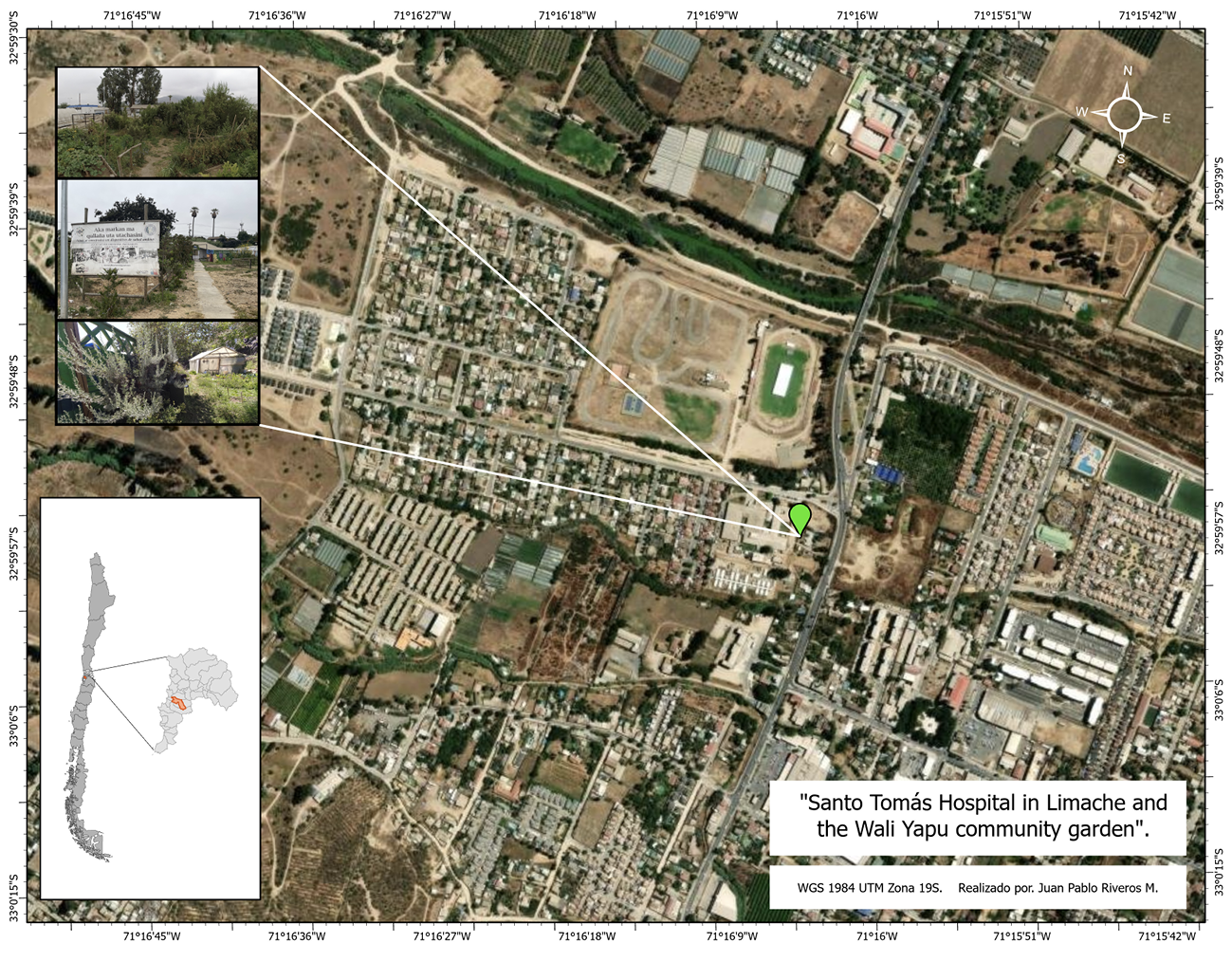
Figure 1.
Santo Tomás Hospital from Limache and Wali Yapu Community Garden.
Source: Google Earth and photographs by the author. Cartography by Juan Pablo Riveros.
A multidisciplinary team was formed, working virtually when necessary and in person when possible. Silvia became an ‘agricultural and family health agent’. With this title, she was officially recognised as an authority with full responsibility for working in health. Silvia identifies herself as a peasant woman, coming from a family in the Azapa Valley dedicated to the land. Today, she receives patients referred from the hospital and provides treatment with her plants to restore health when possible. The garden is not only a resource for the hospital but is also open to the entire community.
After initial contact through WhatsApp, a long conversation took place in the garden. Accompanied by birdsong and nearby urban noise (Figure 2), Silvia shared her relationship with plants, especially medicinal ones. For her, plants speak; they tell her what to do for different ailments. She mentioned that she has suffered from bronchial problems since the pandemic. After trying everything and consulting doctors, she preferred not to take pills. Finally, she found her remedy in the garden.
She recounted that one day, despite feeling unwell, she went to the garden, which she never stopped visiting even when sick. She noticed a plant growing abundantly that she didn’t recognise – it was mullein (Verbascum thapsus), known locally as ‘hierba del paño’. Curious about its presence, she consulted a friend, a Mapuche woman, over a video call. Her friend told her that the plant is common in the south and is used for coughs and bronchial issues. Reflecting on this, Silvia concluded that, when there is a need, the earth offers the cure. Herbs are not simply in the land; they communicate with the land’s inhabitants, both human and non-human. Medicine surrounds those who inhabit the territory, forming part of it and offering wellbeing.
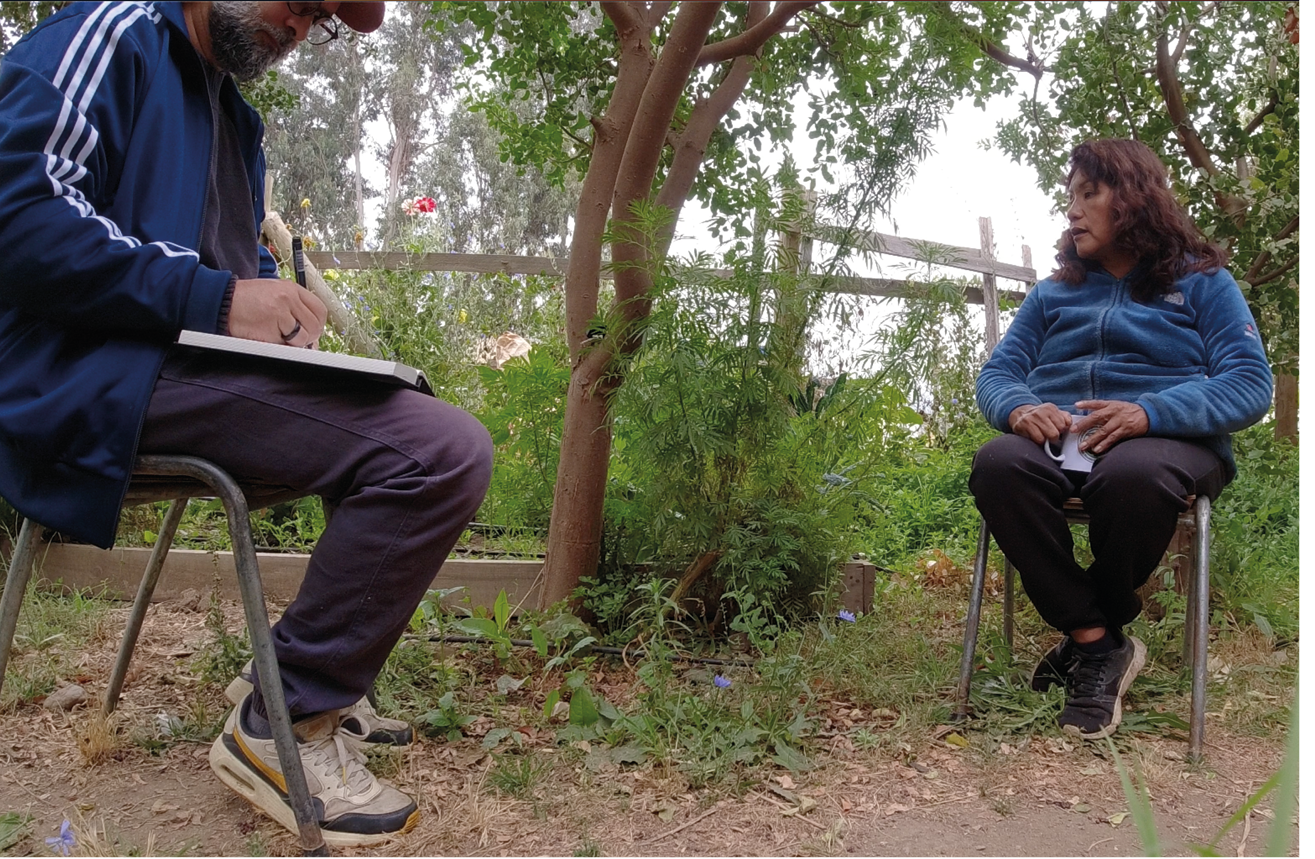
Figure 2.
Talking with Silvia and the huacatay in the vegetable garden.
Photograph by the author.
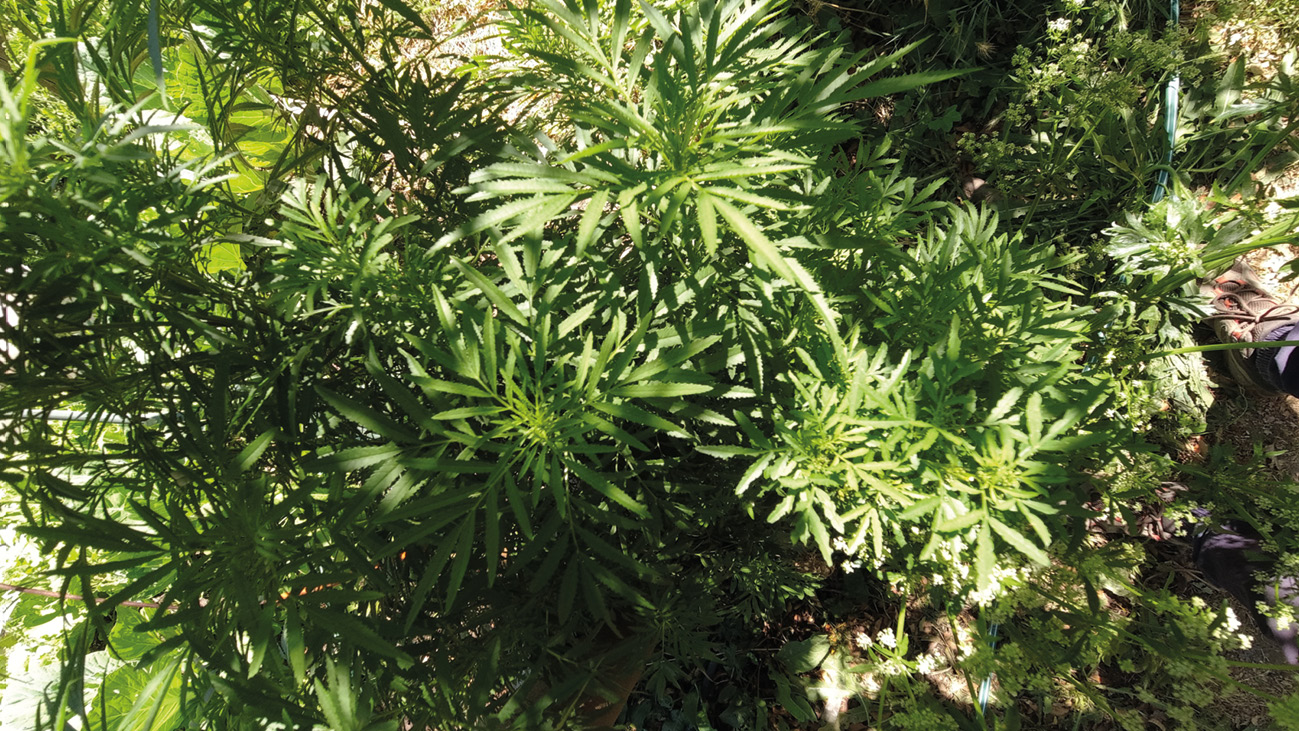
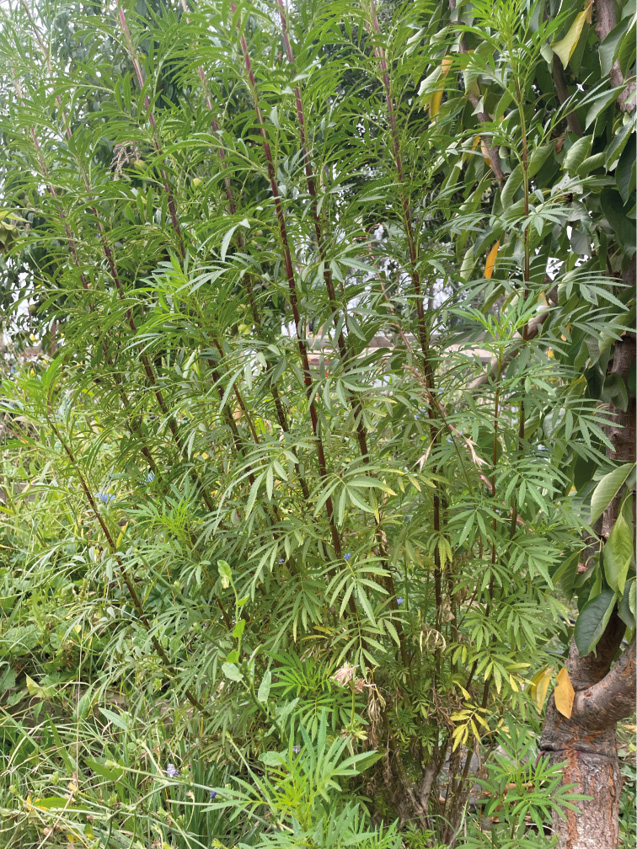
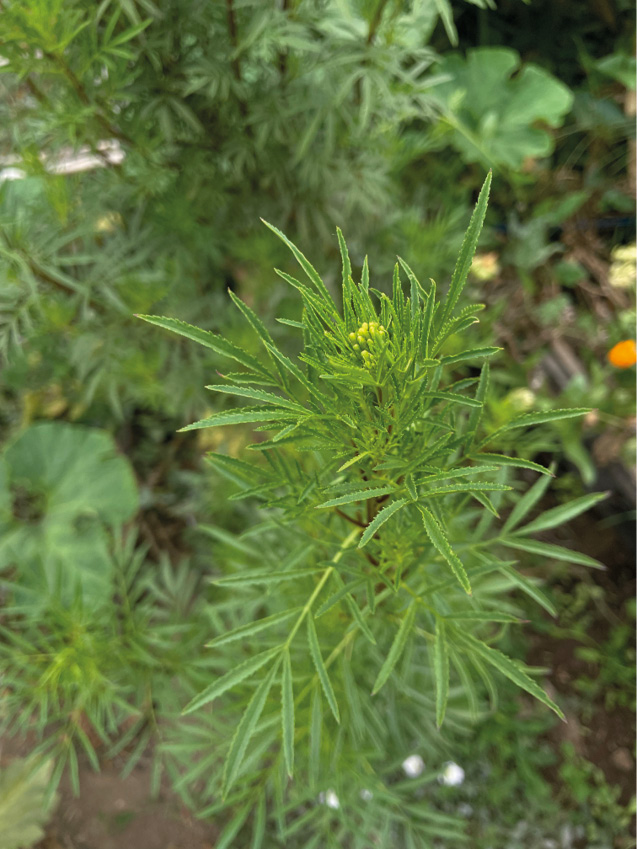
Figures 3, 4 and 5.
The huacatay in the garden. Photographs by the author.
At the end of 2024, a group of researchers held a meeting in La Giganta Park, located in San Felipe, a city in the Aconcagua river basin, which also includes Limache and the hospital where the huacatay is located. During this event, which brought together several yerbateros from the basin, something interesting happened – it turned out that huacatay is not a well-known plant, nor is it commonly used by people outside the Andean region.
At the gathering, which we named Bailawen in honor of a cherished herb from the basin, each herbalist was invited to bring a plant with which they had a special connection – something that, for some reason, was a companion plant. Silvia brought two plants, one of which was huacatay. Cleverly, before introducing herself and her plant, she asked the other herbalists if they could identify it. To everyone’s surprise, the experienced and knowledgeable group of herbalists did not know what it was and even confused it with another plant.
Huacatay is an outsider plant in this basin – an introduced species that has been reterritorialised in these lowland areas of the Valparaíso region (Figures 3, 4, and 5). Even more intriguing: What is a huacatay doing in the backlot of a hospital? What has that huacatay done to the territory? Why does the foreign huacatay feel so comfortable in the lowlands of Limache?
As mentioned above, the relationship between medical care in the hospital and medicinal plant practices in the garden is becoming more natural every day. This is not only due to Decree 21 of the Chilean Ministry of Health, but also because of what the patients tell us. One of them, who is now a volunteer in Silvia’s garden, says that he came to the hospital with a painful inguinal hernia. After a few sessions, he was referred to the garden to treat the stress, insomnia and anxiety caused by waiting for his surgery, as is now customary at the health centre. One of the plants that still helps him sleep better at night today, even after his operation, is lemon balm (Melissa officinalis). This is not an isolated case, as many patients are referred from the hospital to the garden. The recent ceremony of gratitude to the earth (Pachamama), led by Silvia and attended by hospital officials, authorities and community members, is an eloquent testimony to this (Figure 6).
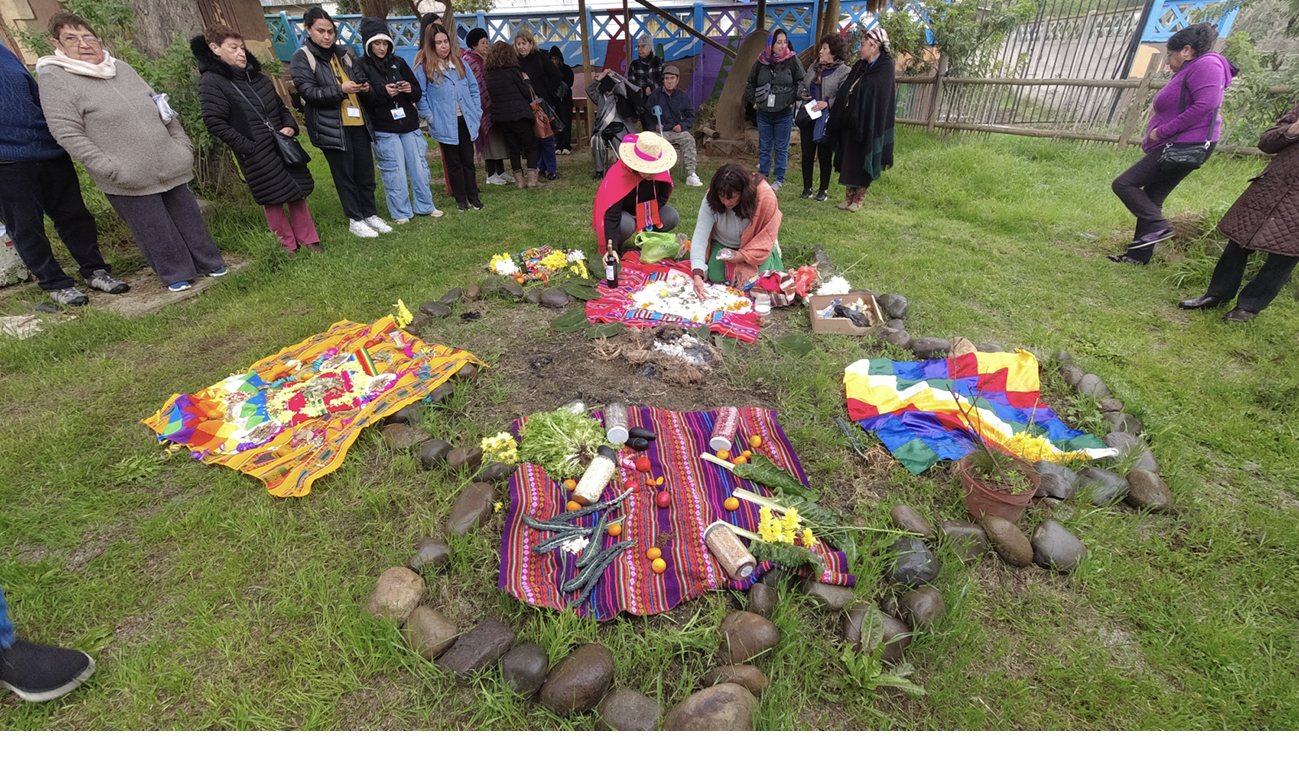
Figure 6.
Aymara thanksgiving to Pachamama. Photograph by the author.
Huacatay as a subject of territorial transformation
As mentioned above, the concept of ‘plant density’, which was developed in other research (Achondo 2025a, 2023), suggests that each plant has a specific ‘density’ in its territory, determined by environmental conditions and relationships. This allows us to reflect on and deepen our understanding of the presence of huacatay. Relationships ‘densify’ a plant within a territory, and those localised relationships redefine the overall territorial configuration.
Therefore, the Limache hospital is not the same without the small huacatay plant. Silvia confirms this idea by saying, ‘Huacatay is a strong plant, a protector of the garden; it gets along well with other plants. For me, it’s a presence, a support’ (personal interview, 27 Feb. 2025). As we have seen, this medicinal herb has generated a network of concrete, situated relationships related to intercultural health, Western health practices, Silvia Vega’s personal journey, the hospital’s interests, the health of individuals and the presence of the garden itself. All of these elements create a new configuration of the space.
The sensory-related methodologies (Myers 2017) allow for a different approach to the territory and the plant life of the garden. In this sense, huacatay is not just a plant – even a plant with specific properties – but becomes an actant (Latour 2005) or a source of potential and intensity, as suggested by Deleuze and Guattari (2002). Huacatay does not just exist – it acts. And as a plant that can act, it influences its environment, transforming encounters. When these encounters are transformed, the entire territory is affected and reshaped by them.
Below is a series of images taken in the garden, highlighting the prominence of huacatay. Following other research (Achondo 2023), I am inclined to affirm that, among other things (aroma, colour, movements), the form of plants holds unexpected potential. Plants also communicate through their shapes (Coccia 2017). In other words, plants have agency in how they appear in space. Their expressiveness defines their potential. It’s clear that their forms include shades of colour, changes over time, ways of moving and releasing aromas into the environment, and reactions to other stimuli (light, sun, wind, insects, humans).
Similarly, explorations involving sketches – always unfinished (Steane 2018) – drawings and interventions with huacatay have been conducted to become more familiar with the plant’s form and affective potential. These approaches – photographs (Figures 7 and 8) and drawings (Figures 9, 10, 11, and 12) – allow for a deeper understanding of how huacatay expresses itself as a plant. They also open up new languages and ways of representing the human-plant relationship in the territory.
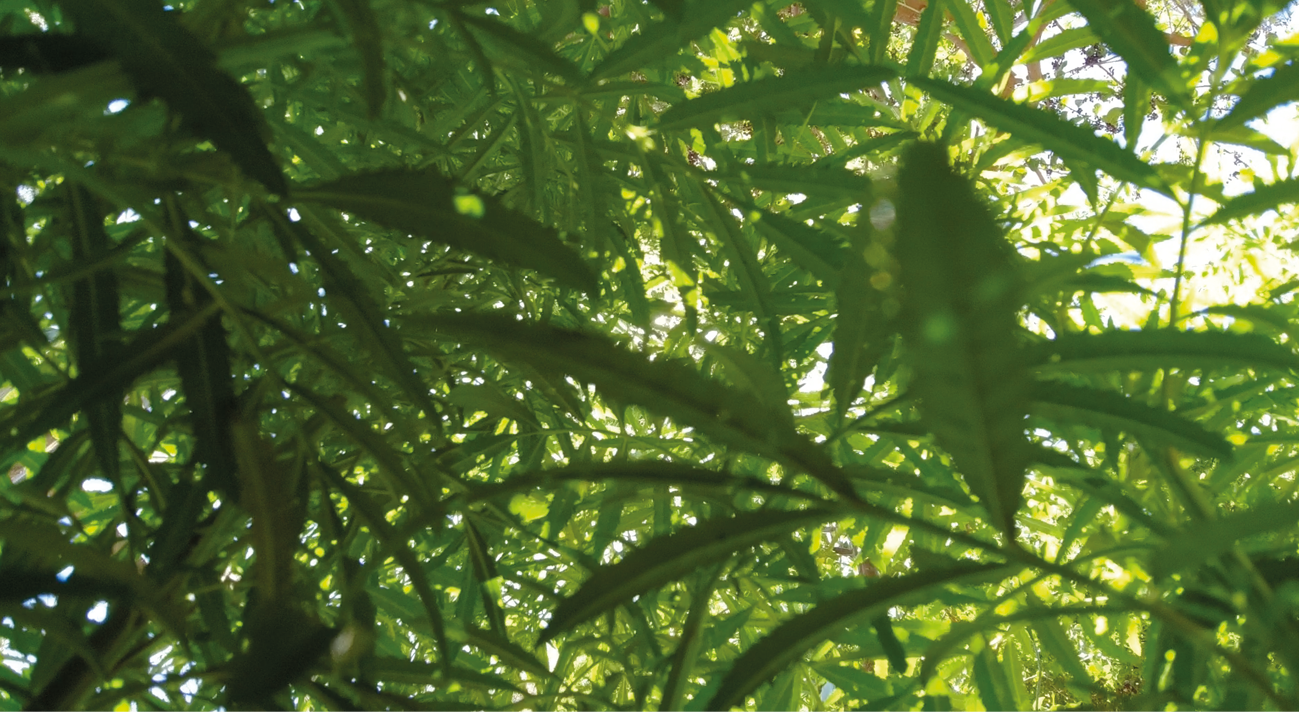
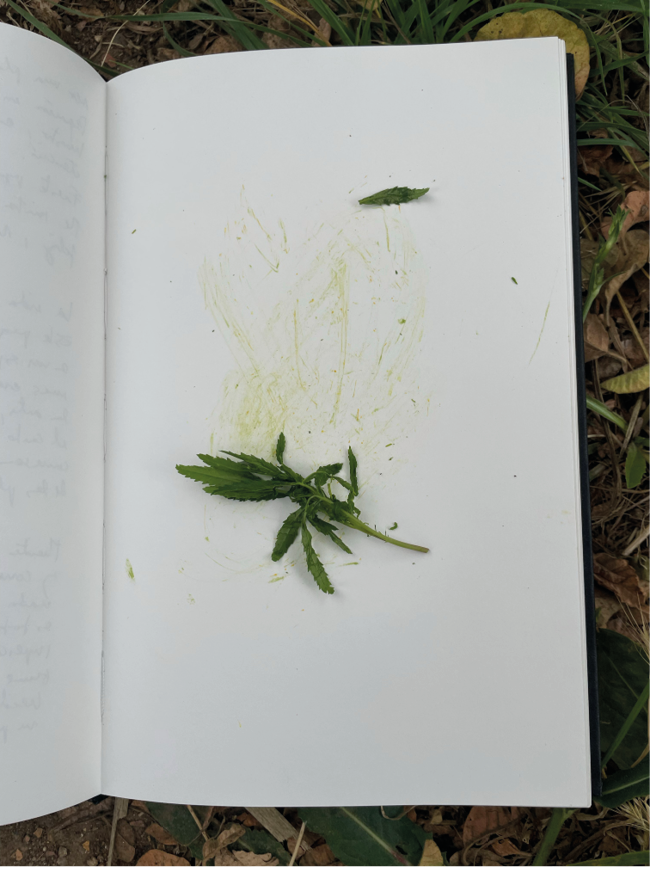
Figures 7 and 8.
In conversation with the huacatay.
Photographs by the author.
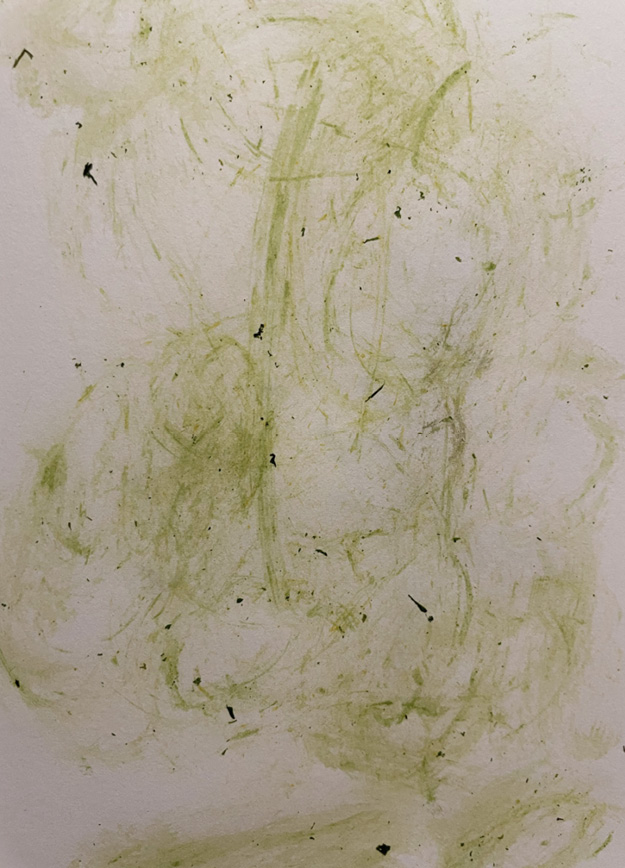
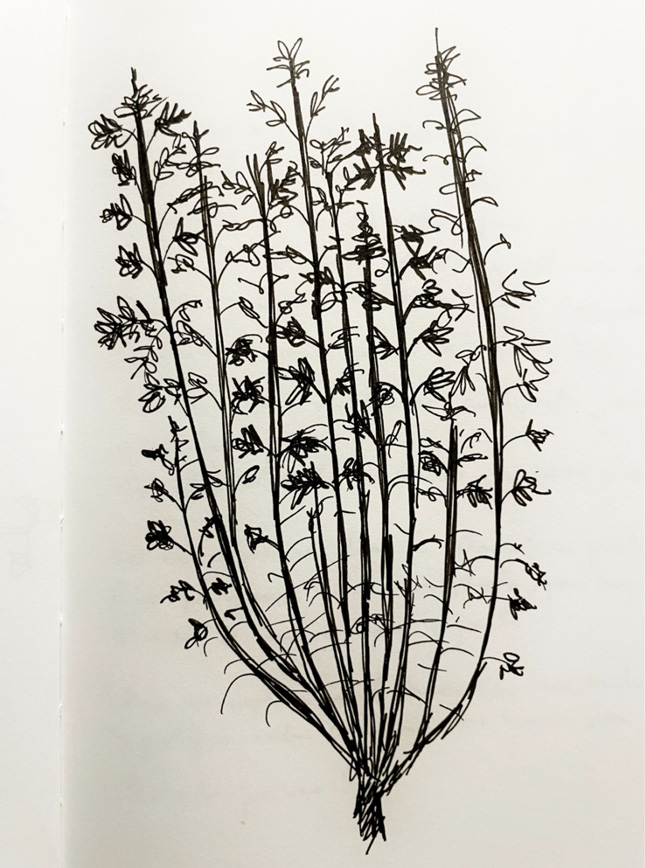
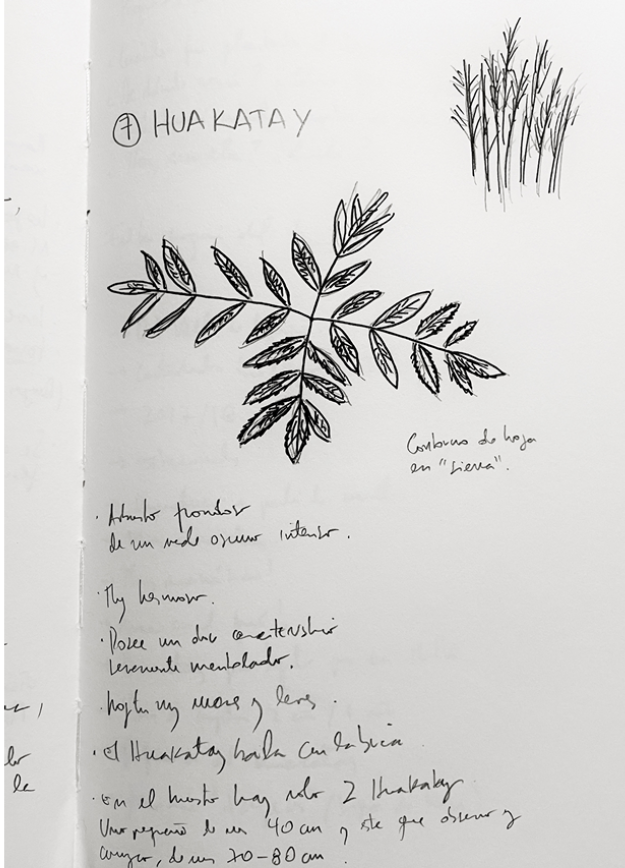
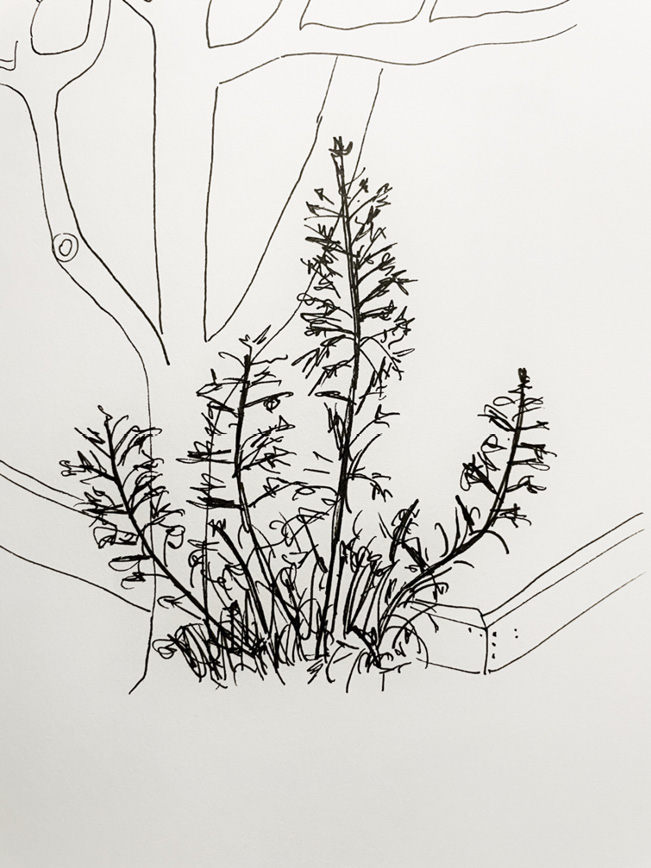
Figures 9, 10, 11 and 12.
The hand that knows huacatay.
Sketches by the author.
Each plant communicates with each person uniquely. The relationship with plants is territorialised rather than universal or abstract. Thus, the plant world requires tasting, testing, smelling and contemplating. Experience and practice are what allow for an understanding of the other languages of plants. Silvia’s story exemplifies this. However, the plant world – being pure extroversion (Coccia 2017) – is, in a way, offered to relationality with others, particularly with humans (Achondo 2023). In a sense, plants have returned, establishing themselves as new interlocutors in the exploration of the future, alternative territorial designs and socio-environmental crises. Having been displaced by extensive botanical and biological colonisation, they have returned with new languages, knowledges and epistemologies (Gagliano 2020, Gagliano et al. 2017).
Silvia’s story reveals how she has faced discrimination throughout her life and how she has personally endured the effects of colonialism. Plants and the land have allowed her to resist and remain steadfast in her Andean worldview. The act of giving back to the earth holds a special place in her ritual practice – a way of expressing gratitude, returning and giving back what has been received. For Silvia, thought is fundamental – not so much words, but the act of thinking when approaching plants. This thought is connected to her history, her family and her culture. All of this thinking accompanies her as she gathers, preserves, cares for and shares the plants.
It is important to recognise the counter-colonial dimension of huacatay in the garden: on the one hand, it resists being labeled as an ‘invasive’ or ‘exotic’ plant, which can carry a pejorative connotation from certain conservationist and botanical perspectives. On the other hand, it resists as a companion to Silvia and her Andean worldview. The mere presence of the huacatay in the garden challenges purist visions of nature and how it should be organised. Silvia reterritorialises the huacatay in its new location – a strange, non-native and exogenous place – so that the plant can flourish, reshaping the space and creating new relationships and human practices in the process. Together, Silvia and the huacatay resist colonialist views of both culture and botany. Plants and humans share this right to be, to exist and to live. This is also why the huacatay takes on such unusual relevance.
In this sense, it is interesting to consider Graham Harman’s (2024) ‘immaterial’ reflections, according to which objects not only do things but are also something beyond what humans can comprehend. According to Harman (2024), a philosopher from the school of Object-Oriented Ontology (OOO), objects are more than what they do and more than what they are composed of. Thus, huacatay is more than just a medicinal herb (for humans) and more than what we can describe in terms of classification and taxonomy (constructed by humans). This, I believe, is precisely what the huacatay in the garden is demonstrating: not only that it can heal, help and contribute to human health, but that, as huacatay (in itself), it escapes any closed classification, surprises us with unexpected processes, and remains hidden from absolute human understanding.
Harman (2024) questions the principles of Latour’s actor-network theory, particularly its tendency to reduce things to their actions, connections and relationships. According to the American philosopher, objects, things and people cannot be interpreted or reduced solely in terms of their relationships. They possess an ontological individuality. Harman (2024) argues that it is from this reality and its unassailable surplus that we generate links, stories and connections. Although this position is debatable, it seems important to approach huacatay as the plant that is territorialised in the garden – in that specific place and not another, alongside those particular plants and not others; in that specific hospital located within that basin and not another. At the same time, it is necessary to understand huacatay as an actant within a much broader network or web of correspondences (Ingold 2021). These correspondences emerge as processes that change and evolve over time, modifying relationships through ongoing dialogues. In this sense, it is interesting to understand not only what happens between huacatay and Silvia, but also between that huacatay and other people involved in the life of the garden, as well as those who have come to know huacatay through the garden. A series of dialogues, connections and encounters unfolds in response – collectively shaping the territory and the territorialities that huacatay has been weaving. The focus on the subject should not overlook the importance of the relationships that subjects create. Without resorting to metaphysical or essentialist positions, the huacatay in the garden and Silvia’s huacatay complement the huacatay to which I relate. They are all the same huacatay, and at the same time they continue to elude total understanding because of their non-human nature: their existence as plant. The wider network of human and non-human agents in relation to the huacatay in the Hospital garden remains to be explored in greater depth.
By focusing attention and reflection on the agency of the huacatay in the garden, a new dimension of space emerges. On one hand, there is the presence of a specific plant located in the here and now of a garden, which in turn is situated in a specific region of the Aconcagua basin, and so on. In other words, a territorialised perspective opens up new considerations about space. Put differently, it is the huacatay itself, as a reterritorialised plant, that acts within the space. Its rooted presence already functions as a focal point of territorial influences and effects. The huacatay in the garden distances humans from their anthropocentrism and anthropomorphism, because it has simply persisted in its life as a plant and has not allowed itself to be domesticated by language or human representation. Possibly because it is not a well-known plant in the region and, for a much more interesting reason that remains to be investigated, because of its adaptive capacity in terms of climate change. The huacatay of the Limache garden has come down from the heights of the Andes in northern Chile, acclimatised to a different climate and put down roots in a different land. More precisely, it came here, to Limache, and thanks to Silvia’s hands, it found a climate suitable for its regeneration and life. The climate, in turn, as an actor, has allowed the mobility and reterritorialisation of this particular huacatay and its proliferation.
If we now focus on the relationships, there is no doubt that Silvia and her team are strong actants. Silvia has not only formed a connection with huacatay as a plant but with this particular huacatay – brought in and territorialized in a foreign space. Without knowing the plant’s potential in that specific environment, huacatay did what it does by relying on this alliance with Silvia. In this way, the relationship reshaped Silvia’s actions and the significance of huacatay in the garden. Consequently, it also influenced the presence of the community garden at the hospital, the hospital itself and the relationships between healthcare professionals and the world of medicinal plants. The plant density of huacatay constitutes a focal point of attraction within the territory.
Following Harman’s (2024) ideas, the huacatay-object is fragile – it depends on watering, care and sunlight. Its relevance (for humans) depends on humans approaching it. The huacatay-as-object possesses its own autonomous and fragile plant life. Perhaps with no particular interest in the life of the hospital, the huacatay seeks to nourish itself through its roots and grow to reach its full potential as an herb. Its life will likely be short (a year or a bit more at most), and after that, it will only remain through regeneration via seeds (Figure 13) so that its plant life can continue. In this way, the presence of huacatay in the garden will endure. What is worth reflecting on is that the fragility of this plant-object transformed the territory and the life unfolding within it, even extending its potentialities far beyond. The symbioses (Harman 2024) that huacatay has facilitated help us understand that neither the garden, the hospital, nor Silvia are mere spectators of huacatay’s life – just as huacatay itself is not a passive agent, available for whatever may come. The symbioses – that is, the significant moments that the huacatay-object experienced, enabling broader transformative processes – are what truly matter and allow us to understand territorial dynamics more deeply and comprehensively.
The tension between Harman and Latour is interesting theoretically speaking because it has practical consequences. In the case of huacatay, it allows me to understand that the emotional, biocultural and biographical bond established between Silvia and the herb has outstanding strength and importance. They have been co-constituted in some way. But at the same time, it alerts me to return to the plant, isolated from its relationships, human and other-than-human, and try to explore what it itself suggests, communicates and establishes as a plant. It is a matter of invoking relationships without forgetting their total otherness.
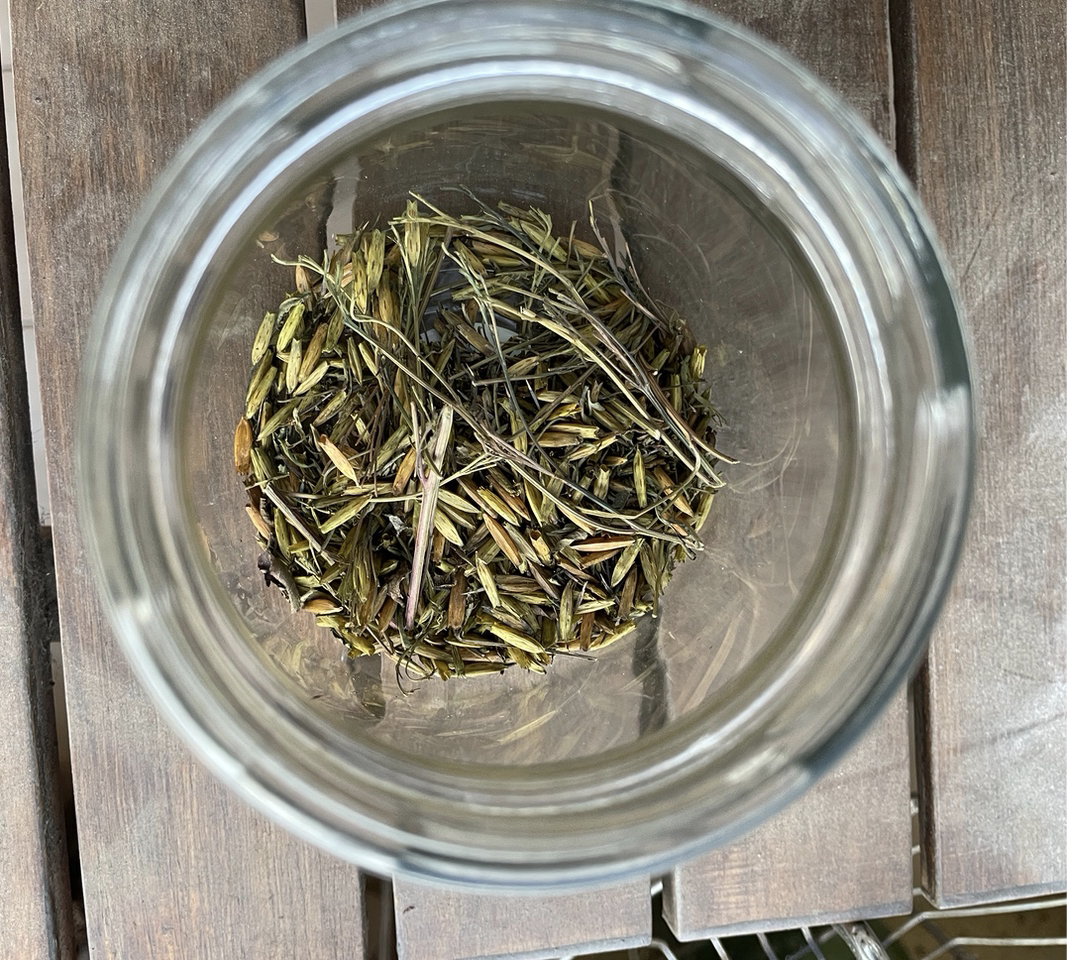
Figure 13.
Huacatay seeds.
Photograph by the author.
The creative and exploratory exercises – based on drawings, sketches and images – allow for a deeper understanding of huacatay: its forms, shades, aromas and movements. But they also encourage speculation about its affective ecologies (Achondo 2026, 2023, Gil-Fournier 2022, Giraldo and Toro 2020, Weik von Mossner 2017, Gregg and Seigworth 2010): the huacatay and the researcher resting together one morning; Silvia and her care for the plant; huacatay cut for medicinal use by humans; the huacatay garden organising cleaning and maintenance activities; huacatay seeds carefully stored in the ‘Wali Yapu’ facility; huacatay being ingested by humans suffering from pain or brewed into an infusion shared with Silvia (Figure 14); the wind swaying the plant’s pointed leaves; the soil sensing the growth of huacatay’s roots; and the small insects and birds approaching the plant. All of this and more happens, at times, without human awareness – as an act of other-than-human life that shapes territories, designing for the future, adapting to constant change, and seeking the flourishing and regeneration of life.
In the same way, drawings in particular allow for a representation of time and, therefore, a reflection on the temporalities present in the garden and linked to the life of the huacatay. As the researcher draws, things, feelings, gazes, events happen, marking what happens over time and capturing it in the sketch. Unlike a photograph or a ‘snapshot’ from a video, drawing – and the presence of the person drawing – becomes an important tool for narrating processes that unfold in space. In this sense, some things became clear: the affection expressed in Silvia’s relationship with huacatay (Figures 15 and 16) and the calmness of the plant-designed space – that is, the garden. Regarding this affective quality, it is interesting to highlight how the small territory located behind the Limache Hospital generates a particular affective atmosphere (Moriceau 2020, Buser 2014, Anderson 2009).
While some authors emphasise human subjectivity in relation to the environment (Anderson 2009) and the potential for shared experience within a space (Buser 2014), it seems crucial to emphasise the non-human dimension in the creation of these atmospheres. In this context, the question concerns the huacatay plants present in the garden. It is precisely through being there – thinking territorially and learning with the hands that draw, or fail to draw – that one shares in the atmosphere of the garden. As shown (Figure 1), the hospital is located in an urban area with heavy traffic. It is not a quiet zone. While I was making the sketches, a group of children played and shouted nearby, and a group of volunteers chatted under a small shelter in the centre of the garden. Human noise and sounds were constant. Yet, the vegetal atmosphere – filled with scents (including the fresh, minty aroma of huacatay), shades (including the deep, dark green of huacatay) and forms (the dense branches and serrated leaves on the narrow, upright stems of huacatay) – shaped the environment, giving it a distinct character. I felt the calmness of the garden, like a kind of oasis of peace in the backlot of the hospital. I have no doubt that this was made possible by the vegetal action of a thoughtfully designed garden.
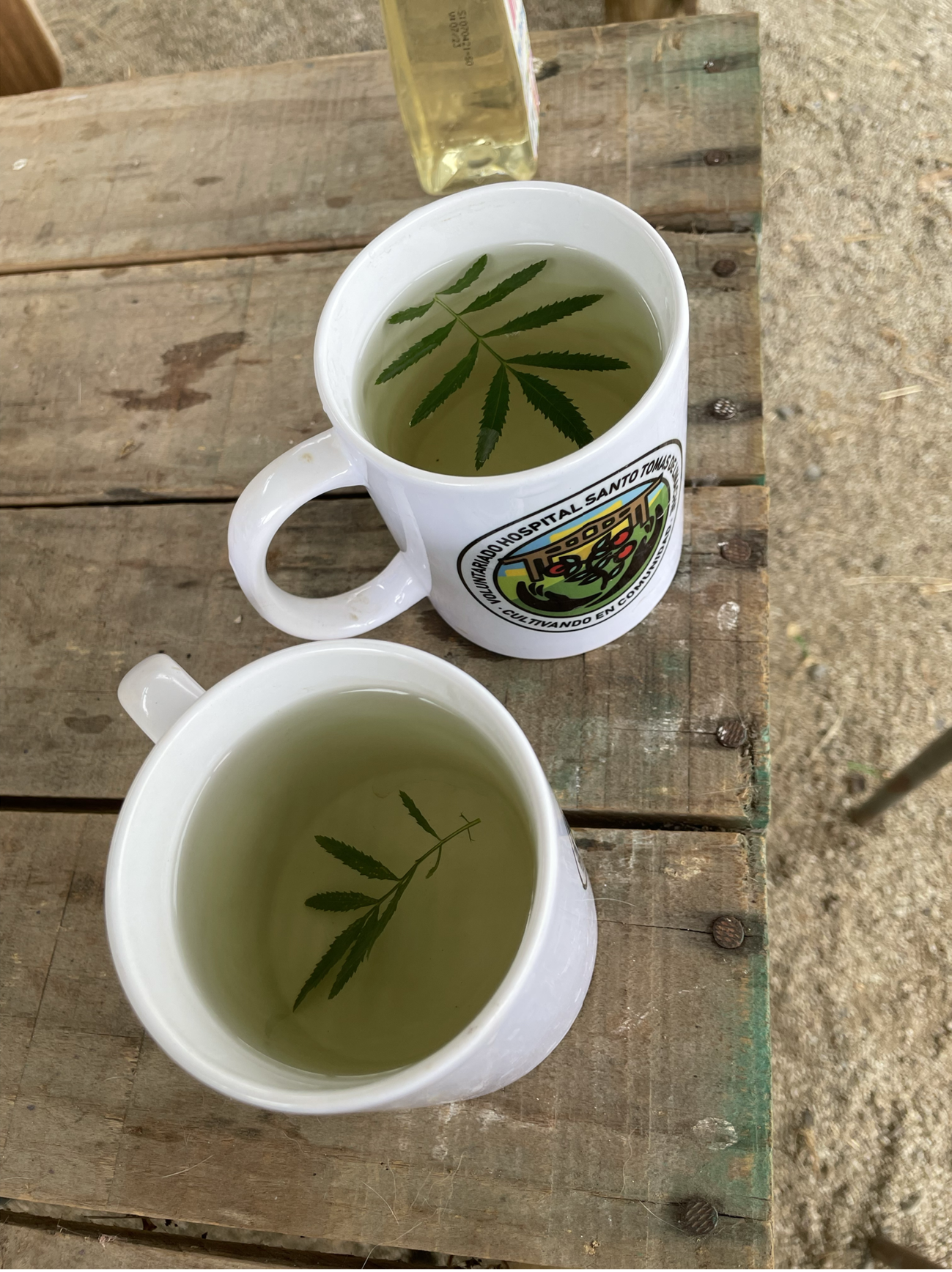
Figure 14.
Huacatay tea.
Photograph by the author.
Giraldo (2024), in his beautiful essay on useful plants, states that ‘plants are a model of existence’ (2014: 98). This assertion was precisely what I felt, perceived and observed while in the garden. My field notes from the last days of February 2025 recorded the ‘strength of huacatay’s proliferation in the garden – the presence of a plant that seemed, in a way, happy, vital, and healthy’. While walking through the small garden, huacatay caught my attention. Its presence and outward expression revealed it to be a significant herb. Approaching it, spending time with it and getting to know it allowed me to rediscover the garden and the life of the plants within it – a way of existing, of being and becoming, as an alternative to the urban noise. Or rather, as a space and atmosphere of affects distinct from those saturated by the constant rhythms of human life, all too human.
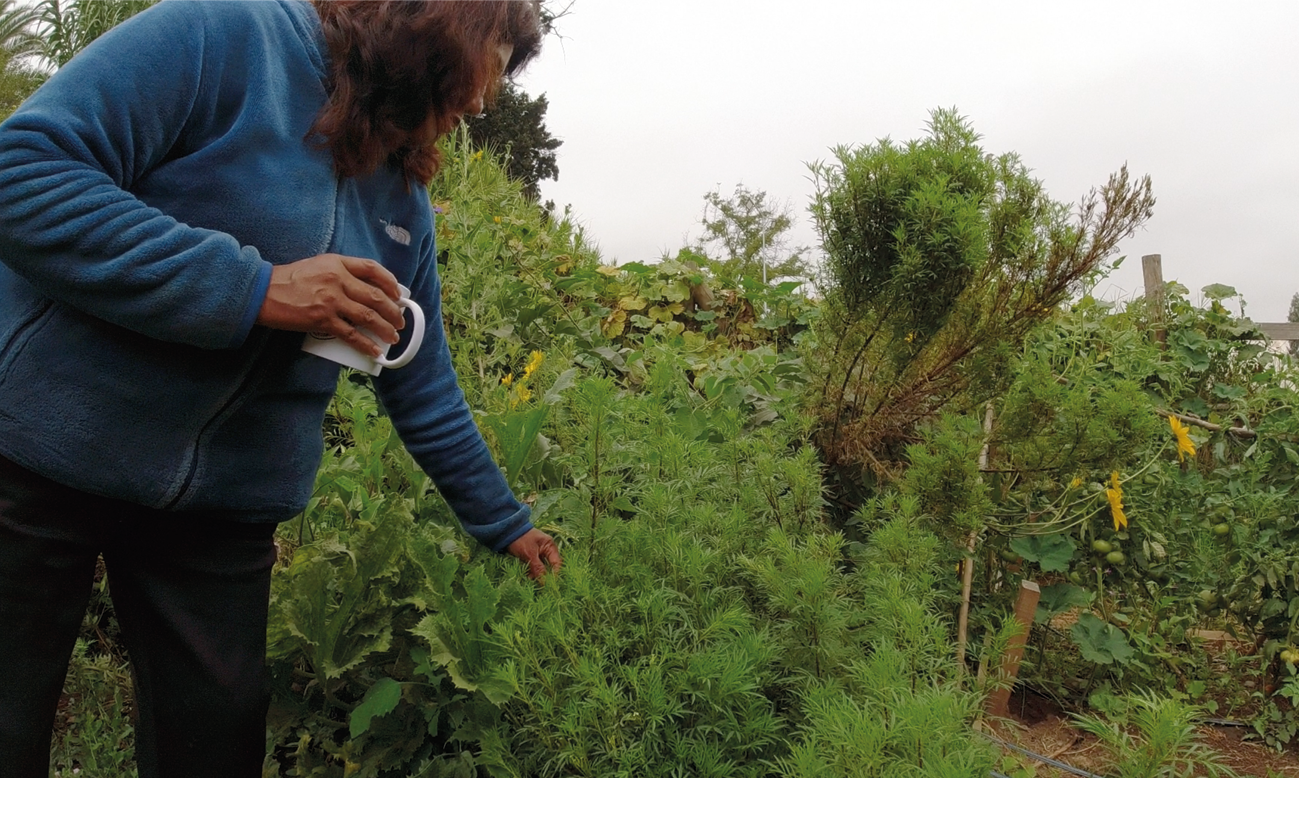
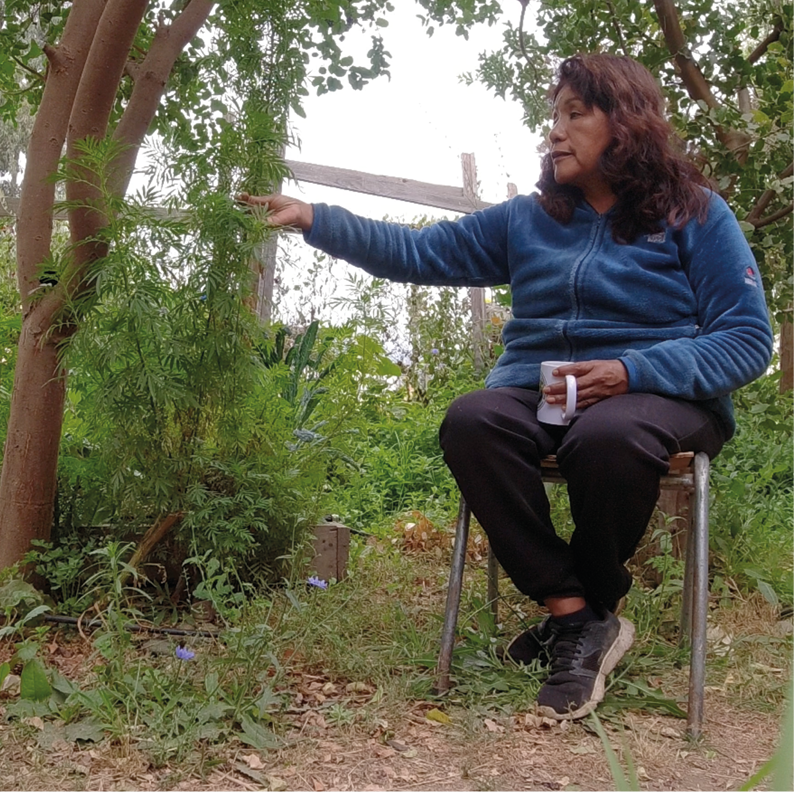
Figures 15 and 16.
Tenderness in the vegetable garden.
Photographs by the author.
Designing alternative territories for habitable futures involves rethinking the role of plants. It requires reinterpreting their agencies, potentialities and modes of existence (Despret 2021). Huacatay, as both a medicinal herb and a reterritorialised plant in the community garden, has generated a network of concrete relationships connected to people seeking relief from ailments, the institutional structure of Western medicine represented by the hospital, the plant life of the garden and a series of other connections, including those explored in this research and the knowledge of the yerbateros from the Aconcagua River basin.
Who designs? Who designs what and for whom? Who is in control? Who claims to hold the power? Those are interesting and relevant questions. It is not huacatay that designs the garden, but it shapes it through its regeneration, growth, changes and movements. Along with the other plant varieties, plant life is creating a new territory behind the hospital, not only giving rise to new languages and expanding the imagination (Marder and Aloi 2023). Furthermore, it shapes relationships and affects people. Therefore, each plant, and the network of territorialised plants as a whole, configures particular territories and redesigns space, offering an alternative way of living. That is, it gives shape and meaning to relationships between humans and between humans and the plant world. In some sense, huacatay has even shaped part of Silvia’s life. Huacatay accomplishes this beyond its biocultural history (where it comes from and how it has been interpreted by Andean culture) through its new territorialisation in Limache. Its life as a plant asserts itself through what it does, what it can do and what it is. Even in the absence of huacatay, while waiting for it to reappear in the garden, Silvia and huacatay together form a territory, establishing a dynamic, symbolic, emotional and therapeutic-nutritional relationship.
This approach could certainly apply to other plants; however, the huacatay at the hospital holds special significance because of its history of reterritorialisation, its connection with Silvia and its foreign identity. Allowing plants to design space is a key task for the emergence of new, non-anthropocentric territories, even when these territories are projected by and for humans. Plant life, often underestimated – especially when we speak of herbs and small plants – reveals an unexpected potential. Giving space to their dynamics, processes and ways of appearing could be a promising path in the context of an environmental crisis. This is one of the key lessons of the Limache huacatay. After all, ‘Wali Yapu’, as mentioned earlier, means ‘fertile land’ or ‘good garden’ in Aymara language. That small patch of land would not be as fertile without the presence of huacatay, nor would many of the relationships that people have established with the plant, the garden and their lives in the territory.
This article is the result of the ANID ANILLOS ATE230072 ‘Pluriversos Climáticos’ project, funded by the National Research Agency of Chile. I thank Silvia Vega for her generosity, kindness, and wisdom – without which this article would not have been possible.
Achondo, P.P. 2026. ‘Alerces en el Antropoceno. El pathos como aproximación territorio-afectiva a los bosques del sur de Chile’. Estudios Geográficos 86 (299), 1116. https://estudiosgeograficos.revistas.csic.es/index.php/estudiosgeograficos/article/view/1116/1596
Achondo, P.P. 2025a. Alerces: Reservorios del tiempo. Santiago: Ediciones Libro Verde.
Achondo, P.P. 2025b. ‘Memorias, plantas y futuros: los gestos del jardinero en los bosques de alerce del sur de Chile’. Antípoda. Revista de Antropología y Arqueología 61: 25-49.
https://doi.org/10.7440/antipoda61.2025.02
Achondo, P.P. 2023. Entre los gestos del bosque : eco-relatos patéticos en el antropoceno y las huellas del tiempo en la lectura del espacio: alerces, tejuelas y humanos en el sur de Chile. [Tesis Doctoral] https://repositorio.uchile.cl/handle/2250/196841
Aldunce, P., F. Haverbeck and R. Rondanelli. 2025. Informe de devolución: Adaptación transformacional ante lluvias extremas y sequía en un clima cambiante: Chañaral y Valle de Aconcagua, Chile. Santiago, Chile. https://doi.org/10.17605/OSF.IO/USYQM
Aliste, E. and A. Núñez. 2020. Geografías del devenir. Narración y hermenéutica geográfica. Santiago: LOM.
Anderson, B. 2009. ‘Affective atmospheres’. Emotion, Space and Society 2: 77–81.
Barbadillo, P. 2022. ‘Beneficios del huacatay, Suico o chinchilla. Hierbas Medicinales: https://www.youtube.com/watch?v=mzu3btqi2xg&ab_channel=PabloBarbadillo%28espacio%C3%91angapiry%29 (accessed 26 March 2025)
Billi, M., B. Reyes and N. Prieto-Gavilán (Coordinadores). 2023. Tejiendo redes para una gobernanza colaborativa del agua en la cuenca de Aconcagua. Santiago, Chile. Center for Climate and Resilience Research cr2.
Braidotti, R. 2020. El conocimiento posthumano. Barcelona: Gedisa.
Buser, M. 2014. ‘Thinking through non-representational and affective atmospheres in planning theory and practice’. Planning Theory 13 (3): 227–43.
https://doi.org/10.1177/1473095213491744
Ciocoletto, A., R. Casanovas, M. Fonseca, S. Ortiz Escalante and Blanca Valdivia (Col·lectiu Punt 6). 2019. Urbanismo feminista. Por una transformación radical de los espacios de vida. Barcelona: Virus Ediciones.
Coccia, E. 2011. La vida sensible. Buenos Aires: Marea.
Correa, M. 2021. La historia del despojo; el origen de la propiedad particular en el territorio mapuche. Santiago: Ceibo.
Cuomo, C. 1998. Feminism and Ecological Communities: An Ethic of Flourishing. London: Routledge.
DECREE 21, Ministry of Health, Chile. 2023: https://www.bcn.cl/leychile/navegar?idNorma=1199560
Deleuze, G., and F. Guattari. 2002. Mil mesetas. Capitalismo y Esquizofrenia. Valencia: Pre-textos.
Despret, V. 2021. Living as a Bird. Boston: Polity.
Diaz-Cedillo, F., M.A. Serrato-Cruz, J. CruzMarcial, M.G. Sánchez-Alonso and V. López-Morales. 2013. ‘Compuestos mayoritarios del aceite esencial en órganos de una población de Tagetes coronopifolia Willd’. Revista Fitotecnia Mexicana 36: 405–11.
Escobar, A. 2017. Autonomía y diseño, La realización de lo comunal. Buenos Aires: Tinta Limón.
Escobar, A. 2014. Sentipensar con la tierra, Nuevas lecturas sobre desarrollo, territorio y diferencia. Medellín: Universidad Autónoma Latinoamericana UNAULA.
Fuentes, C. and M. Cea. 2017. ‘Reconocimiento débil: derechos de pueblos indígenas en Chile’. Perfiles latinoamericanos 25 (49): 55–75.
https://doi.org/10.18504/pl2549-003-2017
Gagliano, M. 2018. Thus Spoke the Plant: A Remarkable Journey of Groundbreaking Scientific Discoveries and Personal Encounters with Plants. Berkeley: North Atlantic Books.
Gagliano, M., J.C. Ryan and P. Vieira (eds). 2017. The Language of Plants. Science, Philosophy, Literature. Minneapolis: University of Minnesota Press.
Gil-Fournier, M. 2022. Las casas que me habitan. Madrid: Arquitecturas Afectivas Ediciones.
Giraldo, E. 2024. Sumario de plantas oficiosas. Un ensayo sobre la flora. Buenos Aires: Ediciones Godot.
Giraldo, O.F. and I. Toro. 2020. Afectividad ambiental: sensibilidad, empaca, estéticas del habitar. Xalapa, Veracruz: El Colegio de la Frontera Sur.
Grados, M.V. and F.P. Peláez. 2012. ‘Especies vegetales utilizadas por pobladores de Berlín, Bagua Grande (Amazonas, Perú) 2011–2012’. Rebiolest, 2: e36.
Gregg, M. and G.J. Seigworth. 2010. The Affect Theory Reader. Durham, NC: Duke University Press.
Haraway, D. 2016. Staying with the Trouble, Making kin in the Chthulucene. Durham, NC: Duke University Press.
Haraway, D. 2008. When Species Meet. Minneapolis: University of Minnesota Press.
Harman, G. 2024. Inmaterialismo. Santiago: Roneo.
Ingold, T. 2021. Correspondences. Oxford: Polity Press.
Karimian, P., G. Kavoosi and Z. Amirghofran. 2014. ‘Anti-oxidative and anti-inflammatory effects of Tagetes minuta essential oil in activated macrophages’. Asian Pacific Journal of Tropical Biomedicine 4 (3): 219–27.
https://doi.org/10.1016/S2221-1691(14)60235-5
Latour, B. 2005. Reassembling the Social: An Introduction to Actor-Network-Theory. Oxford: Oxford University Press.
Lawrence, A. 2022. ‘Listening to plants: Conversations between critical plant studies and vegetal geography’. Progress in Human Geography 46 (2): 629–51.
Mansilla-Quiñones, P., J. Quintero and A. Moreira-Muñoz. 2019. ‘Geografía de las ausencias, colonialidad del estar y el territorio como sustantivo crítico en las epistemologías del Sur’. Utopía y praxis latinoamericana 24 (86): 148–61.
Marder, M. and G. Aloi. 2023. Vegetal Entwinements in Philosophy and Art: A Reader. Cambridge: The MIT Press.
Martínez, C., A. Fernández and P. Rubio. 2012. ‘Caudales y variabilidad climática en una cuenca de latitudes medias en Sudamérica: río Aconcagua, Chile Central (33ºS)’. Boletín de la Asociación de Geógrafos Españoles 58: 227–48.
Moriceau, J-L. 2020. Afetos na pesquisa acadêmica. Belo Horizonte, MG: Fafich/Selo PPGCOM, UFMG.
Murga-Gutiérrez, S.N., J.C. Alvarado-Ibáñez and N.Y. Vera-Obando. 2012. ‘Efecto del follaje de Tagetes minuta sobre la nodulación radicular de Meloidogyne incognita en Capsicum annuum, en invernadero’. Revista Peruana de Biología 19: 257–60.
Myers, N. 2017. ‘Becoming sensor in sentient worlds: A more-than-natural history of a black oak savannah’. In G. Bakke and M. Peterson, Between Matter and Method: Encounters in Anthropology and Art, pp. 73–97. New York: Bloomsbury.
Oyarzo, C. 2025. ‘¿Una nación en bosquejos? Procesos de identificación aymara en Chile durante el periodo transicional, 1990–1993’. Historia Crítica 95: 103–26.
https://doi.org/10.7440/histcrit95.2025.05
Padín, A. 2018. ¿Qué es el huacatay? Apuntes sobre la enigmática hierba del Perú: https://www.mercadoflotante.com/blog/que-es-huacatay-hierba-peru (accessed 26 March 2025).
Perich, M.J., C. Wells, W. Bertsch and K.E. Tredway. 1995. ‘Isolation of the insecticidal components of Tagetes minuta (Compositae) against mosquito larvae and adults’. Journal of the American Mosquito Control Association 11 (3): 307–10.
https://www.biodiversitylibrary.org/part/126736
Steane, M-A. 2018. ‘Recorrer Valparaíso: croquis y anotaciones como un método de investigación urbana’. In D. Joly, La Observación: el urbanismo dede el acto de habitar. Valparaíso: Ediciones e[ad].
Rico, M.N. and O. Segovia (eds). 2017. ¿Quién cuida en la ciudad? Aportes para políticas urbanas de igualdad. Libros de la CEPAL, 150. Santiago: Comisión Económica para América Latina y el Caribe (CEPAL).
Ulloa, A. 2021. ‘Repolitizar la vida, defender los cuerpos-territorios y colectivizar las acciones desde los feminismos indígenas’. Ecología Política 61: 38–48.
Uribe, S. and A. Panez. 2022. ‘Continuidades y rupturas del extractivismo en Chile: Análisis sobre sus tendencias en las últimas dos décadas’. Diálogo andino 68: 151–66.
https://dx.doi.org/10.4067/S0719-26812022000200151
Visintin, A.M. and G. Bernardello. 2005. ‘Morfología y anatomía floral de Tagetes minuta L. (Asteraceae)’. Arnaldoa : revista del Herbario HAO 12: 8–15.
https://www.biodiversitylibrary.org/part/124599
Weik von Mossner, A. 2017. Affective Ecologies: Empathy, Emotion, and Environmental Narrative. Athens, OH: The Ohio University Press.
Zapata, C. 2004. ‘Atacameños y aymaras: El desafío de la “verdad histórica”’. Estudios Atacameños, 27: 169–87.
https://doi.org/10.4067/S0718-10432004002700008
Pedro Pablo Achondo Moya holds a Bachelor’s degree in Philosophy, a Master’s degree in Moral and Practical Theology (Facultés Loyola de Paris), and a Ph.D. in Territory, Space and Society (University of Chile). Since 2019, he has been teaching at the Pontifical Catholic University of Valparaíso (Chile). His research focuses on topics related to plant-centred thinking, Latin American theology, posthumanism, ecology, environmental philosophy and geohumanities in the context of climate change. He is a postdoctoral researcher on the Anillos ‘Climate Pluriverses’ ATE230072 project at the Pontifical Catholic University of Valparaíso (PUCV). He has recently published Alerces. Reservoirs of Time (Libro Verde, 2025), a fascinating journey through the alerce (Fitzroya cupressoides) forests and their territorial, affective and material networks.
Email: pedro.achondo@pucv.cl
https://orcid.org/0000-0002-1247-5412
1 An earlier version of this article was originally written in Spanish: ‘Plantas, diseñando territorios. El caso del huacatay en el huerto comunitario del hospital de Limache’. Cuadernos Del Centro De Estudios De Diseño Y Comunicación 270 (2025): 219–35; however, for this publication, it has been expanded, revised and improved, thanks to the feedback from the reviewers, whom I would like to thank very much for their work and suggestions.