The Journal of Population and Sustainability
Information
The Journal of Population and Sustainability (JP&S) is an open access interdisciplinary journal published by The White Horse Press exploring all aspects of the relationship between human numbers and environmental issues. The journal publishes both peer reviewed and invited material. It is intended that the JP&S act as an interdisciplinary hub facilitating collaboration and furthering the development of the field. While generously supported by environmental charity Population Matters, the JP&S is entirely editorially independent and welcomes contributions from scholars with a variety of perspectives on the role of population in environmental problems. The views and opinions expressed by authors are their own and do not necessarily reflect those of the editor, the editorial board or publisher.
www.whp-journals.co.uk/JPS
Editor: David Samways (Norwich Institute for Sustainable Development, University of East Anglia)
Editorial Board:
Sunday Adedini (Wits University, South Africa & Obafemi Awolowo University, Nigeria)
Ugo Bardi (University of Florence, Italy)
Jeroen van den Bergh (Universitat Autònoma de Barcelona, Spain)
Aalok Ranjan Chaurasia, MLC Foundation and Shyam Institute
John Cleland (London School of Hygiene and Tropical Medicine, UK)
Diana Coole (Birkbeck, University of London, UK)
Sara Curran (University of Washington, USA)
Céline Delacroix, Senior Fellow Population Institute, FP/Earth Project Director,
Adjunct Professor University of Ottawa
Kerryn Higgs (University of Tasmania, Australia)
Theodore Lianos (Athens University of Economics and Business, Greece)
Graeme Maxton (Club of Rome, Switzerland)
Fred Naggs (Natural History Museum, UK)
Jane O’Sullivan (University of Queensland, Australia)
William E. Rees (University of British Columbia, Canada)
Bill Ryerson (Population Media Centre, USA)
Submissions:
We invite contributions from the social sciences, humanities, environmental and natural sciences including those concerned with family planning and reproductive health. We also invite contributions from those working for NGOs with interests in population and environmental issues. We are interested in publishing original research papers, reviews
of already published research, opinion pieces and book reviews.
For submission details please see our website: www.whp-journals.co.uk/JPS
Acknowledgements:
The editor would like to thank the anonymous reviewers for their assistance.
Cover images:
Sunflowers: Sarah Johnson / Crowd: Alejandro Núnez Frometa, CC BY-SA 4.0
Design by Clare Thornhill Email: clare@flidesignltd.com
ISSN 2398-5496
Contents
Editorial: population growth, climate policy and sustainable futures 5
David Samways – Editor
A new definition of global overpopulation, explained and applied 17
Philip Cafaro
Essential yet overlooked: faculty insights on integrating population dynamics into university curricula 53
Celine Delacroix, Paige Passano, Matt Matusiewicz,
Nicole Bergen and Ndola Prata
Is legal abortion required for a sustainable population? 95
Richard Grossman
Thomas More’s Utopia as a steady state economy 107
Theodore P. Lianos
10.3197/whpjps.63887831800455 Open Access – CC BY 4.0
© 2026 Author
Editorial
Population growth, climate policy and sustainable futures
David Samways
The silence at the core of contemporary climate policy
A perplexing tension exists at the heart of contemporary climate policy. While scientific evidence identifies population growth as a primary driver of greenhouse gas emissions, international climate negotiations rarely address it directly. This gap reflects complex political and cultural considerations about discussing population – considerations that may affect our collective capacity to address the climate crisis comprehensively.
The most recent full report (AR6) from the Intergovernmental Panel on Climate Change is clear on the role of population growth where it comes to
carbon emissions:
Globally, gross domestic product (GDP) per capita and population growth remained the strongest drivers of CO2 emissions from fossil fuel combustion in the last decade (robust evidence, high agreement). (IPCC, 2023a: 217)
However, this emphasis diminishes in policy documents. The 64-page Summary for Policy Makers, the document that shapes international negotiations, does not explicitly mention population growth as an indirect driver and acknowledges only obliquely that ‘slow technological change, high levels of global population growth, and high fragmentation as in the Shared Socio-economic Pathway SSP3, may render modelled pathways that limit warming to 2°C (>67 per cent) or lower infeasible (medium confidence)’ (IPCC, 2023b: 21). The absence of discussion regarding mitigation and adaptation policies aimed at addressing population growth in AR6 significantly contrasts the approach taken in the IPCC’s Fifth Assessment Report (AR5).
From recognition to retreat: The IPCC’s evolving position
While the AR5 Summary for Policy Makers flagged population growth as a vulnerability risk, the full report dealt with the issue at some length, acknowledging it as an indirect driver of climate altering pollutant (CAP) emissions and explicitly discussing family planning policies:
Providing access to family planning saves women’s lives by reducing the total number of births and, in particular, through the reduction of births in high-risk groups... while simultaneously reducing total fertility and subsequent CAP emissions. (IPCC, 2015: 741)
The AR5 report emphasised that meeting unmet need for contraception in high-fertility, high-vulnerability regions such as the Sahel could help reduce human suffering in the face of climate change. It noted the importance of reproductive health services not only in developing countries but also in wealthy nations like the United States with high per capita emissions and unmet reproductive health needs. The report connected population policy to improved maternal and child health through increased birth spacing and fewer births among very young and older mothers.
What might explain this pivot from AR5’s comprehensive approach to AR6’s more limited treatment? Political sensitivities around population likely play a role, since the topic still carries historical associations with coercion, racism and victim-blaming that make policymakers understandably cautious. The IPCC’s emphasis on behavioural and technological change may also reflect the temporal urgency of emission reductions. As Bradshaw and Brook (2014) demonstrate, demographic momentum means that even optimistic fertility reductions would take generations to significantly reduce total population size, with environmental benefits only realised by ‘our great-great-great-great grandchildren’ (16614). In the face of targets for 45 per cent emission reductions by 2030 and net-zero by 2050 (IPCC, 2023a), population policy may appear to offer limited near-term impact.
Defining and addressing overpopulation
Yet this temporal constraint may be diverting attention from crucial questions about human numbers and planetary boundaries. In this issue, Philip Cafaro addresses these directly, arguing that the Earth is currently overpopulated and that acknowledging this could strengthen sustainability efforts. Notably, he rejects framing this as choosing between addressing population versus consumption
or technology.
Cafaro observes that global population grew from two to over eight billion in a century while cascading environmental crises such as climate disruption, biodiversity collapse and ocean acidification suggest the Earth cannot sustainably support current human numbers at present consumption levels and technologies. Using the IPAT formula (Impact = Population × Affluence × Technology), he argues that, while all three factors matter, population reduction may actually be most achievable. Fertility rates have fallen dramatically worldwide when modern contraception and education are provided, and reducing population is relatively popular and inexpensive compared to significantly cutting per capita consumption or radically transforming technologies.
Cafaro’s central contribution is a formal definition of ‘overpopulation’: populations are too large if they degrade essential ecosystem services threatening future human wellbeing, or displace species enough to cause mass extinction, when these harms stem partly from unprecedented population size and would decrease significantly with smaller populations. This focuses on observable outcomes rather than speculative future transformations.
Applying this definition, Cafaro suggests that current evidence on climate change and biodiversity loss meet all his criteria for overpopulation. IPCC data confirms population growth remains a primary emission driver and conservation science indicates human displacement of wildlife due to population growth threatens mass extinction. Moreover, he argues that European population decline has enabled wildlife recovery. Cafaro’s conclusion that sustainable societies benefit from addressing all three IPAT factors simultaneously through universal family planning access and policies encouraging smaller families via democratic decision-making offers an alternative to binary policy discourses.
Reproductive rights and population sustainability
This framing connects population sustainability to human rights rather than opposing them. While fertility reduction may not deliver emission reductions quickly enough to meet 2030 or even 2050 targets, the IPCC AR5’s observations about welfare benefits of reproductive autonomy remain relevant. As Bradshaw and Brook (2014) conclude, the limited effectiveness of population policy for tackling immediate environmental crisis ‘should not be an excuse for neglecting ethical measures for fertility reduction now; it could avoid millions of deaths by midcentury and possibly keep the planet more habitable for Homo sapiens in the next’ (16615).
Richard Grossman’s contribution examines this connection through the lens of abortion access. Despite modern contraception, over 120 million unintended pregnancies occur annually worldwide. Grossman identifies 134 countries with total fertility rates at or below replacement level, of which 28 maintain severely restrictive abortion laws. While this appears to suggest that replacement-level fertility is possible without abortion access, his analysis reveals that low fertility in these contexts operates through mechanisms that impose costs on women: cross-border access (available only to those with resources), de facto tolerance creating legal uncertainty, or workarounds like Bangladesh’s ‘Menstrual Regulation’.
Drawing on 43 years as an abortion provider, Grossman emphasises that, while replacement-level fertility may be technically achievable without legal abortion, this comes through unsafe illegal procedures resulting in medical complications, infertility and death. His conclusion resonates with the IPCC AR5’s emphasis on reproductive health services as integral to climate adaptation and mitigation: achieving sustainable population without safe, legal abortion access may be technically possible but raises ethical concerns and practical inefficiencies, imposing unnecessary suffering while achieving demographic goals more slowly and incompletely.
The energy transition and population growth in developing countries
The relationship between population growth and emissions is further complicated by rapid technological and economic changes in developing regions. Previous projections assumed that developing countries would follow the Global North’s fossil fuel energy pathway and this shaped calculations suggesting that population growth in these regions would drive significant emission increases (Bongaarts and O’Neill, 2018). However, the precipitous fall in costs of solar PV, other renewables and battery storage has fundamentally altered this calculus. Many analysts now consider it possible that developing regions, particularly those with limited existing energy infrastructure such as most of Africa, might largely leapfrog fossil fuels in their development (Arndt et al., 2019; Jones, 2025; The Economist, 2025).
This potential transformation, while suggesting that the emissions impact of population growth in developing countries may be substantially lower than previously projected, does not eliminate the relevance of population dynamics. Although the largest, energy supply is only one source of carbon emissions. Growth in emissions from industry, agriculture, forestry and land use, as well as transport and buildings, are all indirectly driven by growth in GDP per capita and population. While decarbonisation is essential to tackling climate change, the IPCC’s own data shows that, between 1990 and 2019, emissions due to economic growth and population growth eclipsed reductions from technical improvements (IPCC, 2023a). Analysis published in this journal showed that population growth alone cancelled out more than three quarters of these emissions reductions (Chaurasia, 2020). Thus, despite promising technical change, limited policy attention to population is clearly unwarranted.
COP30: Silence on indirect drivers
This pattern was evident at COP30, held in Belém, Brazil in November 2025. The final communique, known as the Global Mutirão Decision (UNFCC, 2025), has been criticised for failing to reference, much less commit to, phasing out the direct driver of the climate crisis – fossil fuels. Yet COP30 also failed to address the indirect drivers – growth in per capita GDP and population growth. The Belém Declaration on Hunger, Poverty, and Human-Centred Climate Action (COP30, 2025) focused on climate change’s unequal impacts, emphasising food security and social protection systems as foundations of resilience. The declaration pledged to:
[l]ink social protection to nutrition, school feeding, livelihoods, health, agricultural extension and education services, and other interventions to promote long term resilience and adaptation in the face of adverse climate impacts. (COP30, 2025: 2)
It also committed support for small-scale food producers, smallholder farmers, fisherfolk, Indigenous Peoples, as key agents of resilience, and renewed commitments to sustainable energy transition in developing countries.
These commitments are valuable but represent only part of a comprehensive approach. While developing regions’ energy footprint may pose less of a challenge than previously thought, food security presents increasingly complex constraints. Over 800 million people currently suffer from chronic hunger, while billions more lack access to adequate, safe, nutritious food (FAO et al., 2024). The Food and Agriculture Organisation and World Bank estimate that agricultural production must double or more from 2009 levels by mid-century (Alexandratos and Bruinsma, 2012; Fukase and Martin, 2017).
This production increase is driven not only by population growth but also by changing consumption patterns. Bennett’s law captures shifts toward more resource-intensive foods, particularly meat and dairy (Godfray, 2011), which require 50–100 times more land than plant-based alternatives (Ritchie, 2021). One recent study concluded that meeting the needs of 10.4 billion people within planetary boundaries would require a largely plant-based diet (Schlesier et al., 2024). Achieving such dietary transformation involves addressing deeply
ingrained dispositions linked to individual and cultural identity – a challenge that may be at least as difficult as fertility reduction, yet one that receives more attention in policy discussions, perhaps because it appears less politically sensitive.
The educational gap: Preparing future leaders
The capacity to address interconnected challenges, climate change, population dynamics, food security, sustainable development, depends on whether future leaders understand their relationships. Céline Delacroix, Paige Passano, Matt Matusiewicz and Ndola Prata’s contribution reveals a concerning gap in this preparation. Their mixed-methods study of 125 University of California faculty investigates how they perceive population dynamics and whether they integrate it into undergraduate teaching.
The findings reveal notable disconnect. While 83 per cent consider population dynamics essential for students’ understanding, particularly regarding climate resilience, poverty alleviation, and gender equity, only sixty per cent actually discuss it in courses. Among those who do, coverage is typically minimal rather than substantial. The gap stems from systematic barriers: 54 per cent cite lack of demography training as a key obstacle, while others point to political sensitivity, time constraints, interdisciplinary complexity and concerns about classroom divisiveness around migration, reproductive rights, and historical associations with Malthusian debates and eugenics.
Population dynamics teaching lacks systematic coordination within UC. Its inclusion depends largely on individual faculty preferences rather than institutional support, resulting in fragmented coverage. Students may encounter the topic in one course but not others, with varying depth and framing. Some faculty avoid it, fearing controversy; others include it without adequate background to navigate sensitive dimensions.
This educational gap has policy implications. Students passing through UC and similar institutions will become policymakers, scientists, business leaders and informed citizens shaping future decisions. If they graduate without fundamental demographic knowledge, without understanding population momentum, age structure transitions, relationships between fertility and female education, or demographic dimensions of climate vulnerability, they may be less equipped to engage with issues international bodies currently address. Limited attention in policy discourse may thus be self-reinforcing: policymakers who never studied population dynamics may be less likely to incorporate them into climate and development frameworks.
Historical perspectives: Steady-state economics and population limits
The limited engagement with population dynamics in education and policy is interesting given the long intellectual history of thinking about sustainable population size. Theodore Lianos’s contribution examines Thomas More’s 1516 Utopia as an early conceptualisation of steady-state economics. The modern interest in steady-state economics (SSE) stems from recognition that Earth’s limited resources cannot support indefinite growth and Lianos begins by outlining the characteristics of modern SSE theory: constant population at a sufficient level, constant production at a sufficient level and institutions ensuring this stability.
More’s island nation maintains constant population through regulation. Households maintain ten to sixteen adults and marriage age restrictions help control reproduction. Any population growth that does occur is accommodated by migration to mainland colonies. Lianos argues that what makes Utopia a steady-state economy is this combination of limited land and population stability. Given that resources are limited, the ‘grow or die’ imperative of modern capitalism cannot apply; a different system of social values therefore develops. In Utopia, production exceeds consumption due to a value disposition towards sufficiency rather than luxury and the regulation of population size. The citizens of Utopia accept numerous restrictions in their private lives because they understand these as necessary for a just society. Their attitude toward luxuries and wealth is consistent with the value framework that contemporary SSE theorists consider necessary for sustainable economics.
The significance of this historical perspective is not that More’s specific prescriptions remain directly applicable, but that the fundamental question remains relevant. For over 500 years, political philosophers have recognised that finite land requires stable population for sustainable wellbeing. Yet contemporary policy discourse often treats indefinite growth as natural and inevitable, with population stabilisation mentioned only occasionally if at all. The contrast between the explicitness with which More, Plato and Aristotle centred population limits in their thinking about just societies and contemporary climate negotiations is noteworthy.
Conclusion: Toward integrated climate and demographic policy
The contributions to this issue, while addressing a diverse range of topics, can be seen to underline a notable gap between scientific findings and policy attention regarding population dynamics and climate change. While the IPCC identifies population growth as a primary driver of emissions alongside growing GDP per capita, this recognition receives limited attention in international climate negotiations, and the climate policy community. The AR6’s reduced emphasis compared to AR5 and COP30’s silence on indirect drivers suggest systematic barriers to incorporating population considerations into climate frameworks.
Several factors may explain this pattern. Historical associations with coercion and eugenics create understandable political sensitivities. The temporal dynamics of demographic change – the long lag between fertility reduction and substantial population decline – almost certainly discourages policymakers concerned with near-term emission targets. Moreover, institutional gaps in demographic training, as Delacroix and colleagues document, mean that many universities lack the ability to integrate the topic effectively across curricula relevant to future environmental policymakers. Limited educational exposure may partly explain the apparent lack of confidence of current policymakers to integrate demographic analysis into climate and sustainability frameworks.
While at one level quite reasonable, the argument about the temporal dynamics of demographic change is wanting. If demographic momentum means fertility reductions require many decades to substantially affect total population, this would seem to make earlier action more consequential rather than less relevant. Indeed, Bradshaw and Brook (2014) observe that, if fertility had been addressed immediately after WWII, enormous demographic momentum could have been attenuated and reducing future impacts would have been easier to achieve.
The contributions by Cafaro and Grossman suggest that it is not too late to address population growth through rights-based approaches (i.e., universal access to family planning and comprehensive reproductive healthcare) with the benefits beyond long-term emission reductions including improved maternal and child health, enhanced educational and economic opportunities, and greater climate resilience.
The question facing policymakers may not be whether population dynamics matter for climate change – the evidence clearly suggests they do – but rather how to integrate demographic considerations into comprehensive climate policy alongside consumption patterns and technological change. As Lianos’s historical analysis indicates, questions about the relationship between human numbers and planetary capacity have occupied political philosophers for centuries. Whether contemporary policy can develop frameworks that address these questions explicitly, ethically and effectively remains an open challenge for climate governance and sustainable development. In a political climate where scientific evidence is routinely dismissed, it is even more important that policymakers are faithful to the evidence from both research and best practice and push back against ideological narratives which can be shown to have damaging consequences.
References
Alexandratos, N. and J. Bruinsma 2012. ‘World agriculture towards 2030/2050: the 2012 revision’. https://doi.org/10.22004/AG.ECON.288998
Arndt, C., D. Arent, F. Hartley, B. Merven and A.H. Mondal. 2019. ‘Faster than you think: Renewable energy and developing countries’. Annual Review of Resource Economics 11 (1): 149–68. https://doi.org/10.1146/annurev-resource-100518-093759
Bongaarts, J. and B.C. O’Neill. 2018. ‘Global warming policy: Is population left out in the cold?’ Science 361 (6403): 650–52. https://doi.org/10.1126/science.aat8680
Bradshaw, C.J.A. and B.W. Brook. 2014. ‘Human population reduction is not a quick fix for environmental problems’. Proceedings of the National Academy of Sciences 111 (46): 16610–15. https://doi.org/10.1073/pnas.1410465111
Chaurasia, A.R. 2020. ‘Population effects of increase in world energy use and CO2 emissions: 1990–2019’. The Journal of Population and Sustainability 5 (1): 87–125. https://doi.org/10.3197/jps.2020.5.1.87
COP30. 2025. COP30 Belem Declaration. https://cop30.br/en/news-about-cop30/documents/cop30-belem_declaration_eng-final.pdf (accessed 30 December 2025)
FAO, IFAD, UNICEF, WFP and WHO. 2024. The State of Food Security and Nutrition in the World 2024 – Financing to End Hunger, Food Insecurity and Malnutrition in All Its Forms. Rome: FAO. https://doi.org/10.4060/cd1254en
Fukase, E. and W. Martin. 2017. Economic Growth, Convergence, and World Food Demand and Supply. World Bank, Washington, DC.
Godfray, H.C.J. 2011. ‘Food for thought’. Proceedings of the National Academy of Sciences 108 (50): 19845–46. https://doi.org/10.1073/pnas.1118568109
IPCC. 2015. Climate Change 2014: Synthesis Report. R.K. Pachauri and L. Mayer (eds). Intergovernmental Panel on Climate Change: Geneva, Switzerland.
IPCC. 2023a. Climate Change 2022 – Impacts, Adaptation and Vulnerability: Working Group II Contribution to the Sixth Assessment Report of the Intergovernmental Panel on Climate Change. Cambridge: Cambridge
University Press.
IPCC. 2023b. ‘Summary for policymakers’. In Climate Change 2022 – Mitigation of Climate Change, pp. 3–48. Cambridge: Cambridge University Press. https://doi.org/10.1017/9781009157926.001
Jones, D. 2025. ‘The first evidence of a take-off in solar in Africa’. Ember. https://ember-energy.org/latest-insights/the-first-evidence-of-a-take-off-in-solar-in-africa (accessed 30 December 2025).
Ritchie, H. 2021. ‘If the world adopted a plant-based diet, we would reduce global agricultural land use from 4 to 1 billion hectares’. Our World in Data https://ourworldindata.org/land-use-diets (accessed 30 December 2025).
Schlesier, H., M. Schäfer and H. Desing. 2024. ‘Measuring the doughnut: A good life for all is possible within planetary boundaries’. Journal of Cleaner Production 448: 141447. https://doi.org/10.1016/j.jclepro.2024.141447
The Economist. 2025. ‘Africa needs to generate more electricity’. The Economist 4 Dec. https://www.economist.com/middle-east-and-africa/2025/12/04/africa-needs-to-generate-more-electricity (accessed 30 December 2025).
UNFCC. 2025. COP30 Global Mutirão decision. UN Doc. FCCC/PA/CMA/2025/
L.24. https://unfccc.int/sites/default/files/resource/cma2025_L24_adv.pdf (accessed
30 December 2025).
10.3197/whpjps.63887831800453 Open Access – CC BY 4.0
© 2026 Author
Peer Reviewed Article
A new definition of global overpopulation, explained and applied
Philip Cafaro
1. Introduction
1.1. The bad environmental news and its fundamental cause
Recent years have brought a cascade of bad environmental news from around the world: melting glaciers and acidifying oceans; fires of unprecedented size and intensity; unusually numerous and severe tropical storms; record-breaking droughts; dying coral reefs and boreal forests; massive bird losses and insect die-offs; and much more. The news is grim and the trends suggest worse to come.
While the details and proximate causes vary, the underlying cause of all this bad news seems clear enough: an immense and rapidly growing human economy, serving the needs and wants of unprecedented numbers of people (Reid et al. 2005, Rees 2020). Humanity is generating so much atmospheric carbon because there are many more of us than there were one hundred years ago, we are much wealthier, and we have more powerful technologies at our disposal (IPCC 2022). We are displacing birds and insects, frogs and fish, big cats and rare salamanders, because we want their habitats for our own uses and because the dwindling habitats we do leave them are polluted, fragmented and otherwise degraded by our ever-growing economic activities (IPBES 2019).
As a ‘World scientists’ warning of a climate emergency’ put it, ‘profoundly troubling signs’ of ecological degradation include continued increases in human population and world gross domestic product (Ripple et al. 2020). ‘To secure a sustainable future’, advised the more than 11,000 scientists who signed the warning, ‘we must change how we live’, enacting ‘bold and drastic transformations regarding economic and population policies’. The warning emphasised the need to limit overall human economic activity, not just make it more efficient. In line with the obvious fact that more people generate more economic activity, it admonished that ‘the world population must be stabilized – and, ideally, gradually reduced – within a framework that ensures social integrity’.
The bad environmental news combined with the past hundred years’ population explosion – from two to more than eight billion human beings – support a prima facie argument for global overpopulation. Here is one plausible version.
1.2. A prima facie argument for global overpopulation
The evidence seems clear that eight billion people consuming and producing at current levels and with current technologies are not environmentally sustainable. Eight billion people, living as we are living, are destabilising Earth’s climate. Eight billion people, living as we are living, are heating and acidifying the oceans, filling them with plastic, rapidly destroying coral reefs, fishing out many marine fish stocks, and threatening the extinction of many ocean species (fish, birds, marine mammals). Eight billion people, living as we are living, are toxifying, simplifying and monopolising Earth’s varied landscapes.
According to Paul Ehrlich and John Holdren’s (1972) I = P × A × T formula, environmental impacts (I) are a function of a certain number of people (P) multiplied by their per capita wealth or affluence (A) multiplied by a factor (T) capturing the damage caused by the technologies used to meet their economic demands. When the value of any one of the factors on the right side of the equation increases, (I) goes up, and when they decrease, (I) goes down. This
holds for particular environmental impacts, such as carbon emissions (the Kaya identity used by atmospheric scientists to explain changes in CO2 emissions is a version of IPAT). It also holds for environmental impacts taken as a whole.
As population and wealth have gone up and human technologies have become more powerful, humanity’s overall environmental impacts have increased
(McNeill and Engelke 2014).
It appears that (I) needs to decrease substantially to avoid potential environmental catastrophe. However, there is no substantial constituency for reducing per capita wealth or consumption (A). In fact, the main goal of contemporary economic policies is to increase (A) as quickly as possible. Meanwhile, for two hundred and fifty years, technological innovations (T) have reliably increased overall energy and materials use and intensified human transformation and toxification of the biosphere. Given resistance or inability to reduce (A) or transform (T) in ways that significantly drive down per capita environmental impacts, we should judge whether we are overpopulated based on current per capita economic demands and their current impacts on the natural world. After all, human history suggests these are more likely to go up in the future than down. By these measures, humanity appears overpopulated.
It is tempting to define Earth’s human carrying capacity with reference to a suite of optimistic reforms to (A) or (especially) (T) which would allow global (P) to be higher (e.g. Ritchie 2024, Arrhenius et al. 2024). But we should resist going very far in this direction, for two reasons. First, it takes us away from current reality, where we have abundant evidence regarding what is or is not sustainable, and deeper into speculation, where we must guess. Second, such optimism assumes a willingness and ability to limit (A) or control (T) that humanity has never exhibited society-wide (Dilworth 2010). It is true that tackling (A) and (T) must be part of limiting (I) (Ganivet 2019). But for purposes of specifying a sustainable (P), until we see evidence of people radically scaling back their per capita demands on the natural world, sustainability advocates should not assume they will.
2. Doubts and reservations
2.1. Is successfully addressing population possible?
Critics sometimes respond that we cannot assume people will accept
smaller populations, any more than they will accept efforts to limit per capita affluence and consumption, or curb dangerous technologies. An early critic of this paper commented:
Giving up on the possibility of economic change is understandable, but what makes you think that there is any more support for widespread population shrinkage? Right now, there are significant movements afoot (many with religious roots, others more politically focused) to increase birthrates. I think that it is no more likely that a widespread global population decline movement will take hold than a widespread global economic or political revolution against consumption and destructive technologies.
It is true that there is considerable resistance to accepting smaller human numbers, particularly from business and political leaders committed to endless economic growth. But that does not mean that shrinking populations is not necessary. Reducing the numbers of producers and consumers could be the most important economic change needed to create sustainable economies (Daly and Farley 2010). It is certainly not the only important economic change needed, however, and population advocates do not typically argue that it is. Our guiding equation is I = P × A × T, not I = P (Bourban 2019). Moving any of these three factors in the right direction globally will be difficult, which is why we should work on all three as part of comprehensive efforts to limit overall economic activity and reduce humanity’s environmental impacts (Dietz and O’Neill 2013).
For contemporary societies, the evidence is actually much more hopeful regarding reining in (P) than (A) or (T). While almost every country in the world is more affluent than it was a hundred years ago and deploys destructive modern technologies to the extent it can afford them, almost all also have much lower fertility rates (Götmark and Andersson 2022). A majority of people today live in countries in which average fertility is below replacement rate (United Nations 2024). However they feel about population decline in the abstract, in practice most people choose small families when given the opportunity.
Furthermore, we already know how societies can reduce fertility justly and effectively: provide adults with modern contraception and educate them on the many personal and social benefits of small families (Hardee et al. 2013). We know that after a lag of a generation or two, lower-than-replacement fertility can translate into declining populations (Skirbekk 2022). We know all this because it has happened already in many countries around the world, from Greece and Italy to South Korea and Japan.
Reducing (P) is possible. Compared with reducing (A), it is popular. Compared with radically transforming (T), it is inexpensive. While limiting per capita environmental demands by addressing (A) and (T) must be part of efforts to create sustainable societies, reducing the number of capitas (addressing (P)) is in many ways the simplest and most straightforward component of sustainability efforts.
2.2. Is addressing population necessary?
What about the argument that the population problem is taking care of itself? Fertility is falling around the world. Globally the rate of population growth is slowing, from 2% annually in the 1960s to 1% more recently. Global population is on track to peak around 2080 and begin a slow decline, according to recent United Nations (2024) projections. It might even peak sooner and decline more rapidly, according to some demographers (Vollset et al. 2020). Still, complacency seems misguided, for three main reasons.
First, when assessed in absolute terms, the global population is still growing enormously. Half the rate of growth on a base population over twice as large means we are still adding seventy million people to the planet annually, about the same number as in the 1960s. It is the absolute size of human populations that determines environmental impacts. (P) in IPAT and the Kaya Identity stands for ‘total population’, not ‘rate of population growth’.
Second, projections of population stabilisation or decline are essentially educated guesses about the future. Populations might or might not stabilise, depending on the future choices of individuals and governments. Projections that predict a levelling off of human numbers assume greatly increased contraceptive use worldwide and the voluntary embracing of small-family norms in many poor, patriarchal societies (Turner and Götmark 2023). These outcomes might not happen. Making them happen will require substantial funding increases and greater commitments to national family planning efforts, from which some governments currently are retreating.
Third and most fundamentally, as Karin Kuhlemann (2018) points out, a stable population does not necessarily mean a sustainable population. The point is simple but routinely ignored. Environmentalists got used to talking about population growth as a problem sixty years ago, at the dawn of the modern environmental movement. It makes sense that we feel relief that the end of this growth may be in sight. But stabilising the global population at eight, ten, or twelve billion is almost surely much too high to be sustainable at current levels of affluence serviced by current technologies. This is the basic conclusion of the prima facie argument.
2.3. Lingering skepticism
Still, many committed environmentalists reject the prima facie argument. True, they say, eight billion people living the way we live now is unsustainable. But what if we lived differently? Then eight billion people, or perhaps more, could be sustainable. Besides, population growth has slowed or stopped in much of the world, while unsustainable environmental practices continue, particularly among the wealthy. We need to focus on reforming how we live (A or T), not on our numbers (P).
One alternative approach advocates simpler living (Mills 2003). It includes reducing unnecessary consumption (addressing A): flying less often, embracing vegetarianism, and so forth (Gambrel and Cafaro 2010, Wiedmann et al. 2020). Within the mainstream environmental movement, this approach often results in an ad hoc collection of suggested voluntary behavioural changes. But reducing per capita consumption forms part of more rigorous and comprehensive degrowth proposals as well, which contemplate radically reforming contemporary political economies to do away with the need for economic growth (Kallis 2019, Hickel 2020). This approach appeals to the left of the political spectrum; we can call it ‘ecosocialist’ in its more demanding forms, since proponents see a more equitable distribution of wealth and greater government control of the economy as essential to the degrowth project (Angus and Butler 2011, Vettese and Pendergrass 2022).
Calls to rein in personal consumption, limit inequality or end economic growth are anathema to the political right. A more palatable alternative for conservatives with environmental concerns is the ‘ecomodernist’ model favored by mainstream economists and the doyens of Silicon Valley and Wall Street (Asafu-Adjaye et al. 2015). Focused on addressing (T), this approach seeks to ‘decarbonise’ economies and more broadly to ‘decouple’ economic growth and rising consumption from increased resource and energy use and increased pollution (Rosling 2018). If the previous alternative would address climate change through exhortations to fly less often or stop consuming meat, with incentives or penalties if exhortation proves insufficient, the ecomodernist approach pins its climate hopes on alternative fuels, hyper-efficient farming and the like – and if these steps prove insufficient, solar radiation management or other forms of radical geoengineering. It asks us to double down on the modern project of increasing humanity’s knowledge, power and control of nature (Ritchie 2024).
Ecomodernists see themselves as optimists, showing humanity a path forward in which limiting our numbers, our consumption or our pursuit of wealth are unnecessary. Ecosocialists often doubt the sustainability or benefit of continued economic growth, but they join ecomodernists in support of deploying less harmful technologies and in decrying concerns about population. The problem is not too many people, they believe, but too many rich, selfish people (Khalfan et al. 2023). In contrast, population advocates see a need to limit both per capita impacts and the number of capitas, since increases in either one can negate decreases in the other (Lianos and Pseiridis 2016, Crist et al. 2022).
Ecosocialists, ecomodernists and population advocates all agree: eight billion people consuming and producing at current per capita levels, with current technologies, are nowhere close to environmentally sustainable. But ecomodernists seek to tame the global economy without limiting its scale, while ecosocialists seek to limit its scale without limiting human numbers. Deploying the IPAT equation, we can say that they all agree that environmental impacts (I) must come down. But while ecomodernists look solely to (T) and managerial efficiencies to address environmental problems, ecosocialists typically look to (A) (at least among the wealthy) and (T), while population advocates believe we need to tackle all three factors simultaneously (Mitchell 2012, Bourban 2019).
In short, many environmentalists claim current environmental problems can be addressed successfully without reducing human numbers, while others disagree. Some deny the world is overpopulated, while others affirm that it is. We turn now to specifying a plausible framework for deciding who is correct.
3. A new definition of Overpopulation
3.1. Stipulated formal definition
Judgements regarding population matters necessarily involve both ethical principles and empirical claims (Cohen 1996, Coole 2018). A useful discussion of overpopulation must make both aspects explicit.
Harming our descendants by degrading essential ecosystem services appears to be an important and preventable evil in any defensible approach to ethics (Norton 1997, Rolston 2020). Philosophers employing a wide variety of ethical approaches have likewise argued that extinguishing numerous other species is an important and preventable evil (e.g. Francis 2015, Wienhues 2020, Nussbaum 2024). By stipulating the truth of these two ethical principles – it is wrong to seriously degrade future human generations’ necessary ecological support systems; it is wrong permanently to extinguish numerous other species – a working definition of overpopulation follows:
Human societies, or the world as a whole, are overpopulated when their populations are too large to preserve the ecosystem services necessary for future people’s wellbeing or to share the landscape fairly with other species.
In my preferred eudaimonist ethical approach, I trace these principles to a common source, or grounding value: the flourishing of life is good. All life, human and nonhuman. Esse qua esse bonum est, wrote Saint Augustine: being as being is good. Vita qua vita bonum est, I say: life, simply as life, is good, in all its variety and abundance (Cafaro 2004, Cafaro 2022). Justice and sustainability, as justified fundamental political commitments, make compelling moral claims on us because they enable life’s flourishing (Nussbaum 2024). Overpopulation is bad and should be redressed because it undermines justice and sustainability, unnecessarily harming or destroying life, or threatening to do so (Crist et al. 2022). Of course, overpopulation must be addressed in ways that uphold the value of life and that treat living beings, human and nonhuman, respectfully (Crist 2019). But having thus defined overpopulation, there is a prima facie case for addressing it.
While my own preferred ethical framework is eudaimonism, there are compelling consequentialist, deontological, contractualist, religiously based, and other arguments explaining the wrongness of seriously degrading future generations’ ecological support systems and of extinguishing other species (e.g. Donaldson and Kymlicka 2011, Kortetmäki 2017, Wienhues 2020). The broad support for these two ethical principles should give this working definition of overpopulation wide plausibility. Over the past decade, several compelling deontological and consequentialist arguments that humanity is overpopulated have been published that rely on them (Rieder 2016, Hedberg 2020).
The scientifically verifiable aspects of overpopulation come into play in a number of ways (Attenborough 2011, Tucker 2019). They include which ecosystem services are necessary for societies to function well and whether they are being sustained (Steffen et al. 2015); whether and how other species are being displaced or extinguished (Ceballos et al. 2015); and whether current environmental impacts can be successfully reduced solely through behavioural restraint or technological improvements (Stephens et al. 2023). Such empirical questions run from the relatively straightforward and fully proven (yes, we are heating the Earth; yes, we are extinguishing species at many times the historical background rate) to the highly speculative and essentially unknowable (perhaps vertical farms, nuclear fusion and space colonies will make a population of 100 billion humans possible in a few thousand years; see Kurtzweil 2024). Scientific answers always come with error coefficients and some degree of uncertainty. Still, we must answer them as well as we can and use those answers to intelligently discuss what a sustainable population might be.
In service to this goal, let me stipulate a formalised definition of global overpopulation. The world is overpopulated if:
(1) people are degrading essential global ecosystem services in ways that could seriously harm current and future human generations; or
(2) people are displacing wild animals and plants so thoroughly that we threaten to cause a mass extinction event, permanently extinguishing a large percentage of Earth’s species; and
(3) (1) or (2) (or both) are being caused, in part, by an unprecedentedly large global human population; and
(4) avoiding (1) or (2) (or both) would become significantly more likely with a smaller global human population.
Formally this should be understood as: if [either (1) or (2)] and (3) and (4), then the world is overpopulated.
3.2. Clarifying the definition
A few points of clarification. First, I say the world is overpopulated ‘if’, not the world is overpopulated ‘if and only if’. There could be other good reasons to assert global overpopulation, such as the homogenisation and loss of human cultures. But the focus here is on ecological sustainability.
Second, criterion (2) is framed with sufficient generality to capture the moral intuitions of a wide range of those concerned about biodiversity loss and species extinction. That includes biocentric individualists (Palmer 2010), ecocentric holists (Rolston 1994) and perhaps even some formally anthropocentric environmentalists whose expansive view of human interests blurs the distinction between biodiversity’s intrinsic and instrumental values (e.g. Sarkar 2011).
Third, I state criteria (1) and (2) as a disjunction. Although there could be compelling scientific evidence for both (1) and (2), either by itself should be enough to ground a judgment that Earth is overpopulated. That is because they both involve gross injustice: of current people against future human generations in (1) and of humans against other species in (2). Including (1) and (2) as possible bases for a charge of overpopulation is meant to accommodate both anthropocentric and non-anthropocentric ethical views and the full range of environmental commitments.
Despite the plausibility of Bryan Norton’s (1997) ‘convergence hypothesis’, population matters are one area where the policy prescriptions of anthropocentrists and non-anthropocentrists might differ substantially. A robust sense that people owe other species a fair share of the landscape and the seas provides powerful additional reasons to rein in human numbers and probably supports a smaller optimal human population than one defined solely based on the well-being of people (Wilson 2016). Most discussions of planetary carrying capacity ignore other species (e.g. Greaves 2018, Rosling 2018). I disagree strongly with this view (Staples and Cafaro 2012, Cafaro 2015) and believe it is important to include the human population’s impact on other species in a definition of overpopulation. Nevertheless, anthropocentrists can have strong reasons to support smaller human populations. This formal definition of overpopulation allows for this possibility and for making explicit the degree of population policy convergence between anthropocentrists and non-anthropocentrists.
Fourth, criteria (1) and (2) incorporate a certain vagueness. How large a percentage of species must be extinguished before we call it a mass extinction event? How good and how significant must be the ‘good chance’ future human generations’ flourishing will be ‘significantly reduced’, before we affirm that our degradation of essential ecosystem services represents gross intergenerational injustice? I have set the bar high enough in criteria (1) and (2) so that if met, most readers (not just hardcore environmentalists) should agree they represent significant harms or injustices that should compel remedial action to reduce populations.
Fifth and crucially, criterion (4) asks readers to make a probabilistic judgment about political action in the real world, rather than demand certainty, or ask what might be possible in an ideal setting. In this it differs from recent work by ‘population axiologists’ attempting to specify an optimal global population (e.g. Broome 2012, Greaves 2019). Such attempts, engaging various complicated practical and theoretical issues, typically end in uncertainty and calls for ‘further study’ (e.g. Fleurbaey et al. 2019, Arrhenius et al. 2024). Whatever their value as intellectual exercises, such efforts provide no practical guidance regarding actual population policies. Population policy continues to get made with no discussion of its environmental consequences; as evidenced, for example, by recent public debates about boosting fertility rates in developed nations.
An alternative formulation for this last criterion could be: (4) avoiding severe ecological degradation or mass extinction (or both) is only possible with a smaller global human population. This approach is common, but it assumes without justification that we should first do everything else possible and only address our numbers if absolutely necessary. This stance automatically preferences technofixes, no matter how dangerous, and is not sufficiently precautionary (Dodson et al. 2020). Because the costs of failure are so steep, we need population policies that enhance the likelihood of our creating just and sustainable societies, not merely policies that are compatible with these goals in theory.
After all, we cannot definitively prove that successfully mitigating climate change or averting mass species extinction must involve smaller human numbers. Who knows what technological or social changes may happen? Proponents of hydroponics and ‘vertical farming’ push their preferred technofixes, in part, by promising to accommodate continued population growth while mitigating climate change and sparing biodiversity (Despommier 2010). It seems very likely these technologies and their associated productivity increases will instead be used as new agricultural technologies always have been: to support larger human populations, crowd out other species, externalise harms and increase agribusiness profits. But again, we do not have a crystal ball. What we do know is that in numerous places, recent population decreases have helped lower carbon emissions and open up new areas for ecological restoration, and that where populations are increasing, carbon emissions tend to go up and wildlife populations tend to go down (see sections 4.1 and 4.2).
We also know the environmental news is not good. Arguably, the imminent threat of ecological overshoot causing vast harms and grave injustices demands greater care, humility and precaution than modern societies have shown up until now in their environmental policies. Hence a probabilistic and reality-based criterion (4).
Having stipulated and clarified a formal definition of overpopulation, let us now attempt a more rigorous answer to the question: Is Earth currently overpopulated?
4. Applying the definition globally
4.1. Criteria met regarding harms to future people: Climate change
We will assume anthropogenic global climate change is real and that limiting it depends on human policy choices, not on waiting for natural changes to sunspot cycles, or earnest prayer. Our question is this: are criteria (1), (3) and (4) met regarding climate change and unacceptable harms to future generations, sustaining a charge of overpopulation? The answer appears to be yes.
According to the IPCC’s Sixth Assessment Report (2022), global climate change is already degrading essential ecosystem services around the globe, with worse to come at higher atmospheric carbon levels. One of the most worrisome threats is declining agricultural productivity; the IPCC, the UN’s Food and Agricultural Organization, and many independent scholars predict hundreds of millions of people will be at increased risk of hunger and starvation in coming decades from higher temperatures and reduced and more erratic precipitation (Hall et al. 2017). Additional threats include larger and more frequent fires, floods and tropical storms. At higher global temperatures, these problems threaten to synergise and create a ‘ghastly’ future for our descendants (Bradshaw et al. 2021). Unfortunately, criterion (1) is amply met respecting climate change.
What about criterion (3)? Is climate change a function of our large numbers? For decades, climate scientists have used the Kaya identity (a version of IPAT) to explain changes in global CO2 emissions: total CO2 Emissions = Population × GDP per capita × Energy used per unit of GDP × CO2 generated per unit of energy. Increase any of these factors and a proportional increase occurs in CO2 emissions (Kaya and Yokoburi 1997). According to the IPCC’s Fourth Assessment Report (2007): ‘GDP/per capita and population growth were the main drivers of the increase in global emissions during the last three decades of the 20th century … At the global scale, declining carbon and energy intensities have been unable to offset income effects and population growth and, consequently, carbon emissions have risen.’
The IPCC’s Fifth Assessment Report reiterated this message, asserting that ‘globally, economic and population growth continue to be the most important drivers of increases in CO2 emissions from fossil fuel combustion’ (IPCC 2014). ‘Without additional efforts to reduce greenhouse gas emissions beyond those in place today’, they wrote, ‘emissions growth is expected to persist driven by growth in global population and economic activities’ (IPCC 2014). These same themes are repeated in the IPCC’s most recent Sixth Assessment Report. It states: ‘Globally, GDP per capita and population growth remained the strongest drivers of CO2 emissions from fossil fuel combustion in the last decade. Trends since 1990 continued in the years 2010 to 2019’ (IPCC 2022). The Technical Summary for the Sixth Assessment Report notes that demographic and economic growth will likely continue driving emissions higher in the future.
So criterion (3) appears to be met: climate change is caused, in significant part, by humanity’s unprecedented numbers. Hence, avoiding catastrophic climate change seems more likely with smaller global populations (criterion 4). Fewer people mean fewer cars, planes and houses; less food and heating fuel needed, etc. All these decreases would help lower carbon emissions and all would be positively impacted by smaller human numbers, as numerous empirical analyses show (e.g. van Vuuren et al. 2018, Ripple et al. 2020). One influential study found that if the global population followed the United Nation’s low rather than its medium or ‘most likely’ growth path, this one change would provide 40 per cent of the emissions reductions needed to keep global warming under 2 degrees Celsius during this century (O’Neill et al. 2012).
The potential contributions of population reduction to climate change mitigation start small and increase over time, as smaller populations in one generation lead to smaller populations in the next, and the next, and the emissions reductions cumulate. This has led some to discount population measures, by arguing that ‘human population reduction is not a quick fix for environmental problems’ (Bradshaw and Brook 2014, Arrhenius et al. 2024). This is true, but neither is reducing average consumption levels, deploying new technologies, or anything else. There are no quick or easy solutions for global climate disruption. All potentially consequential efforts are expensive and demanding, generate opposition from powerful vested interests, and would take time to implement at scale. It seems strange to disparage particular climate policies as too slow or insufficient when the world’s governments aren’t considering faster or more effective ones, and when achieving sustainability is obviously an intergenerational task.
In sum: criteria (1), (3) and (4) of our overpopulation definition are clearly met regarding climate change. Because reducing human numbers would make averting catastrophic climate change significantly more achievable, we should reduce our numbers (Meijers 2016). Taking refuge in the bare possibility of averting climate catastrophe without addressing overpopulation is morally repugnant, given the danger to future human generations.
4.2. Criteria met regarding interspecies justice: Biodiversity loss
Are criteria (2), (3) and (4) met regarding biodiversity loss and the threat of mass extinction, independently sustaining a charge of overpopulation? Again the answer appears to be yes.
Consider first criterion (2). A scientific consensus exists that wild nature is rapidly dwindling, with wild vertebrate populations decreased by 69 per cent globally in just the last 50 years (World Wildlife Fund 2022). Rosenberg et al. (2019) report that approximately 2.9 billion fewer wild birds bred in North America in 2018 compared with 1970. Anthropogenic extinction levels are hundreds to thousands of times higher than historical background rates and rising (Pimm et al. 2014). The Secretariat of the United Nations Convention on Biological Diversity (2010) estimates that humanity could extinguish one out of every three species on Earth within the next one to two hundred years.
The United Nations has created a scientific panel modelled on the IPCC to summarise what is known about the causes, extent and possible solutions to biodiversity loss: the Intergovernmental Panel on Biodiversity and Ecosystem Services (IPBES). Its first comprehensive Global Assessment Report on Biodiversity and Ecosystem Services summarised human impacts on wild nature this way:
Humanity is a dominant global influence on life on earth, and has caused natural terrestrial, freshwater and marine ecosystems to decline. Global indicators of ecosystem extent and condition have shown a decrease by an average of 47 per cent of their estimated natural baselines, with many continuing to decline by at least 4 per cent per decade.
Human actions have already driven at least 680 vertebrate species to extinction since 1500 … The proportion of species currently threatened with extinction according to the IUCN’s Red List criteria averages around 25 per cent … More than 40 per cent of amphibian species, almost a third of reef-forming corals, sharks and shark relatives and over a third of marine mammals are currently threatened. (IPBES 2019: 24)
So criterion (2) clearly seems to be met. Conservation biologists debate whether a mass extinction, sometimes defined as the loss of 25 per cent or more of Earth’s species, has already begun. But few doubt that we threaten to cause one if we continue on our current path.
Turning to criterion (3), the general cause of global biodiversity loss is clear: other species are being displaced by a rapidly growing human economy, driven in part by growing human numbers (IPBES 2019, Diaz et al. 2019). We are replacing them with us, our economic support systems, our domestic animals and our trash (MacIver 2015). From 1970 through 2020, the same period wild vertebrate populations declined by 69 per cent, human numbers doubled, the size of the global economy quadrupled, and international trade increased tenfold (Ripple et al. 2020). The wildlife decline was caused by the human expansion (Marques et al. 2019, Cafaro et al. 2022). People took habitat and resources away from other species, because there were a lot more of us and because our economy became more successful at transforming wild nature into resources for human use and profit. As the IPBES (2019) notes: ‘Today, humans extract more from the Earth and produce more waste than ever before’.
The IPBES (2019) found that in recent decades habitat loss was the leading cause of terrestrial biodiversity loss, while overfishing was the most important cause of marine declines. Both were caused in part by our immense numbers. Growing human populations need to be fed, leading to the extensive conversion of forests, wetlands and other biodiverse ecosystems to agricultural uses (Crist et al. 2017). As the IPBES explains, with eight billion people, ‘over one third of the world’s land surface and nearly three-quarters of available freshwater resources are devoted to crop or livestock production’ (IPBES 2019: 28). Similarly, over the past century, immense tracts of natural habitat were lost to urban sprawl and infrastructure development to accommodate humanity’s burgeoning needs for housing, factories, commercial buildings, energy, transportation and recreation – all of which are driven higher by higher populations (Weber and Sciubba 2018).
In addition to habitat loss, habitat degradation is also linked to increased human numbers and higher population densities (Cafaro et al. 2023). For example, habitat fragmentation by human settlements and transportation corridors reduces the conservation value of natural areas. More people lead to more roadkill, invasive species, poaching, pollution and wildlife disturbance overall (Krishnadas et al. 2018). Agricultural intensification (e.g., increased pesticide and fertiliser use to feed burgeoning human numbers) has degraded wildlife habitat around the world (Crist et al. 2021). Climate change also degrades habitat and is expected to grow in importance as a cause of biodiversity loss in coming decades; we have already seen that population growth is an important driver of climate change. Yet another major driver of biodiversity loss is direct overexploitation of species – overhunting, overfishing, overharvesting – which again, are all ramped up by higher human populations (Ripple et al. 2015).
Reviewing the evidence, criterion (3) seems amply met: our unprecedented numbers are a major cause of global biodiversity loss. Moving to criterion (4), the question is not whether people might, theoretically, preserve Earth’s remaining biodiversity at something like our current global population. It is whether doing so becomes significantly more likely with a smaller one. Consider the evidence.
First, addressing this fundamental underlying cause of biodiversity loss seems relevant to reining in the many proximate causes identified by conservationists – especially since, unlike appeals to conscience or clever management schemes, fewer people would address not just one or two of these proximate drivers, but all of them. Fewer people reduces the pressure to convert wild habitats to (sterile) human uses, decreases hunting and fishing pressures, decreases carbon emissions and thus slows climate change, reduces the trade and travel that spread invasive species, and reduces air, water and soil pollution. The one key change of fewer people ameliorates all these major drivers of biodiversity loss.
Second, there is solid empirical evidence that when human numbers decrease, wild nature often rebounds (Pereira and Navarro 2015). One sees this phenomenon particularly clearly in Europe, densely populated but also the first continent to end humanity’s modern population explosion. Europe’s overall population has stabilised in recent years and its rural population has declined by 20 per cent since 1960, contributing to extensive abandonment of less productive farmland. These trends have been very valuable for wildlife, particularly large herbivores and carnivores, which have naturally recolonised many former agricultural areas (Chapron et al. 2014). Ecological restoration helps accelerate and lock in these benefits. Similar examples can be found throughout the world in places where human numbers have decreased (Overpopulation Project 2020).
Third, biological theory also suggests that avoiding a mass extinction depends on significantly reducing the global human population. Conservation biologists calculate that setting half the globe’s terrestrial and aquatic habitats off limits to intensive human economic uses could preserve 85 to 90 per cent of the world’s species long-term; a higher percentage could be protected through extra efforts to safeguard particularly rich ecosystems (Wilson 2016, Dinerstein et al. 2017). But setting aside this much wildlife habitat becomes much more feasible with smaller human populations (Crist et al. 2021). There is a necessary trade-off between the extent of habitat and resources allocated to people and the amount available to the rest of life. Currently, at more than eight billion people, human use is vastly prioritised over biodiversity protection (IPBES 2019).
In sum, criteria (2), (3) and (4) appear to be met for biodiversity loss, justifying an interspecies justice argument for human overpopulation that complements the previous finding of overpopulation based on intergenerational human justice. This argument should still convince those who prefer to speak of the ‘moral considerability’ or ‘intrinsic value’ of other species rather than ‘interspecies justice’ (Sandler 2012, Rolston 2020). Because reducing human numbers would make averting a mass extinction significantly more likely, we should reduce
our numbers.
4.3. Criteria met generally: Ecological overshoot of planetary boundaries
Of course, many people do not take other species’ moral considerability seriously. But even those who can contemplate mass extinction with equanimity still must consider the harms to humans caused by overpopulation (see section 4.1). Humanity appears to be in planetary ecological overshoot: taking more resources and discharging more pollutants than Earth’s ecosystems can safely handle (Rees 2020, Rees 2023). We typically discuss this using the shorthand term ‘climate change’, but we actually face a plethora of environmental problems with the potential to seriously harm large numbers of people.
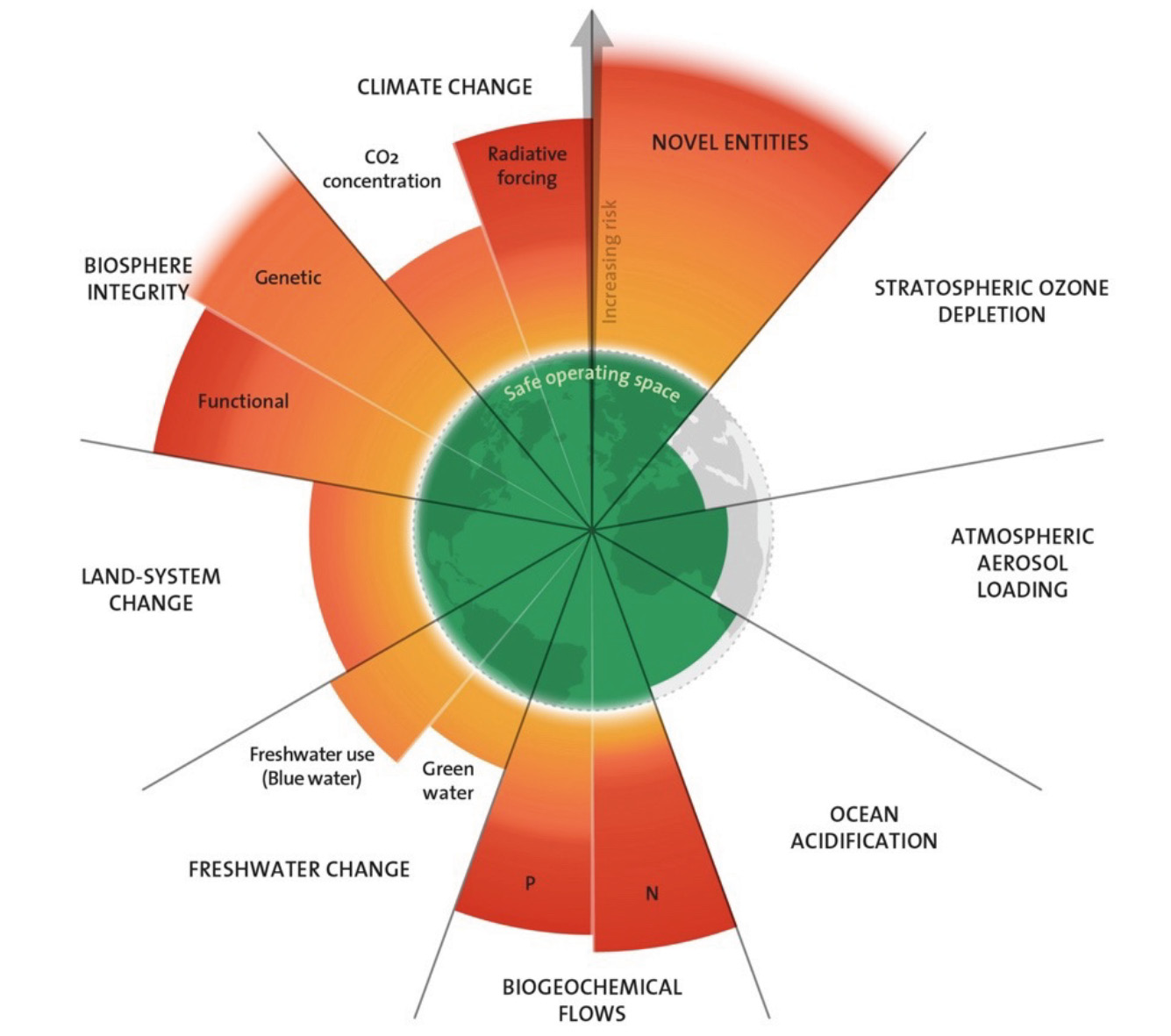
The planetary boundaries (PB) approach quantifies these challenges at the global level, with climate change and biodiversity loss only two of nine boundaries that help spell out a ‘safe operating space’ for humanity’s use of the biosphere (Steffen et al. 2015, Steffen et al. 2018). Additional boundaries include ocean acidification, freshwater withdrawals and pollution, stratospheric ozone depletion, creation and proliferation of artificial entities, phosphorus and nitrogen pollution, land system change, and atmospheric aerosol loading (Richardson et al. 2023). In each case, the developers of the PB approach specify levels of use or degrees of change that can be sustained indefinitely without directly harming large numbers of people or deranging ecological systems in ways which might harm them indirectly. Beyond these levels of use or change the potential exists for catastrophic harms – and the further beyond them we venture, the more likely such harms become (from orange to red in Figure 1 below).
A recent assessment found that humanity has entered the danger zone for six of the nine PBs and that in only one sector are we moving away from danger by decreasing our impacts (ozone depletion) (Richardson et al. 2023). In each of these six cases, excessive human environmental impacts are directly tied to unprecedented human numbers (Reid et al. 2005, Higgs 2017, Rees 2023).
Figure 1. Current status of indicators for nine planetary boundaries for safe human use of the biosphere, showing six of the nine boundaries transgressed (entering the orange and red zone)
Source: Azote for Stockholm Resilience Centre, based on analysis in Richardson et al. 2023.
CC BY-NC-ND 3.0
Figure 1 is warning that humanity is deep into ecological overshoot, exposing current and future generations to grave environmental dangers. The ecologically predictable world in which humankind created our complex civilizations, the Holocene epoch from approximately 12,000 BCE to the present, is over (McNeill and Engelke 2014). What replaces it remains to be seen. We are causing myriad changes, but we are not in control of them. While societies have created massive artificial infrastructures to support their current populations, these complex structures still depend on natural ecosystem services that can no longer be taken for granted. In general, then, criteria (1), (3) and (4) of our stipulated overpopulation definition are met. Even from a purely anthropocentric ethical perspective, in which all that really matters is human wellbeing, the world appears to be overpopulated.
5. An ethical response
5.1. Precaution versus wishful thinking
There is no lack of schemes in the scientific and policy literatures for solving global environmental problems without addressing overpopulation. Because discussing population has fallen out of fashion, such proposals do not have to mention it; they can simply take enormous future numbers as given (Coole 2018, Götmark et al. 2021). One recent study, for example, is titled ‘Feeding ten billion people is possible within four terrestrial planetary boundaries’ (Gerten et al. 2020). As it turns out, all we need to do is completely reinvent global agriculture. According to the study, agriculture as currently practiced could only provide a sufficient, balanced diet for 3.4 billion people – less than half humanity’s existing numbers – without trashing the planet. But if we expand irrigation while managing it more carefully, shift croplands from more to less biodiverse regions (moving tens of millions of farmers in the process), tighten up supply chains to drastically cut food waste, increase fertiliser use here while decreasing it there, eat less meat and more beans – if we do all these things and a lot more, everywhere, we could actually feed 10.2 billion people while ratcheting back pollution and biodiversity loss and still remaining within safe boundaries for use of the biosphere. In theory. A recent report from the EAT – Lancet Commission on Healthy, Sustainable, and Just Food Systems makes similar recommendations and exhibits similar complacency regarding human numbers (Rockström et al. 2025).
Perhaps all these reforms are possible, even at the enormous scales envisioned; perhaps they are all worthwhile. But it seems mistaken implicitly to define Earth’s human carrying capacity on such a speculative basis. There is no more essential human resource than sufficient food, while no ongoing human activity is doing more to displace other species and exceed planetary boundaries than agriculture (Crist et al. 2017). It seems grossly imprudent to menace humanity with the Scylla of mass starvation and the Charybdis of ecological collapse unless we achieve heroic changes across the entirety of global agriculture, particularly when good options exist to reduce agricultural demand by limiting population growth, widening the strait of eco-safety that all parties agree we need to pass through.
After forty years of half-hearted efforts to mitigate climate change, it should be clear neither rational self-interest nor altruistic concern for future generations are necessarily sufficient to motivate action to protect the global commons – especially when powerful, entrenched financial interests are at stake (Gilens and Page 2014). Even if robust action to deal with tough environmental challenges is forthcoming, unexpected technological or political difficulties could derail good faith efforts, or deliver results short of expectations. Our efforts could generate unexpected negative consequences and need to be discontinued. We should not assume numerous complicated efficiency improvements, deployed on an immense scale, will only deliver increased efficiency. If nations were as serious as they should be about ensuring sufficient food for future citizens, they would not rely exclusively on techno-managerial fixes, but hedge their bets by also pursuing population reduction.
But let’s imagine things turn out as well as possible within the agricultural sector, specifically. For the sake of argument, let us stipulate we can feed ten or even twenty billion people, indefinitely, without trespassing directly on any of the nine planetary boundaries in feeding them. Won’t increased human numbers scale up the many other demands we make on the world – with all that implies regarding potential planetary boundary breaking? Demands for housing, clothing and transportation; demands for materials, energy and space. Feeding more people means ... more people. As we have seen, more people scale up our demands on the natural world.
Here other experts rush to reassure us that in every case, managerial and technological improvements can meet the challenges of larger and more demanding numbers of people (Rockström and Klum, 2015). A recent book, Hannah Ritchie’s Not the End of the World: How We Can Be the First Generation to Build a Sustainable Planet (2024), collects such guarantees across a wide spectrum of environmental challenges, assuring readers that smaller populations or curbing economic growth are not necessary. But at some point, the authors of such defences are no longer making rational judgements about whether particular policies are likely to achieve particular goals. Instead, they are declaring their fundamental ideological allegiance to laissez-faire capitalism and complete human domination of the natural world (Asafu-Adjaye et al. 2015). Proposals to geoengineer Earth’s atmosphere or oceans to allow continued economic and demographic growth reveal similar ideological commitments (Stephens et al. 2023).
5.2. Realism versus ideology
It was to rescue the question of Earth’s human carrying capacity from such ideologically driven special pleading that I proposed the ethically and empirically grounded definition of overpopulation in section 3. So let’s take a step back, into the real world of clever but fallible human beings as we actually know them. By Gerten and colleagues’ calculations, agriculture as currently practiced could only provide a sufficient diet for less than half the existing human population without degrading the global environment. Actually existing agriculture for eight billion people has played an important role in pushing past four planetary boundaries: biospheric integrity, land-system change, climate change and over-nitrification of Earth’s waters (Crist et al. 2017, Gerten et al. 2020). All this strongly suggests humanity is overpopulated.
Recent estimates of a sustainable global population tend to run between two and four billion people, depending on a variety of factors, most importantly how opulently people want to live (Dasgupta 2019, Tucker 2019, Tamburino and Bravo 2021). The higher the average levels of wealth and consumption, the lower the sustainable human population. For example, Theodore Lianos and Anastasia Pseiridis (2016) calculate that the world could safely accommodate 3.1 billion people living on an average annual income of $9,000, an amount they deem sufficient to sustain a materially satisfactory life, while remaining within the ecological constraints assumed by the Living Planet Index. At higher income levels, according to these authors, the maximum sustainable population decreases proportionally.
Other researchers come up with higher or lower numbers for a sustainable global population (e.g. Arrhenius et al. 2024). The key point is that it is imprudent to place too much weight on any one of them. Instead, we should define a sustainable human population based on how people are living now and how that is actually impacting the global environment. Based on these realities, humanity appears to be significantly overpopulated today and should pursue population reduction going forward.
Elsewhere I detail policy proposals to accomplish population reduction gradually and fairly (Cafaro 2021, Cafaro 2026). Here I will merely suggest that in an overpopulated world, couples should voluntarily restrict themselves to one or two children – or remain childless if that is their preference, without guilt or reprobation (Bajaj et al. 2024) – while governments should enact policies to enable and encourage such small families.
Above all, national governments should guarantee their citizens universal, affordable access to family planning services, including modern contraception. Such policies are a winner all around: enhancing individual freedom and women’s rights, decreasing poverty, and reducing human numbers (Hardee et al. 2013, Brown and Hardee 2024). They have proven successful in reducing fertility and slowing population growth in many parts of the world (O’Sullivan 2020). Which specific population policies nations choose will legitimately differ, given the demographic, economic and social differences between them (Hedberg 2020). All policies should be made through informed, democratic decision-making (Conly 2016) and should respect human rights (Hickey et al. 2016). But their explicit goal should be fewer people – because today there are too many of us.
6. Conclusion
The approach to defining overpopulation laid out in this essay is cautious and reality-based for a reason. The reason is that life is good. We owe it to our children and grandchildren to pass on the means to enjoy it: a healthy, flourishing biosphere. Overpopulation threatens massive suffering for billions of people and extinction for millions of species. These facts justify humane efforts to reduce human numbers, as a matter of justice between current and future generations, and between people and other species. Addressing population is only part of creating just and sustainable societies, but it is a necessary part. While taking up population matters can be contentious and challenging, continuing to ignore them will likely prove much worse.
References
Angus, I., and S. Butler. 2011. Too Many People? Population, Immigration, and the Environmental Crisis. Chicago: Haymarket Books.
Arrhenius, G., et al. 2024. Sustainable Population in the Time of Climate Change. Stockholm: Institute for Futures Studies.
Asafu-Adjaye, J., et al. 2015. An Ecomodernist Manifesto. Berkeley:
Breakthrough Institute.
Attenborough, D. 2011. ‘Impact of population growth on the planet’. Lecture
to the Royal Society for the Encouragement of Arts, Manufactures and
Commerce, London.
Bajaj, N., et al. 2024. ‘Confronting the United Nations’ pro-growth agenda: A call to reverse ecological overshoot’. The Journal of Population and Sustainability 8 (2): 15–44. https://doi.org/10.3197/JPS.63799977346495
Benatar, D. 2008. Better Never to Have Been: The Harm of Coming into Existence. New York: Oxford University Press.
Bourban, M. 2019. ‘Croissance démographique et changement climatique: Repenser nos politiques dans le cadre des limites planétaires’. La Pensée Écologique 1 (3): 19–37. https://doi.org/10.3917/lpe.003.0019
Bradshaw, C., and B. Brook. 2014. ‘Human population reduction is not a quick fix for environmental problems’. Proceedings of the National Academy of Sciences 111 (46): 16610–16615. https://doi.org/10.1073/pnas.1410465111
Bradshaw, C., et al. 2021. ‘Underestimating the challenges of avoiding a ghastly future’. Frontiers in Conservation Science 1: 615419. https://doi.org/10.3389/fcosc.2020.615419
Broome, J. 2012. Climate Matters. New York: Norton.
Brown, W., and K. Hardee. 2024. ‘Can the International Conference on Population and Development Programme of Action and Cairo Consensus normalize the discourse on population?’ Global Health: Science and Practice 12: e2400121. https://doi.org/10.9745/GHSP-D-24-00121
Cafaro, P. 2004. Thoreau’s Living Ethics: Walden and the Pursuit of Virtue. Athens: University of Georgia Press. https://doi.org/10.1353/book11532
Cafaro, P. 2015. ‘Three ways to think about the sixth mass extinction’. Biological Conservation 192: 387–393. https://doi.org/10.1016/j.biocon.2015.10.017
Cafaro, P. 2021. ‘Just population policies for an overpopulated world’. Ecological Citizen 5 (1): 55–64.
Cafaro, P. 2022. ‘Reducing human numbers and the size of our economies is necessary to avoid a mass extinction and share Earth justly with other species’. Philosophia 50: 2263–2282. https://doi.org/10.1007/s11406-022-00497-w
Cafaro, P. 2026 (forthcoming). ‘Too many people: Applying IPAT in an overpopulated world’. In T. Ruuska and T. Nyfors (eds), Sufficiency: From Growth and Overshoot to Enoughness, pp. 173–205. Leiden: Brill.
Cafaro, P., and J. O’Sullivan. 2019. ‘How should ecological citizens think about immigration?’ Ecological Citizen 3: 85–92.
Cafaro, P., et al. 2022. ‘Overpopulation is a major cause of biodiversity loss and smaller human populations are necessary to preserve what is left’. Biological Conservation 272: 109646. https://doi.org/10.1016/j.biocon.2022.109646
Cafaro, P., et al. 2023. ‘Population effects on biodiversity and climate change: Evidence from recent scientific literature, 2010–2022’. Indian Journal of Population and Development 3: 149–206.
Ceballos, C., et al. 2015. ‘Accelerated modern human-induced species losses: Entering the sixth mass extinction’. Science Advances 1: e1400253. https://doi.org/10.1126/sciadv.1400253
Chapron, G., et al. 2014. ‘Recovery of large carnivores in Europe’s modern human-dominated landscapes’. Science 346: 1517–1519.
Cioran, E.M. 2013. The Trouble with Being Born. New York: Arcade Publishers.
Cohen, J., 1996. How Many People Can the Earth Support? New York:
WW Norton.
Conly, S. 2016. One Child: Do We have a Right to More? New York: Oxford University Press. https://doi.org/10.1093/acprof:oso/9780190203436.001.0001
Coole, D. 2018. Should We Control World Population? Cambridge: Polity Press.
Crist, E. 2019. Abundant Earth: Toward an Ecological Civilization. Chicago: University of Chicago Press. https://doi.org/10.7208/chicago/9780226596945.001.0001
Crist, E., et al. 2017. ‘The interaction of human population, food production,
and biodiversity protection’. Science 356: 260–264. https://doi.org/10.1126/science.aal2011
Crist, E., et al. 2021. ‘Protecting half the planet and transforming human systems are complementary goals’. Frontiers of Conservation Science 2: 761292.
https://doi.org/10.3389/fcosc.2021.761292
Crist, E., et al. 2022. ‘Scientists’ warning on population’. Science of the Total Environment 845: 157166. https://doi.org/10.1016/j.scitotenv.2022.157166
Daly, H., and J. Farley. 2010. Ecological Economics: Principles and Applications. Second edition. Washington, DC: Island Press.
Dasgupta, P. 2019. Time and the Generations: Population Ethics for a Diminishing Planet. New York: Columbia University Press. https://doi.org/10.7312/dasg16012
Despommier, D. 2010. The Vertical Farm: Feeding the World in the 21st Century. New York: Thomas Dunne.
Diaz, S., et al. 2019. ‘Pervasive human-driven decline of life on earth points to the need for transformative change’. Science 366: 1327.
Dietz, R., and D. O’Neill. 2013. Enough Is Enough: Building a Sustainable Economy in a World of Finite Resources. Oakland, CA: Berrett-Koehler Publishers.
Dilworth, C. 2010. Too Smart for Our Own Good: The Ecological Predicament of Mankind. Cambridge: Cambridge University Press. https://doi.org/10.1017/CBO9780511840357
Dinerstein, E., et al. 2017. ‘An ecoregion-based approach to protecting half the terrestrial realm’. Bioscience 67: 534–545. https://doi.org/10.1093/biosci/bix014
Dodson, J., et al. 2020. ‘Population growth and climate change: Addressing the overlooked threat multiplier’. Science of the Total Environment 748: 141346. https://doi.org/10.1016/j.scitotenv.2020.141346
Donaldson, S., and W. Kymlicka. 2011. Zoopolis: A Political Theory of Animal Rights. New York: Oxford University Press.
Ehrlich, P., and J. Holdren. 1972. ‘Critique’. Bulletin of the Atomic Scientists 28 (5): 16–27. https://doi.org/10.1080/00963402.1972.11457930
Fleurbaey, M., et al. 2019. ‘The social cost of carbon: Valuing inequality, risk, and population for climate policy’. The Monist 102: 84–109. https://doi.org/10.1093/monist/ony023
Francis. 2015. ‘Encyclical Letter Laudato Si’ of the Holy Father Francis: On Care for Our Common Home’. 24 May. The Vatican.
Gambrel, J., and P. Cafaro. 2010. ‘The virtue of simplicity’. Journal of Agricultural and Environmental Ethics 23 (1–2): 85–108. https://doi.org/10.1007/s10806-009-9187-0
Ganivet, E. 2019. ‘Growth in human population and consumption both need to be addressed to reach an ecologically sustainable future’. Environment, Development and Sustainability 22: 4979–4998. https://doi.org/10.1007/s10668-019-00446-w
Gerten, D., et al. 2020. ‘Feeding 10 billion people is possible within four terrestrial planetary boundaries’. Nature Sustainability 3: 200–208. https://doi.org/10.1038/s41893-019-0465-1
Gilens, M., and B. Page. 2014. ‘Testing theories of American politics: Elites, interest groups, and average citizens’. Perspectives on Politics 12 (3): 564–581. https://doi.org/10.1017/S1537592714001595
Götmark, F., and M. Andersson. 2022. ‘Achieving sustainable population: Fertility decline in many developing countries follows modern contraception, not economic growth’. Sustainable Development 31 (3): 1606–1617. https://doi.org/10.1002/sd.2470
Götmark, F., et al. 2021. ‘Discussing population concepts: Overpopulation is a necessary word and an inconvenient truth’. Indian Journal of Population and Development 1 (1): 51–60.
Greaves, H. 2018. ‘Optimal population size’. In G. Arrhenius, K. Bykvist and
T. Campbell (eds), Oxford Handbook of Population Ethics. Oxford: Oxford University Press.
Greaves, H. 2019. ‘Climate change and optimum population’. The Monist 102 (1): 42–65. https://doi.org/10.1093/monist/ony021
Hall, C., et al. 2017. ‘The impact of population growth and climate change on food security in Africa: Looking ahead to 2050’. International Journal of Agricultural Sustainability 15 (2): 124–135. https://doi.org/10.1080/14735903.2017.1293929
Hardee, K., et al. 2013. Voluntary Family Planning Programs That Respect,
Protect, and Fulfill Human Rights: A Conceptual Framework. Washington, DC: Futures Group.
Hedberg, H. 2020. The Environmental Impact of Overpopulation:
The Ethics of Procreation. Abingdon-on-Thames, UK: Routledge.
https://doi.org/10.4324/9781351037020
Hickel, J. 2020. Less is More: How Degrowth Will Save the World. London:
William Heinemann.
Hickey, C., et al. 2016. ‘Population engineering and the fight against climate change’. Social Theory and Practice 42 (4): 845–870. https://doi.org/10.5840/soctheorpract201642430
Higgs, K. 2017. ‘Limits to growth: Human economy and planetary boundaries’. Journal of Population and Sustainability 2 (1): 15–36. https://doi.org/10.3197/jps.2017.2.1.15
Intergovernmental Panel on Biodiversity and Ecosystem Services (IPBES). 2019. Summary for Policymakers: Global Assessment Report on Biodiversity and Ecosystem Services. IPBES Secretariat.
Intergovernmental Panel on Climate Change (IPCC). 2007. Climate Change 2007: Mitigation. Contribution of Working Group III to the Fourth Assessment, Technical Summary. IPCC Secretariat.
Intergovernmental Panel on Climate Change (IPCC). 2014. Summary for Policymakers. Climate Change 2014: Mitigation of Climate Change. Contribution of Working Group III to the Fifth Assessment Report. IPCC Secretariat.
https://doi.org/10.1017/CBO9781107415416
Intergovernmental Panel on Climate Change (IPCC). 2022. Climate Change 2022: Mitigation of Climate Change. Contribution of Working Group III to the Sixth Assessment Report. IPCC Secretariat. https://doi.org/10.1017/9781009157926
Kallis, G. 2019. Limits: Why Malthus Was Wrong and Why Environmentalists Should Care. Redwood City, CA: Stanford University Press. https://doi.org/10.1515/9781503611566
Kaya, Y., and K. Yokoburi. 1997. Environment, Energy, and Economy: Strategies for Sustainability. Tokyo: United Nations University Press.
Khalfan, A., et al. ٢٠٢٣. Climate Equality: A Planet for the 99%. Oxford: Oxfam International. https://doi.org/10.21201/2023.000001
Kharas, H. 2017. ‘The unprecedented expansion of the global middle class:
An update’. Working Paper 100. Brookings Global Economy and Development.
Kortetmäki, T. 2017. Justice in and to Nature: An Application of the Broad Framework of Environmental and Ecological Justice. Jyväskylä Studies in Education, Psychology and Social Research 587. Jyväskylä: University of Jyväskylä.
Krishnadas, M., et al. 2018. ‘Parks protect forest cover in a tropical biodiversity hotspot, but high human population densities can limit success’. Biological Conservation 223: 147–155. https://doi.org/10.1016/j.biocon.2018.04.034
Kuhlemann, K. 2018. ‘“Any size population will do?” The fallacy of aiming for stabilization of human numbers’. The Ecological Citizen 1: 181–189.
Kurtzweil, R. 2024. The Singularity Is Nearer: When We Merge with AI. New York: Viking Press.
Lianos, T., and A. Pseiridis. 2016. ‘Sustainable welfare and optimum population size’. Environmental Development and Sustainability 18 (6): 1679–1699. https://doi.org/10.1007/s10668-015-9711-5
MacIver, C. 2015. ‘Procreation as appropriation’. In S. Hannan, S. Brennan and R. Vernon (eds), Permissible Progeny? The Morality of Procreation and Parenting, pp. 107–129. Oxford: Oxford University Press. https://doi.org/10.1093/acprof:oso/9780199378111.003.0005
Marques, A., et al. 2019. ‘Increasing impacts of land use on biodiversity and carbon sequestration driven by population and economic growth’. Nature: Ecology & Evolution 3: 628–637. https://doi.org/10.1038/s41559-019-0824-3
McNeill, J., and P. Engelke. 2014. The Great Acceleration: An Environmental History of the Anthropocene Since 1945. Cambridge, MA: Harvard University Press. https://doi.org/10.4159/9780674970731
Meijers, T. 2016. ‘Climate change and the right to one child’. In G. Bos and
M. Düwell (eds), Human Rights and Sustainability, pp. 181–194. Abingdon-on-Thames, UK: Routledge. https://doi.org/10.4324/9781315665320-14
Mills, S. 2003. Epicurean Simplicity. Washington, DC: Island Press.
Mitchell, R.B. 2012. ‘Technology is not enough: Climate change, population, affluence, and consumption’. The Journal of Environment & Development 21 (1): 24–27. https://doi.org/10.1177/1070496511435670
Norton, B. 1997. ‘Convergence and contextualism’. Environmental Ethics 19 (1): 87–100. https://doi.org/10.5840/enviroethics199719141
Nussbaum, M. 2024. Justice for Animals: Our Collective Responsibility. New York: Simon & Schuster.
O’Neill, B.C., et al. 2012. ‘Demographic change and carbon dioxide emissions’. The Lancet 380 (9837): 157–164. https://doi.org/10.1016/S0140-6736(12)60958-1
O’Sullivan, J.N. 2020. ‘The social and environmental influences of population growth rate and demographic pressure deserve greater attention in ecological economics’. Ecological Economics 172: 106648. https://doi.org/10.1016/j.ecolecon.2020.106648
Overpopulation Project. 2020. ‘Rewilding success stories’. Online at https://overpopulation-project.com/rewilding-success-stories/ (accessed 4 December
4 2025).
Palmer, C. 2010. Animal Ethics in Context. New York: Columbia University Press.
Pereira, H., and L. Navarro (eds). 2015. Rewilding European Landscapes. Cham: Springer International. https://doi.org/10.1007/978-3-319-12039-3
Pimm, S., et al. 2014. ‘The biodiversity of species and their rates of extinction, distribution, and protection’. Science 344 (no. 6187) (art. 1246752): 1–10.
https://doi.org/10.1126/science.1246752
Rees, W. 2020. ‘Ecological economics for humanity’s plague phase’. Ecological Economics 169: 106519. https://doi.org/10.1016/j.ecolecon.2019.106519
Rees, W. 2023. ‘The human eco-predicament: Overshoot and the population conundrum’. Vienna Yearbook of Population Research 21: 21–39. https://doi.org/10.1553/p-eznb-ekgc
Reid, W.V., et al. 2005. The Millennium Ecosystem Assessment: Ecosystems and Human Well-being. Washington, DC: Island Press.
Richardson, K., et al. 2023. ‘Earth beyond six of nine planetary boundaries’. Science Advances 9: eadh2458. https://doi.org/10.1126/sciadv.adh2458
Rieder, T. 2016. Toward a Small Family Ethic: How Overpopulation and Climate Change Are Affecting the Morality of Procreation. New York: Springer.
Ripple, W., et al. 2015. ‘Collapse of the world’s largest herbivores’. Science Advances 1: e1400103. https://doi.org/10.1126/sciadv.1400103
Ripple, W.J., et al. 2020. ‘World scientists’ warning of a climate emergency’. BioScience 70 (1): 8–12. https://doi.org/10.1093/biosci/biz152
Ritchie, H. 2024. Not the End of the World: How We Can Be the First Generation to Build a Sustainable Planet. New York: Little, Brown, Spark.
Rockström, J., and M. Klum. 2015. Big World, Small Planet: Abundance within Planetary Boundaries. New Haven: Yale University Press.
Rockström, J., et al. 2025. ‘The EAT–Lancet Commission on healthy, sustainable, and just food systems’. The Lancet 406 (10512): 1625–1700. https://doi.org/10.1016/S0140-6736(25)01201-2
Rolston III, H. 1994. Conserving Natural Value. New York: Columbia
University Press.
Rolston III, H. 2020. A New Environmental Ethics. London: Routledge. https://doi.org/10.4324/9781003036746
Rosenberg, K., et al. 2019. ‘Decline of the North American avifauna’. Science 366 (6461): 120–124. https://doi.org/10.1126/science.aaw1313
Rosling, H. 2018. Factfulness: Ten Reasons We’re Wrong About the World – and Why Things Are Better Than You Think. New York: Flatiron.
Sandler, R. 2012. The Ethics of Species: An Introduction. New York: Cambridge University Press. https://doi.org/10.1017/CBO9781139151221
Sarkar, S. 2011. Environmental Philosophy: From Theory to Practice. Malden, MA: Wiley-Blackwell.
Secretariat of the Convention on Biological Diversity. 2010. Global Biodiversity Outlook 3. Montreal: Secretariat of the Convention on Biological Diversity.
Skirbekk, V. 2022. Decline and Prosper! Changing Global Birth Rates and
the Advantages of Fewer Children. London: Palgrave-Macmillan. https://doi.org/10.1007/978-3-030-91611-4
Staples, W., and P. Cafaro. 2012. ‘For a species right to exist’. In P. Cafaro and E. Crist (eds), Life on the Brink: Environmentalists Confront Overpopulation,
pp. 283–300. Athens, GA: University of Georgia Press.
Steffen, W., et al. 2015. ‘Planetary Boundaries: Guiding Human Development on a Changing Planet’. Science 347: 1259855. https://doi.org/10.1126/science.1259855
Steffen, W. et al. 2018. ‘Trajectories of the Earth System in the Anthropocene’. Proceedings of the National Academy of Sciences 115 (6223): 8252–8259.
https://doi.org/10.1073/pnas.1810141115
Stephens, J., et al. 2023. ‘The dangers of mainstreaming solar geoengineering: A critique of the National Academies report’. Environmental Politics 32 (1): 157–166. https://doi.org/10.1080/09644016.2021.1989214
Tamburino, L., and G. Bravo. 2021. ‘Reconciling a positive ecological balance with human development: a quantitative assessment’. Ecological Indicators 129: 107973. https://doi.org/10.1016/j.ecolind.2021.107973
Tamburino, L., et al. 2023. ‘An analysis of three decades of increasing carbon emissions: The weight of the P factor’. Sustainability 15 (4): 3245. https://doi.org/10.3390/su15043245
Tamburino, L., et al. 2025. ‘Carbon Inequality: Resolving Contradictory Results from Two Different Approaches’. Qeios (pre-print). https://doi.org/10.32388/CNVHVF
Tucker, C. 2019. A Planet of 3 Billion. Atlas Observatory Press.
Turner, N., and F. Götmark. 2023. ‘Human fertility and religions in sub-Saharan Africa: A comprehensive review of publications and data, 2010–2020’. African Journal of Reproductive Health 27 (1): 119–172.
United Nations. 2024. World Population Prospects 2024. Population Division, Department of Economic and Social Affairs, New York.
van Vuuren, D., et al. 2018. ‘Alternative pathways to the 1.5 C target reduce the need for negative emission technologies’. Nature Climate Change 8: 391–397. https://doi.org/10.1038/s41558-018-0119-8
Vettese, T., and D. Pendergrass. 2022. Half-Earth Socialism. London: Verso.
Vollset, S., et al. 2020. ‘Fertility, mortality, migration, and population scenarios for 195 countries and territories from 2017 to 2100: A forecasting analysis for the Global Burden of Disease Study’. The Lancet 396 (10258): 1285–1306. https://doi.org/10.1016/S0140-6736(20)30677-2
Weber, H., and J. Sciubba. 2018. ‘The effect of population growth on the environment: Evidence from European regions’. European Journal of Population 35: 379–402. https://doi.org/10.1007/s10680-018-9486-0
Wiedmann, T., et al. 2020. ‘Scientists’ warning on affluence’. Nature Communications 11: 3107. https://doi.org/10.1038/s41467-020-16941-y
Wienhues, A. 2020. Ecological Justice and the Extinction Crisis: Giving Living Beings Their Due. Bristol: Bristol University Press. https://doi.org/10.1332/policypress/9781529208511.001.0001
Wilson, E.O. 2016. Half Earth: Our Planet’s Fight for Life. New York: Norton.
World Wildlife Fund. 2022. Living Planet Report 2022 – Building a Nature-Positive Society. Gland, Switzerland.
10.3197/whpjps.63887831800454 Open Access – CC BY 4.0
© 2026 Authors
Peer Reviewed Article
Essential yet overlooked: faculty insights on integrating population dynamics into university curricula
Celine Delacroix, Paige Passano, Matt Matusiewicz,
Nicole Bergen and Ndola Prata
Abstract
Population dynamics play a pivotal role in development, exacerbating social, economic and environmental challenges. Yet, this factor remains largely understudied in undergraduate curricula in the United States. This study explores the perceptions of University of California (UC) faculty of the concept of population dynamics and its integration into their teaching. Through a mixed-methods approach, it investigates the meanings that faculty associate with this concept, the importance they attribute to it, and the barriers they face in teaching it. Findings reveal that UC faculty across multiple disciplines believe that understanding this topic is essential for college students’ future careers. However, study participants reported that population dynamics were infrequently integrated into undergraduate courses due to their interdisciplinary nature, lack of faculty training in demography and lack of prioritisation by the UC system. Other barriers to teaching this topic include the sensitive nature of associated themes like migration, family planning and gender norms. Our findings suggest that the teaching of this subject, as well as its integration into the curriculum, lacks a systematic and coordinated approach. Its inclusion (or lack thereof) depends largely on individual faculty’s preferences and their level of demographic expertise. The gap between its perceived importance and its representation in the curriculum highlights the need for universities to make a more consistent effort to support faculty in integrating this topic in meaningful ways. Adequate coverage of population dynamics within institutions of higher education will help students to increase awareness and contribute to efforts to address global demographic challenges.
Keywords: Population dynamics, demography, higher education, teaching demography, undergraduate curricula.
Introduction
Population dynamics play a pivotal role in development – exacerbating social, economic and environmental challenges. They are of particular importance for equity and social justice and have implications for topics ranging across development sectors, including food security, gender equity, climate change and public health. Despite the foundational and cross-sectoral nature of the topic, it appears to have received minimal attention in undergraduate curricula in the United States.
Population dynamics is the study of why population numbers change in time and space and how these processes operate through biological, social, and environmental processes (Turchin, 2003). In this paper, the term ‘population dynamics’ refers to four phenomena: population growth, population decline, migration and population age structure (the fraction of each age group within the total population). These trends are rapidly changing, with profound implications for the planet and the life that it sustains. We chose to use the term ‘population dynamics’ rather than ‘demography’ to emphasise the interdisciplinary processes and patterns of change in populations, which extend beyond the statistical analyses typically associated with demography.
While global population growth has slowed, United Nations projections estimate that the population will continue to grow from 8.2 billion in 2024, to an estimated 8.5 billion by 2030, 9.6 billion by 2050 and 10.2 billion by 2100 (United Nations Department of Economic and Social Affairs, 2024). Rapid population growth has a number of adverse implications for development (Speidel and O’Sullivan, 2023; Wilmoth et al., 2022). Environmental and climate scientists draw attention to the adverse impact of overconsumption and continuous economic growth in high-income countries in light of the current environmental crisis. They also recognise the need for population stabilisation, followed by a gradual decrease in the human population by advancing gender equity and voluntary family planning and by supporting gender equity in education (Ripple et al., 2022, 2023).
Population dynamics is often recognised as a neglected field of inquiry. For example, until recently, climate change science has either ignored population dynamics or treated these issues in a fragmentary or simplified manner (O’Neill et al., 2010). In relation to teaching of population dynamics at the university level, we found a lack of studies discussing the integration of demographic concepts into university curricula in the United States.
The field of demography focuses on temporal and spatial changes in population numbers and composition, such as population growth, decline, migration and age structure. It is a specialised field that is not usually offered to undergraduate students, with the assumption that graduate school is a more appropriate time for students to specialise in this technical field (Tabutin and Depledge, 2007). Using statistics, demographers systematically analyse trends in the human population, including births, deaths, fertility, migration and age structure. They also study the ways in which these trends influence environmental, economic and social sectors.
Very few studies have assessed levels of demographic knowledge among university students. McFarlane and Hansen (2023) documented the level of demographic knowledge among undergraduate students in political science at the University of New Mexico over the past decade (2013–2022), and found that this group was largely ignorant about basic demographic facts. Although their sample size was only 271 students, the findings still provide valuable insights into the state of demographic knowledge among American university students. To the authors’ knowledge, no studies to date have assessed the degree to which population issues (population dynamics and the policies affecting them) are incorporated into courses across various disciplines (from public health to economics to environmental studies) or explored the difficulties and obstacles faced by faculty members.
This study contributes to the knowledge base around how population dynamics, as a field of inquiry, is integrated into university coursework. Utilising a mixed-methods approach, it explores the meanings faculty associate with the concept of population dynamics and the barriers they encounter in teaching it. It examines the perceived importance of population dynamics among a diverse group of faculty members who teach undergraduates and graduate students at one of the world’s most prestigious institutions of higher education and research – the University of California (UC) system. The intention of the study is exploratory in nature. We were not aiming for the study to capture a representative sample of faculty members, nor were we aiming to quantify the percentage of faculty members who currently include the topic of population dynamics in their courses.
Nine of the ten UC campuses provide both undergraduate and graduate education: Berkeley, Davis, Irvine, Los Angeles, Merced, Riverside, San Diego, Santa Barbara and Santa Cruz. The tenth campus, based in San Francisco, exclusively serves graduate students in health-related fields. The UC system is one of the largest systems of undergraduate education in the US, training nearly 300,000 students annually. Alumni of the UC system tend to occupy influential positions in academia and industry, across a broad range of fields such as technology, healthcare, public policy and science. The UC system hosts specialised population research centres at UC Berkeley, UC Los Angeles and UC Santa Barbara. Despite this, none of the UC campuses have undergraduate majors dedicated to demography or population studies, although some campuses have minors, summer programmes or seminars related to this topic that are open to undergraduates.
Methods
The study team adopted a mixed methods approach incorporating an online survey and in-depth interviews. The survey provided insight on faculty members’ understanding of the term ‘population dynamics’, their perceptions of its importance in their fields, the challenges of teaching it and the related topics they include in their courses. The interviews enabled a deeper exploration of participants’ perspectives, highlighting the diverse views and meanings associated with population dynamics, and reflecting its multifaceted nature, at the individual and disciplinary level.
Participant selection
The participant selection process started by identifying eight broad academic disciplines, based on three factors: a) the presence of corresponding departments on at least five UC campuses; b) the likelihood that the topic of population dynamics would arise within coursework in that discipline and; c) the relevance of population dynamics for each disciplinary field. The eight selected fields included: biology, economics, environmental sciences, public health/global health, women’s/gender/sexuality studies, global studies, political science/public policy and geography/urban planning. Four disciplines that met the above criteria (anthropology, psychology, philosophy and sociology) were excluded in order to maintain a manageable focus.
UC faculty members were eligible for this study if they were based at one of the ten UC campuses and had taught a course at either the graduate or undergraduate level in one of the eight selected fields of study between the fall of 2021 and spring of 2023 (i.e. the 2021–22 and 2022–23 academic years). Potential participants were sourced through UC webpages, as well as by contacting department administrators in the selected fields. All levels of faculty were included, including full, assistant, adjunct or associate professors and lecturers. Over 2,000 invitations to participate in the study were sent via email. Additionally, participants were invited to share the link to the survey with UC colleagues. Eventually, study participants included faculty from beyond the eight disciplinary fields, such as sociology, because of the prevalence of faculty with multiple affiliations and/or appointments across disciplines, and the possibility of recruitment via participants sharing the survey link.
Online survey
The team conducted a confidential online survey in Qualtrics from 17 April to 20 June, 2023. The survey was designed to take ten to twelve minutes to complete, and consisted of both close-ended questions and open-ended questions (see Appendix A). Questions were organised into four parts: (1) academic background (affiliation, disciplinary focus, types of courses taught); (2) interactions with students surrounding the topic of human population dynamics; (3) experiences related to teaching about policies or programs related to population dynamics; and (4) demographic questions. We asked faculty how they had incorporated population dynamics into courses taught in 2021–22 or 2022–23, assessing the frequency and depth of their engagement, comfort level in teaching the topic, challenges faced and perspectives on the topic. The survey also invited them to share their perspective on public debates related to population dynamics, like environmental sustainability and reproductive autonomy, and their thoughts on how policy and/or programmes might influence these debates. With the exception of a question about UC campus affiliation, all questions were optional (non-mandatory) and several questions provided the option for respondents to input text (e.g. as an ‘other’ field).
In-depth interview
All survey respondents who indicated that they include the topic of human population dynamics in at least one of their courses were invited to participate in a twenty-minute follow up interview. The aim of the interview was to gain a deeper understanding about the participant’s decision to integrate this topic into their courses. We wanted to learn about how this was being done, and about how the students had responded.
Interviews were conducted by phone or Zoom in July–September 2023 by one of the researchers (CD, MM or PP). Reasonable efforts were made to schedule interviews with all participants who indicated interest in participating, however, some interviews did not occur due to scheduling conflicts and non-responses to follow-up emails. These interviews were recorded and transcribed with participants’ consent, to understand their motivations and methods in detail. These semi-structured interviews, featuring six open-ended questions and probes, allowed participants to guide the conversation, to explain how and why they integrated population dynamics into their courses, and to share their observations on student responses to the topic (Appendix B).
Analysis
The results from the survey and the interviews were initially analysed separately. After cleaning the survey data to remove incomplete records of participants who did not respond to any survey questions beyond Part 1 on respondent background (n=25), there were 125 survey respondent records. We used descriptive statistics to compile the survey results and assessed themes that emerged in the free-form answers to the open questions. The in-depth interview transcripts were analysed through thematic analysis.
We used Excel software to manage and analyse the open-ended responses from the survey and in the interviews. We present both the survey and interview results together below, as the findings from the interviews strongly supported those of the survey. Results were rounded to the nearest integer to enhance readability (for this reason, percentages may not add up exactly to 100 per cent).
To ensure interpretative rigour, several techniques were employed including triangulation (combining multiple methods, sources and theories to enhance the validity of the results), reflexivity (awareness of the researcher’s own perspectives), and bracketing (making an effort to refrain from imposing the researchers’ perspectives on the findings throughout the research process). Ethical clearance for the study was received from UC Berkeley and University of Ottawa.
Results
Study participants
A total of 125 faculty participated in the online survey, including individuals across all nine UC campuses. The three primary disciplinary affiliations of respondents were public health (n=45/125, 36%), biology (n=25/125, 20%), and environmental studies (n=19/125, 15%). Additional participant characteristics are shown in Table 1.
Table 1. Overview of participant characteristics (online survey)
|
Primary disciplinary affiliation
|
n
|
%
|
|
Public Health
|
45
|
36
|
|
Biology
|
25
|
20
|
|
Environmental Studies
|
19
|
15
|
|
Economics
|
14
|
11
|
|
Gender/Women’s/Sexuality studies
|
5
|
4
|
|
Political Science/Public Policy
|
5
|
4
|
|
Geography/Urban Planning
|
5
|
4
|
|
Global Studies
|
1
|
1
|
|
Othera
|
6
|
5
|
|
Total
|
125
|
|
|
Age
|
|
|
|
Under 35
|
3
|
2
|
|
36–50
|
45
|
36
|
|
51–65
|
42
|
34
|
|
Over 65
|
11
|
9
|
|
Prefer not to answer / no response
|
24
|
19
|
|
Total
|
125
|
|
|
Gender
|
|
|
|
Woman
|
54
|
43
|
|
Man
|
45
|
36
|
|
Non-binary/gender queer
|
4
|
3
|
|
Prefer not to answer / no response
|
22
|
18
|
|
Total
|
125
|
|
|
Participant identified as a person of colour?
|
|
|
|
No
|
72
|
58
|
|
Yes
|
22
|
18
|
|
Preferred identificationb
|
5
|
4
|
|
Prefer not to answer / no response
|
26
|
21
|
|
Total
|
125
|
|
Out of the 52 survey respondents who were eligible to be invited for a follow-up interview (that is, indicated that they do teach on the topic of population dynamics), half (n=26) indicated that they would be willing to participate in an interview. In total, we conducted follow-up interviews with eleven participants. Interview participants were affiliated with the following disciplines: public health (n=3), biology/public health (n=2), environmental studies or environmental sciences (n=2), biology (n=1), economics (n=1), public policy (n=1) and sociology (n=1). To maintain anonymity, the characteristics of this small group of participants are not described in further detail.
Inclusion in courses
A majority of survey respondents (75/125 respondents, 60%) discussed, or planned to discuss in the forthcoming semesters (up until spring 2022–23), the topic of human population dynamics in their courses. Among the 75 respondents who indicated that they integrated population dynamics in their teaching, we asked them about the extent to which they did so. The majority of these survey respondents (41/75, 55%) answered ‘moderately’, defined as mentioning it in multiple sessions throughout the course. Just under a third of respondents (21/75, 28%) answered ‘minimally’, mentioning it in only one session per course. Only 11 respondents out of 75 (15%) answered ‘substantially’, defined as the inclusion of the topic of human population dynamics within their course objectives (two respondents (3%) did not provide a response). Forty-five survey respondents (n=45/125, 36%) indicated that they did not discuss human population dynamics in their courses. The top reasons why they omitted the topic (noting that multiple responses were possible) included: lack of direct relevance to course material (n=35/45, 78%) and topic being outside of area or expertise (n=17/45, 38%) (Table 2).
Table 2. Reasons given for not discussing population dynamics in their courses (online survey)
|
n
|
%
|
|
This topic is not directly relevant to my course material
|
35
|
78
|
|
This topic is outside of my area of expertise
|
17
|
38
|
|
I do not wish to integrate this topic into my course material
|
7
|
16
|
|
I do not have a connection with a qualified faculty member who could guest lecture on this topic
|
3
|
7
|
|
Other a
|
6
|
13
|
Participants in the semi-structured interviews expressed that population dynamics is a pertinent subject for inclusion in their courses and emphasised its pivotal role in enabling students to acquire a comprehensive understanding of their primary subject matter. ‘We don’t talk about population and changes in population enough’, stated interview participant #9 from Environmental Sciences. Participants acknowledged key linkages between population and environment, population and social justice, and population and reproductive health and rights. Many participants pointed to the interconnectedness and indissociable nature of these themes.
It’s kind of a constant theme. In our Environmental Science class, even though we’re covering other topics, we know that deforestation, climate change, and industrialized agriculture – all of these things are related to population growth. So that thread plays throughout the entire class as we’re talking about different environmental issues. (Interview participant #7, Environmental Studies)
A recurring theme in the interviews was that population dynamics was a neglected field both at the undergraduate and graduate levels. Many faculty viewed population dynamics both as a strategic set of skills needed for the future careers of their students, and as a way to foster understanding of the interconnected nature of different sectors.
Our students will need tools to track the way the population and culture shift over time – and how technology plays a role, opening up opportunities to prevent death from communicable or non-communicable diseases … Not learning about population dynamics is not going to hurt them on the job market, but it hurts them intellectually. (Interview participant #11, Public Health).
This point was reinforced by other interview participants, who also recognised the importance of learning about the topic.
I would still love to teach more classes on population and demography. For our undergrads, I think that there’s just a lot of applications for it. There’s a lot of demand for those kinds of skills … having population analysis tools in your toolbox could be really helpful. (Interview participant #1, Sociology)
The grad students are the ones who are going to be experts in their areas. I think it is a shame for them to not get this understanding of the interdisciplinary interactions with population dynamics, you know? (Interview participant #8, Biology)
Relevance to societal goals
Respondents to the online survey were asked to assign a score to the importance of teaching population dynamics for various societal goals. Between sixty and eighty per cent of respondents considered population dynamics to be of ‘critical’ or ‘above average’ importance to these goals (Table 3).
Table 3. Perceived importance of population dynamics for key selected societal goals (online survey)
|
Critical importance
|
Above average importance
|
Average importance
|
Below average importance
|
Not important
|
Non-response
|
Total
|
|
Ecosystem preservation/restoration
|
|
|
|
|
|
|
n
|
48
|
37
|
19
|
4
|
2
|
15
|
125
|
|
%
|
38
|
30
|
15
|
3
|
2
|
12
|
|
|
Climate resilience
|
|
n
|
44
|
40
|
16
|
8
|
1
|
16
|
125
|
|
%
|
35
|
32
|
13
|
6
|
1
|
13
|
|
|
Protection of endangered species
|
|
|
|
|
|
|
n
|
39
|
38
|
16
|
12
|
4
|
16
|
125
|
|
%
|
31
|
30
|
13
|
10
|
3
|
13
|
|
|
Gender equity
|
|
n
|
29
|
40
|
28
|
8
|
2
|
18
|
125
|
|
%
|
23
|
32
|
22
|
6
|
2
|
14
|
|
|
Poverty alleviation
|
|
n
|
51
|
38
|
13
|
4
|
1
|
18
|
125
|
|
%
|
41
|
30
|
10
|
3
|
1
|
14
|
|
|
Healthcare access
|
|
n
|
45
|
39
|
18
|
5
|
1
|
17
|
125
|
|
%
|
36
|
31
|
14
|
4
|
1
|
14
|
|
|
Economic development
|
|
n
|
42
|
37
|
25
|
4
|
0
|
17
|
125
|
|
%
|
34
|
30
|
20
|
3
|
0
|
14
|
|
In the follow-up interviews, many participants’ perspectives were shaped by whether they viewed population growth or decline as an opportunity, or as a matter for concern. For example, some participants focused on the negative impact of population growth, highlighting its role in worsening environmental and social challenges.
Many interviewees, especially those from environmental and health-related fields, associated population dynamics with the earth’s carrying capacity and finite resources and viewed population growth as a matter of growing concern. However, one faculty member held an opposing view, that population growth is a potential driver of innovation and growth.
Population growth potentially explains why living standards have continued to increase, because more people mean more ideas created. Ideas are basically what creates long term growth in the modern economy. (Interview participant #3, Economics)
Despite the widespread concern among the interview participants about the impact of population growth, population decline was also mentioned as a cause for concern by faculty focused on health economics and public health.
In countries with low birthrates like Japan ... the children will have to travel from further provinces to get enough kids to have a class. If you want kids to have cohorts, you have to get them together. Or you do what the United States is going to do – send everybody to sit in front of a computer so that we can have cohorts, but this means that addressing children’s health needs is going to be harder. If we’re not seeing them physically, we’re not going to be able to get nutrition to them the way they are getting it now – by offering them school breakfasts and lunches. There’s all sorts of implications of the shift in population age structure that we’re going to have to deal with in the future. (Interview participant #4, Public Health).
The participant elaborated further on how population dynamics impact health care costs:
In my field, we really have to think about the financing of long-term care and the aging of the health care workforce, because even the people caring for other people, nurses and physicians, are getting older. (Interview participant #4, Public Health)
Importance for student learning
All survey respondents were asked if human population growth and decline, age structure and migration were topics that they considered important for their students to understand. The large majority (n=103/125, 83%) answered yes, while nine respondents (n=9/125, 7%) answered no. Twelve respondents (n=12/125, 10%) were unsure and one did not provide a response (n=1/125, 1%). Among four defined subtopics of population dynamics, survey respondents tended to rank the importance of population growth and migration higher than age structure and population decline (Table 4).
Table 4. Faculty views on the perceived importance for students to understand key subtopics of population dynamics (online survey)
|
|
Very important
|
Important
|
Somewhat Important
|
Not important
|
Not sure / non response
|
Total
|
|
Human population growth
|
|
n
|
49
|
35
|
17
|
1
|
23
|
125
|
|
%
|
39
|
28
|
14
|
1
|
18
|
|
|
Human migration
|
|
n
|
43
|
38
|
17
|
3
|
24
|
125
|
|
%
|
34
|
30
|
14
|
2
|
19
|
|
|
Human population age structure
|
|
n
|
37
|
29
|
19
|
14
|
26
|
125
|
|
%
|
30
|
23
|
15
|
11
|
21
|
|
|
|
|
|
|
|
|
|
Human population decline
|
|
n
|
23
|
28
|
32
|
12
|
30
|
125
|
|
%
|
18
|
22
|
26
|
10
|
24
|
|
In the interviews, we asked participants to identify the specific subtopics they linked to population dynamics in their courses. Table 5 provides an overview of the eleven individual responses, alongside their affiliated discipline(s).
Table 5. Topics linked to population dynamics by interview participants
|
Interviewee self-identified discipline
|
Topics associated with population dynamics
|
|
1
|
Sociology
|
Population composition and change; social justice; migration; diversity
|
|
2
|
Biology/Public Health
|
Environmental sustainability, migration, social justice
|
|
3
|
Economics
|
Economic opportunities and per capita analyses, migration, immigration
|
|
4
|
Public Health
|
Population decline and ageing, elder care, health systems, migration and immigration
|
|
5
|
Public Health
|
Health, environmental sustainability
|
|
6
|
Biology
|
Environmental sustainability, carrying capacity, family planning, abortion
|
|
7
|
Environmental Studies
|
Environmental sustainability, carrying capacity, nutrition, gender norms, cultural aspects of fertility, reproductive autonomy, abortion
|
|
8
|
Biology/Public Health
|
Environmental sustainability, social justice, population composition and change, long term perspectives, physical and biological geography
|
|
9
|
Environmental Sciences
|
Environmental sustainability, carrying capacity, environmental footprint, ethics, reproductive rights
|
|
10
|
Public Policy
|
Population composition and change, migration, family structure, social justice, environmental sustainability
|
|
11
|
Public Health
|
Population composition and change, epidemiological and demographic transition, health equity, aging, nutrition, gender norms, family planning, abortion
|
Factors influencing population dynamics
Overall, 52 survey respondents indicated that they teach about human population dynamics. Just under one third of these respondents (n=16/52, 31%) stated that they had not discussed, or had no plans to discuss, policies or programmes which could influence population dynamics. More than twice as many responded affirmatively (n=36/52, 69%), citing a diverse range of topics (policies or programmes) that they indicated had the potential to influence human population dynamics. We organised these topics into seven themes, summarised in Table 6.
Table 6. Participant-identified themes discussed with students that have potential to influence population dynamics (online survey)a
|
Theme
|
Policies, programmes or topics identified by participants
|
|
1
|
Social inequality
|
Poverty, inequities, immigration, social justice, segregation, exclusion;
|
|
2
|
SRHR and fertility
|
Sexual and reproductive health and rights, abortion, gender, education, pronatalism/anti-natalism, China’s One Child Policy;
|
|
3
|
Land planning
|
Land use, land ownership, urban planning, urbanisation;
|
|
4
|
Environment and economies
|
Environmental and economic policies, marine protected areas, workforce, trade;
|
|
5
|
Demography
|
Population aging, age structure;
|
|
6
|
Health and human resources
|
Health care training, migration of healthcare workers to
high-income countries;
|
|
7
|
Planetary boundaries
|
Population policies, over-consumption, environment.
|
The survey respondents who (a) had integrated population dynamics in their teaching but (b) had not discussed or who had no plans to discuss policies or programmes which could influence population dynamics (n=16 respondents) were asked to select one of three options to better understand their motivations. Half of this group (n=8/16) responded that this topic of human population dynamics was not pertinent to their primary subject matter, while the other half (n=8/16) responded that it landed beyond their area of expertise. No respondent selected the third option ‘There is no evidence that population dynamics can (or should) be influenced.’
Connecting with students
When asked about their level of comfort discussing the topic of human population dynamics with students, nearly half of survey respondents (n=59/125, 47%) reported being comfortable or open to discussing the topic, with two of these respondents qualifying that they would be comfortable discussing certain aspects of the topic. Eleven per cent (n=14/125) were neutral, responding ‘Neither comfortable nor uncomfortable’. Only one survey respondent (n=1/125, 1%) reported being uncomfortable discussing the topic with students. Fifty-one survey respondents (41%) did not provide an answer.
The interviews revealed participants’ keen awareness of the sensitivity the subject matter and shed light on how they navigated its inclusion in their courses. Most interview participants seem to have made an effort to adapt the content to align with their students’ interests. Several participants expressed that it was easier to connect with students on demography as it applies to contemporary social, economic and political issues. For example, topics such as migration, immigration and racism struck a personal chord with students who came from families that have recently immigrated to the US. Other interview participants mentioned climate change, social justice and peace as priority issues for today’s college students, and suggested that these topics could serve as a point of entry to introduce the concept of population dynamics.
Other interview participants expressed discomfort due to the political sensitivity of the topic. They include it but treat it gingerly and avoid delving into the politics associated with it. One participant commented:
Discussion of population dynamics is very present throughout the ten weeks of my class, but I don’t necessarily talk about it every single time – it’s more of a connection point that I touch upon. I try not to get too political because I don’t think my class is the place. But we definitely talk about it. (Interview participant #2, Biology/Public Health)
Reasons for non-inclusion
All survey respondents were invited to select from a list of potential reasons why it may be difficult for some faculty to discuss this topic. They could select up to three reasons out of six, including writing their own response. The most commonly selected reasons were: ‘Many faculty lack training in demography/population sciences’ (n=68/125, 54%), followed by ‘Potential for divisiveness: students’ comments might offend fellow students’ (n=34/125, 27%), and ‘Lack of consensus among experts on solutions to population-related problems’ (n=31/125, 25%). Table 7 displays these findings.
Table 7. Participant-identified challenges in discussing population dynamics in the classroom (online survey)
|
n
|
%
|
|
Many faculty lack training in demography / population sciences
|
68
|
54
|
|
Potential for divisiveness: students’ comments might offend fellow students
|
34
|
27
|
|
Lack of consensus among experts on solutions to population-related problems
|
31
|
25
|
|
Topic seems too personal (e.g. human fertility, mortality)
|
23
|
18
|
|
It could distract students from their focus on the subject matter of the class
|
17
|
14
|
|
Othera
|
23
|
18
|
|
No response given
|
27
|
22
|
Challenge of prioritisation
Throughout the survey, the large majority of respondents expressed that population dynamics topics were important for students to understand, and very few respondents felt that population dynamics fell entirely outside the scope of their teaching. However, when participants were probed further in the interviews, there was no clear consensus on whether the topic should be taught as a dedicated class or integrated across subjects.
Participants in both the survey and the interviews explained that the shortage of time and the need for a nuanced discussion of this complex topic made integration difficult. Many also stressed their inability to adequately cover the topic given the large thematic scope of their courses.
Interview participant #2, who teaches in Biology and Public Health, stated:
The only concern that I have is all the content that I need to cover in a limited time frame, and sometimes it is difficult to accommodate anything extra, if you want to cover the basics.
In an open question answer, survey respondent #80 from Economics argued that: ‘population dynamics would be better taught as a separate class because of the time needed to cover the required subjects and all of the nuances within’. Survey respondent #110 from Environmental Studies concurred:
As junior faculty creating new interdisciplinary courses, I’m maxed out on the number of different fields I can properly represent in the new course material. If the quality of faculty teaching were an actual priority for UC, then maybe I’d take the time to do this, but it’s not.
However, despite these challenges, a majority of survey respondents took the initiative to integrate aspects of population dynamics into their course material (see ‘Inclusion in courses’ subsection above).
Challenge of Integration
With regards to the challenges of integrating these topics into teaching, two factors that emerged were the complexity and interdisciplinarity of population dynamics. Participants across the survey and interviews commented on the difficulty of handling a topic outside of their area of expertise and the challenge of explaining certain concepts to students, such as population pyramids or population momentum. In the absence of institutional directives, it required a significant level of commitment and initiative to integrate this topic into their primary subject matter.
Several interview participants mentioned the challenge of conveying demographic concepts to undergraduates, especially those who lack training in science, technology, engineering, and mathematics (STEM). As interview participant #11 from Biology and Public Health stated: ‘Most of us are covering the topic of population in a very condensed way, in one section of one module. It’s one of the more difficult modules for undergraduate students.’ This participant consistently observed that demographic concepts and tools, such as population pyramids, are challenging for students to grasp.
Risk of controversy
Population dynamics can be contentious. Some faculty had concerns that it could easily align with messages they do not support. For example, the role of population growth and human consumption in environmental degradation can polarise classrooms. Survey respondent #7 from Public Health expressed a desire ‘not to wade into Malthusian debates’ and survey respondent #39 from Environmental Studies reported a hesitation to discuss population in relation to the environment, in part due to the ‘problematic history of perspectives like “The Population Bomb”, which focused on population growth rather than per capita resource use’. Survey respondent #64 from Environmental Studies explained
the dilemma:
The main reason I believe it’s difficult is that students often go to the most basic ‘solutions’ (reduce human population) instead of the more nuanced and evidenced solutions. Environmental degradation has more to do with consumption, property, management, and other choices than simple human existence.
Interview participant #9 from Environmental Sciences confirmed the difficulty: ‘The challenge is: how do we make it something that we can talk about, and in a way that is respectful to all human value systems?’
Malthusian ideas, population control policies, reproductive coercion, eugenics and racism were primary areas of concern. Survey respondent #43 from Biology explains: ‘In the environmental/ecological literature, there is a lot of racism and “eugenics-like” ideas when it comes to population growth and its consequences.’ Survey respondent #45, from Environmental Studies, feared that discussions of population dynamics could reinforce prevailing misconceptions, and noted that many of these misconceptions were already present among faculty peers.
Sensitive topics included migration and immigration: ‘The political climate in the US makes migration/immigration a sensitive topic’ (Survey respondent #49, from Public Health). Other participants mentioned topics of reproductive health and rights, and population aging as being sensitive.
Fear of upsetting students was another recurrent theme, as illustrated by the following quotes: ‘My comments may upset the students. I’ve already been told that playing devil’s advocate is a mode of gaslighting’; and ‘If we do not use what the kids deem to be “inclusive” language, they file grievances and create loads of administrative work.’ (Survey respondent #34, from Public Health)
Support for faculty is needed
The absence of adequate teaching resources, best practice guidelines and lack of training arose as barriers to integrating population dynamics into coursework. Some participants were in favour of structural changes at the university level to create dedicated classes on the topic, while others were interested in learning more themselves, such as interview participant #2 from Biology and Public Health, who stated,
I don’t consider myself an expert on population dynamics. So I will probably leave things out just because I am not familiar with the topic. I try to talk about it and use it as a connecting point for the different topics we discuss, but I would like to become more knowledgeable about it.
Many participants voiced a personal commitment to interdisciplinarity and emphasised the importance of creativity in their teaching. Interview participant #1 from Sociology stated,
If you really believe in population dynamics as an important worldview, or an important set of skills, you make it happen. Even if there isn’t an infrastructure [for teaching this topic] on your campus...
Discussion
Despite its small size, we believe that our study reveals three central themes associated with the teaching of population dynamics in the UC system. First, there are faculty members, including the majority of the participants in this study, who consider the topic of high importance. Second, even among participants who recognise the importance of the topic, it is largely neglected in UC undergraduate curricula. Third, the scope and meaning associated with population dynamics varies greatly across disciplines and individuals.
The majority of participants highlighted the importance of population dynamics in addressing broad societal goals, such as population and environmental wellbeing, equity, and sustainability. This is an important finding, since the topic has become particularly relevant with rising global inequalities, and in light of the current environmental and climate crises (Wilmoth et al., 2022).
The interdisciplinary nature of population dynamics was exemplified both by the different meanings associated with the concept and by the different topics associated with its teaching. The study of demography is inherently interdisciplinary, with relevance to economics, sociology, anthropology, epidemiology, geography, public health, biology, ecology and environmental science, among others (McDonald, 2014). Accordingly, participants in this study tended to express a conception of population dynamics as a broader spectrum of inquiry, rather than a limited set of demographic tools and processes. Traditionally, demography focused on measuring and statistically analysing population trends (Tabutin and Depledge, 2007). However, broadening the field to address complex modern challenges has concrete benefits. In his essay on the teaching of democracy, Burch (2018) explained,
We can rest content with being and being seen as technicians, doing ‘demographic accounting.’ We can leave many of the most important population problems of the day to others, accepting demography as a small sub-discipline of statistics, economics, sociology, or environmental science. Or we can develop and promote demography as a distinct and autonomous science – an extensive, coherent, and empirically grounded body of knowledge about how populations work, and how demographic dynamics are related to society, the economy and the environment. (p. 155)
The norm in demographic inquiry today has broadened into a multidisciplinary field (Merli et al., 2023). Demographers do far more than measure population data – they also raise questions about why population-level changes occur, and with what consequences in the short and longer terms. Their perspective and analyses help predict and prepare for demographic changes, and institute policies and programmes that can lead to better outcomes for human populations, wildlife and their shared environment (Weeks, 2020).
Our study also highlights that the extent to which population dynamics is taught predominantly depends on the preferences of professors from different disciplines, who possess varying levels of knowledge in demography. This situation risks presenting students with an incomplete and fragmented picture of population dynamics. Our study reveals a lack of coherence in the teaching of this subject among participants, with no systematic effort in place to ensure a structured and intentional focus on population dynamics within the curricula of the UC. It is possible that faculty members themselves may have received only minimal training in the subject, and that their views on the topic may not be well grounded in evidence. A more strategic approach to the inclusion of population dynamics in the relevant curricula may be warranted to promote more systematic and evidence-informed instruction on the topic.
Demography as a discipline occupies a unique position both as a field of scholarly inquiry and in how it is taught and situated within university systems – one that is rarely delivered as a standalone field of study and is instead dispersed across a range of departments, contributing to fragmented ownership, reduced disciplinary visibility and specific teaching challenges. Universities frequently integrate demographic studies into other academic domains without consistent recognition of demography as an independent discipline in its own right (Tabutin and Depledge, 2007). Palloni (2002) explains:
Because the contours of what is properly demographic are narrow and confined, a teaching program solely devoted to demography could not possibly extend to more than a few semesters or even a single academic year. Thus, with notable exceptions in Europe, demography becomes a willing prisoner of the teaching schemes of other disciplines, those well cemented in academic institutions, and with strong ties to professional markets where they offer viable and tested products. (p. 41)
However, the absence of a dedicated and coordinated approach to teaching population dynamics stands out as a missed opportunity for UC.
Overall, this study shows that, even among faculty members who recognise the importance of the topic of population dynamics, it is largely neglected in UC curricula. The extent to which participants incorporated this subject into their teaching did not match the significance they attributed to it. This discrepancy can be explained by the many barriers to teaching population dynamics at the university level. Managing interdisciplinarity, lack of expertise in the field, little to no institutional support and lack of time were key barriers.
These difficulties were compounded by the perceived complexity of population dynamics. The data-focused, technical and empirical nature of this field of study made it a difficult subject to integrate into other courses. Another layer of complexity stemmed from the controversial nature of population dynamics. This phenomenon is well-documented in the policy and scientific spheres, as discussions of population dynamics tend to be avoided or downplayed because of their sensitive nature (Coole, 2021; Delacroix and Engelman, 2023).
There are numerous opportunities to enhance education and training in population studies. One approach is to scale up the work of existing population research centres and organisations, such as the Association of Population Centers (https://www.popcenters.org/) and Population Association of America (https://www.populationassociation.org/). Additionally, targeted efforts to integrate demography into US undergraduate curricula are emerging. An example of this is the ‘NextGenPop’ summer programme, a collaborative effort involving six American universities: University of Wisconsin-Madison, Cornell University, Duke University, Johns Hopkins University, UC at Irvine and University of Minnesota. This initiative was designed to address the lack of racial and ethnic diversity among scholars of population and to build a pipeline into demography for historically underrepresented undergraduate students (NextGenPop, 2024).
Strengths and limitations
This study was an opportunity to present empirical findings on the inclusion of demographic concepts in undergraduate curricula. As one of the first studies to explore this topic in the context of a system of major American universities, it has revealed important themes and areas for further inquiry. In particular,
the study points to the need for further research to map how population
dynamics is regarded across other contexts, such as other disciplines, levels of study and geographical locations, and by other populations, such as
students themselves.
In total, the online survey was completed by 125 respondents. All UC campuses were represented in the survey, and a majority of campuses were represented in the interview pool. While this sample provided valuable insights into our study questions, the response rate may be viewed as low (given that more than 2,000 invitation emails were distributed, resulting in a participation rate of less than ten per cent). Our recruitment method, however, was not determined using a sample framework and was not aiming to be representative. We relied on email addresses sourced from faculty website (which may not have been up to date), and we did not pre-screen for eligibility. Further, invitations may have gone to junk mail folders. Finally, because the scope of the project only included campuses from the UC system, the findings are not generalisable outside of this context.
Another limitation of the study was the exclusion of four academic fields, including sociology. It is possible that we may have missed instances of population dynamics being taught in these other fields (although there is no prior evidence to suggest that findings from these fields differ from the fields included in the study). In hindsight, given the high relevance of population dynamics to sociology, it would have been beneficial to include this field, though some participants had multidisciplinary backgrounds that included sociology.
Since the topic of population dynamics is not a high priority for many faculty, those who are particularly interested in population dynamics may have been more inclined to respond, creating a response bias. Another limitation was selection bias, as we restricted our inquiry to eight broad fields for feasibility reasons.
A final limitation of our study was investigator bias. All researchers participating in this study believe that building demographic awareness and sharpening demographic skills is essential for the next generation of policymakers, practitioners, researchers and professors. Cognisant of these biases, the
study team took great care to frame the survey and interview questions in a neutral manner.
Conclusion and recommendations
This study offers important insights into the ways in which the topic of population dynamics is integrated within university curricula. First, population dynamics as a thematic focus seems to be neglected across disciplinary fields. Contributing factors may include: its interdisciplinary nature, few opportunities for faculty training, lack of endorsement as an essential topic to teach and the sensitive nature of associated themes, both political and intimate, such as immigration, family planning and gender norms. We also found a lack of coherence in the ways in which population dynamics were interpreted by study participants and taught to students, and an absence of structured and intentional focus on this subject. The study hints at a disconnect between the high perceived importance of population dynamics by faculty, and the low level of which this field of inquiry seems to be integrated into UC curricula.
Our study corroborates existing data sources that assert population dynamics
have important implications for social justice and equity, as well as for environmental sustainability. By not integrating population dynamics within university curricula, students are hindered from acquiring essential skills and tools that could help them grasp the complexities of these modern challenges. Failing to equip our future leaders with this foundational knowledge
diminishes our ability to develop and enact effective policies to address the interconnected crises the world is facing today. For these reasons, we call on educational institutions to make efforts to integrate content on population dynamics across disciplinary fields and to provide faculty with the support and resources needed to address this topic effectively. Future research is needed to explore students’ perspectives on the topic, and to understand how demography is being taught to undergraduates and graduate students, how the topic is being integrated beyond the UC system and how to overcome barriers to its integration.
References
Burch, T.K. (2018). ‘Teaching demography: Ten principles and two rationales’. In T.K. Burch (ed.) Model-Based Demography: Essays on Integrating Data, Technique and Theory, pp. 155–66. Springer International Publishing. https://doi.org/10.1007/978-3-319-65433-8_11
Coole, D. 2021. ‘The toxification of population discourse. A genealogical study’. The Journal of Development Studies 57 (9): 1454–69. https://doi.org/10.1080/00220388.2021.1915479
Delacroix, C. and R. Engelman. 2023. ‘Empowered, smaller families are better for the planet: How to talk about family planning and environmental sustainability’. Social Change 53 (3): 364–82. https://doi.org/10.1177/00490857231187993
Ehrlich, P.R. 1968. The Population Bomb. New York. Ballantine Book Publication.
McDonald, P. 2014. ‘What is demography?’ International Union for the Scientific Study of Population. https://iussp.org/en/what-demography-peter-mcdonald
McFarlane, D.R. and W.L. Hansen. 2023. Assessing Basic Demographic Literacy Among Undergraduate Political Science Students: Why It Matters and How to Improve It. Annual Meeting of the Midwest Political Science Association,
Chicago, April.
Merli, M.G., J. Moody, A. Verdery and M. Yacoub. 2023. ‘Demography’s changing intellectual landscape: A bibliometric analysis of the leading Anglophone journals, 1950–2020’. Demography 60 (3): 865–890. https://doi.org/10.1215/00703370-10714127
NextGenPop. 2024. NextGenPop. https://nextgenpop.org/
O’Neill, B.C., M. Dalton, R. Fuchs, L. Jiang, S. Pachauri and K. Zigova. 2010. ‘Global demographic trends and future carbon emissions’. Proceedings of the National Academy of Sciences of the United States of America 107 (41): 17521–26. https://doi.org/10.1073/pnas.1004581107
Palloni, A. 2002. ‘Rethinking the teaching of demography: New challenges and opportunities’. Genus 58 (3/4): 35–70.
Ripple, W.J., C. Wolf, J.W. Gregg, K. Levin … and L. Kemp. 2022. World Scientists’ Warning of a Climate Emergency 2022. Oxford University Press. https://academic.oup.com/bioscience/article-abstract/72/12/1149/6764747
Ripple, W.J., C. Wolf, J.W. Gregg, J. Rockström … and S.D.A. King. 2023. ‘The 2023 state of the climate report: Entering uncharted territory’. BioScience 73 (12): 841–50. https://doi.org/10.1093/biosci/biad080
Scranton, R. 2025. ‘Misunderstood Malthus: The English thinker whose name is synonymous with doom and gloom has lessons for today’. The Conversation,
22 August. https://doi.org/10.64628/AAI.vy5nhngr9
Speidel, J.J. and J.N. Sullivan. 2023. ‘Advancing the welfare of people and the planet with a common agenda for reproductive justice, population, and the environment’. World 4 (2): 259–87. https://doi.org/10.3390/world4020018
Tabutin, D. and R. Depledge. 2007. ‘Whither demography? Strengths and weaknesses of the discipline over fifty years of change’. Population 62 (1): 15–31.https://doi.org/10.3917/pope.701.0015
Turchin, P. 2003. Complex Population Dynamics: A Theoretical/empirical Synthesis. Princeton: Princeton University Press.
United Nations Department of Economic and Social Affairs. 2024. World Population Prospects 2024: Summary of Results. https://population.un.org/wpp/assets/Files/WPP2024_Summary-of-Results.pdf
Weeks, J.R. 2020. Population: An Introduction to Concepts and Issues, 13th edition. Cengage Learning.
Wilmoth, J., C. Menozzi and L. Bassarsky. 2022. Why Population Growth Matters for Sustainable Development (Policy Brief 130; Future of the World). United Nations Department of Economic and Social Affairs. https://www.un.org/development/desa/pd/sites/www.un.org.development.desa.pd/files/undesa_pd_2022_policy_brief_population_growth.pdf
Appendix A
Survey: Inclusion of the Topic of Human Population Dynamics in University of California Classrooms
Default Question Block
Inclusion of the topic of human population dynamics in University of California classrooms CPHS #
2022-02-15049
You are invited to take part in this research study led by Dr. Ndola Prata of UC Berkeley and Dr. Celine Delacroix of the University of Ottawa. The study aims to determine how the subject of human population dynamics is integrated into courses across the University of California system.
You are eligible to participate in this 10-12 minute survey if you teach undergraduate or graduate students on any UC campus with a focus on one of these eight fields of study: biology, economics, environmental sciences, gender studies, geography/urban planning, global studies, political science/public policy or public health.
If you agree to participate in a follow up interview, and/or if you wish to see the final results of the study, you will be requested to provide your contact information. Your contact information will not be used for any other purpose other than what you have indicated.
There is no direct benefit to you from taking part in this study, other than possible insight into how population relates to your field of expertise. You will not be paid for taking part in this study. If any of the survey questions make you uncomfortable, you are free to stop participating in the survey at any time.
Your study data will be stored on secure systems that can only be accessed by the study team. When publishing the results of this study, data will be aggregated and names (and other identifying information) will be removed or masked.
Open-ended responses may be quoted, unless respondents indicate that they prefer not to have their response quoted by typing "Please do not quote" before
the response.
Participation in research is completely voluntary. You are free to decline to take part in the project – and there will be no penalty to you or loss of benefits to which you are otherwise entitled.
Questions
If you have any questions about this research, please contact Paige Passano or Ndola Prata.
If you have any questions about your rights or treatment as a research participant in this study, please call UC Berkeley's Office for the Protection of Human
Subjects at 510-642-7461, in reference to study protocol 2022-02-15049, or email subjects@berkeley.edu.
We welcome new participants into this study. Please feel free to share the email invitation email with anyone across the UC system who is teaching undergraduates or graduates in the fields of biology, economics, environmental sciences, gender studies, geography/urban planning, global studies,political science/public policy or public health.
 Accept Decline
Inclusion of the topic of human population dynamics in University of California classrooms Part 1 of 4: Background
Which UC campus is your primary affiliation?
Berkeley Davis Irvine
Los Angeles Merced Riverside San Diego
Santa Barbara Santa Cruz San Francisco
Which field is most relevant to your faculty position?
Biology Economics
Environmental Studies Gender/Women's/Sexuality Studies Global Studies
Geography/Urban Planning Political Science/Public Policy Public Health
Other 
Which level of students do you teach?
Undergraduate students Graduate students
Both undergraduate and graduate students
Other
Please list all of the required "core" courses that you are teaching this academic year (2022–23) and those that you taught last year (2021–22). Please include required course numbers and names.
Course number/Course name 
Course number/Course name
Course number/Course name
Course number/Course name
Course number/Course name
Course number/Course name
I did not teach any core courses during this period.
Please list all of the non-required "elective" courses that you are teaching this academic year (2022–23) and those that you taught last year (2021–22). Please include elective course numbers and names.
Course number/Course name
Course number/Course name
Course number/Course name
Course number/Course name
Course number/Course name
Course number/Course name
I did not teach any non-required/elective courses in this time period.
Inclusion of the topic of human population dynamics in University
of California classrooms Part 2 of 4: Interactions with Students
Among the four topics listed below, do you think some (or all) of these are important for your students to understand?
a) Human population growth
b) Human population age structure (ratio of dependents to workers)
c) Human migration
d) Human population decline
Yes, I believe some or all of these topics are important for my students
to understand.
No, I do not think these topics are important for my students to understand
I am not sure about the relative importance of these topics for my students
How important is it for students in your field to understand the following topics?
Very Important Somewhat Not Not
important Important important sure
Human population growth
Human population age
structure (ratio of
dependents to workers)
Human migration
Human population decline
Human population dynamics have implications for society that can be sensitive and political. Which of the following reasons might make it difficult for faculty to discuss this topic in the classroom? (Mark up to three responses, or write your own response.)
Many faculty lack training in demography/ population sciences
Topic seems too personal (human fertility and mortality)
Potential for divisiveness: students' comments might offend fellow students
Lack of consensus among experts on solutions to population-related problems
It could distract students from their focus on the subject matter of the class
Other/Comment 
Did you discuss, or do you plan to discuss, the topic of human population dynamics* in any of the courses or guest lectures that you are teaching this academic year (2022–23) or in the prior year (2021–22)?
*Human population dynamics includes: human population size, age structure (ratio of dependents to workers), rates of change (growth/decline) and migration.
Yes No
Which of the following best describes the reason you have not discussed
the topic of human population dynamics with your students in the last two academic years?
This topic is not directly relevant to my course material
This topic is outside of my area of expertise
I do not wish to integrate this topic into my course material
I don't have a connection with a qualified faculty member who could guest lecture on this topic
Other/Comment
(Optional) Please complete the following information for any guest lectures
you did this academic year (2022–23) or last year (2021–22) in which you spoke about population. If you taught multiple guest lectures on the topic, please include all courses, separating each piece of information with a slash(/).
Write "DK" for any information that you cannot recall. If not applicable,
please skip this question.
Course name(s) 
Department(s)
Lead Professor(s) name(s)
Across all the courses that you teach, to what extent do you integrate the topic of human population dynamics?
Minimally (mentioned in one session per course taught)
Moderately (mentioned in multiple sessions per course taught)
Substantially (part of course objectives)
How comfortable are you discussing this topic with students?
Uncomfortable
Neither comfortable nor uncomfortable
Comfortable
Haven't discussed this topic, but I am open to doing so
Haven't discussed this topic and I don't plan to do so
Other/Comment
When you discuss human population dynamics in the courses that you teach, which topics do you discuss in conjunction with this topic? (Mark all that apply.)
Climate change
Economy/Employment
Education
Elder care
Environment/ Natural resources
Ethics
Health / Healthcare
Human rights
Migration
Policy and planning
Political stability/ Instability
Poverty/ Food security
Racism / Xenophobia
Reproductive health and rights / Family planning
Women's self-determination
Other topic(s) 
How important are population dynamics in terms of achieving the following societal goals?
Not Below Average Above Critical
important average importance average importance
importance importance
Ecosystem preservation/
restoration
Climate resilience
Protection of endangered
species
Gender equity
Poverty alleviation
Healthcare access
Economic development
Inclusion of the topic of human population dynamics in University
of California classrooms Part 3 of 4: Influences on human population dynamics
The following questions are aimed at faculty who are teaching about human population dynamics. If you are not teaching on this topic, please click no.
Yes, I teach on this topic
No, I dont teach on this topic
In any of the classes that you taught this academic year (2022–23) or last year (2021–22) did you discuss – or do you plan to discuss – any policies or programs which might influence human population dynamics?
Yes No
In a few words or phrases, which policies or programs with potential to influence human population dynamics have you discussed – or do you plan to discuss – with students?

When you talk about population with students, can you explain why you do not mention any policies or programs that could influence population dynamics?
This is not relevant to the topic I am teaching
This topic is outside of my area of expertise
There is no evidence that human population dynamics can or should be influenced
Other/Comment
We plan to interview a subset of faculty to gain a deeper understanding about their decisions to integrate human population dynamics into their courses. For those who have included this topic, we would like to learn how it is being done, and about students' response.
Would you be willing to participate in a 20-minute phone interview in the next two months?
Yes No
To contact you for the interview, please write your name and preferred method of contact – email or phone. (Your contact information will only be used to help coordinate the interview).
Last name, first name 
Email address or phone number (Contact information written here will only be used to arrange the interview)

Inclusion of the topic of human population dynamics in University of California classrooms Part 4 of 4: Demographic questions
Thank you for completing the main part of our survey. Please complete the last five questions.
Please indicate your age bracket.
Under 35
36-50
51-65
Over 65
Prefer not to answer
Which best describes your gender?
Man
Woman
Non-binary / Genderqueer
Prefer not to answer
Preferred identification: 
Do you identify as a person of color?
Yes No
Prefer not to answer
Preferred identification:
Would you like to receive the results of this survey once they have been
written up?
No, thank you.
Yes. Please enter your email address below
(Your email will only be used once to share the results)

(Optional) Feel free to share the email invitation for this survey with your networks. Also, if you know of any centers, departments, or individuals on your campus that may be interested in the findings of this study, please write their name(s) here.

We thank you for your time spent taking this survey.
Appendix B
Interview Guide for study entitled ‘Inclusion of the topic of human population dynamics in University of California classrooms’.
Thank you for taking the time to participate in this interview. Your insights and experiences as a faculty member who includes this topic into your courses will be invaluable to our research.
Introduce self, study title (above) and objective: To understand to what degree – and how – the topic of human population dynamics is being integrated into six fields of study across the UC System – and to learn more from faculty about the importance of this topic for students in their own field of study.
Participant rights + recording Before we begin, I want to assure you that your participation is voluntary, and any information you provide will be kept confidential. Please feel free to ask any questions or seek clarification at any point. With your permission, I’d like to record the interview to ensure accuracy of our data. All recordings and transcripts will be de-identified by the study team and any data shared in our results will not be linked to specific participants.
May I have your permission to record this call?
1. There are a lot of different definitions of population dynamics.
When you hear the term, what topics come to mind?
2. Why do you feel it’s important to bring your students’ attention to population dynamics?
3. Do you think this topic receives adequate attention in the university curricula? Please explain.
4. Within the topic of population dynamics, which subtopics do you think are especially important for students taking introductory courses in your field? Why is this important?
5. Tell me more about the linkages that you make for your students between your course material and the topic of population dynamics.
6. Tell me about the response you have received from students when you have discussed population dynamics.
7. Do you wish to talk more about population dynamics in your class?
8. Probe: If so, how do you plan to do this? Do you feel equipped to do this?
9. Is there anything else you would like to add? Is there anything you are surprised that I haven’t asked you?
10.3197/whpjps.6388783180045 Open Access – CC BY 4.0
© 2025 Author
Perspective
Is legal abortion required for
a sustainable population?
Richard Grossman
Abstract
Humanity’s impact on the planet has surpassed sustainable limits, driven by population growth, consumption and limited efficiency gains (Bradshaw et al., 2021; Ehrlich and Holdren, 1971). While consumption in the Global North remains excessive, welfare improvements in the Global South require some growth in consumption. A smaller global population would aid sustainability, yet the current population exceeds 8 billion – well above most estimates of a sustainable size (Crist et al., 2022). Although modern contraception has reduced fertility, over 120 million unintended pregnancies occur annually (Bearak et al., 2020), and induced abortion remains vital for achieving desired family size and stabilising population growth (Tietze and Bongaarts, 1975). This article examines countries with total fertility rates (TFR) at or below replacement level (2.1), where abortion laws remain restrictive, and explores how access to legal abortion influences reproductive autonomy, population stabilisation and long-term environmental sustainability.
Keywords
Abortion, sustainable population, fertility, TFR, replacement fertility, menstrual regulation.
The human impact on the natural world can be thought of as a product of a combination of population, consumption and technological efficiency. Our current collective impact is far from sustainable and is growing (Ehrlich and Holdren, 1971; Bradshaw et al., 2021). There seems to be little interest in reducing the excessive consumption of the Global North. On the other hand meeting the welfare needs of people in the Global South requires their consumption to grow. Increasing efficiency of the use of resources and of energy is ongoing, but is outstripped by a combination of the growth in consumption and population (Chaurasia, 2020). In contrast, however, hundreds of millions of people are interested in attempting to limit their fertility (Sully et al., 2020). Overall, a smaller human population will aid efforts towards environmental sustainability. As Crist et al. put it:
the international imperative in this time of converging calamities is to lower the total fertility rate (TFR) beneath the replacement figure of 2.1 (currently it is 2.4), in order to slowly reduce the global population beneath current levels. Environmental analysts regard a sustainable human population as one ... retaining its biodiversity and with climate-related adversities minimized. Analysts' estimate of that population size vary between 2 and 4 billion people (Crist et al., 2022).
Despite widely expressed fears about depopulation, the environments in at least three countries have already experienced benefits from decreasing population (Matanle et al., 2022).
Human population is now over eight billion people and although there is debate over how many people can live sustainably (Cohen, 1995), there is little question that we are far from being sustainable. There are many estimates of the maximum size of a sustainable population, but all seem to be lower than our current and projected population size (Samways, 2022).
Although modern contraception has helped people limit their fertility, globally there are still over 120 million unintended pregnancies each year (Bearak et al., 2020). Abortion is a universal way women have used to limit their fertility and remove unintended pregnancies (Devereux, 1976). According to Tietze and Bongaarts: ‘levels of fertility required for population stabilization cannot be easily obtained without induced abortion’ (Tietze and Bongaarts, 1975). Campbell, Prata and Potts reiterated this assertion over a third of a century later: ‘All societies use a combination of contraception and abortion to limit family size.’(Campbell, Prata and Potts, 2013) Mumford and Kessel looked at the issue of population stabilisation from what now is rightly regarded as the ethically indefensible viewpoint of ‘control’. They found that both safe and unsafe abortion are needed to slow growth, even where contraceptive usage is prevalent (Mumford and Kessel, 1984).
In addition to aiding individual women solve the problem of unintended pregnancies, abortion also helps slow the human population growth rate. Although our global fertility is approaching replacement fertility of 2.1, the current Total Fertility Rate (TFR) is approximately 2.25 (United Nations, 2025). However, due to population momentum (the forward growth of population due to the offspring of a high fertility generation having [fewer] children themselves), growth continues after fertility has fallen to replacement levels. A TFR of 2.1 or below will speed progress to a stable (or declining) population. Contraception is primary prevention of unintended pregnancy, while abortion, be it legal or illegal, can be considered secondary prevention.
The question arises: ‘how important is access to legal abortion care for
people to manage the size of their families in countries that are at or below replacement fertility?’
To attempt a preliminary answer to this question I searched for countries and territories where the TFR was at replacement level or below, and where abortion laws prohibited or severely restricted access to abortion, i.e., in categories 1 and 2 described below.
The TFR which will eventually reach a constant population size varies from country to country. It is generally given as 2.10 for a developed country, although the number would be somewhat higher for some less developed countries with higher mortality rates. For the sake of simplicity, 2.10 was used in this study for every country.
Online databases were accessed for both fertility and the legality of abortion. The 2024 data from the United Nations World Population Prospects was searched for countries estimated to have a TFR of 2.10 or less (United Nations, 2025).
I used The World’s Abortion Laws as the primary database for the legal status of access to abortion (Center for Reproductive Rights, 2025). They claim that the data are ‘updated in real time’. Furthermore, I used their categories of abortion laws: 1. Abortion is prohibited altogether; 2. Abortion is limited to saving the woman’s life; 3. Abortion is limited to preserving the woman’s health; 4. Abortion is allowed for broad social or economic grounds; 5. Abortion is available on request. For the few cases when this database didn’t list a country, I searched for the information online, which resulted in multiple sources being used.
I have assumed that women can usually access safe abortion services in categories 3, 4 and 5; even though the category 3, ‘to preserve the woman’s health’ could be interpreted as being restrictive, an empathetic provider could find a health reason for almost everyone requesting an abortion – especially if mental health reasons are included. On the other hand, only a very small minority of women would qualify for abortion care where the law will only allow abortion in category 2, ‘to save the woman’s life’.
No attempt has been made to determine how every one of these countries where access to safe abortion services is very limited or non-existent has achieved low TFRs. However, I did look at surrounding countries to see if access to abortion services is available in an adjoining country, and have found other ways in which countries with low TFRs get around legal abortion restrictions.
Of the 240 countries listed in the United Nations World Population Prospects (2024), more than half, 134, had a TFR of 2.10 or less in 2024. A total of 28 of these countries with lower fertility despite having the most restrictive abortion laws, falling in categories 1 or 2.
Table 1. Countries with very restrictive abortions laws and replacement
or less fertility in 2024
|
Country
|
TFR (Fertility)
|
Abortion status
|
Island?
|
|
2024
|
Panama
|
2.09
|
2
|
|
|
2024
|
Myanmar
|
2.08
|
2
|
|
|
2024
|
Venezuela
|
2.06
|
2
|
|
|
2024
|
Cook Islands
|
2.00
|
2
|
Y
|
|
2024
|
Sri Lanka
|
1.94
|
2
|
Y
|
|
2024
|
Philippines
|
1.88
|
1
|
Y
|
|
2024
|
Palau
|
1.86
|
1
|
Y
|
|
2024
|
Bahrain
|
1.78
|
2
|
Y
|
|
2024
|
El Salvador
|
1.75
|
1
|
|
|
2024
|
Iran
|
1.67
|
2
|
|
|
2024
|
Aruba
|
1.60
|
2
|
Y
|
|
2024
|
Brazil
|
1.60
|
2
|
|
|
2024
|
Antigua & Barbuda
|
1.58
|
2
|
Y
|
|
2024
|
Cayman Islands
|
1.51
|
2
|
Y
|
|
2024
|
Saint Kitts & Nevis
|
1.51
|
2
|
Y
|
|
2024
|
Dominica
|
1.47
|
2
|
Y
|
|
2024
|
Montserrat
|
1.45
|
2
|
Y
|
|
2024
|
Turks & Caicos Islands
|
1.44
|
1
|
Y
|
|
2024
|
Sint Maarten (Dutch)
|
1.43
|
1
|
Y
|
|
2024
|
Bermuda
|
1.41
|
2
|
Y
|
|
2024
|
Anguilla
|
1.35
|
2
|
Y
|
|
2024
|
Jamaica
|
1.34
|
1
|
Y
|
|
2024
|
United Arab Emirates
|
1.21
|
2
|
|
|
2024
|
Chile
|
1.13
|
2
|
|
|
2024
|
Malta
|
1.11
|
2
|
Y
|
|
2024
|
Andorra
|
1.10
|
1
|
|
|
2024
|
Curaçao
|
1.07
|
1
|
Y
|
|
2024
|
British Virgin Islands
|
1.06
|
2
|
Y
|
From the above we see that 28 countries have low TFRs without access to legal abortion services, apparently contradicting Bongaarts and Tietze’s assertion. However, there are several ways that low fertility can be achieved despite severe legal restrictions on access to abortion care. In some cases, women have access to safe abortion services in an adjoining country; two examples are given below.
The island of Saint Martin presents a unique example where a short trip can take a woman from a category 1 country to one that is category 5. This island is divided between Dutch and French governance, but there is no barrier or customs at the border and people often go back and forth from one country to the other. While Dutch Sint Maarten prohibits abortion completely, French Saint Martin allows abortion care on request. Andorra, one of the tiny countries in Europe, also prohibits abortion, but access to abortion services is not far away. Abortion is legal on request both in Spain to the south and France to the north.
Easy travel to a place where legal abortion is accessible is not the rule, however, for most of the other 26 countries that severely limit or prohibit abortion. For instance, a woman in El Salvador, which now has a total prohibition on abortion, would be unlikely to receive an abortion in either of its two neighbours, Honduras and Guatemala, which also severely limit or entirely prohibit abortion. Political barriers may also be prohibitive. For instance, there likely would be political and cultural barriers for a woman in Iran (Category 2) to get care in her neighbouring countries, Turkey or Turkmenistan, both of which are Category 5.
Some island countries have a disconnect between their law and their practice.
A study of five island countries of the northeast Caribbean found that abortion was not uncommon, despite it being illegal (Pheterson and Azize, 2008). This legal flexibility was confirmed in a southern Caribbean island, Curaçao, where abortion is strictly forbidden by law. Nevertheless, currently there is a policy of tolerance and over 1,100 abortions were performed by physicians in Curaçao during the period of one year, ending 1 November 2009 (Boersma et al., 2012).
Bangladesh, with a TFR of 2.11, is worthy of note, even though it is not included in this study, because its fertility is just over the cut off of 2.10. This country is exceptional because abortion is only legal to save a woman’s life (Category 2). However, it has legalised ‘Menstrual Regulation’ (MR). MR is defined as starting vaginal bleeding when a woman’s period is late. This can be done with medication or herbs, or by physically removing the uterine contents (Kessel, Brenner and Stathes, 1975). Bangladeshi law allows MR up to twelve weeks after the onset of the last bleeding. It is not necessary to know if the woman is actually pregnant or not. In many cases, however, MR causes an early abortion. The law allowing MR was established in 1979 in order to decrease maternal deaths from unsafe abortions (Hossain et al., 2012).
It is interesting that 19 of the 28 countries with low TFRs and severe abortion restrictions are island states; several of these are in the Lesser Antilles, as noted above. For dwellers on an island with restrictions but without a policy of leniency, it would be necessary to either travel by boat or plane to a country with a more liberal abortion policy.
From this brief survey of the data, we see that there are currently 134 countries in the world with fertility low enough to eventually produce a constant or decreasing population. Access to abortion care is completely illegal or severely restricted by law in 28 of these countries, yet they have a TFR below 2.10. In some of these countries, women may seek abortion care by international travel or by their country’s willingness to disregard local laws. Illegal, unsafe abortions are performed in some countries with low fertility, but this is difficult to quantify. Despite what has been thought in the past, it is apparently possible to have replacement level fertility without legal abortion care. In some countries this is probably possible due to easy travel to a place where legal abortion is readily available, and elsewhere safe abortion services are available because of an agreement with legal authorities to ignore restrictive laws against abortion.
I suspect that many women in the 28 countries that fulfilled these criteria sought illegal abortions. If so, many of these women would suffer medical problems. Some would become infertile. More than a few would die from infection or hemorrhage. Many would experience abuse because of needing to go outside the legal system, thus needing to pay exorbitant prices to abusive abortion providers.
Worldwide, more than half of all unintended pregnancies end with an induced abortion (Bearak et al., 2020). Although it is difficult to obtain information about unsafe abortions, it is estimated that globally almost half of all induced abortions are unsafe (Ganatra et al, 2017).
With a proper protocol, medication abortion with the combination of misoprostol and mifepristone, or misoprostol alone, is very safe and effective. Misoprostol alone is the most common black-market drug for abortions outside of the medical care system. Too high a dose can cause uterine rupture and maternal death from exsanguination. Too low a dose may be insufficient to abort the pregnancy, but can cause serious harm to the fetus, resulting in a child living with congenital anomalies.
I was an abortion provider for 43 years and many of my patients have told me the importance of abortion care to themselves and their families. One of these, a quiet teenager, stands out in my mind. After the procedure she told me: ‘Thank you, doctor. You have given me back my future.’ My belief is that all women should have the option to have a safe abortion for an unintended pregnancy.
We think of abortion care primarily as benefiting individual women and their families. However, there are global benefits for all women to have access to safe abortion care. With over 120 million unintended pregnancies each year, it is difficult to imagine a sustainable human population without access to legal abortion.
References
Bearak, J.A., A. Popinchalk, B. Ganatra, A.-B.. Moller, Ö. Tunçalp, C. Beavin,
L. Kwok and L. Alkema. 2020. ‘Unintended pregnancy and abortion by income, region, and the legal status of abortion: estimates from a comprehensive model for 1990–2019’. Lancet Global Health (8): e1152–1161.
https://doi.org/10.1016/S2214-109X(20)30315-6
Boersma, A.A., J.F. Alberts, J. de Bruijn, B. Meyboom-de Jong and G. Kleiverda. 2012. ‘Termination of pregnancy in Curaçao: Need for improvement of sexual
and reproductive healthcare’. Global Journal of Health Science 4 (3): 30–38. https://doi.org/10.5539/gjhs.v4n3p30
Bongaarts, J. and C.F. Westoff. 2006. ‘The potential role of contraception in reducing abortion’. Studies in Family Planning 31 (5):193–202.
https://doi.org/10.1111/j.1728-4465.2000.00193.x
Bradshaw, C.J.A., P.R. Ehrlich, A. Beattie, G. Ceballos, E. Crist, J. Diamond, R. Dirzo, A.H. Ehrlich, J. Harte, M.E. Harte, G. Pyke, P.H. Raven, W.J. Ripple, F. Saltré, C. Turnbull, M. Wackernagel and D.T. Blumstein. 2021. ‘Underestimating the challenges of avoiding a ghastly future’. Frontiers in Conservation Science 1: 615419.
https://doi.org/10.3389/fcosc.2020.615419
Campbell, M.M., N. Prata and M. Potts. 2013. ‘The impact of freedom on fertility decline’. Journal of Family Planning and Reproductive Health Care 39: 44–50. https://doi.org/10.1136/jfprhc-2012-100405
Center for Reproductive Rights. ‘The World’s Abortion Laws’.
https://reproductiverights.org/maps/worlds-abortion-laws/?country=NZL&category[1350]=1350 (accessed 12 September 2025).
Chaurasia, Aalok. 2020. ‘Population effects of increase in world energy use and CO2 emissions: 1990–2019’. The Journal of Population and Sustainability 5 (1): 87–125.
https://doi.org/10.3197/jps.2020.5.1.87
Cohen, J. 1995. How Many People Can the Earth Support? New York:
W.W. Norton.
Crist, E., W.J. Ripple, P.R. Ehrlich, W.E. Rees and C. Wolf. 2022. ‘Scientists’ warning on population’. Science of the Total Environment 845.
https://doi.org/10.1016/j.scitotenv.2022.157166
Devereux, G. 1976. A Study of Abortion in Primitive Societies, rev. ed. New York: International Universities Press.
Ehrlich, P.R. and J.P. Holdren. 1971. ‘The impact of population growth’. Science 171 (3977), 1212–1217.
https://doi.org/10.1126/science.171.3977.1212
Ganatra, B., C. Gerdts, C. Rossier, B.R. Johnson, O. Tunçalp, A. Assifi, G. Sedgh, S. Singh, A. Bankole, A. Popinchalk, J. Bearak, Z. Kang and L. Alkema. 2017. ‘Global, regional, and subregional classification of abortions by safety, 2010–14: estimates from a Bayesian hierarchical model’. Lancet 390: 2372–2381.
http://dx.doi.org/10.1016/S0140-6736(17)31794-4
Hossain, A., I. Maddow-Zimet, L. Remez and S. Singh. 2012. ‘Menstrual regulation, unsafe abortion and maternal health in Bangladesh’.
https://www.guttmacher.org/report/menstrual-regulation-unsafe-abortion-and-maternal-health-bangladesh (accessed 12 September 2025).
Kessel, E., W.E. Brenner and G.H. Stathes. 1975. ‘Menstrual regulation in family planning services’. American Journal of Public Health 65 (7): 731–34.
https://doi.org/10.2105/ajph.65.7.731
Matanle, P., L.A. Sáez-pérez, Y. Li and E. Buehler. 2022. ‘Localizing and Globalizing the Depopulation Dividend: theory and evidence from three countries in three world regions’. Bölge Çalışmaları Dergisi 1 (1): 1–28.
https://dergipark.org.tr/en/download/article-file/2648030 (accessed 12 September 2025).
Mumford, S.D. and E. Kessel. 1984. ‘Is wide availability of abortion essential to national population growth control programs? Experiences of 116 countries’. American Journal of Obstetrics & Gynecology 149 (6): 639–45.
https://doi.org/10.1016/0002-9378(84)90249-7
Pheterson, G. and Y. Azize. 2008. ‘Abortion within and around the law in the Caribbean’. Puerto Rico Health Sciences Journal 27 (1): 93–99.
https://prhsj.rcm.upr.edu/index.php/prhsj/article/view/42/34 (accessed 12 September 2025).
Samways, David. 2022. ‘Population and sustainability: Reviewing the relationship between population growth and environmental change’. The Journal of Population and Sustainability 6 (1):15–41.
https://doi.org/10.3197/JPS.63772239426891
Sully E.A., A. Biddlecom, J.E. Darroch, T. Riley, L.S. Ashford, N. Lince-Deroche,
L. Firestein and R. Murro. 2020. ‘Adding it up: Investing in sexual and reproductive health 2019’. New York: Guttmacher Institute.
https://www.guttmacher.org/report/adding-it-up-investing-in-sexual-reproductive-health-2019 (Accessed 9 December 2025).
Tietze, C. and J. Bongaarts. 1975. ‘Fertility rates and abortion rates: Simulations of family limitation’. Studies in Family Planning 6 (5): 114–20.
https://doi.org/10.2307/1964745
United Nations. 2025. World Fertility 2024. UN DESA/POP/2024/TR/NO.11, https://www.un.org/development/desa/pd/sites/www.un.org.development.desa.pd/files/undesa_pd_2025_wfr_2024_final.pdf (accessed 10 September 2025).
United Nations Department of Economic and Social Affairs, Population Division. World Population Prospects 2024 (Complete version).
https://population.un.org/wpp/ (accessed 2 September 2025).
10.3197/whpjps.63887831800451 Open Access – CC BY 4.0
© 2025 Author
Perspective
Thomas More’s Utopia
as a steady state economy
Theodore P. Lianos
Abstract
The idea of a steady-state economy based on the relationship between population and land was first introduced in the writings of Plato (Laws) and Aristotle (Politics), both in the fourth century bc. Nineteen centuries later, in 1516, Thomas More published his Utopia. In this paper I argue that More’s Utopia is a steady state economy based on two fundamental institutions: public ownership of the means of production and democratic system of governance. What makes Utopia a steady state economy is the limited land (Utopia is an island) and the stability of population. Given that resources are limited the ‘Grow or Die’ motto of modern capitalism does not apply and therefore a different system of social values is developed in Utopia.
Keywords
Thomas More, Utopia, steady-state economy
Introduction
Thomas More’s Utopia, first published in 1516 under the Latin title De optimo statu reipublicae deque nova insula Utopia, was translated into English by Ralph Robinson and appeared in print in 1551. Utopia represents the fourth major philosophical attempt – following Plato’s Republic (Politeia), Laws (Nomoi), and Aristotle’s Politics, Book VIII (Politica) – to conceptualise an ideal society structured to promote the happiness and wellbeing of its citizens. Plato composed the Laws as a pragmatic alternative to the Republic, believing that the ideal society proposed in the latter was too advanced for practical implementation. As he himself noted: ‘If what we have attempted to do is realised it will be closer to immortality and second in value’ (Laws 739E). He also envisioned, conditions permitting (‘if God allows’), the formulation of a third model.
The frameworks for social organisation articulated by both Plato and Aristotle can be regarded as comprehensive theories in which economic activity is recognised as a central determinant of social justice and human flourishing. The economic structures they propose align closely with what contemporary scholarship refers to as a steady-state economy (Lianos, 2023). In the economic theory of the nineteenth century, the steady state condition of an economy appeared in the ‘magnificent dynamics’ of classical writers under the name of stationary economy (Mill, 1970; Baumol, 1951) and also in Marx’s Capital as simple reproduction in contrast to expanded reproductions (Marx, 1887). More recent discussions of a steady-state model include Keynes (1930) Huxley (1956) Boulding (1964) and of course Ehrlich (1971) as well as Daly in his many writings. Utopia can likewise be interpreted as a depiction of a society grounded in the principles of a steady-state economy. The purpose of this short article is to show that More’s Utopia is also a society based on the same economic system.
Before examining Utopia itself, it is worth considering why More situated his ideal society on an island. While this choice likely draws on Plato’s myth of Atlantis in the Timaeus, the recent discovery of America – roughly twenty years before More wrote Utopia – may have inspired his vision of a society fundamentally different from European civilisation, both socially and geographically. The connection between More’s work and contemporary humanist thought becomes evident through his friendship with Erasmus, who composed In Praise of Folly while staying in More’s house in 1510. This intimate collaboration suggests that Erasmus was familiar with the ideas that would later emerge as Utopia. Indeed, Erasmus’s dedication of In Praise of Folly to More – particularly his playful closing, ‘Farewell, my best disputant More, and stoutly defend your Moriae’ – reveals not only his awareness of More’s developing concepts but also his enthusiastic support for them.
Steady state economy
The steady state economy (SSE) in its modern version is an economy with the following characteristics:
a. There is private property of the means of production, i.e. of land and
produced capital.
b. The working and the coordination of the economy is based on the mechanism of the free markets.
c. Population is constant at some at some chosen sufficient level.
d. Production of goods and services is constant at some chosen sufficient level. Population and production are codetermined.
e. Institutions are established to make sure that population and production stay at the chosen level. To this purpose, some have suggested family planning, transferable birth licence (Boulding, 1964), an international market for limited birth licences per family(Lianos 2018), monetary benefits for small size families etc. To reduce persisting economic inequalities, minimum and maximum limits to personal income are recommended and also maximum limits to personal wealth.
The modern interest in the SSE derives from the serious environmental problems that became obvious during the second half of the twentieth century (See, among others, Ehrlich, 1968; Daly, 1991, 1972, 2008; and Meadows et al., 1972 and the concern that the limited resources of the Earth could not provide enough for the rapidly increasing world population. It became clear that a choice should be made between population size and per capita product. Of course, it is not easy to simultaneously determine the right population size and the right level of production but, generally speaking, it is possible to find combinations of population and production that are acceptable (Lianos, 2013; Lianos and Pseiridis, 2016).
Given the optimal population is estimated to be around three billion assuming an acceptable per capita income and ecological equilibrium at the same time (see Daily et al., 1994; Pimentel et al., 1994; Lianos and Pseiridis, 2016; and Dasgupta and Dasgupta 2017, realising a steady state economy is difficult at the present time since the global population stands at 8.2 billion. Herman Daly (1991) has argued that what is needed now is moral growth rather than economic growth. Modern societies are conditioned to believe that economic growth is the ultimate goal. They rarely consider whether their aims are morally sound or rooted in meaningful values, prioritising size over quality. In other words, economic growth often occurs without corresponding moral development. While economic growth relies on efficiency, moral growth depends on the pursuit of higher values.
One issue occasionally discussed in the literature concerns the social organisation of the steady state economy. The central question is whether it can function as a capitalist economy or whether a socialist economy is necessary. Daly argued that the SSE is neither capitalist nor socialist but something different (Daly, 2010). Richard Smith states that, since capitalism cannot exist without constantly expanding markets, a steady state economy cannot therefore be a capitalist economy (Smith, 2010), while in contrast Philip Lawn believes the opposite (Lawn, 2011). My own opinion is that the crucial characteristic of an SSE is a stable population and therefore an SSE can be either capitalist or socialist (Lianos, 2021).
More’s Utopia
Thomas More’s Utopia is divided into two books. Book One takes the form of a dialogue, featuring correspondence with several figures, including the town clerk of Antwerp, Peter Giles, and counsellor to Charles V, Hieronymus van Busleyden. Central to the narrative is a fictional character named Raphael Hythlodaeus – his surname derived from the Greek words ύθλος (ythlos) (meaning ‘nonsense’) and δαίω (daio) (meaning ‘to distribute’ or ‘to share’). Raphael is portrayed as a Portuguese sailor and seasoned traveller who has explored many parts of the world. He spent five years in the fictional land of Utopia, gaining deep knowledge of its society. Book Two is a monologue delivered by Raphael, in which he describes in detail the customs, laws, and daily life of Utopia.
Book One
Book One is devoted to a discussion of the evils of the Old World, i.e. the European countries. More is the first to admit that ‘nothing is less novel than monsters. For you cannot go anywhere without finding Scyllas and greedy Celaenos and people devouring Lastrygonians and immense fictions of that sort, but sensibly and wisely educated citizens you will hardly discover anywhere’
(p. 21). In the discussion that follows, Raphael mentions negative aspects of the Old World including civil rebellion, the death penalty for theft, miserable poverty and scarcity contrasting with the luxurious lives of noblemen, mercenary armies, insatiable landowners enclosing agricultural land and displacing tenant-farmers, high food prices, excessive indulgence in food and drink among the servants of noblemen and artisans, the rise of monopolies and oligopolies, prostitution, and corrupt forms of entertainment.
Because of his extended knowledge and experience, Raphael is twice encouraged by More to ‘attach himself to a king’ (p. 22) and become ‘an excellent councillor to any king’ (p. 23). Also, More reminds Raphael that his friend Plato ‘teaches that commonwealths will finally be fortunate only when philosophers rule them, or when their kings are philosophic’ and asks him ‘how far off will good fortune be, if philosophers do not at least deign to impart their counsel to kings?’ (p.34). Raphael’s reaction to More’s exhortations is threefold: first, kings are interested in extending their kingdoms and do not care about the welfare of the people and peace; second, among kings there is no place for philosophy; and, third, kings are surrounded by advisors with a variety of different and contradictory opinions so his opinion would be unconvincing and therefore redundant.
Book One ends with Raphael and More expressing their diametrically opposed opinions. Raphael believes that
wherever there is private property, wherever everybody measures everything with money, there it can hardly ever happen that a commonwealth will be governed justly or prosperously … There could only be one way to public well-being: by decreasing the inequality of possessions – which I do not think could ever be observed when individuals have private ownership (p. 42).
More expresses the opposite opinion, arguing that
life can never be lived with any convenience where all things are owned in common. For how could there be a good supply of things with everybody trying to get out of work, not be urged by the profit motive and becoming lazy by relying on the work of others? But even if they are urged to work by the scarcity, when nobody is able lawfully to protect as his own what he has acquired, is it not inevitable that everybody will suffer from perpetual murder and sedition?
Book Two
In the second book of Utopia, Raphael, in a long monologue, gives a detailed description of private and public life in Utopia, an island state, starting with the geography and ending with the religious ceremonies of the church.
Following his narration, we learn details about the plan of the cities, the system of government (magistrates), occupations and production, population, travels, social organisation, trade and foreign exchange, pleasures, happiness and ethics, the legal system, euthanasia, marriage, divorce and adultery, alliances and wars, religion and tolerance for other beliefs. For the purpose of comparison with the modern version of SSE, we will briefly describe Utopia’s population, social organisation and production of commodities.
(1) Population size
Utopia has 54 cities, ‘all spacious and magnificent, with language, customs, institutions and laws entirely identical’. Each city has 6,000 households and each household can have between ten and sixteen adults. Thus, Utopia has a population of approximately 4.2 million adults and assuming two children per couple (in order to keep population constant), the total population of Utopia is close to 8.4 million. The members of a household are mostly blood relatives and therefore a household is practically an extended family. To keep the distribution of population balanced among households and among cities people can be transferred between households and between cities. If the population exceeds in total the right size people are sent to create colonies in the mainland where the natives have land that is not used. If the population falls below the right size the citizens who created the colony will return to Utopia. Also, there are age limits for girls and for men below which they cannot marry.
More does not explain how the ‘right size’ is determined but my explanation is discussed in the next section of this paper.
(2) The economics of Utopia
The most important element of Utopia’s society and its economy is that there is no private property. People in the households do not even own the house where they live. All property is public. Technology of production is developed enough so that total yearly production is more than sufficient to cover the needs of the population and part of it is exported. The oversupply of goods relative to demand is such that there are no markets, no prices and no monetary system. Utopians can simply pick up things from the stores in the quantities they need to have a comfortable but not luxurious life. There is gold and silver which are used only in the foreign trade. The Utopians are so productive that they need to work only six hours a day. There are no economic inequalities. All products are equally distributed and therefore no one can be poor or a beggar. Utopians do not worry about the future and therefore there is no need to accumulate commodities for future use. In other words, there is no need for saving and for growth of production.
It appears that the Utopians have achieved the Aristotelian moral standard ‘to live temperately and liberally’ because ‘these are the only desirable qualities relating to the use of wealth’ (Politics, 1265 pp. 33–36).
(3) The government
The political system of Utopia is a variant of representative democracy. Each city is divided in units of thirty households each of which annually elect a magistrate called a phylarch (leader of a tribe, in Greek). Thus, every city has 200 phylarchs. To every ten phylarchs is assigned a protophylarch (first among the phylarchs) and thus there are twenty protophylarchs. The two hundred phylarchs take an oath to choose by secret ballot the one among four nominated candidates whom they believe to be the best city-ruler.
The city-ruler is chosen for life unless he is suspected of conspiracy to overthrow democracy and establish tyranny. Issues and problems of the commonwealth are discussed every other day in meetings of the phylarchs with the city-ruler. Decisions are taken after three days of discussions in city council.
There is a city council in every city and a council of the whole island but Raphael does not give any other information about the island council, its constitution and its functions.
(4) Moral standards
The citizens of Utopia live under numerous restrictions in their private lives. For instance, traveling from one city to another requires official permission – which is easily obtained – but those who travel without it are subject to punishment. Girls under eighteen and men below 22 cannot marry. Sex before marriage is forbidden and seriously punished. Violating the rules of marriage is punished by slavery and, if committed a second time, the penalty is death. Lunch and dinner are served at designated times and in specific halls, although individuals are permitted to eat at home if they choose. Everyone wears the same type of clothing.
Utopians do not resent the restrictions imposed by the legal system because they understand the necessity of strict laws for a just society. This and their contempt for luxuries and wealth show their moral standards and moral growth which modern writers consider a necessary condition for an SSE.
Comments
Population
The ‘right size’ of population for Utopia is not mentioned in the text but, as previously stated, can be estimated from the number of cities, the number of households in each city, the number of adults of each household (assuming an average of thirteen) to be 4.2 million adults. The population of children should be approximately equal to the population of adults given that stability of population requires two children per couple and that average life expectancy at the time of More was around forty years. Therefore, the population of Utopia was approximately 8.4 million.
There are two questions related to the size of population: first, how was its number chosen and, second, why was it constant? Regarding the first question it occurred to me that More might had in mind the population density of England and
I have attempted to estimate the area of Utopia to find the density of population. The shape of the island is like a crescent moon with circumference of 500 miles and diameter throughout the greater part of 160 miles. The area of a circle with circumference of 500 and radius of 80 miles is 20,096 square miles. This is an approximation because Utopia is not a perfect circle as the two ends are narrow and the sea comes into the land and forms something like a lake. This size of the area corresponds to 0.005 of a square mile or 13 square metres per adult citizen and half of that if children are included.
At More’s time the density of population in England was 0.019 square mile per citizen (50,000 square miles divided by a population of 2.6 million). Thus, compared to England, the population density of Utopia is extremely high. If this was More’s intention, it is hard to explain.
Regarding the question of why population is kept constant, no explicit explanation is given by More. However, it is obvious that in an island of given size there must be limits to the size of population, not only for economic sufficiency but also, as in Aristotle, for efficient administration and for law enforcement.
Economics and morals
The reader of Utopia will easily come to the conclusion that Utopians are happy living according to the Aristotelian principle of a comfortable but not luxurious life. This has been achieved by a successful coordination of their social organisation with their moral values. According to the stoic saying, they are rich not because they have wealth but because they do not need it. In Utopia there is no private property; land and material capital are public. Utopians have no uncertainty and therefore no motive for profit and growth.
The government
The city-ruler is elected in a three-stage process with the final stage being a secret ballot. There is also an island council about which More does not give any information but it is reasonable to assume that its members are the city-rulers. It is clear that the rules and the laws of Utopia apply to all cities and therefore it appears that the assembly of the city-rulers is the government.
Utopians love democracy, as indicated by the provision that, if the elected for life city-ruler is suspected of ‘seeking tyranny’, he can be forced to step down.
Discussion and conclusion
The similarities between More’s Utopia and the modern steady-state economy are clear. In both models the size of population is constant and the production of goods and services is maintained at a chosen sufficient level and therefore there is no economic growth. However, differences are also clear. In Utopia there is no private property and no markets, whereas in steady-state economy there is private property and the operation of the economy is based on free markets (although restrictions may be introduced in production and distribution). These differences are important because of the effect they have on the distribution of goods, i.e. on economic inequality. In Utopia there is absolute equality; in steady-state economy there is limited inequality.
For More’s time, this is a strange combination, making it intriguing to ask what Utopia truly represents: is it a satire of a certain type of social organisation or is it a serious attempt to model a new social system? Obviously, if Utopia is a satire, it would be of little value to claim it as a philosophical study of a steady-state economy model. There are three elements that support the idea Utopia is a satire. First, the title ‘Utopia’ meaning ‘no place’ may be interpreted as a suggestion to its reader not to take it seriously. Second, the name ‘Hythlodaeus’ meaning someone who talks nonsense implies the same. Third, the title ‘phylarch’, meaning leader of the tribe, may be understood as a demeaning characterisation of the cultural level of Utopia.
We can interpret the inclusion of these satirical elements as a warning not to take everything literally but not as a negation of Utopia’s philosophical content. It is hard to imagine that More – or any scholar – would write a satire about something that does not exist, or compose a work he does not believe in while simultaneously criticising it. It seems to me that More was very serious in suggesting fundamental social changes even if not necessarily exactly those described in Utopia. Also, it is not unreasonable to assume that More needed a protective shield as he was not, like Plato, in democratic Athens but in the England of ruthless Henry VIII. In addition to its satirical parts, Utopia ends with More making it clear that he does not approve of everything that happens in Utopia but he acknowledges that some reforms are necessary in Europe. In the last paragraph, More says ‘I readily confess that there are very many things in the commonwealth of Utopians that I would wish for in our states, rather than hope for’.
Instead of discrediting Utopia as a satire of new progressive ideas, it is faithful to the spirit and letter of Utopia to understand its content as an attempt by More to combine Plato and Aristotle and at the same time severely criticise (in Book One) the status quo via the fictitious Raphael Hythlodaeus. Also, More speaks ironically of the nobility in both Books of Utopia. In Book One, More asserts that ‘sensibly and wisely educated citizens you will hardly discover anywhere’ (p. 21). And at the end of Book Two his ironic tone is clear when he writes that many things were
… very absurdly established in the customs and laws of that people … but most of all … the common life and livelihood without any exchange of money: by this one institution all nobility, magnificence, splendor, majesty are profoundly overthrown – the true (according to public opinion) glories and ornaments of a commonwealth (p. 102).
In brief, it seems to me that Utopia is not a satire but More’s vehicle for indirect social criticism of his time. Thomas More’s Utopia is close to a combination of Plato’s Republic, where there is no private property, and Aristotle’s Politics, where democracy is suggested as the best political system. Thus, Utopia can be seen as a democratic socialist steady-state economy.
References
Aristotle. 1932. Politics, Loeb Classical Library, vol XXI. Cambridge, MA: Harvard University Press. https://doi.org/10.4159/DLCL.aristotle-politics.1932
Baumol, W. 1951. Economic Dynamics. New York: Macmillan.
Boulding, K. 1964. The Meaning of the Twentieth Century. New York: Harper
and Row.
Daly, H. 1991. Steady-State Economics, 2nd ed. Washington D.C.: Island Press.
Daly, H. 2010. ‘The operative word here is “somehow.”’ Real World Economics Review 54: 103.
Daly, H. 2008. A Steady-State Economy, UK Sustainable Development Commission.
Daly, H. 1972. ‘In defense of a steady-state economy’. American Journal of Agricultural Economics 54: 945–54. https://doi.org/10.2307/1239248
Daily, G., A.H. Ehrlich and P.R. Ehrlich. 1994. ‘Optimum human population size’. Population and Environment 15 (6): 469–75. https://doi.org/10.1007/BF02211719
Dasgupta A. and P. Dasgupta. 2017. ‘Socially embedded preferences, environmental externalities and reproduction rights’. Population and Development Review 43 (3):405–41. https://doi.org/10.1111/padr.12090
Ehrlich, P.R. 1968. The Population Bomb. New York: Ballantine Books.
Huxley, J. 1956. ‘World population’. Scientific American 104 (3): 64–76. https://doi.org/10.1038/scientificamerican0356-64
Keynes, J.M. 1930. ‘Economic possibilities for our grandchildren’. In Essays in Persuasion, pp. 358–73. New York: W.W. Norton & Co.
Lawn, P. 2011. ‘Is steady-state capitalism viable?: A review of the issues and an answer in the affirmative’. Annals of the New York Academy of Sciences 1219: 1–25. https://doi.org/10.1111/j.1749-6632.2011.05966.x
Lianos, T.P. 2013. ‘The world budget constraint’. Environment, Development and Sustainability 15 (6), 1543–53. https://doi.org/10.1007/s10668-013-9460-2
Lianos, T.P. and A. Pseiridis. 2016. ‘Sustainable welfare and optimum population size’. Environment, Development and Sustainability 18 (6): 1679–99. https://doi.org/10.1007/s10668-015-9711-5
Lianos, T.P. 2018. ‘Steady-state economy at optimal population size’. Journal of Population and Sustainability 3 (1): 75–99. https://doi.org/10.3197/jps.2018.3.1.75
Lianos, T.P. 2021. ‘Is a capitalist steady- state economy possible? Is it better in socialism?’ Real World Economics Review 95: 1–10.
Lianos. T.P. 2023. ‘Population and steady-state economy in Plato and Aristotle’. Journal of Population and Sustainability 7 (1): 123–37. https://doi.org/10.3197/JPS.63799953906862
Marx, K. 1887, Capital, vol.1. Moscow: Progress Publishers.
Meadows, D.H., D. Meadows, J. Ranters and W.W. Behrens 1972. The Limits to Growth: A Report for the Club of Rome’s Project on the Predicament of Mankind. New York: Universe Books.
Mill, J.S. 1970. Principles of Political Economy. Harmondsworth: Penguin Books.
More, Thomas. 2023. Utopia and Selected Epigrams, ed. by Gerard Wegemer and Stephen Smith; trans. by Gerald Malsbary, Bradley Ritter, Carl Young and Erik Ellis. (Utopia trans. by Gerald Malsbary). CTMS Editions, University of Dallas. https://thomasmorestudies.org/wp-content/uploads/2023/05/CTMS-Utopia-2023.pdf
Pimentel, D., R. Harman, M. Pacenza, J. Pecarsky and M. Pimentel. 1994. ‘Natural resources and an optimum human population’. Population and Environment 15 (5): 347–69. https://doi.org/10.1007/BF02208317
Plato. 1926. Laws, trans. R.G. Bury. Cambridge, MA: Harvard University Press. https://doi.org/10.4159/DLCL.plato_philosopher-laws.1926
Simoson, A. 2016. ‘The size and area of Utopia’. Bridges Conference Proceedings. Jyvaskyla: Finland.
Smith, R. 2010. ‘Beyond growth or beyond capitalism’. Real World Economics Review 53: 28–42.