Maria Lee Kernecker
Between Grazing and Gathering: Plant Knowledges, Belonging and Becoming in the Swiss Alps
ABSTRACT
Alpine summer pastures with high plant diversity emerged through millennia of farmers grazing their animals at higher elevations during the summer months. In the past decades, as plants have migrated uphill, changing the species composition in Alpine pastures, the economic viability of mountain agriculture has simultaneously declined, and who cares for which animals in summer pastures throughout the European Alps has shifted. In the Swiss Alps, seasonal workers from neighbouring countries make up a large portion of shepherds and cheesemakers involved in transhumance. Here, I aim to contribute to a deeper understanding of how the interactions between humans, animals and plants shape changes in alpine landscapes and their meanings. Drawing on autoethnographic methodologies, I reflect on my experiences as a shepherd in the Swiss Alps over several summers to explore how my growing knowledge of plants through herding and my own foraging anchored my relationship to the Alp and led me to think more deeply about approaches to conservation in regions characterised by alpine farming. While local farmers and members of the communities relate to plants mostly through animals, as a herder, I grew my plant knowledge based on species I could use for teas and as food for myself. As my knowledge about local plants grew, my relationship to place became more tightly attached, and accentuated a different relationship to plants from that which I observed among the local community. Based on my evolving relationships with the Alp, I suggest that plant knowledges provide an entry point to studying continuous becoming in places traditionally associated with high conservation value, providing an emergent perspective on the alpine pastures of the future.
Keywords
biodiversity, more-than-human geography, multi-species, transhumance, mountain farming, pastoralism, autoethnography.
 uropean Alpine pastures and their plant diversity, people and animals
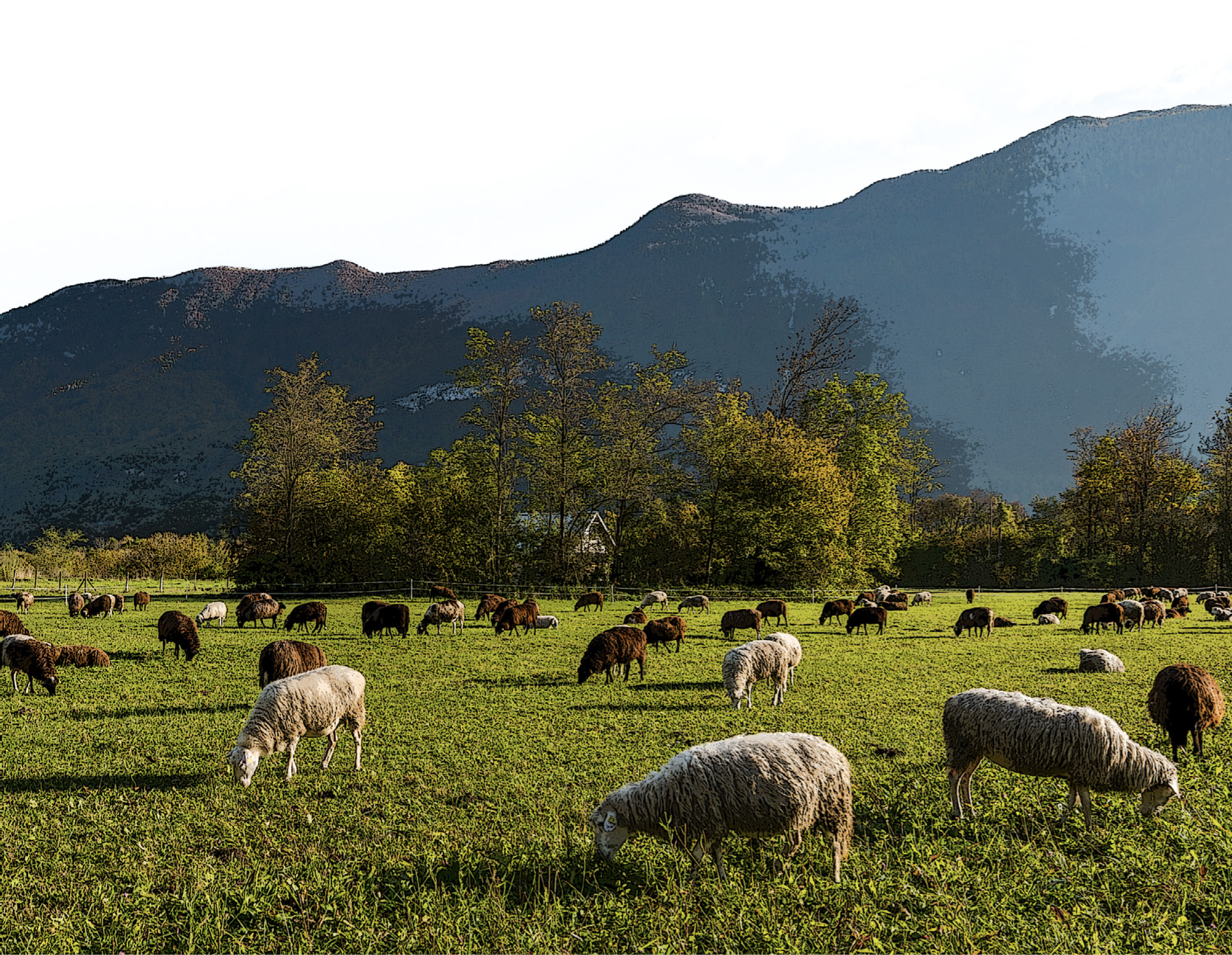
High plant diversity characterises alpine pastures across mountain regions, where extensive management, including seasonal grazing, is often the only type of land use (Niedrist et al., 2009). These pastures are characterised by seasons, where people, mostly farmers, send up their animals for the summer to graze, a practice referred to as transhumance (Dreier et al., 2004; Parra et al., 2025). Over millennia, this has allowed plant communities to evolve, making these pastures biodiverse havens and objects of conservation in Europe (Herzog and Seidl, 2018). As plants have migrated uphill due to climate change-associated warming, plant species richness has increased in alpine regions (Steinbauer et al., 2018), but with a number of species accumulating an extinction debt (Lamprecht et al., 2018). What this means for alpine summer pastures, including the animals and humans that depend upon them, is unclear.
Traditionally, sending animals up to alpine pastures has given farmers – and their land – a break from their animals. During summers, farmers mow grass for hay, stockpiling winter feed for livestock (Orland, 2004; Von Glasenapp and Thornton, 2011). The animals grazing the pastures higher up the mountain get a more diverse diet, while also producing nutritious meat and dairy products (Farruggia et al., 2014). Farmers originally bred animals that fit the mountain pastures (Marsoner et al., 2018) and these grazing animals have shaped plant communities through selective grazing (Rook et al, 2004; Molnár et al., 2020). Therefore, we cannot really think about the maintenance of these biodiverse pastures without considering the entangled relationships between people, animals and plants (Stepp et al., 2005).
Farmers or members of their families have long moved with their animals to higher elevations during the summer, and it is still, in some cases, done this way. At the same time though, there were and still are a range of constellations of humans, including farmers, herders, cheesemakers, community members, with just as diverse constellations of livestock. Cows have typically been given the juiciest pastures, which are necessary for dairy production, while sheep and goats climbed up to harder-to-reach pastures, where the forage quality often declines and the grazing season is shorter (Orland, 2004; Imfeld-Müller, 2013). Over the course of history, cows have become more prized, as their dairy products have been treated as the Alpine gold, which started through increasing trade by merchants in alpine regions with merchants beyond (Wunderli, 2014). In contrast, sheep husbandry has changed significantly in the past centuries as the markets for wool and sheep-based food products have dwindled and fluctuated, respectively (Mattalia et al., 2018). These constant changes have likely shaped the constellations of humans and animals in relation to different roles they have and the pastures they use.
Where different animals end up on mountain pastures has typically been defined by farmers’ individual and collective grazing rights, depending on the arrangement on each individual Alp. Some are private, belonging to a certain farm. Some are collective and have a range of agreement-types for the Alp’s maintenance, including division of labour among community members, often associated with cow-sharing arrangements. In either case, farmers decide on which animals to send up, how many, and which breed. If they do not have enough of their own animals to fulfil the grazing requirements to receive subsidies for their pastures, they recruit livestock belonging to other farmers who may not have access to mountain pastures (Gugerell, et al. 2019). Farmers’ relationships to other community members and farmers will therefore likely define which, if any, animals they send up to pastures and, ultimately, how the pastures evolve.
In the past decades, as the economic viability of mountain agriculture has declined across Europe, increasing abandonment of traditional practices, including transhumance, is leading to a loss of species-rich pastures (Soliva et al., 2010). However, Swiss agricultural payments, including agri-environmental and biodiversity-directed schemes, have led to less abandonment of alpine farming than in other European countries (Huber et al., 2024). There are about 6,700 productive Alps (Schweizerischer Alpwirtschaftlicher Verband, 2022) together covering about 500,000 ha (Schweizer Bundesamt für Statistik, 2023). Nevertheless, keeping Alps productive remains a challenge, in part because financing the work associated with an Alp is increasingly a challenge. Almost half of the shepherds and cheese makers working on these Alps are seasonal workers from non-Swiss countries (Fasolin, 2010). If transhumance allowed plant rich alpine pastures in Switzerland to evolve, can policies protect the essence of what an Alp is under changing compositions of people, animals and plant communities? What is the role of people’s knowledge of plants in such change? How can the Alp be thought of differently to account for such change? Using autoethnography of my relationship to plants, formed through my experiences as a sheep and cow herder in the Swiss Alps, I explore these questions. I thereby aim to provide a deeper understanding of how the interactions between humans, animals and plants shape alpine landscapes and their meanings.
Approach and method in autoethnography
Autoethnography is considered a triad of methods, with varying emphasis on auto (self), ethno (culture) and graphy (process). It is ‘ethnographic in its methodological orientation, cultural in its interpretive orientation, and autobiographical in its content orientation’ (Ellis et al., 2011). I use this approach to analyse my own biographical narrative as a resource for drawing attention to larger sociocultural phenomena (Chang, 2008). The phenomena that I focus on here speak to small-scale agriculture and to people engaging in work that embodies their dedication to maintaining tradition and plant species-rich alpine pastures, thereby cultivating their place of belonging. I thus provide a narrative of my experiences in two alpine regions in Switzerland: an Alp in the Valais canton and an Alp in the Uri canton. This means my primary ‘data’ are my past, but also my present, as the present allows for self-observation and self-reflection on the past experiences that I detail in narrative form (Chang, 2008). In this process, I play with ideas of how different plant knowledges may mirror ways of belonging and ways of thinking about the future of alpine pastures.
Personal narrative of plant knowledges and relations
Of course I have always loved plants. Plants made those colourful meadows draped in front of a blue sky and craggy peaks what they were; they made the thin mountain air smell the way it did; and they visually marked my changes in elevation on hikes. I basked in this love once I was down from the mountain, back at home. Although my home was a place that embraced the world in its entirety, in suburbia, it was nevertheless a disconnected place – a place that functioned apart from the rules that non-human life followed. I would not have considered myself blind to that all that life.
But I was. I had a bad case of plant blindness, living a duality that disconnected me from the non-human world. I knew about five plants from my home landscapes, which straddled the Sierra Nevadas and the Great Basin of North America: Indian Paintbrush (Castilleja Mutis ex L.F.), Sagebrush (Artemisia tridentata Nutt.), Rubber Rabbitbrush (Ericameria nauseosa Pall. ex Pursh) G.L. Nesom & G.I. Baird), Alpine Columbine (Aquilegia formosa Fisch. ex DC.) and Bristlecone pines (Pinus longaeva D.K. Bailey) (POWO, 2025). The latter are some of the oldest trees on earth, twisted by wind and weather, but I mostly only saw ‘things growing’. Of course there was ‘grass’ too, but I associated that with lawns and golf courses that were irrigated with water – water that was (and is) not actually there. And that grass mostly grew (and grows) in the valley, between asphalt, cars, cookie-cutter homes and strip malls. But those plants that I did know, I treasured. I was in awe of Indian Paintbrush that I passed on the trail, its scarlet blossoms aflame. I deeply inhaled the fresh sage scent after a rain, its bitter and earthy tang a balm to my soul. I may have felt reprieve from the sun in the bits of shade of Bristlecone pines. I treasured these plants, but they were all further away, up the highway, out in what everyone called ‘nature’.
But then there I was, among the mountains in Valais, Switzerland. It was early summer, 2008. The meadows were on the brink of resembling confetti strewn across the slopes surrounding the seasonal village at 1,800 metres. It was peak time for colour before the landowners mowed their meadows for hay. Those that no longer had sheep or cows mowed it for their siblings, cousins, and other kin who did still have cows or sheep. For keeping the meadows mown and open, they received subsidies. These meadows were grasslands. But in all my plant blindness, I would not have dared associate these places with grass, it all being interwoven with flowering herbs and forbs. There was more to the grass, and it was about survival, about producing food through animals on otherwise marginal mountain lands.
The cows – both from the village and from elsewhere – grazed the pastures spanning the mountainside, moving from one pasture to the next as the grass ripened at different time intervals over the summer. The cows were not accompanied by the farmers who owned them, but rather by herders, a cheese maker and, sometimes, a younger male ‘Bocha’ who helped the herders and the cheese maker in the day-to-day tasks. As acquaintances from the village recounted, these men, previously from the village, used to carry their milking equipment along with whatever they needed from pasture to pasture, sleeping on fir greens when they were on pastures further from the huts. But, by 2008, equipment was driven with a jeep, pastures further from the huts were visited on daytrips with the cows, and the herders and cheese makers who were hired came from elsewhere. The same applied to the sheep and sheep farmers, but they were more out-of-sight, out-of-mind to many, as they were further up the mountain, on pastures further away, while the cows remained more closely integrated into the village traditions. There were festivities centred on the cow who gave the most milk and the cow who was the ‘queen’ in the herd hierarchy. The cow herder and cheese makers had prized positions in the village, because of the key cultural role they fulfilled, it seemed. When they found workers who stuck around for more than a summer, the managers of the Alp commons seemed pleased to have these loyal foreign workers who would maintain the transhumance, the work, the animals, the dairy products, the culture and the pastures.
Because the daily pay rate for the herders and cheese makers was not on a par with pay rates in Switzerland, not many Swiss people worked in these jobs. Rather, a large number of them went to foreign seasonal workers who came to the mountains to work all day, every day, from before sunrise to after sunset for 90–120 days over the summer months. The allure of the jobs was being outside, working with animals and being able to save a lot of the pay, since room and board were usually covered, and there was no time or place to spend any earnings. It was a feast for the famine. In 2008, a German cow herder worked on the Alp during the summer and then lived the rest of the year sparingly in his bus in Portugal; after a summer on the Alp, the Belgian cheese maker lived in Cuba with his family for the rest of the year. Herders and cheese makers in the Swiss Alps were (and still are) probably seasonal workers out of choice for a lifestyle, not out of necessity, save for a deeply shared need to protest against neoliberal, materialist ideas of what a good life entails.
I was one of them too, choosing the job as a sheep herder as an experience that fit my ideals for my life. Embracing physical challenges was part of that. Backpacking through the Sierra Nevadas in the western US in the preceding decade, I had relied on dehydrated meals but, on the Alp, I had my rations for the summer flown up with the helicopter that also flew up my firewood. Vegetables were not part of that delivery, and so I started looking outside as a naive forager for something fresh to compliment my dry goods. I knew stinging nettle (Urtica dioica L.) and, picked young, the leaves are quite nice to eat, even better coated in olive oil. I imagined this plant made me stronger – something that I needed to be for the many kilometres I would walk looking for the sheep, keeping track of their location and wellbeing (Figure 1). Nettles became a staple in my otherwise vegetable-poor cabin cuisine, the first foraged plant I could really rely on. For flavour and tea, I then also started to collect rock thyme (Clinopodium alpinum (L.) Kuntze), which some older local ladies pointed out to me.
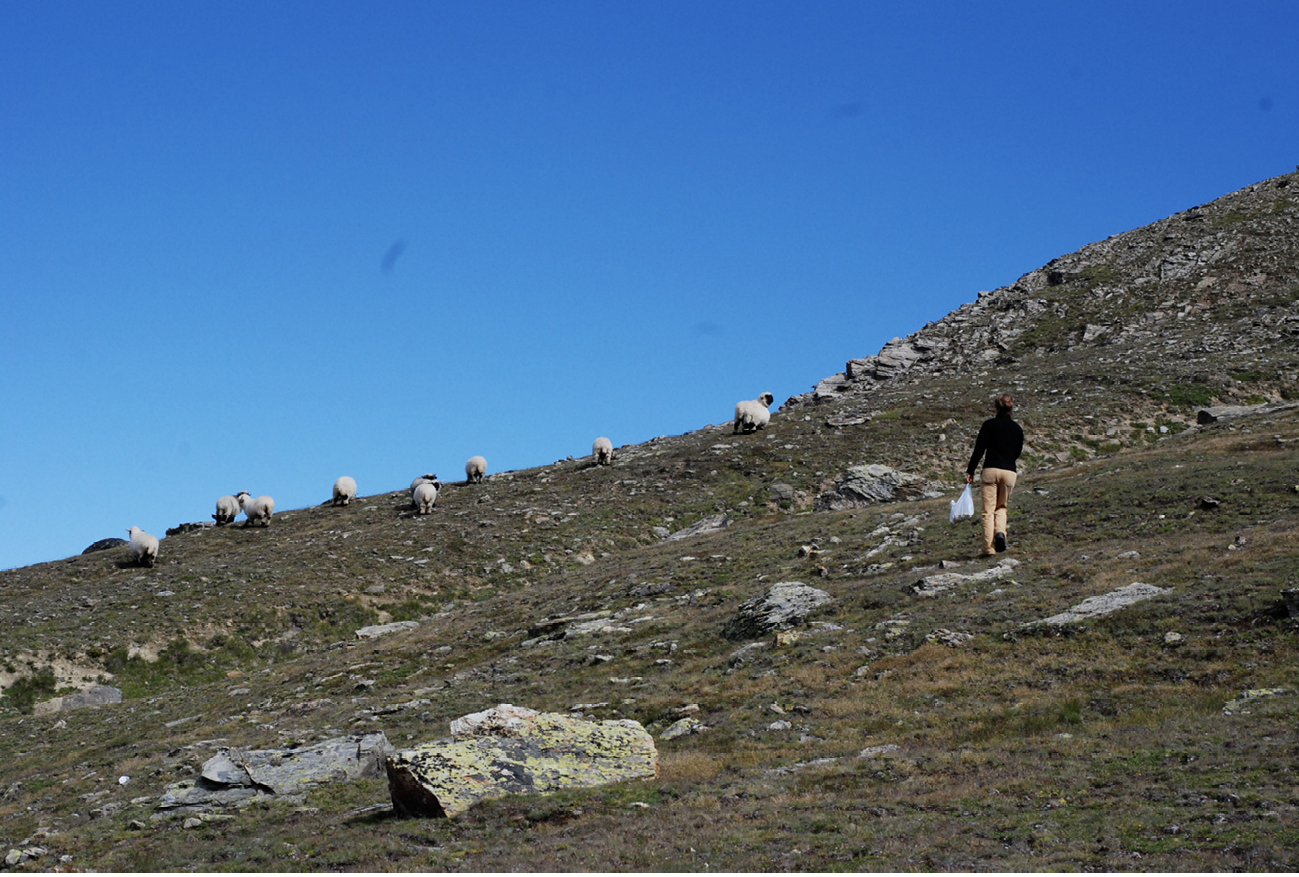
Figure 1.
Checking on sheep in higher lying pastures, Valais, 2008.
Photo by Magdalena Barthofer.
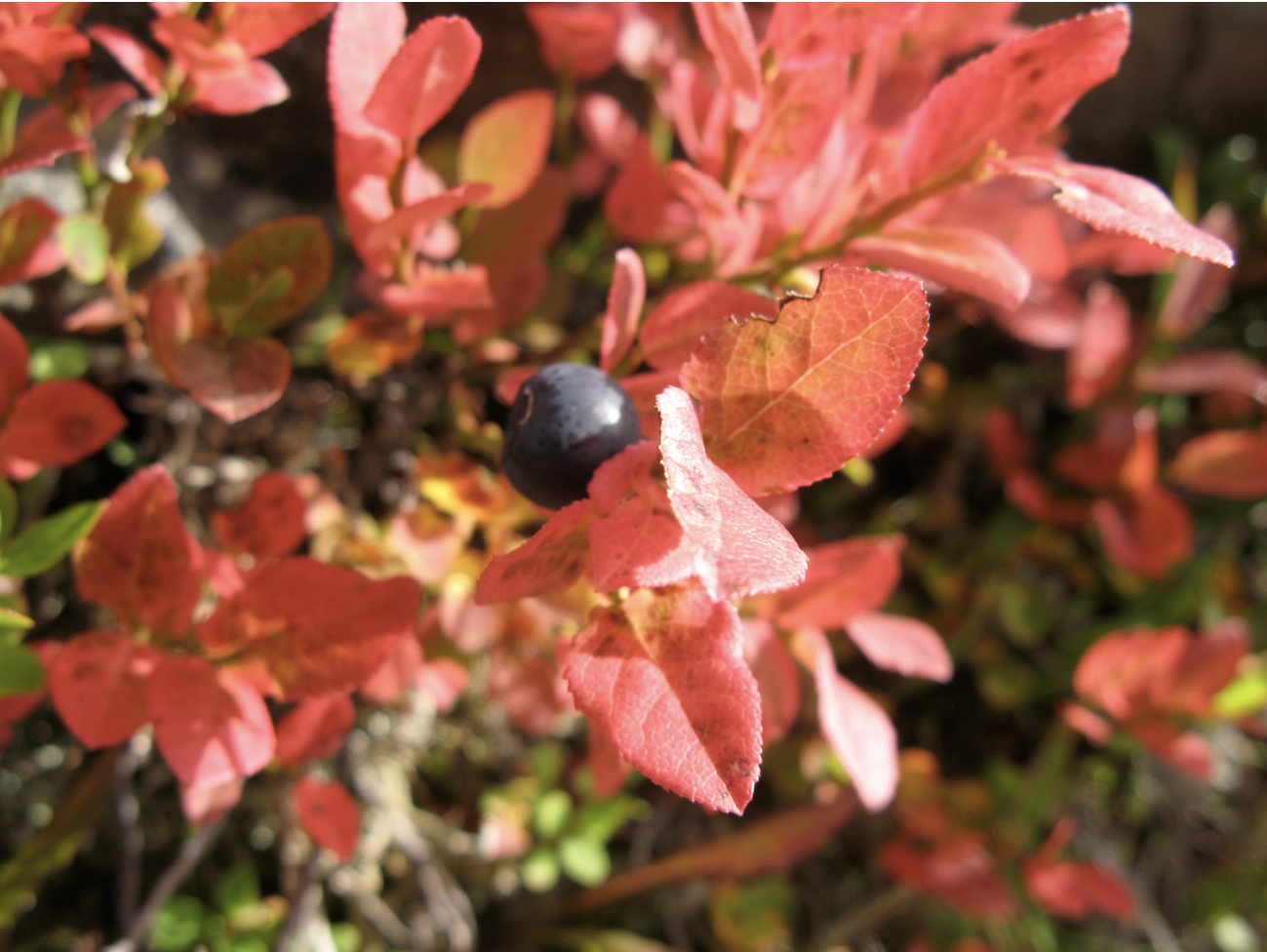
Figure 2.
Blueberry season, Valais 2008.
Photo by author.
In late August, the blueberries (Vaccinium myrtillus L.) started to ripen, and the hillsides were bursting with that sweet musky flavour (Figure 2). After doing my rounds among the sheep, I spent the rest of my afternoons crouched among the blueberry shrubs. I asked the people in the village if they also were collecting so many berries. ‘That was something we used to do’, was the general response. ‘With nets. I still have some old ones in the attic.’ I was told that the nets had been forbidden partially due to conservation advocates who argued that by using them, the leaves were removed from the plants, damaging them. I thought my hands were fast enough, and my harvest and jars of jam proved it. Hour upon hour I sat, picked and ate blueberries, filling up all my empty containers, my fingers and tongue turning blue. This was my meditative activity as the warm glow of the late summer sun swallowed me and my spot on the mountain whole.
I spent three more summers in Valais, as part of the cow herding crew from 2009 to 2014 (Figure 3). Even if we were working at lower elevations with the cows than I had been with the sheep, my hunger to get to know the plants, what was growing and what I could forage, grew. One rainy summer, the mushrooms were abundant and I foraged those more-than-plant species (meadow mushroom: Agaricus campestris, slippery jack: Suillus luteus), that glowed in the forest undergrowth. More than that, being around the cows and dairy products presented new opportunities. I used the fresh cheese made of the whey (like ricotta but called ‘Zieger’) to make some version of gnocchi (Figure 4). I collected a wild spinach, one to alternate with the nettles, Good King Henry (Blitum bonus-henricus (L.) Rchb.), which was also abundant where cows concentrated on pastures.
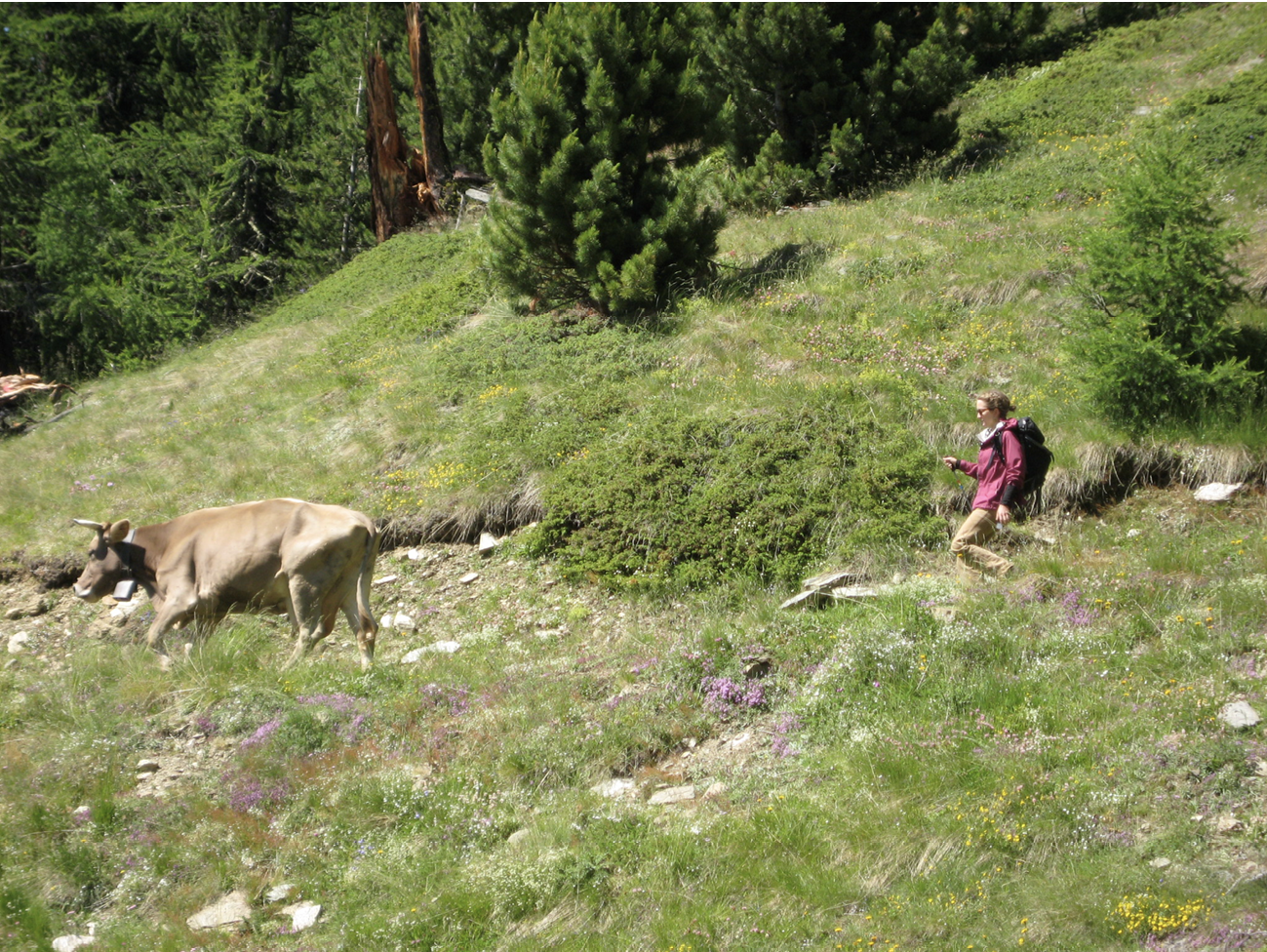
Figure 3.
Bringing cows back from pastures further away to the milking stall and night pastures, Valais 2009.
Photo by Olaf Mayer.
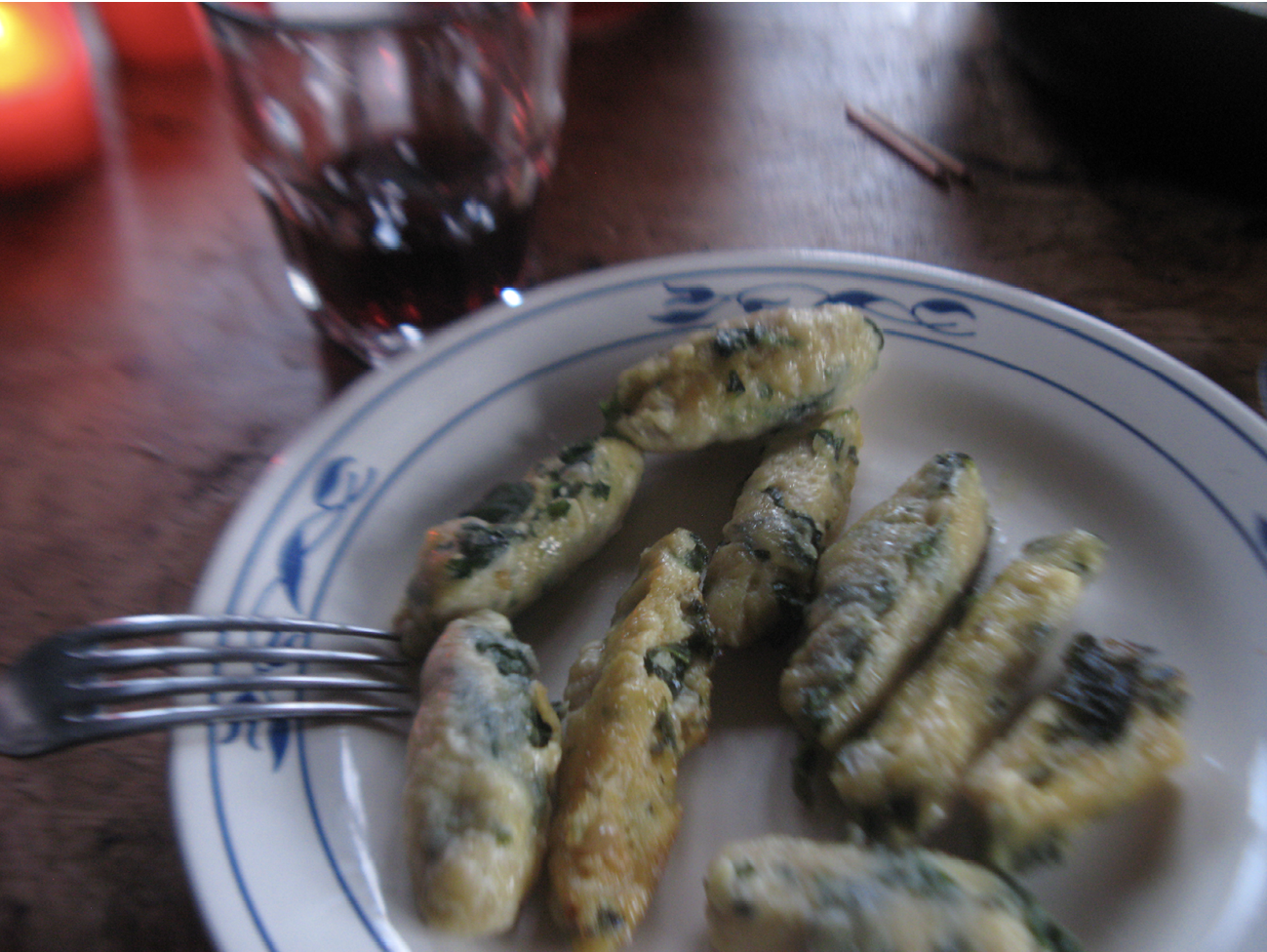
Figure 4.
Gnocchi-like dumplings with Good King Henry and Zieger, Valais 2012.
Photo by author.
There was one tourist family that regularly visited the village, and they knew a lot about plants. I met them my first summer on the sheep alp and saw them every summer thereafter on the cow alp. They came nearly daily to get their fresh milk from the cows to chat during milking time. Each year, before the meadows were mown, they collected many different grassland plants, dried them in their vacation apartment and took them home with them to make crafts and fill their tea stocks. They told me about what they collected, where and for which purposes. Bumping into them over the different summers, they explained to me that simple leaved milfoil (Achillea erba-rotta All.) was sweeter than the ubiquitous yarrow (Achillea millefolium L.). They taught me about alpine lady’s mantle (Alchemilla alpina L.), eyebright (Euphrasia L.), and alpine cat’s foot (Antennaria dioica (L.) Gaertn). They reminded me of the rock thyme (Clinopodium alpinum) and the juniper berries (Juniperus communis L.) that were prolific above the tree line. It was all food, tea and spice, free to me.
Local families, friends from the cow-keeping community, seemed sceptical about eating foraged plants. Many ate more processed food than I did, so probably our preferences for different flavours diverged. While the cows and the pastures were central to their life on the mountain, the plants in the landscape did not seem part of their food reality.
Now, in 2025, the Alp in Valais is no longer maintained either for sheep or for dairy cows. The process of the Alp dying out developed in parallel to my process of building an academic career. Inspired by the Alp, my research dealt (and deals) with relationships between biodiversity and productivity in agricultural landscapes, how values, perceptions and social constructs, including technology, shape these relationships, and how we do science in the first place. Each additional year that I have spent in academia, it has become clearer to me that my research interests cannot be separated from my time on the Alp, and that my own experiences had already taught me so much. They set the scene for me, providing a model food system, ecosystem and landscape, and even a model for thinking about what work is.
After a long break, in 2022, I found a sheep Alp in another Swiss canton, Uri, where I could work. I planned to share the summer with my friend and fellow herder, to make it compatible with my research job. Despite being only ninety kilometres away from the Alp in Valais as the crow flies, it was a different universe. I went up the mountain as a seasonal worker, confident that I would be able to navigate this new place based on my previous experiences in Valais. This time, though, I wanted it to be more than a work experience, by practising my botanical skills in identifying plant species that I would literally walk through (Figure 5) and immersing myself in an interpretive process of thinking about what kind of place an Alp is.
I was hired as a shepherd for the Alp in Uri by the ‘sheep commission’. The men in the sheep commission were small-scale, mostly part-time farmers who sent their sheep up to the higher slopes above the seasonal village at 1,600 metres, the pastures stretching across wide swaths of the alpine landscape. To graze the extensive pastures and receive all the subsidies for these pastures, the commission had to recruit about 600 sheep in addition to their own local herds. These came from two other large-scale farmers from other cantons in Switzerland. This would teach me about the role of herd size and dynamics among sheep and livestock, when they had different ‘home’ backgrounds.
While I had become more established in my role as a researcher in my time away from the Alp, I avoided emphasising this identifier when speaking to the farmers who hired me, as I was aware of the somewhat negative association farmers and rural people often apply to science. It is associated with people who comfortably sit at desks, far removed from farming, but nevertheless making decisions for farmers. I did not hide my curiosity to know as much as possible about the details of the Alp though. I took many notes and tried to build on my plant and animal knowledge, quickly realising that my work experiences in Valais paled in comparison to the consuming workload of herding 800 sheep in Uri. As a woman from elsewhere, with no substantial experience with livestock beyond the rather spacious summers in Valais with small-scale farm animals, I felt like some of the sheep owners were a bit wary of me, nor did I feel a sense of community among them, save for with my boss. On the days when we moved large numbers of sheep, the farmers kept mostly among themselves, and did not explain the procedures of what we were doing, where we were going. They did not bring snacks to share or wine to pass around, as the farmers and community members in Valais had. They were there to get the work done of moving sheep from one place to another, and it felt like I was supposed to either intuitively know what they were doing or just follow their cue. I was paid well, and I believe the farmers and sheep owners mostly wanted me to just do the work. Their sheep should look healthy, graze the pastures so that the satellite images of the pastures would provide the proof needed for the payments the sheep commission expected. At the end of the summer, the sheep should come down the mountain again, too. If not the sheep, at least their ear tags.
My hut on the Alp in Uri was among a community of nine cow farmer families, almost all of them with unique agreements on which and whose cows they had with them on the Alp. Most of these farmer families brought their own cows with them from their farms in the valley, several had cows from other families additionally, and one family had solely cows from another farm entirely. Cows grazed pastures at both lower and, later, higher elevations. The families drove (and still drive) the milk down to the dairy twice a day, where it was (and still is) measured and added to all the other milk for the German cheesemaker to then turn into yogurt, cream, butter and cheese. As the season progressed in 2022, the volume of milk shrunk more quickly than normal, largely because the grass had ripened so quickly due to the heat. Riper plants contained less of the essential nutrients, fats and proteins than younger plants. The reduced forage quality that cows consumed led to many farmers giving their cows concentrated feed (e.g. with extra grain and soy), to keep the milk quantities and quality higher. One family did not. This family emphasised that the whole point of bringing cows up to the summer pastures was to not have to feed them and make use of the forage growing right there. When the forage was as ripe in July as it ‘normally’ was in September, they told me that they just had to deal with the reduced milk levels, the lower amounts of cheese. In Valais, the whole system had been more extensive, so that the cheese maker looked forward to the later summer when he would make cheese only every second day due to the lower amounts of milk produced.
The Alp in Uri used to be based around a common pasture, but the farmers tired of having to pluck their own cows out of the herd to milk them twice a day, so they had a consultant come and divide the pasture into parcels with the same amount of the same quality of forage available to each family. The cow pastures were separated from the higher sheep pasture through an electric fence. Relations were contentious between the cow farmers and the sheep commission, and so my job was to have the sheep ‘mind the fence’. Sheep from the large-scale farms had low regard for the fence and were more focused on the lush swards beyond its boundaries. Trying to be diplomatic was my attempt to compensate for the misbehaving sheep (Figure 5). In return, the cow farmers comforted me by telling me that it was good that the sheep were there. If the grass was not grazed efficiently, then it created warm air patches beneath layers of snow in the winter, making avalanches likely that could damage stalls and other infrastructure.
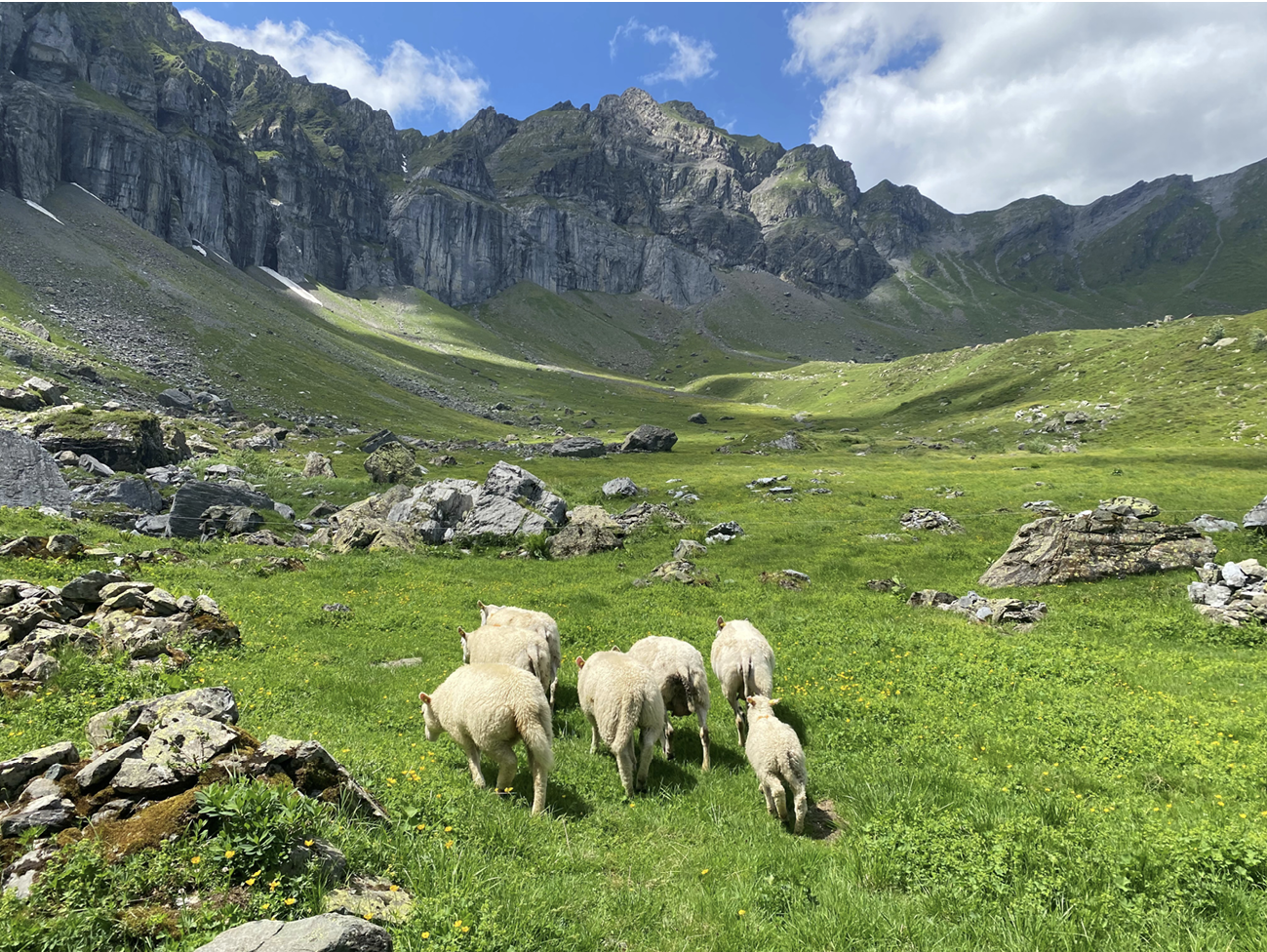
Figure 5.
Bringing sheep that had escaped their pastures into the cow pastures back up, Uri 2022.
Photo by author.
On the Alp in Uri, most cow owners sprayed herbicides on the abundant Alpine Dock (Rumex alpinus L.). The organic farmers spent days digging it out of the soils, bringing it elsewhere to avoid it spreading even more. The animals seem to avoid it intuitively, but it proliferated (and likely still does) around the stalls. Unfortunately, there is no use for the Alpine Dock, no way of using it as food. The smaller, sibling plant, Common sorrel (Rumex acetosa L.) is a delightful sweet-sour salad leaf that I used, and that livestock are not averse to.
When I asked farmers about the importance of plant diversity for them, their main response was that, since formal western medicine and health insurance had become part of people’s lives, they no longer had to rely on the diverse plants growing across the meadows and pastures. Only one older female farmer that I met collected herbs for flavouring the Alp cheese, bringing chives (Allium schoenoprasum L.) that grew along one of the stream banks, down to the dairy. She also collected diverse plants for teas, and I followed her cue, collecting lady’s mantle (Alchemilla mollis (Buser) Rothm.), limited amounts of alpine arnica (Arnica montana subsp. montana), alpenrose (Rhododendron ferrugineum L.), alpine hawkweed (Hieracium alpinum L.), red clover (Trifolium alpinum L.) and more (Figure 6). When I asked about what the plants in the meadows did for animals’ health, my boss, responded succinctly: if the animals’ health was not negatively impacted by changes in plant diversity, it did not really matter which plants were there or not. A neighbouring cow farmer mentioned that when he was younger, he and his family used to go to more remote, difficult-to-reach meadows to mow that grass and bring it down to the stables (‘Wildheu’). They would give the animals that hay on Christmas, or when a cow was sick, since it was said to have higher value due to micronutrients and was special. But modern life has become so busy, there is no time for extra work or extra plant relations.
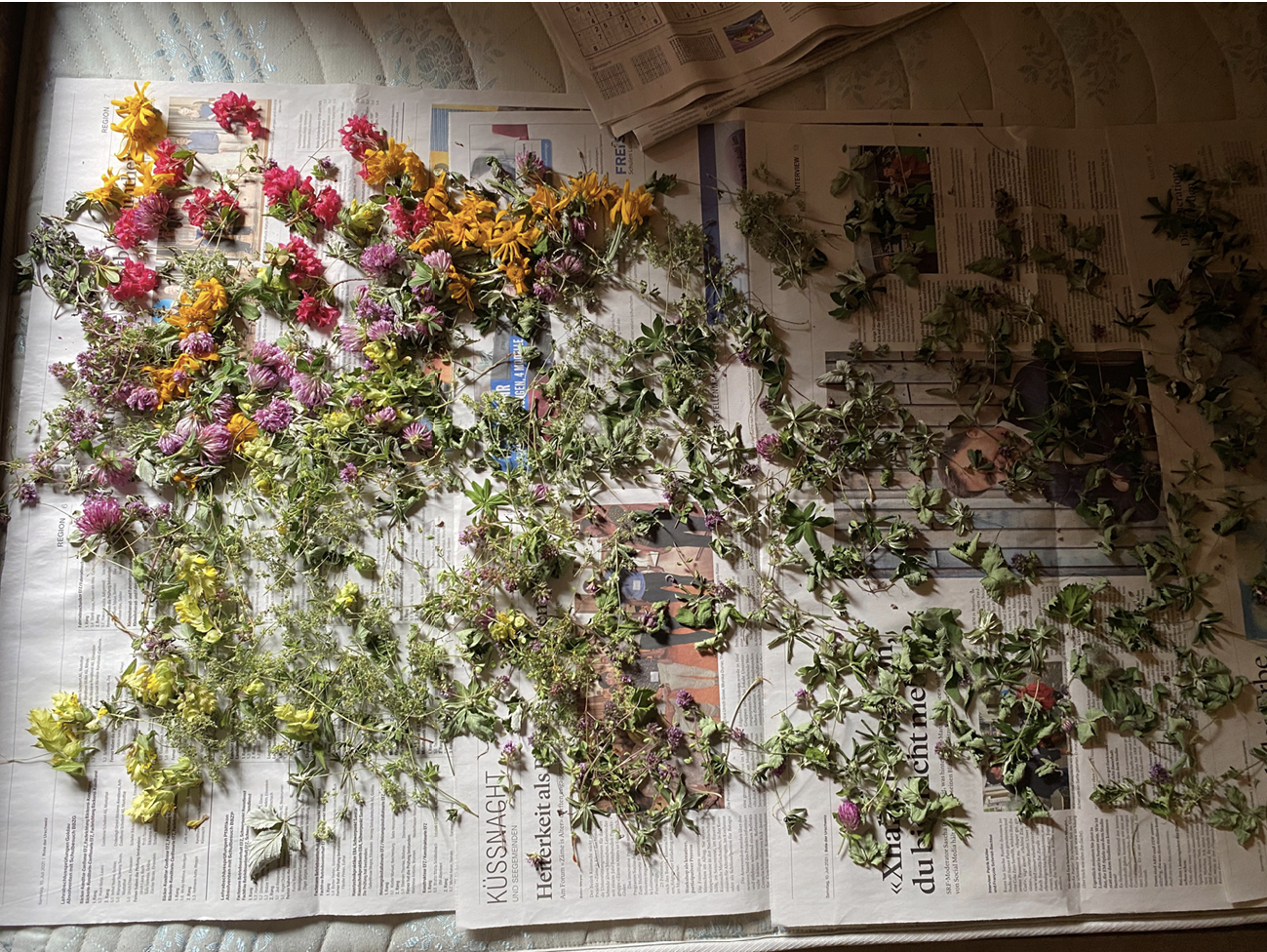
Figure 6.
Diverse plant parts drying for tea, Uri 2022.
Photo by author.
It seemed plants were not considered individually, but rather as part of the whole pasture, indelibly connected to livestock. The plants were visually important and have shaped the Alp as a place, but plant knowledge was not central to farmers or livestock’s relationships to the place.
I heard about the previous sheep herders on the Alp, their successes and failures. Stories trickled through, giving me a sense of how different people had shaped the place. Years before me, there had been some young Austrian men, whose children walked around barefoot everywhere on the Alp and, unbelievably to locals, they and their families barely seemed to eat food from the grocery store, but rather mostly dairy products and all the herbs growing in the landscape. One of the cow farmers told me that while she did not have an issue with eating foraged foods, she found it exaggerated. So, I felt like a deer in headlights once when she saw me collecting nettles.
My boss did not know a lot about the plants, but what he knew he said he mostly learned from the Austrian herb-eating sheep herders. When I asked him about the beautiful dark blue-violet flowers growing prolifically on one of the mountainsides, he explained that it was poisonous. This was monkshood or wolfsbane (Aconitum napellus L.). Sheep, and all livestock select what they graze on, and do not consume poisonous plants – somehow they just know. My boss also told me the Austrians had eaten the fruit of the spiniest thistle (Cirsium spinosissimum L. Scop.). I was always hungry for vegetables, and at least this pesky plant, which the sheep also did not eat, would be useful for me – unlike monkshood.
In Valais, as herders, we were absorbed into and by the community to a certain extent. Without our jobs, our position in the community was no longer central. This perhaps reflected other changes too. Over time, the community disintegrated somewhat, as fewer and fewer animals were held by people. Power struggles between some of the remaining cow owners changed how the pastures are grazed. The sheep alp no longer exists since several farmers got rid of their sheep, because they got too old or because of the wolf having torn through the herds. The glacier that regularly provided water in the summer has mostly melted. Cheese has not been made for several years now. Some cows are still brought up by two men from the village, who rent the pastures from the community. I heard that herders come up from the valley a few days at a time. What will happen to the pastures is unclear.
My boss on the Alp in Uri said that, by the time his teen son is an adult, sheep will no longer be a part of the Alp. Cows will likely continue, if there is water. But sheep are too marginal, the work is too physically intense and finding sheep to graze the pastures is increasingly difficult. Green alder (Alnus viridis (Chaix) DC.) is already starting to grow in the pastures, a clear sign that the grazing pressure is not enough. The cow farmers I spoke to said that they have the ‘Alp virus’, a metaphorical, psychological virus that infects people who have spent a summer herding livestock on the Alp, making them need to return regularly. The farmers continue to invest in their summer stalls and consider the Alp as a central vein running through their life, just as many seasonal herders and cheese makers do.
Plant knowledges and relationships to Alp as place in a constant state of becoming
As my knowledge about plants on each Alp grew through foraging and herding, my connection to the Alp strengthened. Learning through being shown, being in place, waiting and observing livestock and the pastures around them, gave me a sense of becoming with the Alp. This embodied experience of ‘livingness’ emerged through practice and connection across times and place (Isaacs, 2020). Each summer, I came to understand the structural and social changes affecting each of the Alps more deeply. Over time, my perception about what an Alp is and should be, has shifted – from something static to something in constant change and movement. This evolution aligns with the literature on ecology, conservation and multinatural or more-than-human thinking (Lorimer, 2012), where ideas about succession as ‘fixed’ are contested with ideas of fluidity over time (Wallington et al., 2005; Manning et al., 2009). Similar shifts are apparent in agricultural science, where systemic approaches are replacing linear models of farm innovation processes (Knickel et al., 2009), and anthropology, where observations have been made that horizontal, peer-based knowledge or cultural transmission is gaining prominence over vertical transmission from older to younger generations (Reyes-Garcia, et al., 2016). Despite such insights, Western frameworks continue to emphasise stability, top-down and deterministic thinking in the way we live and work (Darnhofer, 2020). In becoming with the Alp, plants led me into a view of shifting constellations of the humans and animals associated with pastures.
My experiences in both Valais and Uri suggest that perhaps plant knowledge on the Alp emerges through interactions between herders, cheese-makers, tourists and farmers. Rather than being entirely local, knowledge transgressed boundaries and enabled responsive Alp maintenance by opening up knowledge and cultural exchange. I observed a certain compartmentalisation of knowledge: knowledge of individual plants belonging to outsiders and certain insiders (i.e. seasonal workers, tourists, older local women), and knowledge of whole pastures belonging mostly to decision-making insiders, the farmers. This points to a potential disparity between knowledge and place-based practice, but also to shifting peripheries of vision and ways of seeing. As an outsider, I came closer to insiders’ practices via my inquiry into plant knowledge – my field of vision increasing from plant to animal and pasture. While previous studies imply that most traditional botanical knowledge in the Alps has become seriously eroded (Pieroni and Giusti, 2009; Abbet et al., 2014), I found that plant knowledge persists by being transmitted horizontally between insiders and outsiders. Other studies report that local alpine village inhabitants will also use reference books and the internet for new ways of using local plants (e.g. birch syrup) (Abbet et al., 2014). With the exception of symbolic plants and delicacies (Christanell et al., 2010), like edelweiss (Grabherr 2009), or Alpine wormwood (Pieroni and Giusti, 2009), my experiences suggest that plant knowledge might simply not be widely important for people living in Alpine regions with a modern way of life.
Perhaps symbolic plants (e.g. edelweiss) and animal-based foods (e.g. cheese) capture the Alp as a ‘whole system’ that contains multiple relations and meanings. Farmers’ plant knowledge is embodied in decisions about where animals should graze, reflecting ecological knowledge and rights that developed historically in response to dynamic changes in the landscape (Glasenapp and Thornton, 2011). A warming climate and associated plant migration, however, cast uncertainty on the future of alpine pastures and grazing practices. Recent research in the Swiss Alps predicts that, due to intertwined biodiversity decline and loss of plant knowledge, knowledge will become mainstreamed and less place-specific (Poncet et al., 2021) and, as my experience suggests, more person-dependent. It is unknown if this will lead to a loss of communities’ agency to nurture transhumance and therefore maintain pastures.
Plant knowledges and animal-caring practices reflect different ways of belonging on Swiss pastures and the Alp as a place. These ways of belonging shape the dynamic and multilayered forms of social organisation including local farmers and farmers from elsewhere, herders, cheese makers, tourists, and community members (Guillet et al., 1983). The ways in which social organisation forms relationships between different people, animals and plants will depend on sociocultural identity (e.g. farmer, herder, insider or outsider), political power (e.g. who makes choices about where animals can graze, what payments farmers receive) and ecological factors (e.g. how is climate change affecting how long animals have forage, nutritional quality of forage) (see ‘relational ecologies of belonging’: Poe et al., 2014). I was an insider when meeting hikers or tourists, I was an outsider when interacting with other farmers. These roles shaped my relationship to the place and suggest that plant knowledges reflect not just place but also which people come together and how they do so (Head et al., 2014).
Foraging for plants for my food and teas rooted in each Alp bridged my identity between the Swiss Alps, my home mountains at the edge of the Great Basin and my other self as researcher. In this case, my attachment to the Alp was not a replaceable commodity in which I experienced ‘nature’ through a hike or trip (Hawkes and Acott, 2013), but rather a place I built a sense of belonging in. It was the repeated times that I spent in different locations on the Alp, with specific livestock and plant species in particular locations, sometimes also with certain persons (see ‘knowing by showing’: Pitt, 2015). Engaging with plants through shepherding and foraging activities provided me with a greater sense of purpose related to the way I inhabit and belong to the Alp as a place of people, animals and plants. I thus experienced my belonging through diverse relationships, the whole greater than the sum of its parts. Relational belonging demonstrates how identity and movements between places are interconnected, providing insight to the ‘negotiated visions about how we organize ourselves and live together’ (Poe et al., 2014: 15). Perhaps outsiders’ detailed knowledge of plants can complement pasture and animal knowledge, and farmers’ associated intuitive practice (Krzywoszynska, 2015; Lawrence, 2022). This may offer a way for moving beyond rigid insider-outsider divisions.
In autoethnography, the living body and subjective self of the researcher is considered a significant part of the research process (Denzin, 1997), blurring the distinctions between self and other or subject and object (Conquergood, 1991). In my story here, the Alp becomes a system without definite spatio-temporal boundaries, co-produced through my roles as shepherd, turned forager and researcher (see ‘making-with’: Haraway, 2018). My fluid positioning allows reflections and questions to emerge from the conversation my different roles have with each other. Each role speaks to each other, as each is in conversation with the farmers and community members around me (e.g. Lawrence, 2022). By placing my narrative in the centre of interpretation, I show how the Alp and I are co-constituted through ongoing, embodied encounters, beginning through an inquiry into plant knowledge. This process of co-constitution could suggest that sustaining the essence of the Alp might not lie in preserving static relationships or practices between people, plants, animals, but rather in nurturing evolving, emergent relations. We might thus shift from conserving fixed traditions through policies addressing species-rich alpine pastures to enabling adaptive and relational ways of being on the Alp, recognising its continuous becoming.
Acknowledgements
I would like to thank Hannah Pitt and Hilal Alkan for organising the ‘Crops and their humans’ workshop, which gave me a reason to work on this piece in the first place. Deep gratitude also to Jamila Haider for joining me during this continuously unfolding journey through ways of thinking in the context of this piece and beyond. Kurt Riedi made the summer in Uri possible. Maria Busse: what a joy to identify plants together when she came to visit. Thank you to the farmers who had the confidence to hire me to take care of their animals. Lastly, but importantly, I extend appreciation to millennia of farming families who have created these beautiful Alpine places.
REFERENCES
Abbet, C., R. Mayor, D. Roguet, R. Spichiger, M. Hamburger and O. Potterat. 2014. ‘Ethnobotanical survey on wild alpine food plants in Lower and Central Valais (Switzerland)’. Journal of Ethnopharmacology 151 (1): 624–34.
Chang, Heewon. 2008. Autoethnography as Method. New York: Routledge.
Christanell, A., B. Vogl-Lukasser, C.R. Vogl and M. Gütler. 2010. ‘The cultural significance of wild gathered plant species in Kartitsch (Eastern Tyrol, Austria) and the influence of socio-economic changes on local gathering practices’. Ethnobotany in the New Europe: People, Health, and Wild plant resources. New York: Berghahn Books. pp. 51–75.
Conquergood, D., 1991. ‘Rethinking ethnography: Towards a critical cultural politics’. Communications Monographs 58 (2): 179–94.
Darnhofer, I. 2020. ‘Farming from a process‐relational perspective: making openings for change visible’. Sociologia Ruralis 60 (2) : 505–28.
https://doi.org/10.1111/soru.12294
Denzin, N.K., 1997. Interpretive Ethnography: Ethnographic Practices for the 21st Century. Thousand Oaks: Sage.
Dreier, S., M. Ramsauer and F. Herzog. 2004. ‘Alpine summer farms in Switzerland’. In R.G. Bunce (ed.) Transhumance and Biodiversity in European Mountains. Wageningen: Ponsen and Looijen.
Ellis, C., T.E. Adams and A.P. Bochner. 2011. ‘Autoethnography: an overview’. Historical Social Research/Historische sozialforschung: 273–90.
Farruggia, A., D. Pomiès, M. Coppa, A. Ferlay, I. Verdier-Metz, A. Le Morvan, A. Bethier, F. Pompanon, O. Troquier and B. Martin. 2014. ‘Animal performances, pasture biodiversity and dairy product quality: How it works in contrasted mountain grazing systems’. Agriculture, Ecosystems & Environment 185: 231–44.
Fasolin, S. 2010. ‘The Cheese Makers – Foreign Alpine Herders in the Bernese Oberland’, documentary film.
Grabherr, G., 2009. ‘Biodiversity in the high ranges of the Alps: ethnobotanical and climate change perspectives’. Global Environmental Change 19 (2): 167–72.
Gugerell, K., M. Penker and P. Kieninger. 2019. ‘What are participants of cow sharing arrangements actually sharing? A property rights analysis on cow sharing arrangements in the European Alps’. Land Use Policy 87: 104039.
Guillet, D., R.A. Godoy, C.E. Guksch, J. Kawakita, T.F. Love, M. Matter and B.S. Orlove. 1983. ‘Toward a cultural ecology of mountains: the Central Andes and the Himalayas compared’. Current Anthropology 24 (5): 561–74.
Haraway, D. 2018. ‘Staying with the trouble for multispecies environmental justice’. Dialogues in Human Geography 8 (1): 102–05.
Hawkes, F.M. and T.G. Acott. 2013. ‘People, environment and place: The function and significance of human hybrid relationships at an allotment in South East England’. Local Environment 18 (10):1117–33.
Head, L., J. Atchison, C. Phillips and K. Buckingham. 2014. ‘Vegetal politics: belonging, practices and places’. Social & Cultural Geography 15 (8): 861–70.
Herzog, F. and I. Seidl. 2018. ‘Swiss alpine summer farming: current status and future development under climate change’. The Rangeland Journal 40 (5): 501–11.
Huber, R., N. El Benni and R. Finger. 2024. ‘Lessons learned and policy implications from 20 years of Swiss agricultural policy reforms: A review of policy evaluations’. Biobased and Applied Economics 13 (2): 121–46. https://doi.org/10.36253/bae-14214
Imfeld-Müller, S. 2013. ‘Nutztierhaltung auf der Alp – eine Literaturübersicht’. Agrarforschung 4: 216–21.
Isaacs, J.R. 2016. ‘More‐than‐human geographies’. International Encyclopedia of Geography: People, the Earth, Environment and Technology, pp. 1–5.
https://doi.org/10.1002/9781118786352.wbieg2041
Knickel, K., G. Brunori, S. Rand and J. Proost. 2009. ‘Towards a better conceptual framework for innovation processes in agriculture and rural development: From linear models to systemic approaches’. The Journal of Agricultural Education and Extension 15 (2): 131–46. https://doi.org/10.1080/13892240902909064
Krzywoszynska, A. 2016. ‘What farmers know: experiential knowledge and care in vine growing’. Sociologia Ruralis 56 (2): 289–310.
Lamprecht, A., P.R. Semenchuk, K. Steinbauer, M. Winkler and H. Pauli. 2018. ‘Climate change leads to accelerated transformation of high‐elevation vegetation in the central Alps’. New Phytologist 220 (2): 447–59.
Lawrence, A.M. 2022. ‘Listening to plants: Conversations between critical plant studies and vegetal geography’. Progress in Human Geography 46 (2): 629–51.
Lorimer, J. 2012. ‘Multinatural geographies for the Anthropocene’. Progress in Human Geography 36 (5): 593–612. https://doi.org/10.1177/0309132511435352
Manning, A.D., J. Fischer, A. Felton, B. Newell, W. Steffen and D.B. Lindenmayer. 2009. ‘Landscape fluidity – a unifying perspective for understanding and adapting to global change’. Journal of Biogeography 36 (2): 193–99.
https://doi.org/10.1111/j.1365-2699.2008.02026.x
Marsoner, T., L.E. Vigl, F. Manck, G. Jaritz, U. Tappeiner and E. Tasser. 2018. ‘Indigenous livestock breeds as indicators for cultural ecosystem services: A spatial analysis within the Alpine Space’. Ecological Indicators 94: 55–63.
https://doi.org/10.1016/j.ecolind.2017.06.046
Mattalia, G., G. Volpato, P. Corvo and A. Pieroni. 2018. ‘Interstitial but resilient: nomadic shepherds in Piedmont (Northwest Italy) Amidst spatial and social marginalization’. Human Ecology 46: 747–57.
Molnár, Z., A. Kelemen, R. Kun, J. Máté, L. Sáfián, F. Provenza, S. Díaz, H. Barani, M. Biró, A. Máté and C. Vadász. 2020. ‘Knowledge co‐production with traditional herders on cattle grazing behaviour for better management of species‐rich grasslands’. Journal of Applied Ecology 57 (9): 1677–87.
Niedrist, G., E. Tasser, C. Lüth et al. 2009. ‘Plant diversity declines with recent land use changes in European Alps’. Plant Ecology 202: 195–210.
https://doi.org/10.1007/s11258-008-9487-x
Orland, B. 2004. ‘Alpine milk: dairy farming as a pre-modern strategy of land use’. Environment and History 10 (3): 327–64.
Parra, S.A., M.E. Ramos-Font, E. Buisson, A.B. Robles, C. Vidaller, D. Pavon, V. Baldy, P. Dominguez, F. Godoy-Sepúlveda, H. Mazurek and A. Peña-Enguix. 2025. ‘How transhumance and pastoral commons shape plant community structure and composition’. Rangeland Ecology & Management 98: 269–82.
Pieroni, A. and M.E. Giusti. 2009. ‘Alpine ethnobotany in Italy: traditional knowledge of gastronomic and medicinal plants among the Occitans of the upper Varaita valley, Piedmont’. Journal of Ethnobiology and Ethnomedicine 5: 1–13.
Pitt, H., 2015. ‘On showing and being shown plants‐a guide to methods for more‐than‐human geography’. Area 47 (1): 48–55. https://doi.org/10.1111/area.12145
Poe, M.R., J. LeCompte, R. McLain and P. Hurley. 2014. ‘Urban foraging and the relational ecologies of belonging’. Social & Cultural Geography 15 (8): 901–19.
Poncet, A., C. Schunko, C.R. Vogl and C.S. Weckerle. 2021. ‘Local plant knowledge and its variation among farmer’s families in the Napf region, Switzerland’. Journal of Ethnobiology and Ethnomedicine 17: 1–19.
POWO. 2025. Plants of the World Online. Facilitated by the Royal Botanic Gardens, Kew: https://powo.science.kew.org (accessed 9 May 2025).
Reyes-García, V., A.L. Balbo, E. Gómez-Baggethun, M. Gueze, A. Mesoudi, P.J. Richerson, X. Rubio-Campillo, I. Ruiz-Mallén and S. Shennan. 2016. ‘Multilevel processes and cultural adaptation: examples from past and present small-scale societies’. Ecology and Society 21 (4): 2. http://dx.doi.org/10.5751/ES-08561-210402
Rook, A.J., B. Dumont, J. Isselstein, K. Osoro, M.F. Wallis DeVries, G. Parente and J. Mills. 2004. ‘Matching type of livestock to desired biodiversity outcomes in pastures–a review’. Biological Conservation 119 (2): 137–50.
Schweizerischer Alpwirtschaftlicher Verband (SAV). 2022. Jahresbericht 2022.
Schweizer Bundesamt für Statistik. 2023. https://www.bfs.admin.ch/bfs/de/home/statistiken/raum-umwelt/bodennutzung-bedeckung/landwirtschaftsflaechen.html (accessed 15 December 2024).
Soliva, R., J. Bolliger and M. Hunziker. 2010. ‘Differences in preferences towards potential future landscapes in the Swiss Alps’. Landscape Research 35 (6): 671–96.
https://doi.org/10.1080/01426397.2010.519436
Steinbauer, M.J., J.A. Grytnes, G. Jurasinski, A. Kulonen, J. Lenoir, H. Pauli, C. Rixen, M. Winkler, M. Bardy-Durchhalter, E. Barni and A.D. Bjorkman. 2018. ‚Accelerated increase in plant species richness on mountain summits is linked to warming’. Nature 556 (7700): 231–34.
Stepp, J.R., H. Castaneda and S. Cervone. 2005. ‘Mountains and biocultural diversity’. Mountain Research and Development 25 (3): 223–27.
Von Glasenapp, M. and T.F. Thornton. 2011. ‘Traditional ecological knowledge of Swiss alpine farmers and their resilience to socioecological change’. Human Ecology 39: 769–81.
Wallington, T.J., R.J. Hobbs and S.A. Moore. 2005. ‘Implications of current ecological thinking for biodiversity conservation: a review of the salient issues’. Ecology and Society 10 (1). http://www.ecologyandsociety.org/vol10/iss1/art15/
Wunderli, R. 2014. ‘Alpvermarktung historisch’. In zalp. Zeitschrift der Älplerinnen und Älpler 25: S. 4–7.
Maria Kernecker is an environmental scientist at the Leibniz Centre for Agricultural Landscape Research, leading the working group on land use decisions. She is fascinated by the relationship between people and landscapes and explores this multidimensional, dynamic relationship through the lenses of agriculture, biodiversity and food. Drawing on methodologies from landscape ecology, anthropology and sociology, she aims to inform practices for resilient living systems. With her research, she also contributes to collective efforts towards rethinking how we do science. Her academic journey started with an Bachelor of Arts in International Affairs and Spanish at the University of Nevada, Reno, USA. It then took her to the University of Natural Resources and Life Sciences, Vienna, Austria for a Master of Science degree in Environmental and Bioresource Management, and to McGill University, in Montreal, Canada, for a Ph.D. in Renewable Resources.
Email: Maria.Kernecker@zalf.de