Sabrina Dookie
Mangroves as sacred forests: connecting people and nature
ABSTRACT
Mangroves are complex ecosystems that possess cultural, spiritual and traditional importance. In both the eastern and western hemispheres, these forests are considered sacred and are protected and revered by numerous indigenous communities. This article examines the global prevalence of sacred mangrove forests and outlines their benefits across various contexts and paradigms. Sacred mangrove forests, due to the reverence in which they are held and their protected status, offer more efficient ecological functions and outputs than traditional mangrove forests affected by anthropogenic stresses. They offer various advantages, including enhanced pollination, species conservation and improved nutrient cycle regulation, and serve as a repository for plants of medicinal significance. The revision of policies on the protection status of mangroves, combined with the integration of co-management strategies that incorporate shared traditional ecological knowledge and governance, can position sacred mangrove forests as a catalyst for conservation, promoting biodiversity, and benefiting dependent communities.
KEYWORDS
mangrove ecosystems, mangrove forests, sacred forests, sacred groves, traditional ecological knowledge
 Introduction
Mangrove forests offer a plethora of socio-economic benefits to dependent communities, such as essential materials for livelihoods and food security, coastline protection, carbon sequestration, biodiversity and ecosystem stability, and preservation of traditional practices and cultural values (Garmeepour 2025). Despite their crucial roles, IUCN (2024) reported an increased percentage of mangrove loss, with approximately fifty per cent at risk of collapse. Climate changes coupled with anthropogenic activities, including mining, aquaculture and urban development, constitute the primary threats faced by mangroves. Mangrove deforestation is heightened by the widespread perception that their wetlands possess little or no value, often being viewed in a negative light. However, if we examine this phenomenon a little more closely, it becomes evident that the main issue is the insufficient recognition of the various ecological goods and services that these coastal wetlands provide.
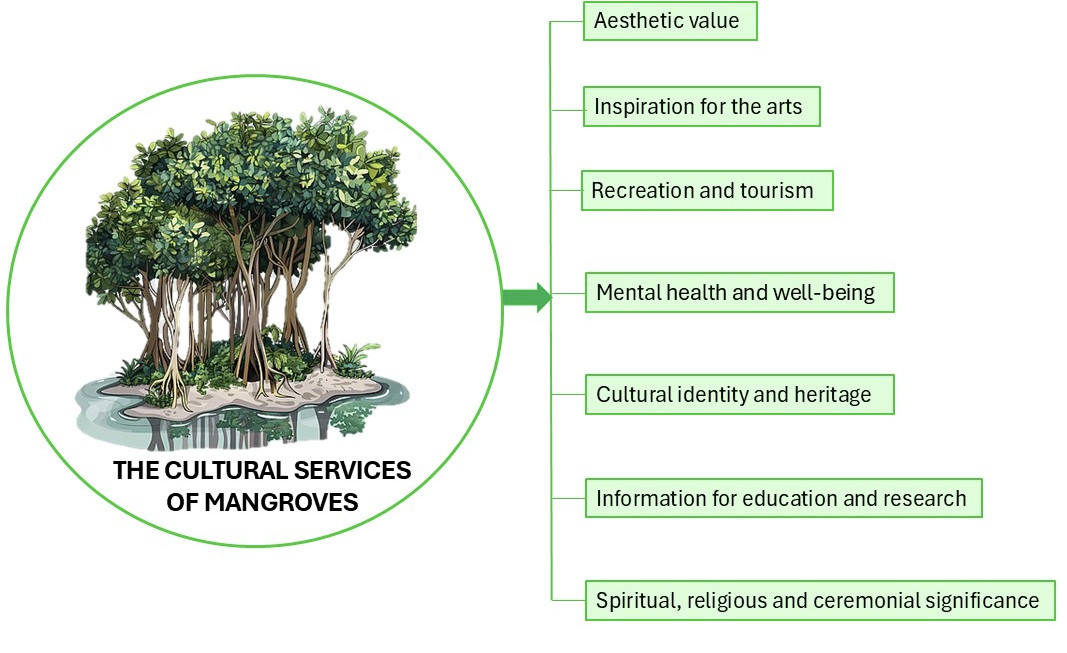
Figure 1.
The cultural uses of mangroves around the globe. Created by the author
Mangrove forests have been thoroughly examined historically, financially and ecologically in many contexts and paradigms. Emerging in the Late Cretaceous period (100–65 Ma), historical references to these plants can be traced back to the era of Alexander the Great (326–324 bc) by Nearchus (326–324 bc) and Theophrastus (305 bc), who depicted mangroves as plants ‘held up by their roots like a polyp’ (Spalding 2010). The emphasis on cultural ecosystem services (CES) and sacred values within coastal and marine environments, while under-studied, has been growing consistently in territories such as the United Kingdom, Spain, Australia, India and China (Jupe et al. 2025). For example, Urquhart and Acott (2013) examined the role of fishing in shaping individual and community identities in Cornwall (England), emphasising its significance for the social and cultural wellbeing of coastal communities. In Southern China, Dou et al. (2021) highlighted the distinct functions of local landscape features in the provision and varying perceptions of CES, which reinforces the need for multi-functional and sustainable landscape management.
The concept of CES effectively illustrates how natural systems significantly contribute to human wellbeing and environmental management. Mangroves serve as a cultural ‘fabric’, weaving profound spiritual and traditional values throughout many coastal communities, transcending the typical material approach often employed to assess ecosystem services (Figure 1). This is recognised within indigenous societies worldwide, where physical/mental wellbeing and cultural heritage are interconnected with ecosystems and native biota. For instance, the Warrau people (‘mangrove people’) of Guyana and Venezuela have settled in and relied on mangrove swamps for over 7,000 years for housing, boats, fishing gear and tools (Holtzman 2023) (Figure 2).
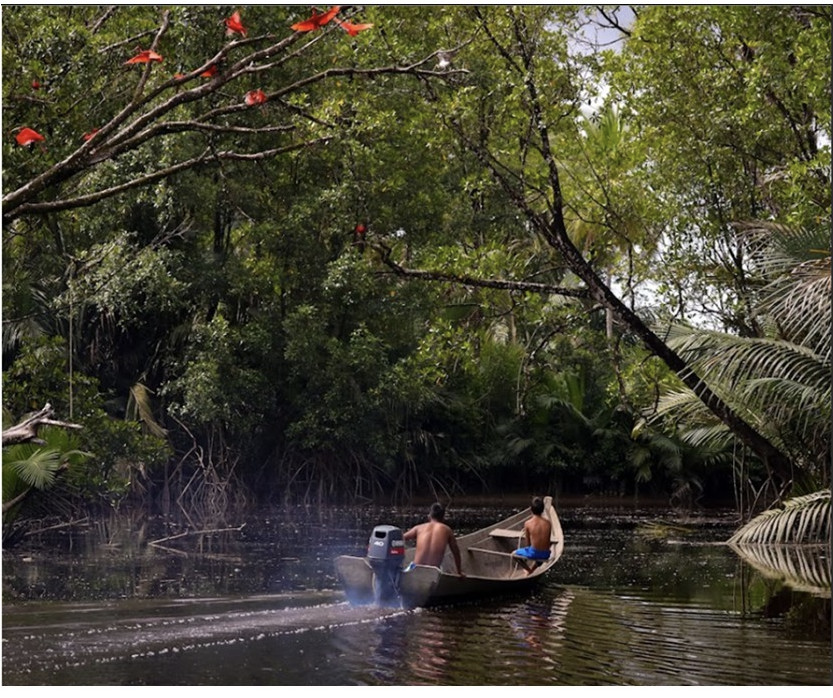
Figure 2.
The Warrau people of the Imbotero village in Barima Waini (Guyana) have settled within mangrove swamps and have been dependent on these mangrove forests for over 7,000 years.
Source: Courtesy of Annette Arjoon–Martins, GMCS.
Moreover, within many indigenous ideologies, nature is frequently perceived as a living community where human and non-human entities contribute to the integrity of the system (Moore et al. 2022). This ecological concept views restoration as a process guided by nature, where practitioners modify their plans in response to the land’s reactions to treatments, rather than imposing a mechanistic control that forces nature to conform to a predetermined desired state (Kimmerer 2011). These beliefs, values and uses form a feedback loop where the health and management of ecosystems are linked to the wellbeing of human communities, closely influencing each other (Rodrigues et al. 2017). Overlooking the cultural services offered by mangrove ecosystems disregards important factors that frequently impact vulnerable and marginalised communities. Over time, this has led to shifts in policymaking and the creation of mangrove conservation and preservation frameworks that prioritise some ecosystem services over others. Many stakeholders often portray mangroves as ‘green gold’, encompassing them into neoliberal environmental governance logics that commodify nature as an economic asset and strategic tool for climate change mitigation. This encourages a shift towards a wider market-based conservation instead of ecological resilience or community health and wellbeing (Oldenburg 2025).
Recent trends indicate a growing acceptance of community-based and co-management approaches for coastal and marine resources. Both approaches necessitate the active involvement of key stakeholders and resource users who hold important positions and obligations in forest management (Aheto et al. 2016). Community-based management initiatives can facilitate the sustainable exploitation, restoration and management of mangrove resources when local customary rules are enforced, and institutional arrangements are established to regulate mangrove exploitation and regeneration rates (Jadin and Rousseau 2022). This cements the overarching importance of understanding how people perceive mangroves and represents a crucial factor in ensuring the long-term sustainability of social-ecological systems. This body of work attempts to address a knowledge gap by describing how the cultural relevance of mangroves in some countries has deepened our understanding of the relationship between people and nature and its influence on traditional conservation, community-based practices and co-management practices.
Mangroves hold significant spiritual value, representing a deep connection and a profound ‘sense of place’. Numerous communities acknowledge mangroves as a sacred space for safeguarding heritage, tradition and ancestral knowledge. The mere image of these trees and their interwoven roots evokes several questions relevant to many cultures around the world, serving as a representation of support, strength and resilience in literary works like Caribbean Marsh by Muna Lee (1923) or in texts such as Mangrove Myths and Legends by Martin Keeley (Figure 3). Mangroves, despite their significance, receive insufficient recognition for the cultural services they offer. Within this contention, this paper offers a comprehensive overview of the different cultural practices surrounding mangrove forests to argue for a reconsideration of existing conservation approaches regarding the inclusion of co-governance approaches for sustainable forestry management. Through the exploration of traditional practices within communities that maintain significant cultural ties to mangroves, which are concurrently subjected to anthropogenic pressures, this article attempts to review and compare the prevalence of mangroves as sacred forests across the eastern and western hemispheres while examining their potential as catalysts for mangrove conservation and protection.
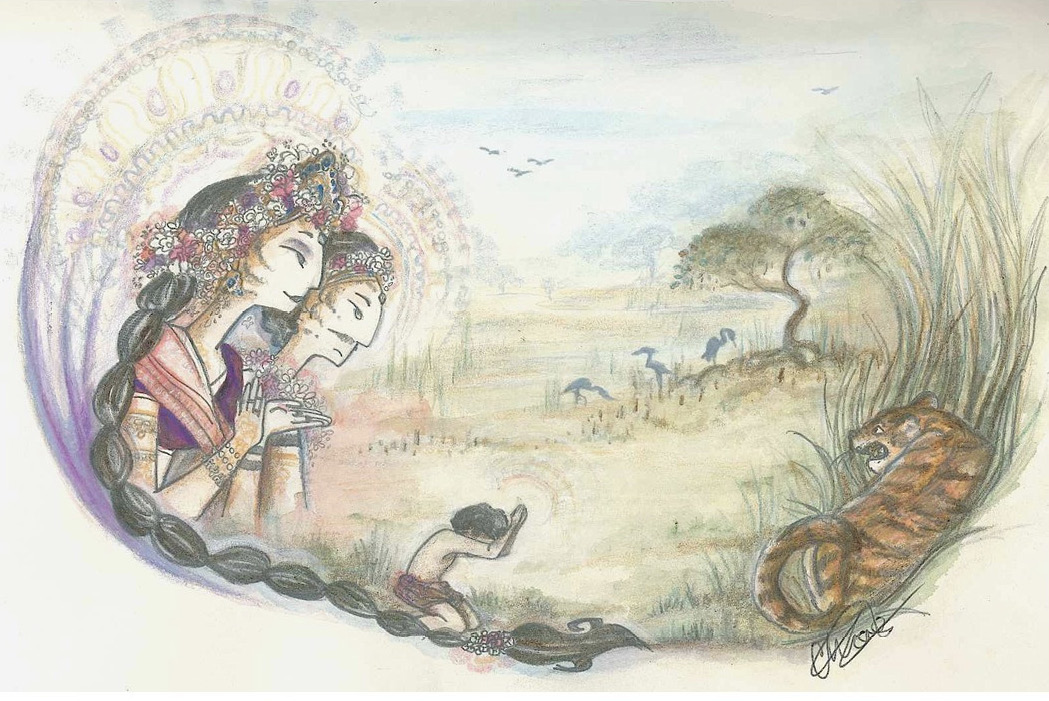
Figure 3.
Mangroves weave deep spiritual and cultural connections between people and nature. This is depicted in the arts and literature throughout many decades.
Source: Courtesy of Danielle Christian, taken from the book Mangrove Myths and Legends by Martin Keeley.
Methods. Literature acquisition, screening, selection and review
Information regarding mangroves as sacred forests was obtained through an extensive review of academic journals, books and databases using the Google Scholar, Scopus and ResearchGate platforms, focusing on key search terms: ‘sacred forests’, ‘sacred groves’, ‘mangrove sacred forests’, ‘mangrove cultural services’, ‘mangrove spiritual services’, and ‘mangrove sacred groves’. The search yielded eighty relevant articles through the established search criteria (Figure 4), which were subsequently manually screened. A comprehensive review of the selected literature on sacred forests was undertaken to evaluate their prevalence across various countries. Following an examination of research objectives, hypotheses and methods from book chapters, case studies, articles and websites, the results were refined to present relevant information regarding sacred spaces in mangrove forests in the Eastern and Western hemispheres. Key variables, beliefs, practices, regulations and outcomes related to the conservation and management of mangroves were identified and compared to identify research gaps and future perspectives on the use of various management strategies for forest governance. The findings were subsequently reported within an established framework (Figure 4) and presented under the main sub-sections outlined below.
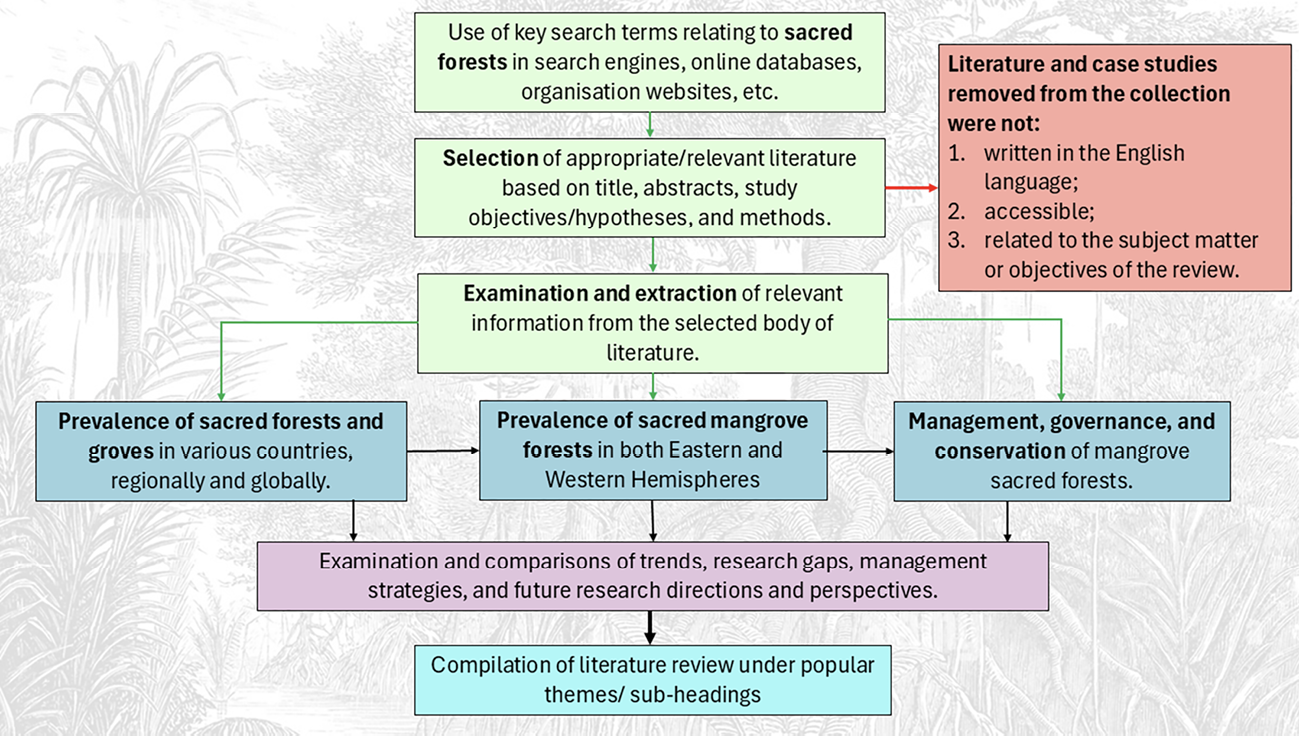
Figure 4.
Framework used for the review of literature and case studies presented in this review. Created by the author.
The concept of sacred forests: What do we know?
Sacred forests, or ‘sacred groves’, are often described as the ‘secret wizards of conservation’. They are natural forest patches safeguarded by the religious or cultural beliefs of local communities, serving as reservoirs of rare plant and animal species (Parthasarathy et al. 2015). The cultural and spiritual values associated with these forests are crucial for promoting biodiversity conservation initiatives and the capacity to preserve biological diversity and services. Sacred forests, once prevalent in the Old World, are documented in Greek and Sanskrit literature; however, their existence in Europe significantly diminished with the rise of Christianity and its associated anthropocentrism. Nonetheless, remnants of sacred forests exist in various regions of Europe and across all continents, excluding Antarctica (Gadgil 2018).
The preservation of small patches or extensive areas of mature forests reflects a manifestation of cultural practices passed down from previous generations. Local communities, often in collaboration with governmental organisations, have established traditional rules that facilitate the conservation and preservation of species (Wangpakapattanawong et al. 2010). This movement has achieved successes in various countries such as India, Greece, China, Japan, Africa and Mexico, as their development and survival are closely linked to the conservation of forests. Consequently, they usually possess a deep understanding of the sustainable use and conservation of local biodiversity (Maru et al. 2022). For example, in Ethiopia, the designation of sacred forests has resulted in successful preservation efforts which facilitated the regeneration of fragmented forests (Woods et al. 2017). Similarly, sacred forests, or ‘Misitu ya Jadi’ in Zanzibar, contribute to biodiversity preservation by safeguarding unique species of flora and fauna while providing financial benefits to surrounding communities as ecosites (Madeweya, Oka and Matsumoto 2004).
Many indigenous people believe that damage to a sacred forest may incite anger from local deities and spirits, potentially leading to misfortune for nearby settlements, and may even result in family curses (Masulu et al. 2010). Consequently, these regions emerge as hotspots for biodiversity, remaining undisturbed for several centuries. Notable sacred forests globally include the sacred groves in the Western Ghats of Maharashtra, Karnataka, Kerala, and Tamil Nadu, the Khasi and Jaintia Hills in India, the Church groves in the Ethiopian Highlands, the Sacred Mijikenda Kaya forests in Kenya, Meiji Jingu, Kasugayama Primaeval Forest, and Aokigahara in Japan, the Osun-Osogbo Sacred Grove in Nigeria, and the Amazon Rainforests in South America (Figure 5).
c
d
b
a
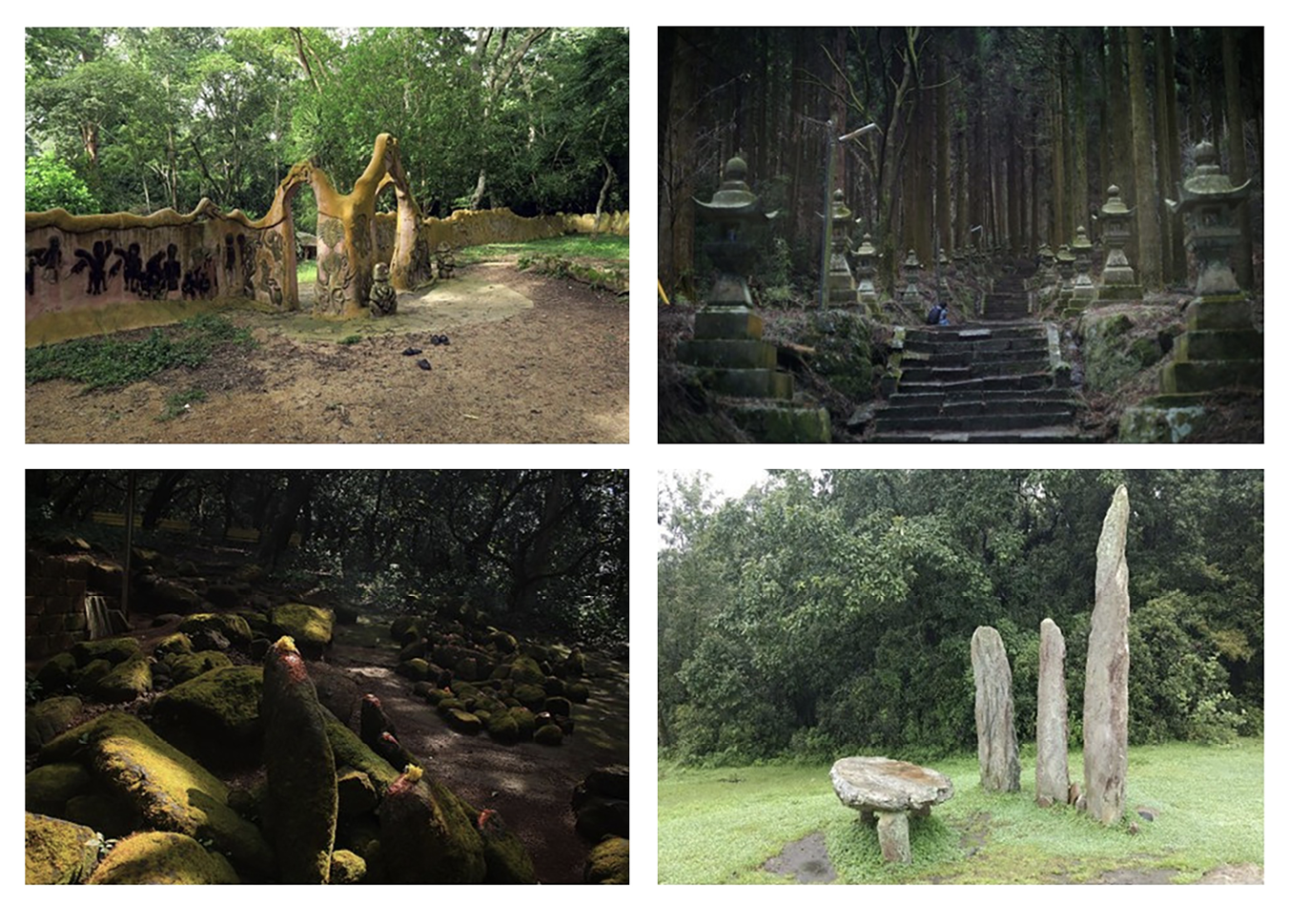
Figure 5.
a) Osun-Osogbo Sacred Grove (Source: Omoeko Media, CC BY-SA 4.0);
b) The Kumano shrine forest, Japan (Source: Ann Lee, CC BY-SA 2.0, via Wikimedia Commons);
c) Durgawadi, a sacred grove in the Western Ghats of India (Source: Nikhil More, CC BY-SA 4.0); and
d) Mawphlang Sacred Forest, India (Source: Daniel Romanson, CC0, via Wikimedia Commons].
The conservation practices employed in sacred forests differ across regions due to varying characteristics and local beliefs. Africa, India and Japan are recognised for their animistic practice, which is ‘the belief that natural beings possess their own spiritual principles and that it is therefore possible for humans to establish with these entities personal relations of a certain kind’ (Descola 1992). Omura (2004) notes that in Japan, Shintoism emphasises that ‘there are gods in everything, not only living creatures but also surrounding all things’. This worldly experience has cemented the spiritual foundation for Japanese cultural identity, resulting in the preservation of over 208,000 ha of forests.
Globally, sacred forests provide numerous benefits that are frequently neglected. Firstly, these forests are capable of sustaining biodiversity over extended periods, as their cultural value can endure across many generations. Secondly, they serve as repositories for rare and endemic species, thereby contributing to biodiversity protection (Manna and Roy 2021). Thirdly, sacred forests safeguard vital ecosystem services and functions, promoting landscape connectivity. They facilitate seed dispersal and pollination, protect water resources, provide erosion control and mitigate adverse climate change effects (Devi et al. 2021). Fourthly, sacred forests preserve forested habitats, which promotes forest regeneration beyond the sacred area. Fifthly, these areas can significantly contribute to a land use matrix by providing co-benefits related to cultural preservation and biodiversity conservation (Sullivan et al. 2023).
Mangroves as sacred forests: Safeguarding tradition, culture and heritage
The concept of sacred mangrove forests presents significant opportunities for ecological conservation and the protection of diverse cultural traditions entwined in various communities globally. Sacred forests have played an important role in conservation through an overarching combination of traditional ecological knowledge (TEK), local customs, cultural values and policy-related governance (Mangora and Shalli 2014). This section provides an overview of various cases transitioning from the Eastern to the Western Hemisphere regarding the prevalence of sacred mangrove forests, highlighting their environmental benefits and advantages that communities gain through their interactions and experiences.
Sacred forests of Africa
In Africa, countries such as Tanzania lack legislation that explicitly recognises sacred forests along with their governance, regulation and management. The management of sacred mangrove forests is predominantly conducted by traditional authorities utilising a framework of taboos, beliefs, restrictions and prohibitions (Akida and Blomley 2008). This results in the prevalent non-consumptive activities of worship, spiritual consultations and sacrifice, accompanied by minimal resource extraction from these forests. Furthermore, local regulations are established to mitigate the overexploitation of these resources. In Kwamdoe, Pemba, a complete prohibition on mangrove cutting is implemented, and pregnant women are restricted from traversing these forests for fear of miscarriage. In certain instances, authorisation from village elders is required to access and extract any forest materials (Mangora and Shalli 2014), as local deities are recognised for their role in safeguarding wildlife, including fish species.
Unlike Tanzania, the mangroves of Benin Republic are safeguarded under a ‘Sacred Forest Law’, which recognises the legal status, protection and governance of sacred natural sites (UNDP 2012). In Coastal Benin, certain villages exhibit clearly defined sacralised mangroves, which are influenced and safeguarded by a local deity known as ‘Zangbeto,’ thereby mitigating their destruction (Zanvo et al. 2021) (Figure 6a). Sanctuary mangroves represent local inhabitants’ cultural identity and have been established by their ancestors for millennia. Local deities associated with sacralised and sanctuary mangroves contribute to reduced anthropogenic pressures compared to non-deity mangroves (Gnansounou et al. 2024). Non-deity mangroves are available to local communities without restrictions due to the absence of divinities, enabling the utilisation of mangroves for fuelwood, medicine, fishing, forage and salt production (Teka et al. 2018).
c
b
a
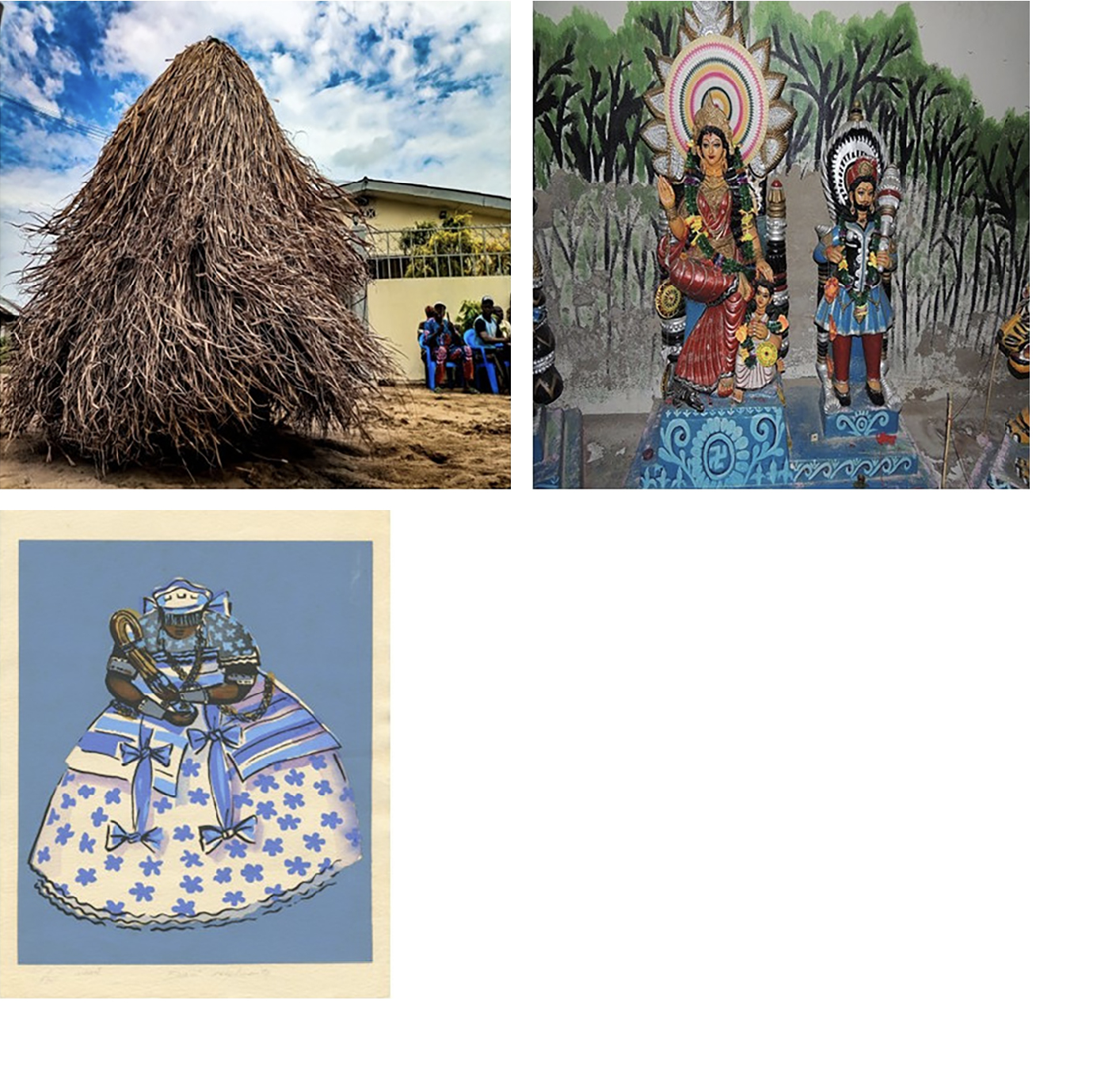
Figure 6.
Popular deities associated with mangrove forests:
a) The Zangbeto: A voodoo guardian of the night and protector of mangrove forests (Source: Atej2*, CC BY-SA 4.0, via Wikimedia Commons);
b) Bonbibi, ‘the forest goddess’ (left) and Dakkhin Rai, ‘the tiger god’ (right) temple in Sundarbans, Bangladesh (Source: A.J.T. Johnsingh, WWF-India and NCF, CC BY-SA 4.0, via Wikimedia Commons); and
c) Orisha Nanã, a goddess associated with the wetlands in Bahia, northeast Brazil (Source: Davi Nascimento, CC BY-SA 2.5, via Wikimedia Commons).
The governance of mangroves in Senegal, unlike the Benin Republic, is controlled by various laws and regulations that vary across different zones. Certain laws permit riparian populations to gather dead straw and wood, harvest plants and fruits, and utilise wood for household repairs; however, commercial use may be restricted in specific instances (Republique du Senegal 1998). The Serére people (Sine Salom Delta), although predominantly Muslim, still practice animism through the belief in Pangool, a forest spirit. Additionally, the Niominka hold a strong belief that ‘the mangrove is a divine gift’ and promote a unified sacred relationship with nature that positively influences the environmental protection of mangroves (Cisse et al. 2004) (Figure 7a). Fishermen in the Sine-Saloum Delta frequently utilise boiled Avicennia germinans leaf water for facial steaming and bathing, andRhizophora spp. leaves for dyeing their clothing; and they secure a propagule in their hats for protection against genies and spirits while entering the mangroves. Rhizophora spp. leaves and prop roots are commonly thought to enhance fish and crop yields, improve health and provide protection when utilised in specific mystical practices (Gallup et al. 2019) (Figure 8a and 8b).
b
a
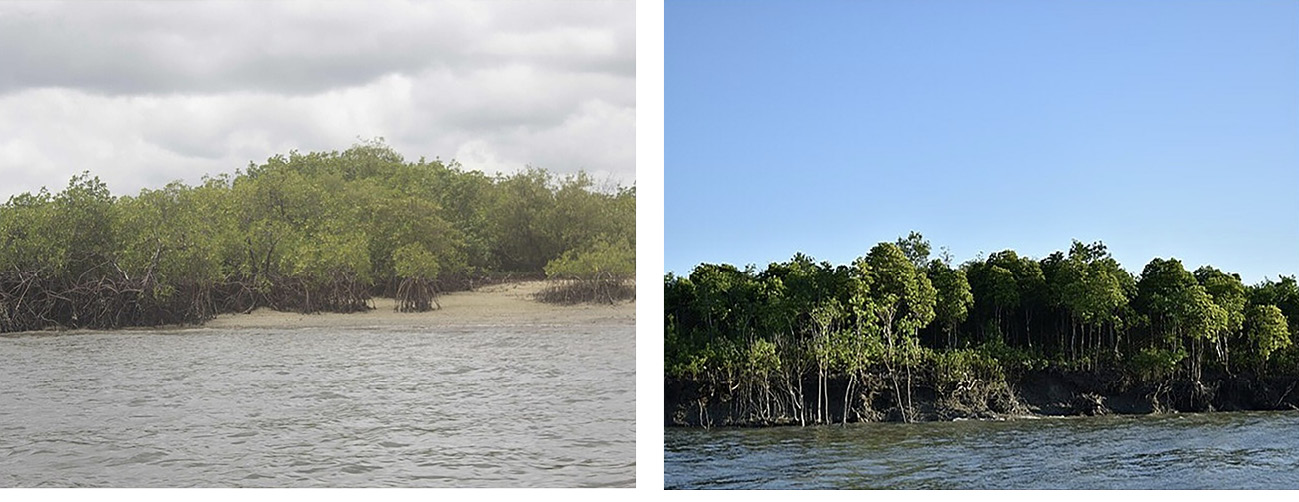
Figure 7.
a) The Sine Saloum Delta mangroves in Senegal, West Africa (Source: Oumi Diop, CC BY-SA 4.0, via Wikimedia Commons); and
b) The Sundarbans Tiger Reserve and Mangrove Forest, West Bengal, India (Source: Pinakpani, CC BY-SA 4.0, via Wikimedia Commons).
c
b
a
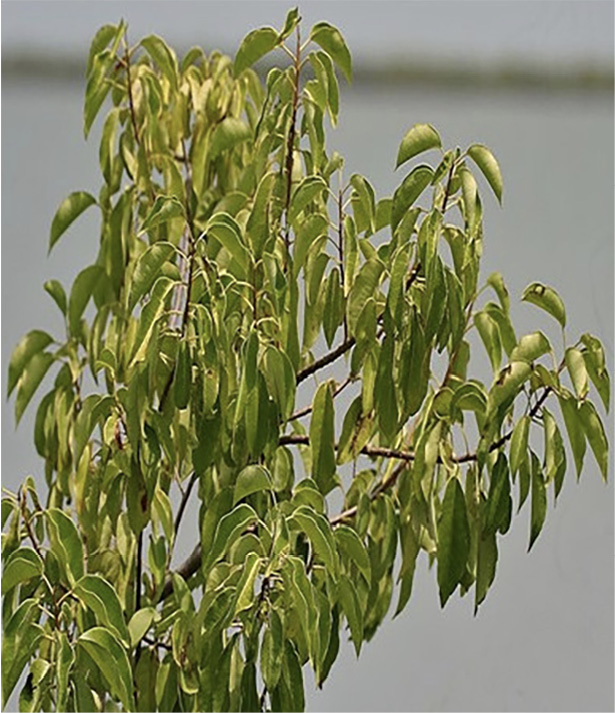
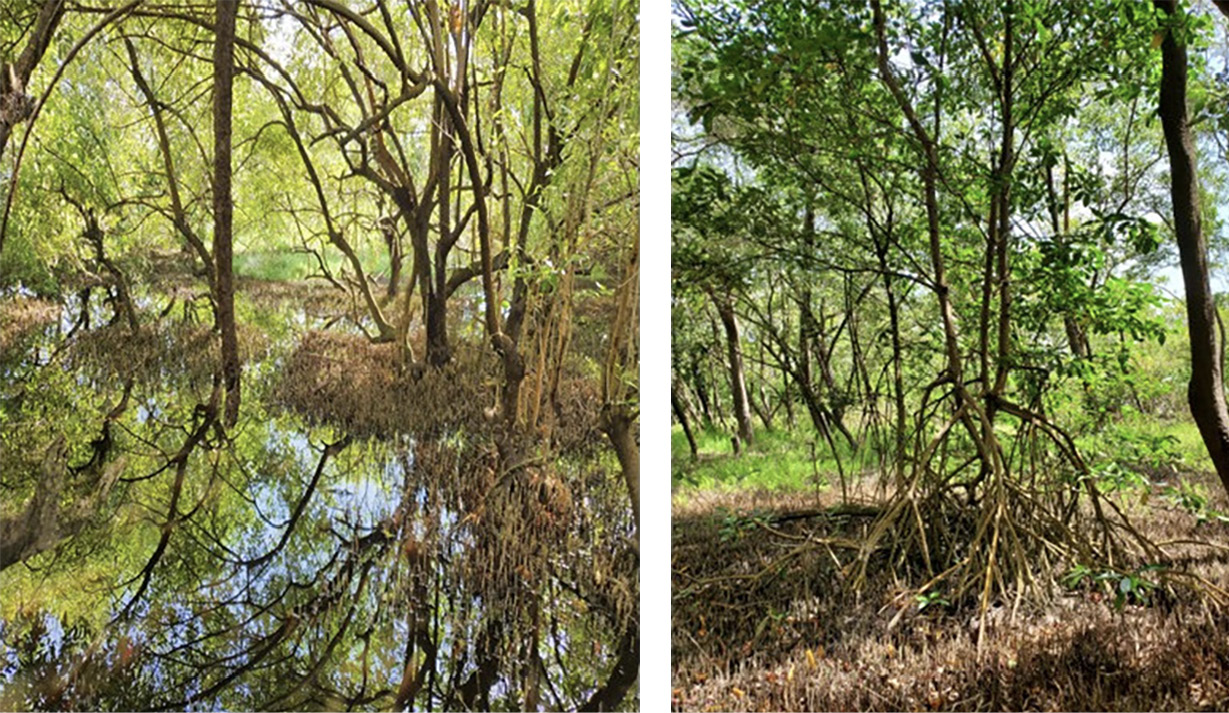
Figure 8.
Species of mangroves that are considered sacred by local communities.
a) Avicennia sp. (Source: Author);
b) Rhizophora spp. – (Source: Author); and
c) Excoecaria agallocha (‘Blind Your Eye’ mangrove) (Source: J.M.Garg, CC BY-SA 4.0, via Wikimedia Commons).
The animism practised by the Joola people in Senegal, Gambia and Guinea-Bissau also incorporates the notion of sacred space, which has contributed to the conservation of specific mangroves relative to areas lacking this designation (Diatta et al. 2017). Although certain mangrove sacred sites have experienced degradation, they have been preserved, despite the fact that conservation was not the primary outcome. In the Jaol-Fadiouth population, these sacred sites serve as ‘places for communion, transmission of collective memory, and the recognition of identity’ (Juhé-Beaulaton et al. 2010). These sacred and taboo spaces within mangroves are prohibited from exploitation. In some forests, mangrove wood is designated for the significant initiation ceremony of males. The cultural and socio-economic significance of certain mangrove resources, including shells, totemic species and shelters, and ritual sites, highlights the evolution of management strategies employed over generations (Cormier-Salem 2024). The Joola people maintain their natural resources by adhering to taboo rules transmitted across generations, a practice referred to as ‘hutongh’ or ‘hubene’, which has facilitated the sustainable management of mangrove ecosystems. Access to taboo areas, consumption of oysters, shellfish and finfish, as well as wood cutting in specific sites, is restricted in some mangrove forests due to concerns about potential destructive consequences (Diatta et al. 2020). Furthermore, to maintain the ecological functions of nurseries, ecological niches and spawning zones of mangrove and fishery resources, the Joola people have established a taboo. Arks and oysters are assigned a sacred status, serving as representations of totemic species, which helps prevent their overexploitation during seasonal harvesting.
Mangroves represent a major heritage for the indigenous populations in the Niger Delta ecosystems, particularly in villages such as Buguma, Burutu and Kurunama. The annual masquerade festival begins in the mangrove forest of the Buguma community, where masqueraders wear costumes made from mangrove materials and perform specific rites before entering the community. The local community also practises the burial of deceased individuals in mangrove forests (Uche 2023), and the trunk of Rhizophora spp. serves as a means to resolve disputes among aggrieved parties within the community. In the Burutu community, ashes from burned mangroves are utilised for body painting among young women during traditional dance festivals (Tasie and Olumati 2014). Furthermore, access to certain mangrove areas within the community is prohibited as they are classified as evil forests. Despite the decline of traditional religious activities due to the growth of Christianity, in certain villages, some religious rites and spiritual worship continue to utilise mangrove forests. For example, Rhizophora spp. roots are used for drumming in masquerade festivals (James et al. 2013).
Sacred forests of Asia
The practice of making mangrove forests sacred is regarded as a significant practice in India, where trees regarded as sacred groves significantly contribute to the livelihoods of indigenous communities and provide protection against destruction. Sacred mangroves have been documented in various forests across India, specifically in Gujarat, Maharashtra, West Bengal and Karnataka (Warrier et al. 2023). In Karnataka, the sacred shrine known as ‘Kalika Mandir’ is situated amidst dense forests along the Kali Nadi. The Achra mangroves in Maharashtra are designated as sacred by the Rameshwar temple and are safeguarded by temple authorities. Sometimes, a portion of the forest is permitted for use to fulfil the firewood needs of the local population (Goa Forest Department 2024).
In contrast to the beliefs about revered spirits surrounding African sacred mangrove forests, the Pichavaram mangrove forests (Tamil Nadu) have a longstanding tradition of tree worshipping. Mangrove species such as Excoecaria agallocha are worshipped by Hindus at the ancient Thillai Chidambaram Temple, who regard them as a remedy for various incurable diseases (Kathiresan 2021) (Figure 8c). The inland mangroves in Shravan, Kavadia and Kachchh represent significant sacred groves in Gujarat for local inhabitants (Gurjar et al. 2019). Religious sites exist on the Islands of Pirotan, Mitha, Khara, Chusna and Chhad, where the cutting of mangrove trees and harm to wildlife are prohibited. Avicennia spp. exhibits widespread distribution, with many species being religiously protected by fishermen who worship them (Figure 8b). Avicennia marina is the sole species classified as a sacred grove within the inland mangrove communities globally. The sacred mangrove forests near the renowned Hindu pilgrimage site of Shravan Kavadia represent a significant sacred grove for the local population. The activities of fire, logging, harvesting or collection of firewood are entirely prohibited and deemed religiously inauspicious by local inhabitants to promote sustainable development of the area (Tripathi et al. 2013).
The Sundarbans Forest extends from Bangladesh to India and is associated with various traditional and cultural beliefs, which influence its governance and sustainability (Jalais 2010) (Figure 7b). Several principal local folk deities are venerated by woodcutters, honey collectors, hunters and fishermen, including Bonobibi, Dakshin Rai, Kalu Rai, Badar Sahib, Sonapir, Sawal Pir, Gazi Saheb and Bakra Gazi. These deities are regarded as protectors of local island inhabitants who venture into the deep mangrove forests to gather honey, wax, wood and other resources. Bonobibi is the most prominent female guardian deity in the deltaic Sundarbans (Mitra 2019) (Figure 6b) and is respected by both Muslim and Hindu communities. She, together with her brother Shah Janguli, is thought to safeguard forest workers from the foreboding tiger demon Dakshin Rai, who is regarded as a principal folk deity by certain cults. In this forest, cultural identity is determined by traditional livelihood practices and the legitimisation of those livelihoods through customary rights. Local communities adjacent to mangrove forests safeguard these vital ecosystems from deforestation and environmental degradation through their beliefs (Jeychandran 2020). Sacred groves in India also serve as venues for traditional festivals and rituals, highlighting their cultural significance and ties to the local communities. Many indigenous persons have indicated that, when entering the forests to gather honey or other resources, they only take what is necessary due to the fear of punishment by Bonobibi for excessive greed. This results in a decrease in misuse and overexploitation of products derived from sacred forests (Chaudhari et al. 2025).
In Indonesia, the Asmat people’s legends describe a creator who made human carvings from mangrove roots, which animated upon the sound of a drum made from a mangrove tree. Today, wood carvers are highly regarded within communities, and roots from mangrove trees continue to be utilised for crafting intricate ceremonial items that honour specific individuals and ancestors (Mastaller 1997). The largest group of sea nomads globally, the Bajo Tribe, are prominently recognised for their support of maritime culture and mangrove conservation. The Bajo people hold the belief that all entities on earth possess a guardian spirit, and any disturbance or damage to these entities may result in disaster. The sea serves as a vital habitat, reflecting the Bajo Tribe’s values, customs and norms aimed at safeguarding the region. Local wisdom is manifested through traditions, regulations and hereditary taboos that are practised, preserved and adhered to (Prameswari et al. 2019).
The Bajo settlements are characterised by intact mangrove ecosystems, seagrass beds and coral reefs, attributed to the Bajo tribe’s emotional connections to natural resources, which influence behaviour considering ecology (Basri et al. 2017). The community’s atmosphere is rich in maritime cultural values and practices, which influence the maintenance and conservation of the natural marine environment and its resources based on indicator provisions. Sulaiman et al. (2023) highlighted the fundamental principles that guide the Bajo tribe in their mission to conserve mangrove forests:
For our belief in the Bajo Tribe, mangrove forests are not just a collection of trees. Mangrove forests for us are part of our lives, and it is so that our culture is inseparable from mangrove forests. When the baby is born after going through the customary procession, the baby’s placenta is hung on a mangrove tree. Similarly, our bodies were buried not far from the mangrove forest when we die. Our ancestors’ traditions taught us always to respect the surrounding nature wherever we are. That is why the mangrove forests around us are still upright; compared to mangrove forests in other places.
The conservation methods utilised by the Bajo community have resulted in favourable outcomes relative to other mangrove forests, as they intentionally enforce customary regulations that prohibit excessive logging and damage to mangroves (Haris et al. 2019). If mangrove trees are removed for housing development, it is necessary to replant two trees and provide care until they can thrive independently, in order to appease vengeful spirits (Wani and Ariana 2018). Mangrove forests are not converted into settlements, and the preservation of mangroves is enforced by planting seedlings in degraded coastal regions and implementing zoning measures to protect these forests. Furthermore, members of this community actively engage in the removal of garbage from the mangrove forest while reinforcing regulations against fish consumption near their settlements (Chanifah et al. 2024).
Adjacent to the popular Torosiaje Village, mangrove areas are regarded as sacred, and entry without permission is prohibited. Rituals are conducted in these forests to honour the spirits and guardians of the mangroves, and the preservation of this ecosystem is vital for all organisms inhabiting the forest. Participation in mutual cooperation for mangrove forest rehabilitation and active preservation contributes to the establishment of a sustainable income source (Maulidyna et al. 2021). While sacred forests have been acknowledged by entire communities in different regions of the world, some mangrove forests in Papua are classified as ‘women’s forest’ and are governed by the Enggros Tribe’s customary ‘Tonotwiyat law’, which prohibits men from accessing and foraging in these areas. Papuan indigenous women experience significant value, autonomy and connection to the mangrove ecosystem, which serves as a source of food and a venue for socio-cultural interactions while foraging for shrimp, shells and firewood (Rumahorbo et al. 2020). The customary law which grants women governance over these forests safeguards the distinctiveness of this mangrove forest while reinforcing preservation and conservation.
Sacred forests of Oceania
Countries including Fiji, Papua New Guinea, Australia and New Zealand maintain a sacred relationship with mangrove forests. In the Solomon Islands, the deceased are disposed of, and specific rites are conducted in mangrove waters (Kathiresan and Bingham 2001). MacDonald (1851) emphasised significant spiritual connections between mangrove forests and local communities in Fiji, noting specific deities and legends linked to various elements of the mangrove ecosystem. Wake, in 1970, documented the utilisation of mangroves by indigenous populations in Papua New Guinea during significant burial ceremonies, wherein the deceased were typically left in the forest completely exposed as a preservation method (Friess 2016).
Before European arrival in Australia, Aboriginal and Torres Strait Islander coastal communities effectively managed and relied on mangrove ecosystems for over 40,000 years for food, paddles, canoes, shields, boomerangs and spears, and have positively influenced these ecosystems through their sacred beliefs (Duke 2006). The Djan’kawu creator ancestors inhabited and animated the Glyde River region, resulting in the emergence of the first Manyarrngu (‘people from the mangrove trees’) and Liyagawumirr people (Malibirr 2025). Presently, the traditional use of mangroves by Aboriginals is apparent in the remote regions of the northern coast of Australia (Kunstadter et al. 1986). Wake (1970) documented Aboriginal ceremonies in which the deceased were interred in graves covered with mangrove saplings. Furthermore, marine stone arrangements established by Aboriginal peoples are located around mangrove forests, functioning as a connection to their culture, spirituality, and history (McNiven 2004). Currently, Torres Strait Islanders and Aboriginals reside along the shore, sustaining a strong connection to the maritime boundary grounded in common law rights, interests and ownerships, historical ties and resource utilisation. Furthermore, indigenous landowners utilise their protected area status under the National Reserve System Program to uphold customary values and practices and enforce regulations that prohibit the cutting and clearing of mangroves in specific regions like New South Wales and Queensland (Duke 2008).
Similar to the Aboriginal peoples of Australia, the Māori people of New Zealand adopt a comprehensive approach to environmental management grounded within an integrated socio-spiritual-ecological framework (Rout et al. 2021). Avicennia marina australasica (manawa) is the sole mangrove species in New Zealand and is traditionally used by the Māori for their tanning characteristics, as tools for pounding fern-root, as dyes for textiles, for boat construction, and for shellfishing (Dencer-Brown et al. 2018). The cultural and religious values instilled by the Māori encompass features such as spirituality (wairua), sacredness (tapu), metaphysics, ethical integrity, customs, amenity, heritage, recreation and wellbeing. These support policies, management actions and initiatives related to the protection and management of traditional cultural sites while preserving natural resources and cultural heritage (Le Heron et al. 2022).
Sacred forests of the Americas
In North America, Florida’s Everglades are recognised for their extensive mangrove forests. The Seminole tribe, among Native American groups, maintains its livelihood in the Glades and is a known leader in safeguarding the sacred territory. Through the extensive agreements with the state, safeguarding this ecosystem is feasible and facilitates climate mitigation (Sengar 2023). The tribe enforces more stringent quality requirements on water resources which are culturally/religiously significant, enabling the tribe to oversee water quality effectively to sustain and safeguard the ecosystem, which is essential for their survival (Golden 2017).
In the Isla Arena mangrove forest in Mexico, many communities acknowledge the significance of the cultural, spiritual and aesthetic services provided by the mangroves, which have been integral to their lives and are granted special protection under Mexican law (Díaz-Gallegos et al. 2011). The gathering of snails and shellfish in mangroves is conducted according to population dynamics, with the mangrove area designated as a reserve, remaining undisturbed and waste free for six to twelve months. Community-led conservation measures, including replanting and selective pruning, have initiated the rehabilitation of mangroves in this region. The indigenous people utilise traditional knowledge to comprehend the dynamics and distribution of community resources, thereby facilitating improved actions that address population needs while preserving the environment (Hernández-Félix et al. 2017).
In Panama, indigenous tribes like the Guna (Kuna) Yala have preserved mangrove forests through their traditional and cultural connections. They also rely on mangroves for sustenance, medicinal resources and construction materials (Chamberland-Fontaine et al. 2022). A principal method employed by the Gunas to preserve their forests is the establishment of sacred spaces, predominantly consisting of primary forests. Furthermore, they engage in community-oriented conservation initiatives, championing the creation of marine protected zones and endorsing sustainable practices. They are responsible for managing their territory according to their customary law and traditional rights (Domeyer 2020).
In South America, the Wayúu indigenous community in Colombia regards mangrove environments as sacred sites and an ancestral sanctuary (Grimm et al. 2024). The people in the Colombian Pacific possess a profound historical connection to and reliance on mangroves, which they regard as an essential component of their cultural identity. The ability to collect ‘piangua’ in the mangroves, an ancestral skill utilised in culinary practices, serves not just as a means of survival but also as an empowering occupation for women, enabling them to advocate for their expertise (Murillo-Sandoval et al. 2025). Jaba Tañiwashkaka (Northern Colombia) is the inaugural sacred site restored for the Indigenous communities of the Sierra Nevada de Santa Marta. Jaba Tañiwashkaka is the origin of the natural universe for the Kogi people, defining their territory (Matallana‐Tobón et al. 2018). Marshes, wetlands and mangroves, all reliant on the Jerez River, are overseen by the Kogi Indigenous people, who have transformed this severely degraded area into a sacred forest through restoration initiatives and spiritual offerings to the environment. The region of Jaba Tañiwashkaka was intentionally left undisturbed for a period to facilitate spiritual healing and to create conditions conducive to its natural restoration (Stringer 2024)
In Ecuador, protected areas and mangrove reserves, such as the Manglares Churute ecological reserve and the Cayapas Matajie mangrove reserve (REMACAM), encompass 162,000 ha of conserved mangroves. REMACAM possesses the tallest mangrove trees globally (sixty metres) and is regarded as a sanctuary for spirit dwellers revered by the indigenous population (Verschuuren et al. 2007) (Figure 9a). This region was designated an Ecological Reserve in 1995 to evaluate management alternatives after years of environmental degradation. The indigenous population manages the robust mangrove ecosystem that sustains the livelihoods of around 6,000 individuals. While fishing and cockle gathering support 85 per cent of households, extensive prawn farming has destroyed cockle-gathering areas (Columbié 2021). Local communities have addressed these changes by developing and engaging in new management strategies, including the formation of mangrove defence groups and management practices known as ‘custodias’, which progress mangrove conservation while reducing environmental impacts (Beitl 2016). Ecuador also empowers ancestral and traditional users inhabiting mangrove zones by granting them exclusive rights to their resources.
b
c
a
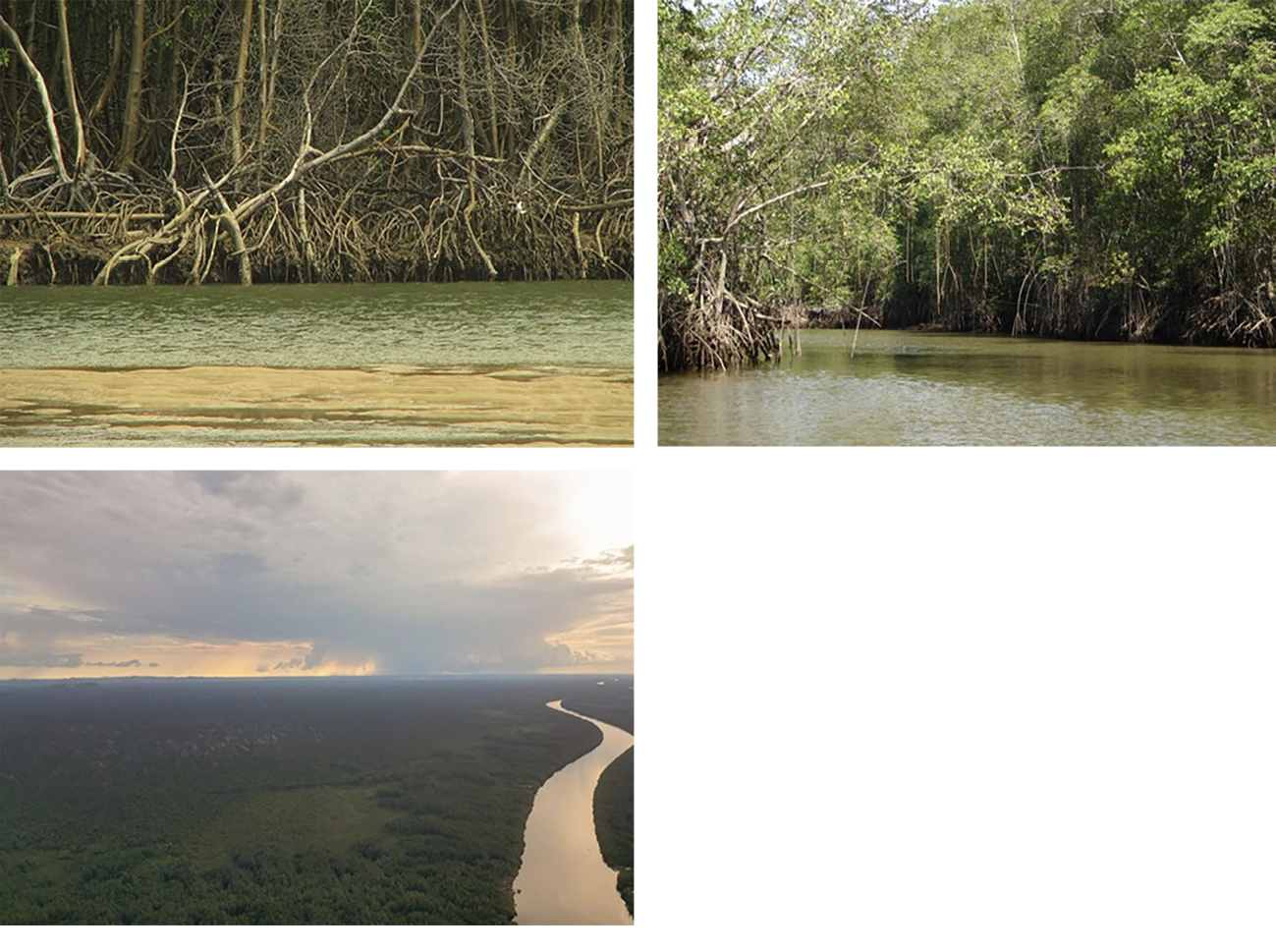
Figure 9.
a) Mangroves of the Manglares Cayapas Mataje Ecological Reserve, Ecuador (Source: Diego Tirira, CC BY-SA 2.0, via Wikimedia Commons);
b) Mangroves of Rio Sauipe, Bahia, Brazil (Source: Alex Popovkin, Bahia, Brazil from Brazil, CC BY 2.0, via Wikimedia Commons); and
c) Mangroves of the Barima Mora Passage (Guyana) (Source: Courtesy of Annette Arjoon- Martins, GMCS).
In earlier times, mangroves sustained Amerindian populations in Brazil while Africans settled within coastline mangrove environments that provided ample wood for cooking, honey, salt, medicine, fish and shellfish (Carney 2016). Some mangroves in Bahia are linked to deities referred to as orishas (orixás), which are nature gods and goddesses venerated in Candomblé, Umbanda, and various Yoruba religions (Yudin 2020) (Figure 9b). This tradition originated in Western Africa and was introduced to Brazil during the Transatlantic Slave Trade. Nanã Buruku (Orisha Nanã) is recognised as the oldest orixá associated with water, muddy environments and wetlands, and oversees the reproductive success of mangrove fauna (Keeley 2016) (Figure 6c). Analogous to the ‘women’s forest’ in Indonesia, the ‘Mothers of the Mangrove’ network in Pará comprises over 800 women from traditional communities engaged in shell fishing and artisanal activities while serving as protectors of the mangroves, safeguarding their cultural heritage while providing financial stability for their communities (Magalhães et al. 2007).
Mangroves along the Guyana coastline are legally classified as a ‘protected species’ and offer various goods and services. Sacred natural sites within Guyana’s extensive rainforests possess significant cultural and spiritual importance for indigenous communities and act as reservoirs of biodiversity. Conservation efforts incorporate both indigenous and non-indigenous knowledge, promoting a sustainable future for biodiversity and the local reliant communities (Burca 2024). The Barima Mora Passage (BMP) in Barima Waini represents the largest, intact mangrove ecosystem in Guyana (Figure 9c). The Indigenous Warrau people have relied on the mangroves as a ‘sacred passage’ for their livelihoods and cultural values, contributing to the preservation of this vital ecosystem for millennia (Arjoon 2022). Additionally, in mangrove forests located in various coastal regions, Hindus engage in rituals and prayers dedicated to various deities, including the Goddess Ganga and the God Shiva, in sections of mangroves, particularly near beaches and canals, akin to practices observed in the Sundarbans mangrove forest (Younger 2019).
Conservation and management of sacred mangrove forests – lessons learnt and future perspectives
Society has consistently faced the challenge of managing mangrove ecosystems to ensure sustainability. Conflicts in governance and management, cultural shifts, erosion of belief systems and economic motivations have contributed to the deterioration and increased negative perceptions of numerous sacred forests (Parthasarathy and Babu 2019). This is not a fairly new phenomenon, but one that has been recorded over time in scholarly and artistic writings. For example, Broocks et al. (2025) highlighted the Ecuadorian novel Don Goyo (1933), which elaborates on the disparity and injustice between the Europeans (‘the white man’) who invaded and exploited ‘the mangle’ (mangrove land) in Guayaquil, and the indigenous people (‘cholo’) that have historically coexisted with the mangrove forests:
… the oldest mangle [mangrove] on the islands – its voice strange and sad spoke: - we are going away, Don Goyo. Going away. The evil White Man has come. Has come to uproot us from the earth we were born in, has come to corrupt us with gold that makes slaves, has come to make us enemies of each other, even though your race and mine have always lived together, and always were loving and beloved … Don Carlos woke up … Slowly he came to understand that was what the White Men wanted when they had come to work on the islands: to rob the cholos of what was theirs; to make them work for the White Man’s benefit, to wait quietly in their houses for the cholos to bring them stump wood, or firewood, or mangle bark, so they could buy it for a pittance and then sell it for much more in Guayaquil. Yes, it was true, undoubtedly true. The day would come when there wouldn´t be a stick of mangle left, nor a place on the islands in which the poor cholos could live. (Demetrio Aguilera Malta [1933] 1980: 90–91)
This loss of mangrove forests remains apparent today in Ecuador and other countries, including Indonesia, Myanmar and Malaysia (Hamilton and Casey 2016). For example, the Chakaria Sundarbans forest has now completely disappeared as a result of resource overexploitation alongside the development of shrimp farming, salt beds and settlement areas for ultimate human gain (Islam 2014) (Figure 10).
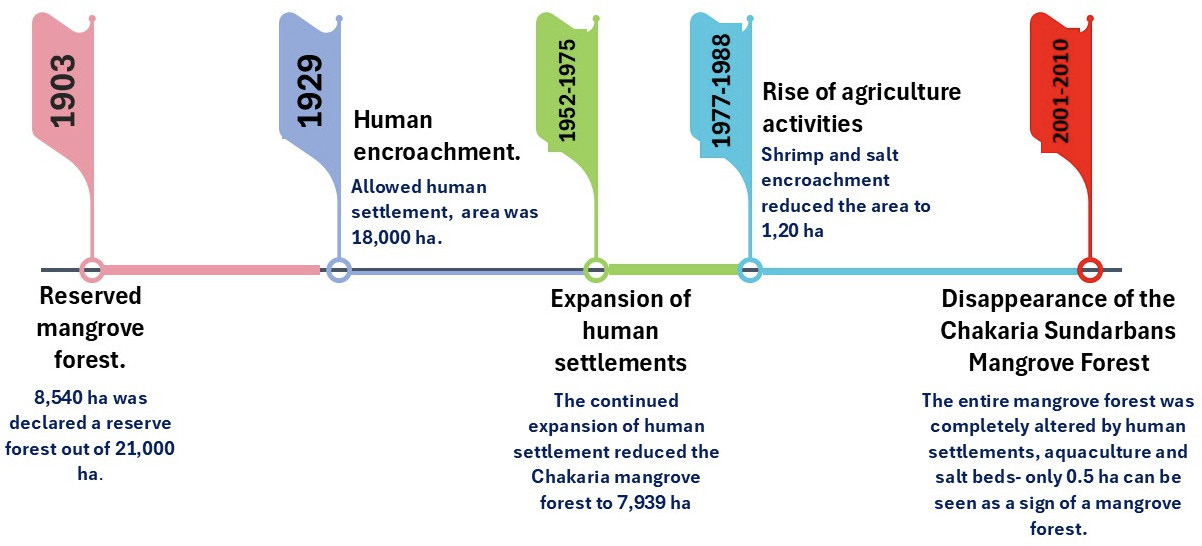
Figure 10.
Historical changes in the Chakaria Sundarbans Mangrove Forest during a 107-year period. Adapted from Islam (2014).
This article clearly demonstrates that mangrove forests with significant sacred, traditional or cultural values exhibit improved ecological states and serve as compelling evidence of successful biodiversity and resource conservation when ownership is distributed among community members. This contributes to increased safe spaces for vulnerable species, water conservation, mitigates soil and nutrient depletion, enhances carbon storage, and supports pollination, all while safeguarding religious and cultural heritage (Khan 2003).
Local populations reliant on sacred mangrove forests must play a crucial role in their conservation by upholding traditional rules and laws (Mangora and Shalli 2014). A singular solution for sacred grove management is not feasible globally, owing to the significant variations in land rights systems across regions. Nonetheless, sacred forests and traditional ecological knowledge are interconnected and not isolated entities. External factors, contemporary norms and beliefs consistently challenge their intended harmonious function, often resulting in overall failure. This necessitates a reformed management framework aimed at promoting forest rehabilitation and development while adapting to the anticipated impacts of climate change to enhance sacred forest resilience (Parthasarathy et al. 2008). Numerous models have been proposed for the governance of sacred spaces, including community-based conservation, which involves local communities in the management of sacred forests, and government-managed conservation, which relies on governmental plans, laws, and regulations (Chaudhari et al. 2025). However, co-management conservation, characterised by a partnership between the government and local communities, has proven to be the most effective and widely accepted strategy to date. Co-management conservation provides more benefits compared to exclusively community-based conservation by formally incorporating government authority alongside community involvement (Gienger and Nursey-Bray 2025). This results in increased legitimacy, collective responsibility, faster conflict resolution and improved capacity for addressing conservation issues such as resource extraction and overexploitation (Manda et al. 2023). For example, in Togo-Benin (West Africa), Gnansounou et al. (2022) reported that the co-management approach for mangrove conservation has lowered anthropogenic stressors to mangroves in the Mono Transboundary Biosphere Reserve. Moreover, co-management conservation of Ecuadorian mangroves enables ancestral communities to obtain territory concessions in return for resource protection. Communities formulate management plans which incorporate sustainable extraction practices, enhancing capacity in decision making and ensuring the preservation of healthy mangroves (Villacrés, Quiñónez, and da Silva 2024).
Future research is required to comprehend the intricate relationship between people and mangroves and their implications for environmental protection. Long-term studies should be conducted to compare and track the ecological functions and challenges faced by sacred mangrove forests with those of non-traditional mangrove forests. Integrated coastal zone management (ICZM), sustainable tourism and community-based marine conservation are essential practices for maintaining ecological balance while reinforcing the cultural identity of traditional communities. Some current laws and policies regarding mangrove conservation and governance in various countries are often perceived as ambiguous, misleading or impractical. As such, further research is necessary to support the revision, implementation or adjustment of laws regarding mangrove status to better address community needs. This preserves traditional ecological knowledge while ensuring long-term benefits for many communities.
Conclusion
Sacred mangrove forests are prevalent globally and have profound spiritual and cultural ties within numerous communities that worship and safeguard them. They serve as a catalyst for mangrove preservation and conservation, exhibiting significantly enhanced ecological functions and outputs relative to other mangrove forests, attributable to the protective measures enforced by governance or traditional laws. Sacred mangrove forests provide various benefits, such as species protection, water conservation and regulation of nutrient cycling. Consequently, the conservation of these forests should incorporate co-management strategies that integrate governmental regulations with traditional ecological knowledge to promote sustainable forestry practices. To maintain the sustainability and advantages of sacred mangrove forests, it is essential to modify current policies and regulations to more effectively meet community needs, thereby safeguarding traditional ecological knowledge and ensuring benefits for reliant communities.
Acknowledgements
I would like to express my gratitude to Martin A. Keeley (Education Director – Mangrove Education, Cayman Islands) and Annette Arjoon-Martins (GMCS) for their support in providing some images used within this article. I also thank Pandit Omesh Persaud (Blairmont Hindu Temple) for his guidance on the Hindu traditions and practices. Gratitude is also extended to the reviewers and editors of Plant Perspectives for their valuable contributions and feedback on the manuscript.
Declaration of interest
The author has no potential conflicts of interest to declare.
Sabrina Dookie is a lecturer and mangrove ecologist attached to the University of Guyana, Turkeyen Campus. Her research interests include mangrove restoration and dynamics, microbial functionality in mangroves, ecophysiological adaptations of mangroves in stressed environments, coastal and marine life management, hydroperiod and sedimentation dynamics, sustainable forestry management, and the applications of traditional ecological knowledge.
Email: sabrinadookie1@gmail.com, sabrina.dookie@uog.edu.gy
https://orcid.oirg/0000-0002-7292-091X
REFERENCES
Aheto, Denis Worlanyo, Stephen Kankam, Isaac Okyere, Emmanuel Mensah, Adams Osman, Fredrick Ekow Jonah and Justice Camillus Mensah. 2016. ‘Community-based mangrove forest management: Implications for local livelihoods and coastal Resource conservation along the Volta Estuary catchment area of Ghana’. Ocean & Coastal Management 127 (July): 43–54.
https://doi.org/10.1016/j.ocecoaman.2016.04.006
Akida, A. and R. Blomley. 2008. ‘Trends in forest ownership, forest resources tenure and institutional arrangements: Are they contributing to better forest management and poverty reduction? Case study from the Republic of Tanzania. Understanding forest tenure in Africa: Opportunities and challenges for forest tenure diversification’. Food and Agricultural Organisation of the UN, Forest Policy and Institutions Working Paper NO 14. FAO.
Arjoon, Annette. 2022. ‘Guyana’s sacred passage’. Caribbean Beat Magazine. May. https://www.caribbean-beat.com/issue-170/sacred-passage-offtrack
Basri, La Ode Ali, I. Wayan Mudana, Wa Ode Sitti Habsah, Akhmad Marhadi, La Tarifu, Faika Burhan and La Janu. 2017. ‘Pamali, Bajo’s local wisdom in the conservation of marine resources’. Asian Social Science 13 (12): 63.
https://doi.org/10.5539/ass.v13n12p63
Beitl, Christine M. 2016. ‘The changing legal and institutional context for recognizing Nature’s rights in Ecuador: Mangroves, fisheries, farmed shrimp, and coastal management since 1980’. Journal of International Wildlife Law & Policy 19 (4): 317–32.
https://doi.org/10.1080/13880292.2016.1248688
Broocks, Anne-Katrin, Maria-José Barragán-Paladines, Indira Nolivos and Anna-Katharina Hornidge. 2025. ‘Mimicry worlds in Ecuador’s wangroves: The (post)colonial power of science in mangrove conservation and development’. Environmental Sociology June: 1–27.
https://doi.org/10.1080/23251042.2025.2511478
Burca, Jackie De. 2024. ‘Guyana sacred natural sites and biodiversity’. Constructive Voices. 14 April.
https://constructive-voices.com/guyana-sacred-natural-sites-and-biodiversity/
Carney, Judith A. 2016. ‘Between land and sea: Mangroves and mollusks along Brazil’s Mangal Coast’. Fronteiras: Journal of Social, Technological and Environmental Science 5 (3): 17.
https://doi.org/10.21664/2238-8869.2016v5i3.p17-38
Chamberland-Fontaine, Sarah, Stanley Heckadon-Moreno and Gordon M. Hickey. 2022. ‘Tangled roots and murky waters: Piecing together Panama’s mangrove policy puzzle’. Frontiers in Forests and Global Change 5 (May).
https://doi.org/10.3389/ffgc.2022.818722
Chanifah, Nur, Thohir Luth, Sitii Rohmah, Moh. Anas Kholish and None Zaini Muchlis. 2024. ‘Ecological wisdom of the Bajo tribe in the perspective of Fiqh Al-Bi’ah and green constitution’. AL-IHKAM Jurnal Hukum & Pranata Sosial 19 (2): 470–95.
https://doi.org/10.19105/al-lhkam.v19i2.13894
Chaudhari, Tushar, Lancelot D’cruz and Rashmi Yadav. 2025. ‘Study of sacred groves of South Gujarat, India’. Journal for Basic Sciences 24 (4): 632–46.
https://www.researchgate.net/publication/388827111
Cisse, T., A. Ghysels and C. Vermeulen. 2004. ‘Niomanka belief systems and management of mangrove natural resources’. In M. De Dapper (ed.) Tropical Forests in a Changing Global Context. Brussels: Royal Academy of Overseas Sciences.
Columbié, Yairen Jerez. 2021. ‘People of the mangrove: A lens into socioecological interactions in the Ecuadorian Black Pacific’. ETropic: Electronic Journal of Studies in the Tropics 20 (2): 74–94.
https://doi.org/10.25120/etropic.20.2.2021.3808
Cormier-Salem, Marie Christine. 2024. ‘Desirable futures: Perspectives of Joola fisherwomen in Casamance, Senegal’. Futures 162 (September): 103435.
https://doi.org/10.1016/j.futures.2024.103435
Dencer-Brown, Amrit, Andrea Alfaro, Simon Milne and John Perrott. 2018. ‘A review on biodiversity, ecosystem services, and perceptions of New Zealand’s mangroves: Can we make informed decisions about their removal?’ Resources 7 (1): 23.
https://doi.org/10.3390/resources7010023
Descola, Philippe. 1992. ‘Societies of nature and the nature of society’. In Adam Kuper (ed.) Conceptualizing Society, pp. 107–26. London: Routledge.
Devi, N. Bijayalaxmi, Nima T. Lepcha, Siddarth S. Mahalik, Denish Dutta and Benrithung L. Tsanglao. 2021. ‘Urban sacred grove forests are potential carbon stores: A case study from Sikkim Himalaya’. Environmental Challenges 4 (August): 100072.
https://doi.org/10.1016/j.envc.2021.100072
Diatta, Claudette Soumbane, Malick Diouf, Charlotte Karibuhoye and Amadou Abdoul Sow. 2017. ‘Sites naturels sacrés et conservation des ressources marines et côtières en milieu traditionnel Diola (Sénégal)’. Revue d’ethnoécologie, 11 (March).
https://doi.org/10.4000/ethnoecologie.2900
Diatta, Claudette Soumbane, Malick Diouf, Amadou Abdoul Sow and Charlotte Karibuhoye. 2020. ‘The Joola civilization and the management of mangroves in lower Casamance, Senegal’. Revue D’ethnoécologie 17 (February).
https://doi.org/10.4000/ethnoecologie.5855
Díaz-Gallegos, José Reyes, Joanna Acosta-Velázquez, María Teresa Rodríguez-Zúñiga and Raúl Jiménez-Rosemberg. 2011. ‘The mangrove forests of Mexico: Transformation, conservation and threats’. In D. Thangadurai, C.A. Busso, L.G.Abarca Arenas and S.N. Jayabalan (eds), Frontiers in Biodiversity Studies. Delhi: I.K International Pvt. https://www.researchgate.net/publication/272416425
Domeyer, Devin. 2020. ‘Preserving the biodiversity of coral reefs: The Gunadule of Panama’. Unfoundation.org. 26 Aug. 2020. https://unfoundation.org/blog/post/preserving-the-biodiversity-of-coral-reefs-the-gunadule-of-panama-2/
Dou, Yuehan, Mengxiao Liu, Martha Bakker, Xiubo Yu, Gerrit J. Carsjens, Rudolf De Groot, and Junguo Liu. 2021. ‘Influence of human interventions on local perceptions of cultural ecosystem services provided by coastal landscapes: Case study of the Huiwen wetland, Southern China’. Ecosystem Services 50 (August): 101311.
https://doi.org/10.1016/j.ecoser.2021.101311
Duke, Norman C. 2006. Australia’s Mangroves: The Authoritative Guide to Australia’s Mangrove Plants. St. Lucia, Qld.: University of Queensland.
Duke, N.C. 2008. Conservation and Management of Mangroves in Australasia. International Conference and Exhibition on Mangroves of Indian and Western Pacific Oceans (ICEMAN), Kuala Lumpur, Malaysia, 21–24 August 2006. Malaysia: Maritime Institute of Malaysia (MIMA).
Friess, Daniel. 2016. ‘Ecosystem services and disservices of mangrove forests: Insights from historical colonial observations’. Forests 7 (12): 183.
https://doi.org/10.3390/f7090183
Gadgil, Madhav. 2018. ‘Sacred groves: An ancient tradition of nature conservation’. Scientific American, December.
https://doi.org/10.1038/scientificamerican1218-48
Gallup, Laura, David A. Sonnenfeld and Farid Dahdouh-Guebas. 2019. ‘Mangrove use and management within the Sine-Saloum Delta, Senegal’. Ocean & Coastal Management November, 105001.
https://doi.org/10.1016/j.ocecoaman.2019.105001
Garmaeepour, Roghayeh, Amir Alambeigi, Afshin Danehkar and Afshin Alizadeh Shabani. 2025. ‘Mangrove forest ecosystem services and the social well-being of local communities: Unboxing a dilemma’. Journal for Nature Conservation 84 (January): 126827.
https://doi.org/10.1016/j.jnc.2025.126827
Gienger, Ariane and Melissa Nursey-Bray. 2025. ‘Towards co-governance: An evaluation of co-management advantages, challenges and ways forward in South Australia’. Geoforum 162 (June): 104296.
https://doi.org/10.1016/j.geoforum.2025.104296
Gnansounou, Setondé Constant, Alberta Ama Sagoe, Precious Agbeko Dzorgbe Mattah, Kolawolé Valère Salako, Denis Worlanyo Aheto and Romain Glèlè Kakaï. 2022. ‘The co-management approach has positive impacts on mangrove conservation: Evidence from the Mono transboundary biosphere reserve (Togo-Benin), West Africa’. Wetlands Ecology and Management September.
https://doi.org/10.1007/s11273-022-09894-0
Gnansounou, Setondé Constant, Kolawolé Valère Salako, Corentin Visée, Farid Dahdouh-Guebas, Romain Glèlè Kakaï, Patrick Kestemont and Sabine Henry. 2024. ‘The role of local deities and traditional beliefs in promoting the sustainable use of mangrove ecosystems’. Forest Policy and Economics 160 (March): 103145.
https://doi.org/10.1016/j.forpol.2023.103145
Goa Forest Department. 2024. Sacred Groves of GOA. Forest Department: Government of GOA. https://www.forest.goa.gov.in/sites/default/files/2022-06/ch7_man.pdf
Golden, J.C. 2017. ‘The Seminole tribe of Florida: Keeping the Everglades wet’. Arizona Journal of Interdisciplinary Studies 6: 11–24. Retrieved on 20 May 2025 from https://journals.librarypublishing.arizona.edu/azjis/article/id/349/
Grimm, Kerry, Mark Spalding, Marice Leal, Kate Kincaid, Lalao Aigrette, P. Amoah-Quiminee, L. Amoras et al. 2024. ‘Including Local Ecological Knowledge (LEK) in mangrove conservation & restoration. A best-practice guide for practitioners and researchers’. Global Mangrove Alliance February.
https://doi.org/10.5479/10088/118227
Gurjar, Udai Ram, Suman Takar, Khemraj Bunkar, Vikas Pathak and Jaspreet Singh. 2019. ‘Present status on distribution, biodiversity and management of Indian mangroves’. Research Biotica 1 (1): 16.
https://doi.org/10.54083/resbio.1.1.2019.16-22
Hamilton, Stuart E. and Daniel Casey. 2016. ‘Creation of a high spatio-temporal resolution global database of continuous mangrove forest cover for the 21st Century (CGMFC-21)’. Global Ecology and Biogeography 25 (6): 729–38.
https://doi.org/10.1111/geb.12449
Haris, Oheo Kaimuddin, Syahbudin Syahbudin and Ahsan Yunus. 2019. ‘Legal existence of local wisdom for Bajo fishery tribe on Indonesian maritime border’. Hasanuddin Law Review 5 (1): 41.
https://doi.org/10.20956/halrev.v5i1.1727
Hernández-Félix, Lourdes, Dolores Molina-Rosales and Claudia Agraz-Hernández. 2017. ‘Ecosystemic services and conservation strategies in the Isla Arena mangrove’. Agricultura, Sociedad Y Desarrollo 14 (3): 427–49.
https://www.scielo.org.mx/pdf/asd/v14n3/1870-5472-asd-14-03-00427-en.pdf
Holtzman, Robert. 2023. ‘The Warrau canoe and the maritime cultural landscape of Imbotero’. In Roots of Resilience: Sustaining the Barima-Mora Passage Mangrove Ecosystem and Livelihoods. A Symposium Presented by Guyana Marine Conservation Society, 1 December, 2023, 1–11. Guyana: Guyana Marine Conservation Society.
Islam, Shafi Noor. 2014. ‘An analysis of the damages of Chakoria Sundarbans mangrove wetlands and consequences on community livelihoods in South East coast of Bangladesh’. International Journal of Environment and Sustainable Development 13 (2): 153.
https://doi.org/10.1504/ijesd.2014.060196
IUCN. 2024. Red List of Mangrove Ecosystems. 11 June 2024.
https://iucn.org/resources/conservation-tool/iucn-red-list-ecosystems/red-list-mangrove-ecosystems
Jadin, Julia and Sandra Rousseau. 2022. ‘Local community attitudes towards mangrove forest conservation’. Journal for Nature Conservation 68 (August): 126232.
https://doi.org/10.1016/j.jnc.2022.126232
Jalais, Annu. 2010. Forest of Tigers: People, Politics and Religion in the Sundarbans. New Dehli: Orient Blackswan.
https://doi.org/10.4324/9780203085516.
James, Godstime K., Jimmy O. Adegoke, Sylvester Osagie, Saba Ekechukwu, Peter Nwilo and Joseph Akinyede. 2013. ‘Social valuation of mangroves in the Niger Delta region of Nigeria’. International Journal of Biodiversity Science, Ecosystem Services & Management 9 (4): 311–23.
https://doi.org/10.1080/21513732.2013.842611
Jeychandran, Neelima. 2020. ‘Geographies of death and memory: Shrines dedicated to African saints and spectral deities in India’. South Asian History and Culture October: 1–12.
https://doi.org/10.1080/19472498.2020.1827597
Juhé-Beaulaton, D. 2010. Sacred Forests and Wooded Sanctuaries. Cultural and Biological Creations (Burkina Faso, Togo, Benin). Paris: Karthala.
Jupe, Lucy L., Alexandra M. Collins, Liam Kirkpatrick, Julia L. Newth, Jonathan P. Reeves, Sara A. Thornton and Kevin A. Wood. 2025. ‘Cultural ecosystem services provided by wetlands’. In The Routledge Handbook of Cultural Ecosystem Services, pp. 145–56. London, New York: Routledge
https://doi.org/10.4324/9781003414896-16
Kathiresan, K. and B.L. Bingham. 2001. ‘Biology of mangroves and mangrove ecosystems’. Advances in Marine Biology 40: 81–251.
https://doi.org/10.1016/s0065-2881(01)40003-4
Kathiresan, K. 2021. ‘Mangroves of Coastal India’. Iisc.ac.in. https://wgbis.ces.iisc.ac.in/biodiversity/sahyadri_enews/newsletter/Issue79/mangroves.html.
Keeley, Martin. 2016. Mangroves Myths and Legends. Independent Publisher.
Khan, L. 2003. ‘Center for the Conservation of Biodiversity: Sacred Groves in India’. Fao.org. World Forestry Congress, Quebec.
https://www.fao.org/4/XII/0509-A1.htm#fn1
Kimmerer, Robin. 2011. ‘Restoration and reciprocity: The contributions of Traditional Ecological Knowledge’. Human Dimensions of Ecological Restoration: 257–76.
https://doi.org/10.5822/978-1-61091-039-2_18
Le Heron, Richard, Carolyn J. Lundquist, June Logie, Paula Blackett, Erena Le Heron, Shaun Awatere and Jade Hyslop. 2022. ‘A socio-ecological appraisal of perceived risks associated with mangrove (Mānawa) management in Aotearoa New Zealand’. New Zealand Journal of Marine and Freshwater Research 56 (3): 1–19.
https://doi.org/10.1080/00288330.2022.2097270
MacDonald, John Denis. 1857. ‘Proceedings of the expedition for the exploration of the Rewa River and its tributaries, in Na Viti Levu, Fiji Islands’. Journal of the Royal Geographical Society of London 27 (January): 232–32.
https://doi.org/10.2307/1798379
Madeweya, Kassim H., Hiroyasu Oka and Mitsuo Matsumoto. 2004. ‘Sustainable management of sacred forests and their potential for eco-tourism in Zanzibar’. Bulletin of FFPRI 1 (3): 33–48.
Magalhães, André, Rauquírio Marinho da Costa, Rossivaldo da Silva and Luci Cajueiro Carneiro Pereira. 2007. ‘The role of women in the mangrove crab (Ucides cordatus, Ocypodidae) production process in North Brazil (Amazon Region, Pará)’. Ecological Economics 61 (2–3): 559–65.
https://doi.org/10.1016/j.ecolecon.2006.05.013
Malibirr, George. 2025. ‘Arnhem Land’. National Gallery of Australia.
https://nga.gov.au/first-nations/the-aboriginal-memorial/arnhem-land/
Malta, Demetrio A. 1933. Don Goyo. Madrid: Espasa-Calpe.
Manda, Leonard, Kolawolé Valère Salako, Andrew Kataya, Sèdjro A.T. Affossogbe, Dalo Njera, William O. Mgoola, A.E. Assogbadjo and Brice Sinsin. 2023. ‘Co-management brings hope for effective biodiversity conservation and socio-economic development in Vwaza Marsh wildlife reserve in Malawi’. Frontiers in Conservation Science 4 (August).
https://doi.org/10.3389/fcosc.2023.1124142
Mangora, Mwita M. and Mwanahija S. Shalli. 2014. ‘Sacred mangrove forests: Who bears the pride?’ In M. Behnassi, S. Shahid and N. Mintz-Habib (eds). Science, Policy and Politics of Modern Agricultural System, pp. 291–305. Dordrecht: Springer.
https://doi.org/10.1007/978-94-007-7957-0_20
Manna, Saikat and Anirban Roy. 2021. ‘Indian sacred groves: Floristic diversity, ecology and conservation’. International Journal of Chemical and Environmental Sciences 3 (1): 32–45.
https://doi.org/10.15864/268963821834540209
Maru, Yoseph, Aster Gebrekirstos and Getahun Haile. 2022. ‘Indigenous sacred forests as a tool for climate change mitigation: Lessons from Gedeo Community, Southern Ethiopia’. Journal of Sustainable Forestry 42 (3): 1–28.
https://doi.org/10.1080/10549811.2021.2007490
Mastaller, Michael. 1997. Mangroves: The Forgotten Forest between Land and Sea. Kuala Lumpur: Tropical Press.
Masulu, D.C.P, M.S. Shalli and R.A Kitula. 2010. ‘Customs and taboos. The role of indigenous knowledge in the management of fish stocks and coral reefs in Tanzania’. Queensland, Australia: Coral Reef Targeted Research and Capacity and Building for Management Program. https://gefcoral.org/Portals/53/downloads/CRTR_Customs_Taboos.pdf
Matallana‐Tobón, Clara, Marcela Santamaría, Alexandra Areiza Tapias, Clara Solano and Sandra Galán. 2018. ‘Rethinking nature conservation in Colombia: A case study of other effective area‐based conservation measures’. Parks 24 (SI): 89–98.
https://doi.org/10.2305/iucn.ch.2018.parks-24-siclm.en
Maulidyna, Aninda, Bhefira Syafitri Hartawan, Herlina Noor Agustin, A.N. Irfan, Anisa Septiasari, Ramli Utina and Ahmad Dwi Setyawan. 2021. ‘Review: The role of local belief and wisdom of the Bajo community in marine conservation efforts’. International Journal of Bonorowo Wetlands 11 (1).
https://doi.org/10.13057/bonorowo/w110105
McNiven, Ian. 2004. ‘Saltwater people: Spiritscapes, maritime rituals and the archaeology of Australian Indigenous seascapes’. World Archaeology 35 (3): 329–49.
https://doi.org/10.1080/0043824042000185757
Mitra, Abhijit. 2019. Mangrove Forests in India. Dordrecht: Springer.
Moore, Alex C., Luis Hierro, Neena Mir and Taylor Stewart. 2022. ‘Mangrove cultural services and values: Current status and knowledge gaps’. People and Nature 4 (5).
https://doi.org/10.1002/pan3.10375
Lee, Muna. 1923. ‘Caribbean Marsh’. In Sea-Change: Poems, pp. 11–12. New York: The MacMillian Company.
Murillo-Sandoval, Paulo J., Mauricio Perea-Ardila and Marc Simard. 2025. ‘Examining the status of mangrove forest dynamics and community-led management on the Colombian Pacific Coast’. Ocean & Coastal Management 266 (April): 107672–72.
https://doi.org/10.1016/j.ocecoaman.2025.107672
Oldenburg, Silke. 2025. ‘Thinking with the archipelago: Mangroves, marginalization, and the making of alternative environmental futures in Cartagena, Colombia’. Environment and Planning F July.
https://doi.org/10.1177/26349825251339492
Omura, Hiroshi. 2004. ‘Trees, forests and religion in Japan’. Mountain Research and Development 24 (2): 179–82.
https://doi.org/10.1659/0276-4741(2004)024[0179:tfarij]2.0.co;2
Parthasarathy, N. and K. Naveen Babu. 2019. ‘Sacred groves: Potential for biodiversity and bioresource management’. Encyclopedia of the UN Sustainable Development Goals January: 1–16.
https://doi.org/10.1007/978-3-319-71065-5_10-1
Parthasarathy, N., P. Vivek and K. Anil. 2015. Biodiversity, Ecology & Conservation of Tropical Dry Evergreen Forest. Germany: Lambert Academic Publishing.
Parthasarathy, N., M. Arthur Selwyn and M. Udayakumar. 2008. ‘Tropical dry evergreen forests of peninsular India: Ecology and conservation significance’. Tropical Conservation Science 1 (2): 89–110.
https://doi.org/10.1177/194008290800100203
Prameswari, Sely Indri, A.M. Iskandar and Slamet Rifanjani. 2020. ‘Kearifan Lokal Masyarakat Adat Dayak Hibun Dalam Melestarikan Hutan Teringkang Di Dusun Beruak Desa Gunam Kecamatan Parindu Kabupaten Sanggau’. Jurnal Hutan Lestari 7 (4).
https://doi.org/10.26418/jhl.v7i4.38499
Republique du Senegal. 1998. Code forestier, loi 98/03 du 08 janvier 1998.
Rodrigues, João G., Alexis Conides, Susana R. Rodriguez, Saša Raicevich, Pablo Pita, Kristin Kleisner, Cristina Pita et al. 2017. ‘Marine and coastal cultural ecosystem services: Knowledge gaps and research priorities’. One Ecosystem 2 (May): e12290.
https://doi.org/10.3897/oneeco.2.e12290
Rout, M., S. Awatere, J. Mika, J. Reid and M. Roskruge. 2021. ‘A Māori approach to environmental economics: Te ao tūroa, te ao hurihuri, te ao mārama—The Old World, a Changing World, a World of Light’. Oxford Research Encyclopedia of Environmental Science. Retrieved 19 May 2025, from https://oxfordre.com/environmentalscience/view/10.1093/acrefore/9780199389414.001.0001/acrefore-9780199389414-e-715
Rumahorbo, Basa T., Baigo Hamuna and Henderina J. Keiluhu. 2020. ‘An assessment of the coastal ecosystem services of Jayapura City, Papua Province, Indonesia’. Environmental & Socio-Economic Studies 8 (2): 45–53.
https://doi.org/10.2478/environ-2020-0011
Sengar, B. 2023. ‘Fracturing and formation of cultural spaces of Florida Seminole: From settlements to reservation’. In B. Sengar and A.M.E. Adjoumani (eds). Indigenous Societies in the Post-colonial World. Singapore: Springer.
https://doi.org/10.1007/978-981-19-8722-9_3
Spalding, Mark, Mami Kainuma and Lorna Collins. 2010. World Atlas of Mangroves. London: Earthscan.
Stringer, David. 2024. ‘Folkbiology in endangered languages: Cognitive universals and lexical relativity’. Sociolinguistic Studies 18 (3–4): 357–76.
https://doi.org/10.3138/ss-18-3.4-0003
Sulaiman, Umar, David E. Wilkins, Rahmawati Rahmawati, Subair Subair, Wahyuddin Bakri, Alwan Suban, Mihrani Mihrani, Ilham Ilham, Andries Kango and Muhammad Obie. 2023. ‘Contribution of local wisdom of the Bajo tribe to preserve Indonesia’s mangrove forests’. Academic Journal of Interdisciplinary Studies 12 (3): 264–64.
https://doi.org/10.36941/ajis-2023-0076
Sullivan, Megan K., Luke Browne, Juan Carlos, Jasmine Liu, Akshay Surendra and Sergio Estrada‐Villegas. 2023. ‘Sacred forest biodiversity conservation: A meta‐analysis’. Conservation Science and Practice 6 (1).
https://doi.org/10.1111/csp2.13055
Tasie, G. and R. Olumati. 2014. ‘An over-view of Niger Delta Indigenous religion’. Lwati a Journal of Contemporary Research 11 (3): 89–100.
Teka, Oscar, Laurent G. Houessou, Bruno A. Djossa, Yvonne Bachmann, Madjidou Oumorou and Brice Sinsin. 2018. ‘Mangroves in Benin, West Africa: Threats, uses and conservation opportunities’. Environment, Development and Sustainability 21 (3): 1153–69.
https://doi.org/10.1007/s10668-017-0075-x
Tripathi, Nimisha, Raj S. Singh and Bhoomi Bakhori. 2013. ‘The world’s only inland mangrove in sacred grove of Kachchh, India, is at risk’ Current Science 105 (8): 1–4.
https://www.researchgate.net/publication/259198733
Uche, Izuchukwu. 2023. ‘Mangroves of the Niger Delta’. Mangrove Biology, Ecosystem, and Conservation. IntechOpen EBooks.
https://doi.org/10.5772/intechopen.109296
United Nations Development Programme (UNDP). 2012. ‘Incorporation of Sacred Forests into the Protected Areas System of Benin’. Government of Benin: Ministry of Environment and Nature Protection. UNDP GEF PIMS 2823.
https://info.undp.org/docs/pdc/Documents/BEN/PRODOC%20FS%20TOME%201.pdf
Urquhart, Julie and Tim Acott. 2013. ‘A sense of place in cultural ecosystem services: The case of Cornish fishing communities’. Society & Natural Resources 27 (1): 3–19.
https://doi.org/10.1080/08941920.2013.820811
Verschuuren, Bas, Josep Maria Mallarach and G. Oviedo. 2007. ‘Sacred sites and protected areas’. IUCN World Commission on Protected Areas Task Force on Protected Area Categories.
Villacrés, Felipe Carrera , Lucía Vernaza Quiñónez and Edson Vicente da Silva. 2024. ‘Analysis and systematization of mangrove co-management from a systemic environmental management approach’. Ambiente & Sociedade 27.
https://doi.org/10.1590/1809-4422asoc02184vu27L5OA
Wake, C. Staniland. 1870. ‘Tribal affinities among the Aborigines of Australia’. Journal of the Anthropological Society of London 8: xiii.
https://doi.org/10.2307/3025190
Wangpakapattanawong, P., A. Junsongduang and A. Ratnamhin. 2010. ‘Roles and importance of sacred groves in biodiversity conservation in Chiang Mai’: Https://Www.cifor-Icraf.org/Publications/Sea/Publications/Files/Report/RP0304-14.Pdf Thailand: Federal Ministry of Economic Cooperation and Development.
Wani, Khursheed A. and Lutfah Ariana. 2018. ‘Impact of climate change on Indigenous people and adaptive capacity of Bajo Tribe, Indonesia’. Environmental Claims Journal 30 (4): 302–13.
https://doi.org/10.1080/10406026.2018.1504380
Warrier, Kannan C.S., Rekha R. Warrier and V. Thangavel. 2023. ‘Status of sacred groves in India: A review’. International Journal of Environment and Climate Change 13 (8): 170–81.
https://doi.org/10.9734/ijecc/2023/v13i81942
Woods, Carrie L., Catherine L. Cardelús, Peter Scull, Alemayehu Wassie, Mabel Baez and Peter Klepeis. 2017. ‘Stone walls and sacred forest conservation in Ethiopia’. Biodiversity and Conservation 26 (1): 209–21.
https://doi.org/10.1007/s10531-016-1239-y
Younger, P. 2019. ‘Hinduism in Guyana’. In H. Gooren (ed.) Encyclopedia of Latin American Religions. Religions of the World. Cham: Springer.
https://doi.org/10.1007/978-3-319-27078-4_152
Yudin, L. 2020. ‘Orixás: The divine force of nature’. Soul Brasil Magazine. 13 October.
https://soulbrasil.com/orixas-divinie-force-nature/
Zanvo, Mahutin Serge, Kolawolé Valère Salako, Césaire Gnanglè, Sylvanus Mensah, Achille Ephrem Assogbadjo and Romain Glèlè Kakaï. 2021. ‘Impacts of harvesting intensity on tree taxonomic diversity, structural diversity, population structure, and stability in a West African mangrove forest’. Wetlands Ecology and Management 29 (3): 433–50.